Steak Tartare
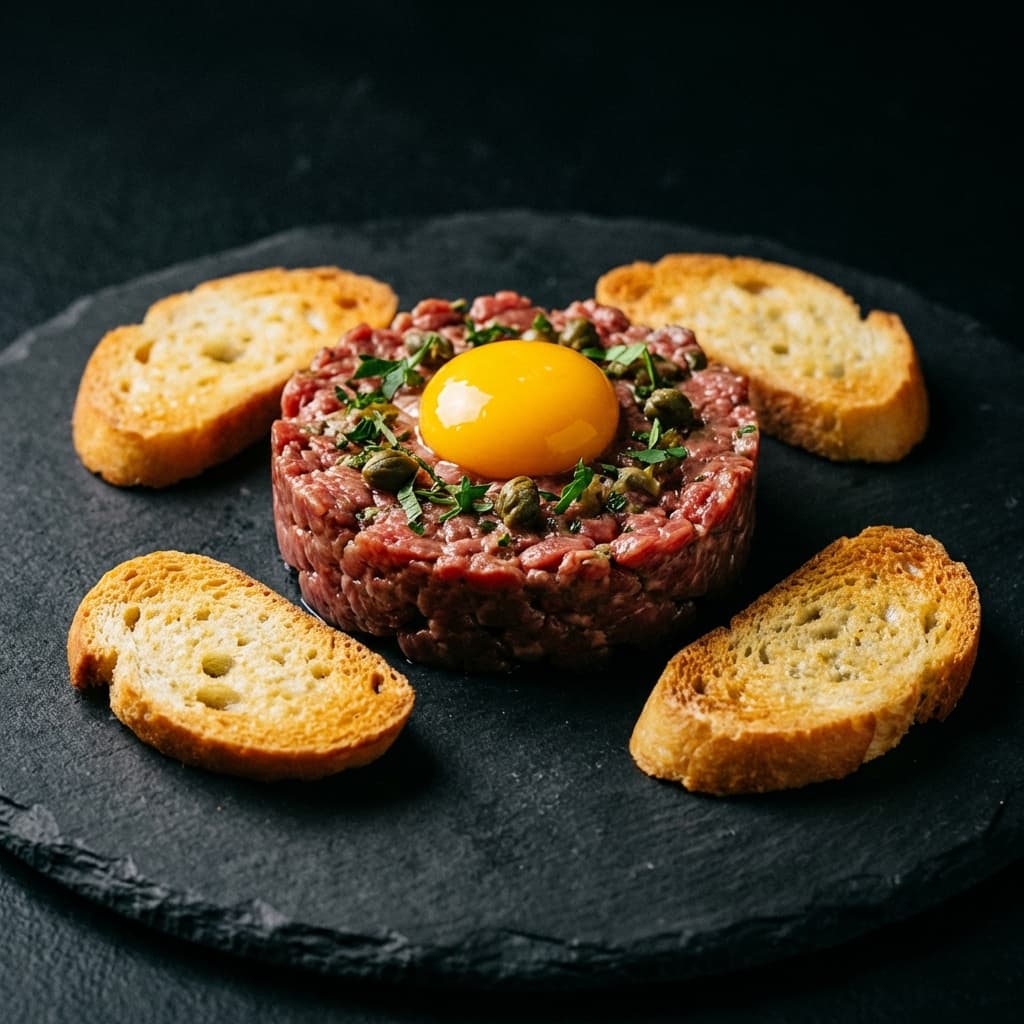
Raw beef, capers, yolk. Chopped by hand, not machine.
Raw beef, capers, yolk. Chopped by hand, not machine.. This is the ultimate test of confidence.
Buy whole muscle, trim exterior (where bacteria live), dice only the sterile interior. Never use pre-ground beef. The knife work is the safety.
The fit, timing, and key move are all here. If it is a yes, go straight into cook mode.
Raw beef, capers, yolk. Chopped by hand, not machine.
Timing note: 20 mins
Set your units, then drop the ingredients into grocery if this is happening later.
What matters before the pan gets hot
The shortest path to understanding the dish, the key move, and whether tonight is the right time to cook it.
The Hook
This ain't sushi, pal. Serve this raw beef and you're either a genius or a liability. Your knife skills are the only thing between a diner and a trip to the ER.
The Technique
Bacteria lives on the surface. You trim that surface, you're left with clean meat. Dice it fine, you increase surface area for the dressing, not contamination. Pre-ground is a biohazard. Your knife is your sterilization; precision is non-negotiable.
The History
Forget those romantic tales. Tartare likely emerged from necessity, a way for dockworkers or travelers to consume beef on the go, maybe with some dubious sauce. The 'raw' aspect was less about refinement and more about survival, a far cry from the delicate dish it is today.
Food Facts
Sourced notes. Tap to verify.
Tough cuts feel chewy because they contain more collagen. With time and moist heat, collagen breaks down into gelatin, which is why braises and stews get richer the longer they cook.
Raw beef, capers, yolk. Chopped by hand, not machine.. This is the ultimate test of confidence.
Nutrition per Serving
Estimated valuesSatiety
Data verifiedTechnique, context, and fallback plans
The reason the method works, the prep you can do early, and what to change if the dish starts drifting.
Steak tartare is more than a dish; it's a bold declaration of culinary confidence, a dance with primal ingredients that demands respect. Its very essence, raw beef, capers, and a glistening yolk, challenges convention. The magic, and indeed the safety, lies in precision. The acid in the accompanying dressing, a vibrant mix of mustard, lemon, and pickles, begins its transformative work the instant it meets the meat. This is why tartare must be mixed à la minute, at the very last second, lest the delicate crimson turn an unappetizing gray. The true test of a chef's mettle, and the ultimate guarantor of safety, is in the knife work. Sourcing a whole muscle, meticulously trimming the exterior where bacteria might lurk, and then hand-dicing the pristine interior is paramount. This is not a dish for the hesitant; it's a testament to the profound connection between technique, ingredient integrity, and the art of serving purity.
My tartare feels mushy, almost paste-like.
Ah, that texture usually means your knife wasn't quite sharp enough, or the meat had started to warm up.
The meat has turned a bit gray.
That's the acid working too quickly. Remember, for steak tartare, you want to mix in any acidic ingredients, like lemon juice or Worcestershire, right at the very end, just before…
Use this in Focus
Turn this nutrition profile into a week you can plan, shop, and actually cook.
Set up, cook, and remember what worked
The mise, the method, your notes, and the next recipes to master after this one lands.
The Setup
- Cutting Board
- Chef's Knife
- Whisk
- Mixing Bowls
The Mise en Place
3Your prep station before cooking begins
The Protein (0/1)
The Pantry (0/2)
Chef's Notes
Use a very sharp knife for a clean cut. Dice ingredients finely and uniformly for the best texture.
Serve immediately with toast points, capers, and a raw egg yolk on the side for mixing.
Chop herbs and shallots ahead of time, but mix everything just before serving to maintain freshness.
THE TRIM
Remove all fat and silverskin from the beef.
THE DICE
Time-sensitiveSlice into thin sheets -> Strips -> Tiny cubes (Brunoise).
The pieces should be distinct cubes, not mush. If you hack at it with a dull knife, you get paste. Use a razor-sharp blade.
THE DRESSING
Whisk yolk, mustard, and sauces in a cold bowl until emulsified.
THE FOLD
Time-sensitiveFold the meat and crunchy bits into the dressing gently. Season heavily with salt/pepper.
⚠️ Taste it. Cold meat suppresses flavor. You need more salt than you think.
THE PLATE
Pack into a ring mold. Serve immediately with toast points.
Service Log
Log your variables. Iterate like a pro.
Clean slate.
Log your variables after the first run.