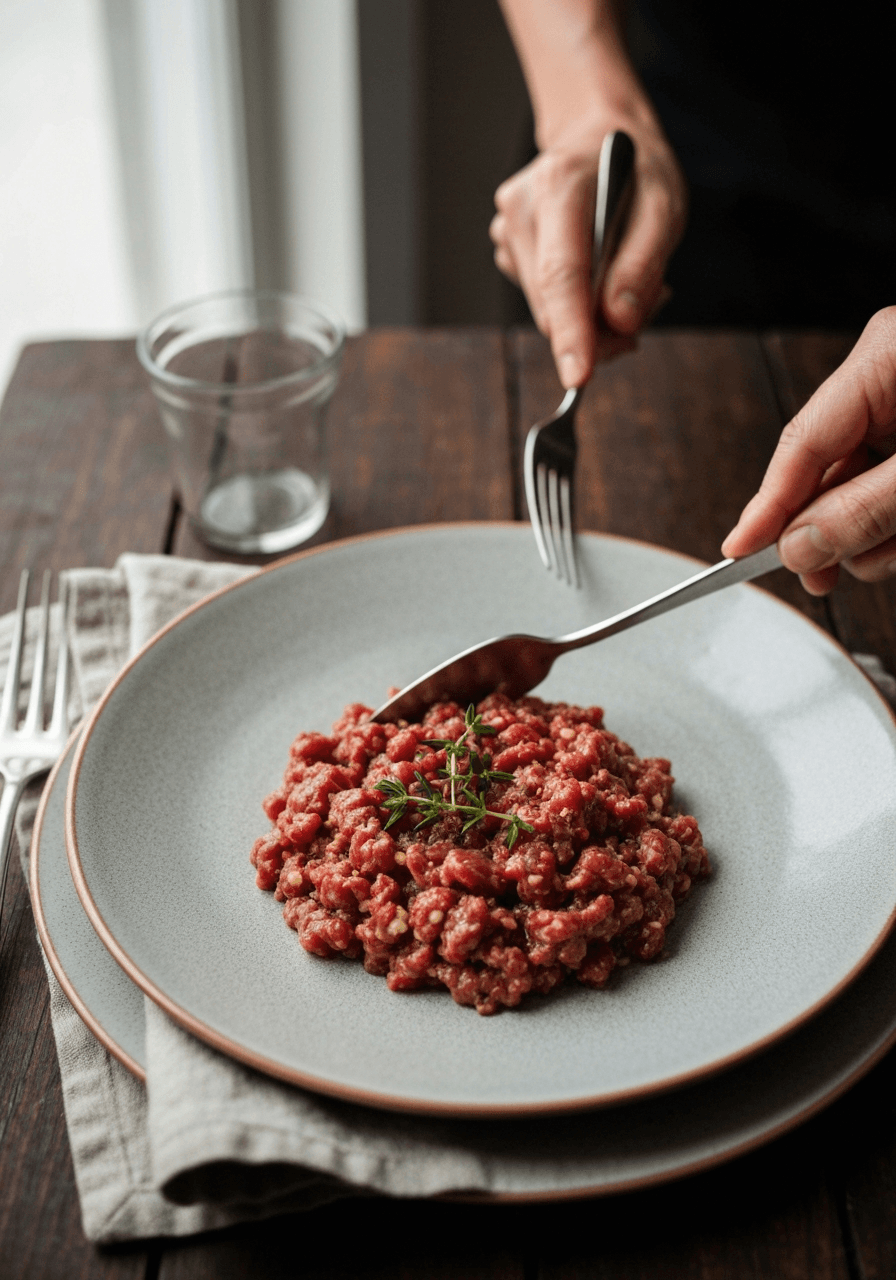
Steak Tartare — Raw Perfection
Indulge in the exquisite simplicity of steak tartare, where hand-cut beef meets vibrant seasonings for a symphony of flavor and texture.
Experience the pure, unadulterated flavor of steak tartare. Hand-cut, seasoned to perfection, and served with classic accompaniments.
Achieve a perfect texture by hand-cutting the beef into small, uniform dice, avoiding any mushiness.
The fit, timing, and key move are all here. If it is a yes, go straight into cook mode.
Indulge in the exquisite simplicity of steak tartare, where hand-cut beef meets vibrant seasonings for a symphony of flavor and texture.
Set your units, then drop the ingredients into grocery if this is happening later.
What matters before the pan gets hot
The shortest path to understanding the dish, the key move, and whether tonight is the right time to cook it.
The Hook
**Hand-cutting the beef is non-negotiable; it's the only way to achieve the perfect texture and prevent the tartare from becoming mushy.**
The Technique
The freshness and quality of the beef are paramount due to the dish being served raw. Proper handling and sourcing from a reputable butcher are essential to minimize any risk of bacterial contamination.
The History
Steak tartare's origins are debated, with some tracing it back to the Tatar people of Central Asia, who were said to tenderize meat by placing it under their saddles. It later evolved in French cuisine.
Food Facts
Sourced notes. Tap to verify.
Fermentation uses microorganisms to transform foods, often improving shelf life, flavor, and texture. It is one of the oldest food-processing techniques.
Experience the pure, unadulterated flavor of steak tartare. Hand-cut, seasoned to perfection, and served with classic accompaniments.
Nutrition per Serving
Estimated valuesSatiety
Data estimatedTechnique, context, and fallback plans
The reason the method works, the prep you can do early, and what to change if the dish starts drifting.
Steak tartare, a dish of raw ground or minced beef, has a history as rich and complex as its flavor profile. Originating in the nomadic cultures of Central Asia, it evolved into a culinary delicacy enjoyed in the finest restaurants worldwide. The key to exceptional tartare lies in the quality of the beef and the precision of the preparation. Each element, from the hand-cut texture to the vibrant seasonings, contributes to a symphony of flavors and sensations.
Preparing steak tartare is an act of culinary alchemy, transforming humble ingredients into a dish of sublime elegance. The raw beef, carefully selected and meticulously prepared, becomes a canvas for a tapestry of flavors. Capers, shallots, and parsley provide a bright, briny counterpoint to the richness of the beef, while a touch of Dijon mustard and Worcestershire sauce adds depth and complexity. The addition of a raw egg yolk lends a luxurious, velvety texture that coats the palate.
This recipe celebrates the essence of steak tartare, emphasizing the importance of hand-cutting the beef to achieve the perfect texture. Unlike ground beef, which can be dense and pasty, hand-cut beef retains its natural tenderness and allows the flavors to meld harmoniously. The result is a dish that is both decadent and refreshing, a testament to the transformative power of simple ingredients and skillful preparation.
Serve immediately and enjoy this classic French delicacy. It's a celebration of pure, unadulterated flavor, a dish that invites you to savor the moment and appreciate the artistry of culinary craftsmanship.
Tartare is too mushy.
Ensure the beef is very cold before dicing and that you are using a sharp knife.
Tartare is too bland.
Adjust the seasoning with more salt, pepper, or a dash of hot sauce.
Use this in Focus
Turn this nutrition profile into a week you can plan, shop, and actually cook.
Set up, cook, and remember what worked
The mise, the method, your notes, and the next recipes to master after this one lands.
The Setup
- Sharp Knife
- Mixing BowlMedium
- Cutting Board
The Mise en Place
5 of 11Your prep station before cooking begins
The Protein (0/4)
The Pantry (0/4)
CHILL
Place the beef tenderloin (450 g) in the freezer for 15 minutes to firm up slightly. This will make it easier to dice.
DICE
Remove the beef from the freezer and carefully dice it into small, uniform pieces, about 1/4 inch in size. Remove any sinew or tough pieces.
Small, uniform dice with no large chunks
COMBINE
In a medium bowl, gently combine the diced beef with the capers (2 tbsp), shallots (2 tbsp), parsley, Dijon mustard (2 tsp), Worcestershire sauce (1 tsp), olive oil (1 tbsp), and hot sauce (1 dash) (if using).
SEASON
Season the mixture with salt (2 g) and freshly ground black pepper (1 g) to taste. Be careful not to over-salt.
Balanced flavor, not too salty
PLATE
Time-sensitiveDivide the steak tartare among individual serving plates. Make a small well in the center of each portion and carefully place an egg yolk in the well.
SERVE
Serve immediately with toast points, crackers, or crudités. Encourage guests to mix the egg yolk into the tartare before eating.
Silky texture after mixing in the yolk
Service Log
Log your variables. Iterate like a pro.
Clean slate.
Log your variables after the first run.
Master These Next
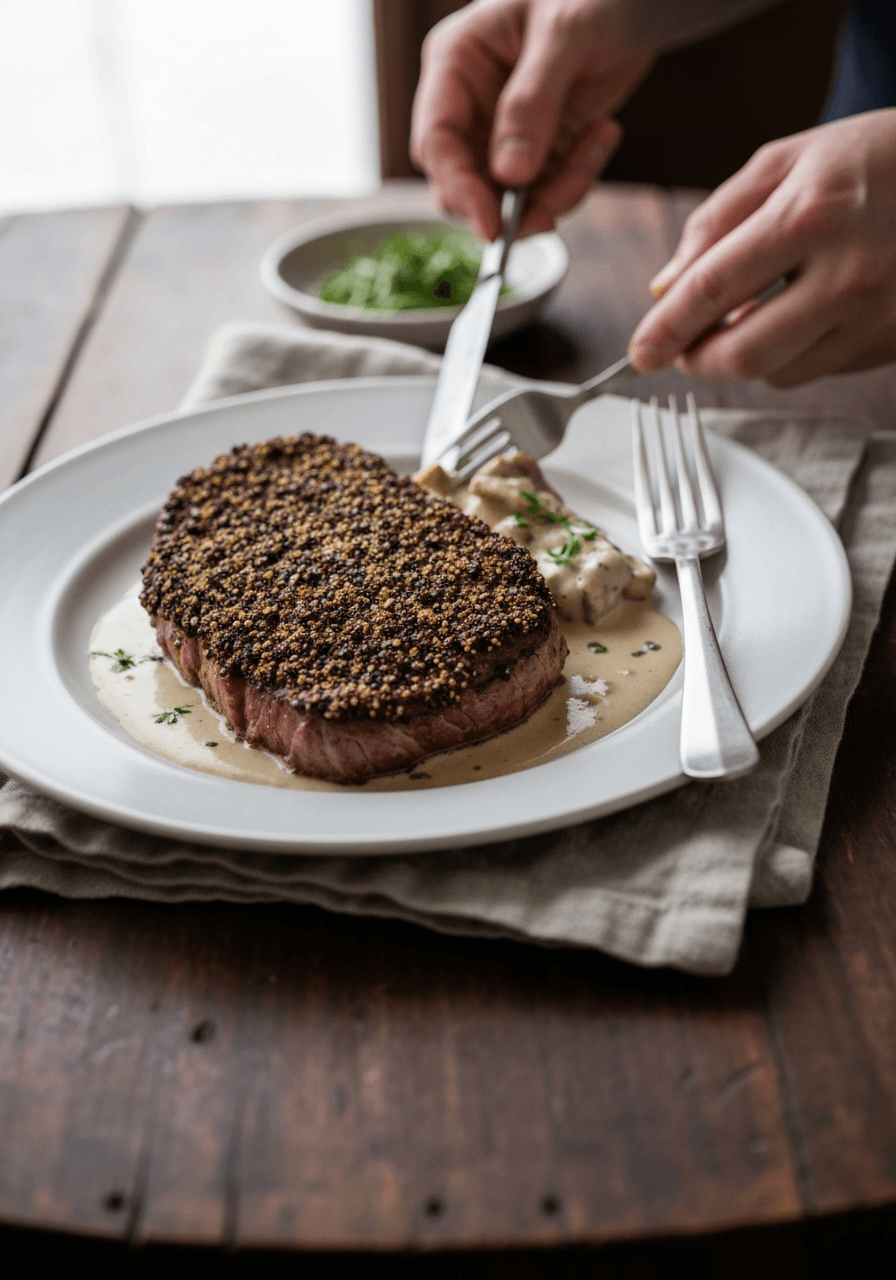
Steak au Poivre — Pepper Crusted
Experience the rich flavors of a French bistro with this classic steak au poivre recipe. Perfectly seared steak, bold pepper crust, and a decadent cream sauce.
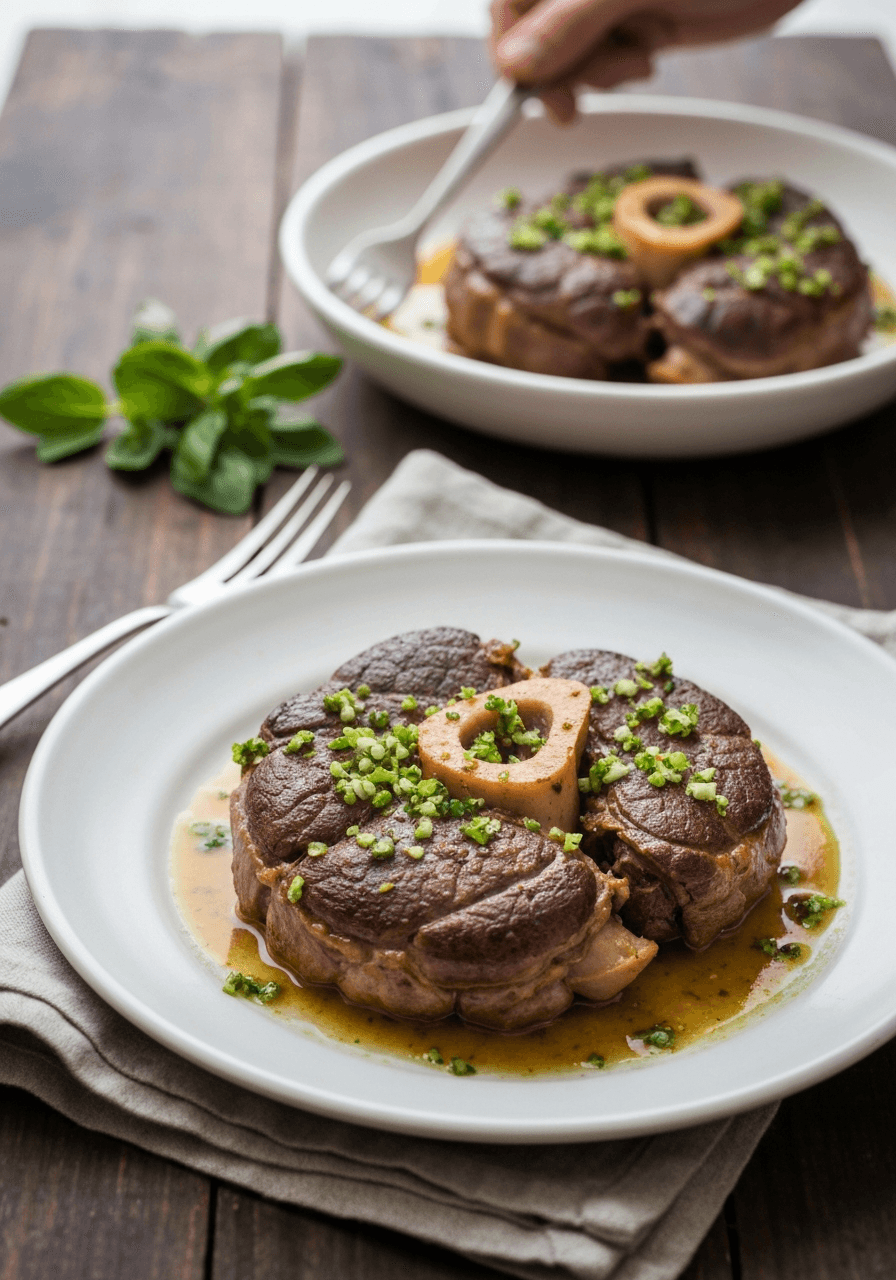
Osso Buco with Gremolata
Indulge in the richness of slow-braised veal shanks, brightened by the zesty flavors of gremolata. A classic Italian dish that's both comforting and impressive.
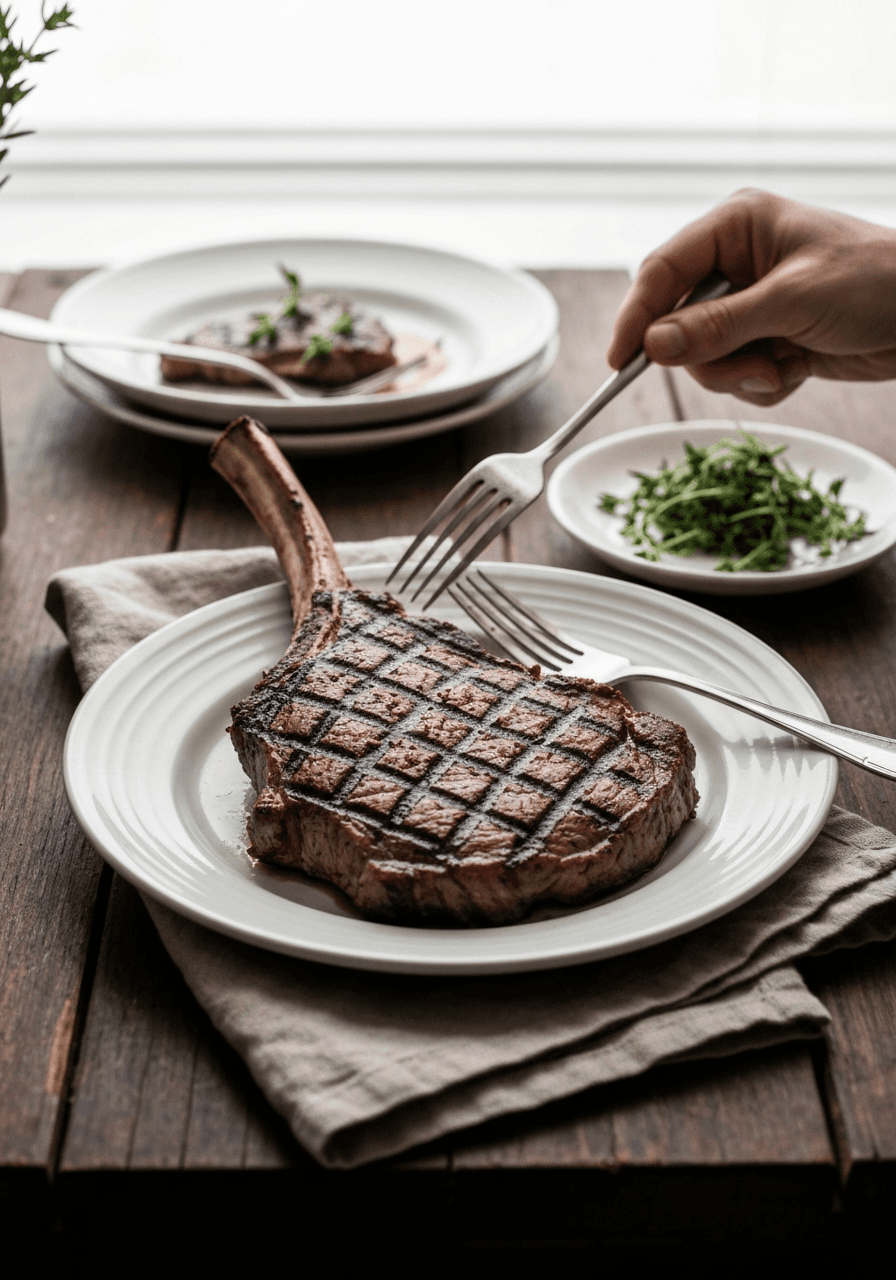
Grilled Ribeye — Reverse Sear
Unlock steakhouse-quality results at home with this reverse-seared grilled ribeye recipe. Achieve a perfectly rosy center and a deep, flavorful crust every time.