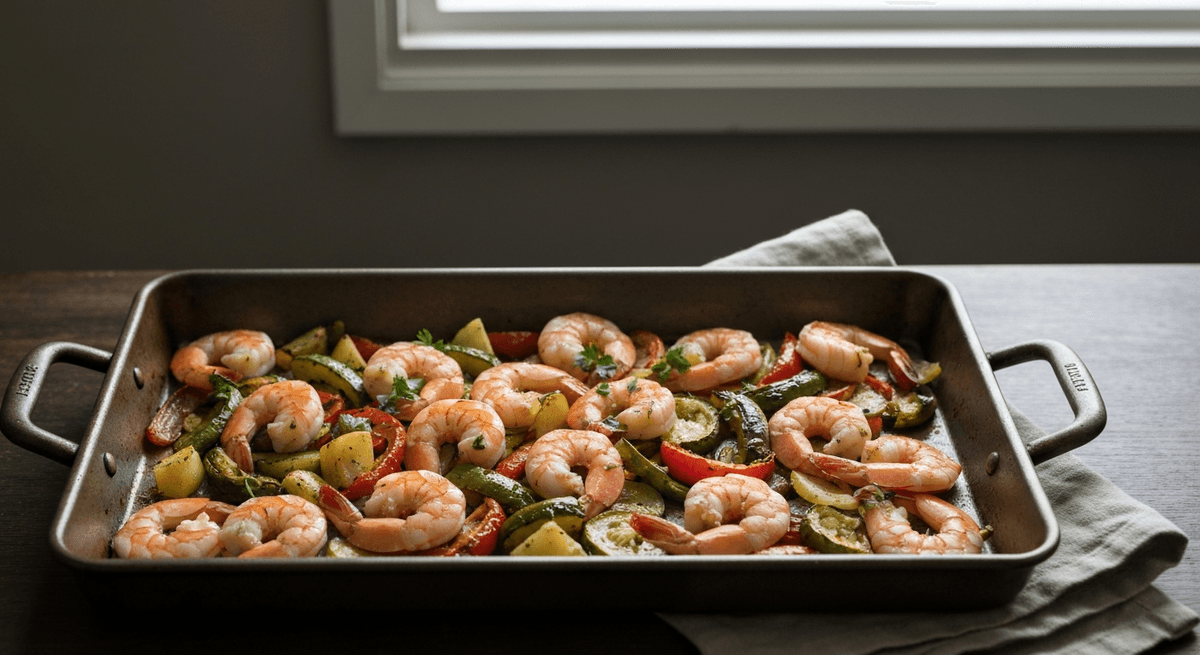
Sheet Pan Shrimp + Vegetables (Fast, Not Rubber)
One pan, real timing: roasted veg and shrimp that stays tender. Fast dinner with clean flavor.
Sheet pan shrimp with roasted vegetables that stay snappy, not rubbery. Roast veg first, then add shrimp for the last minutes.
Roast vegetables first, then add shrimp for the last 6-8 minutes--shrimp is the finisher, not the base.
The fit, timing, and key move are all here. If it is a yes, go straight into cook mode.
One pan, real timing: roasted veg and shrimp that stays tender. Fast dinner with clean flavor.
Timing note: 28 mins
Set your units, then drop the ingredients into grocery if this is happening later.
What matters before the pan gets hot
The shortest path to understanding the dish, the key move, and whether tonight is the right time to cook it.
The Hook
Shrimp on a sheet pan? It's not rocket surgery, it's just not screwing up. Don't overcook the damn shrimp.
The Technique
Shrimp are tiny protein packages that cook in seconds. Throw 'em in too early and you've got rubber. We blast the veg first, then add the shrimp for its brief, glorious moment under heat. It's about timing, not magic. Get it wrong, and you’ve failed the shrimp.
The History
This ain't your Nonna's Sunday gravy. This is what happens when people with jobs and zero patience want decent food without burning down the kitchen. It's a weeknight truce between hunger and laziness, a bastardized Mediterranean mashup for the time-crunched masses.
Food Facts
Sourced notes. Tap to verify.
A sheet-pan dinner leans on a baking sheet as a wide, hot surface so ingredients roast in a single layer. Spacing matters: crowding traps steam, while airflow helps browning.
Sheet pan shrimp with roasted vegetables that stay snappy, not rubbery. Roast veg first, then add shrimp for the last minutes.
Nutrition per Serving
Estimated valuesSatiety
Data estimatedTechnique, context, and fallback plans
The reason the method works, the prep you can do early, and what to change if the dish starts drifting.
The quest for tender, succulent shrimp often ends in disappointment, a rubbery fate born from a misunderstanding of its delicate nature. Unlike heartier proteins, shrimp demands respect for its speed, a swift dance with heat that most recipes fail to acknowledge. This sheet pan method, however, understands the clock. It begins by coaxing sweetness and char from sturdy vegetables like broccoli and bell peppers, allowing them the time to soften and develop those coveted roasted edges.
Then, at the eleventh hour, the shrimp enters the stage. Added for just the final few minutes, it basks in the residual heat, its transformation from translucent to opaque a fleeting moment. This timing ensures the vegetables retain their delightful snap, a vibrant counterpoint to the plump, juicy shrimp. The result is a weeknight miracle: a deeply flavorful, texturally balanced meal born not of complexity, but of a profound understanding of ingredients and the simple elegance of the sheet pan.
My shrimp came out rubbery.
Ah, that usually means they cooked a touch too long. Shrimp cook incredibly fast! Next time, start peeking at them around the 5-6 minute mark after you add them to the pan. Pull th…
My vegetables look a little pale and sad.
That can happen if the pan is too crowded, or if the oven wasn't quite hot enough.
Use this in Focus
Turn this nutrition profile into a week you can plan, shop, and actually cook.
Set up, cook, and remember what worked
The mise, the method, your notes, and the next recipes to master after this one lands.
The Setup
- Sheet Panhalf sheet
- Mixing Bowl
The Mise en Place
5 of 8Your prep station before cooking begins
Chef's Notes
Best fresh. Refrigerate up to 2 days and reheat briefly to avoid overcooking shrimp.
PREHEAT
Heat oven to 425F (220C). Line a sheet pan.
Hot oven gives vegetables browning without dragging shrimp into overcook territory. • Oven fully preheated
ROAST
Time-sensitiveToss broccoli (1¼ lb) and peppers with 1.5 tbsp olive oil (2½ tbsp), half the salt, and pepper. Roast 12 minutes, until Light roasted spots appear.
Vegetables need a head start—shrimp does not. • Light roasted spots appear • Roasted vegetable aroma begins
Vegetables start browning at edges
TOSS
Meanwhile, toss shrimp with remaining olive oil (2½ tbsp), remaining salt, garlic (4 cloves), and a little lemon (1 whole) zest if using.
Keep shrimp dry—wet shrimp roast pale and go rubbery faster. • Garlic clings without puddles • Garlic-lemon aroma jumps
Shrimp evenly coated with no wet pooling
ROAST
Time-sensitiveAdd shrimp to the pan and roast 6-8 minutes until shrimp are opaque and firm with a slight C-shape.
Stop as soon as shrimp turns opaque—extra minutes turn it chewy. • Pink and opaque; vegetables browned • Roasted garlic smell
Shrimp opaque; no translucent centers
FINISH
Squeeze lemon (1 whole) over the pan and toss. Taste and adjust salt.
Acid at the end keeps shrimp tasting clean. • Light sheen without watery pooling • Lemon lifts aroma immediately
Bright finish, not heavy
Service Log
Log your variables. Iterate like a pro.
Clean slate.
Log your variables after the first run.
Related Techniques
Master These Next
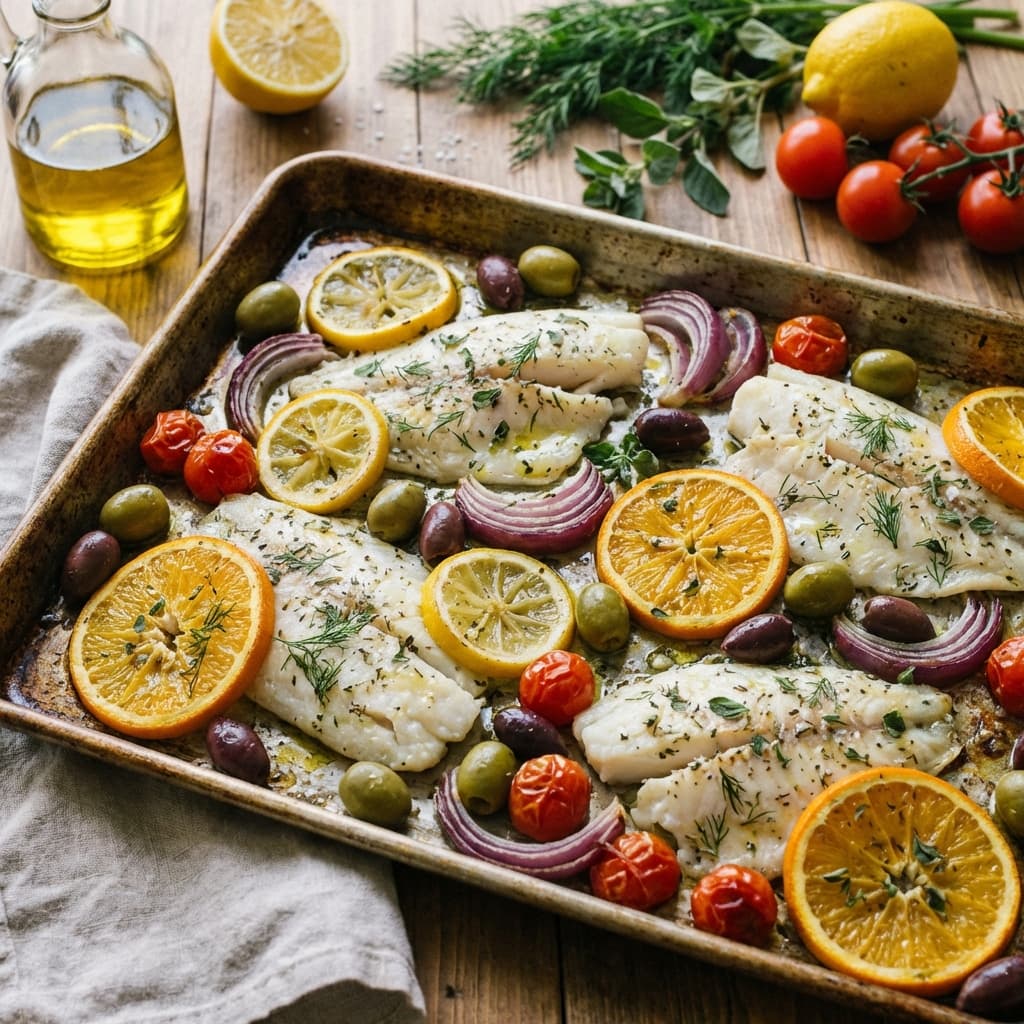
Sheet Pan Tilapia
Fast, clean fish dinner: flaky tilapia, bright citrus, olive oil finish. No dryness.
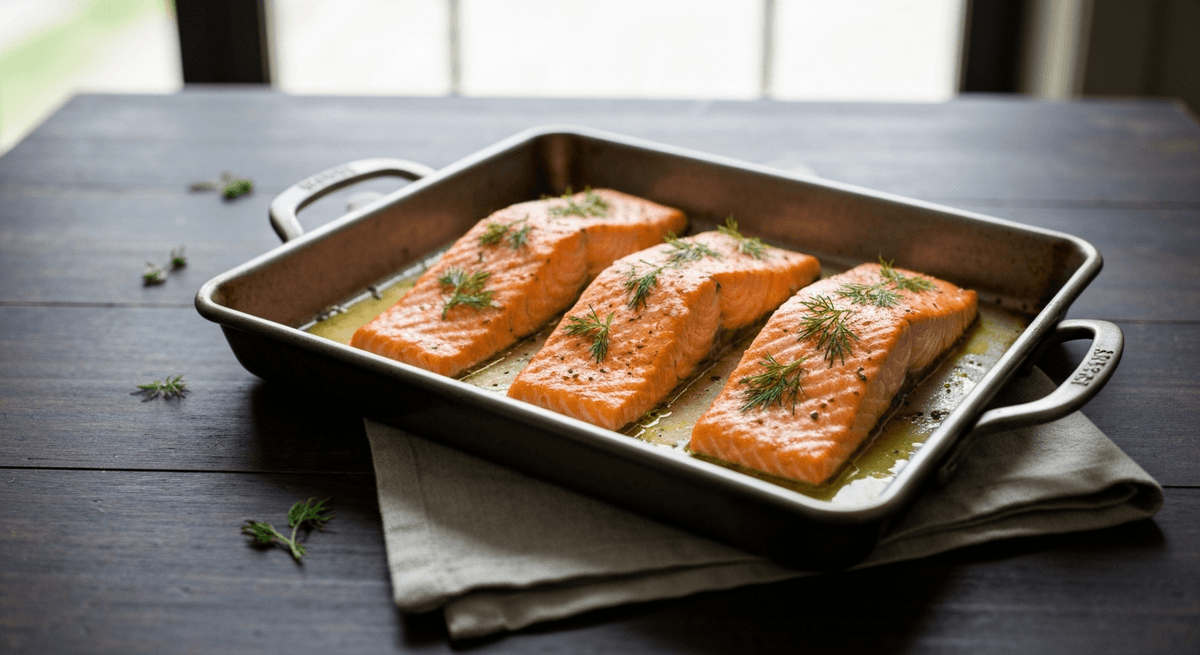
Sheet Pan Salmon
The weeknight salmon that never goes dry: hot roast, early pull, lemon-dill finish.
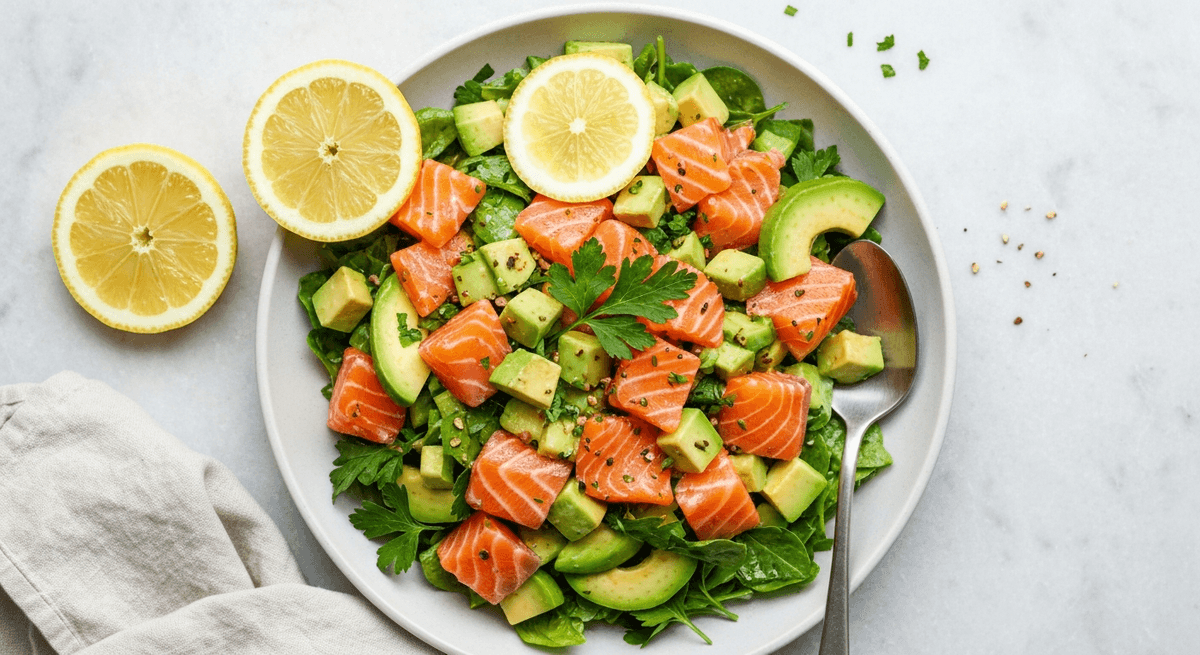
Salmon Avocado Citrus Salad
Fast, high-protein salad with real richness and a bright finish. No mayo, no bland.