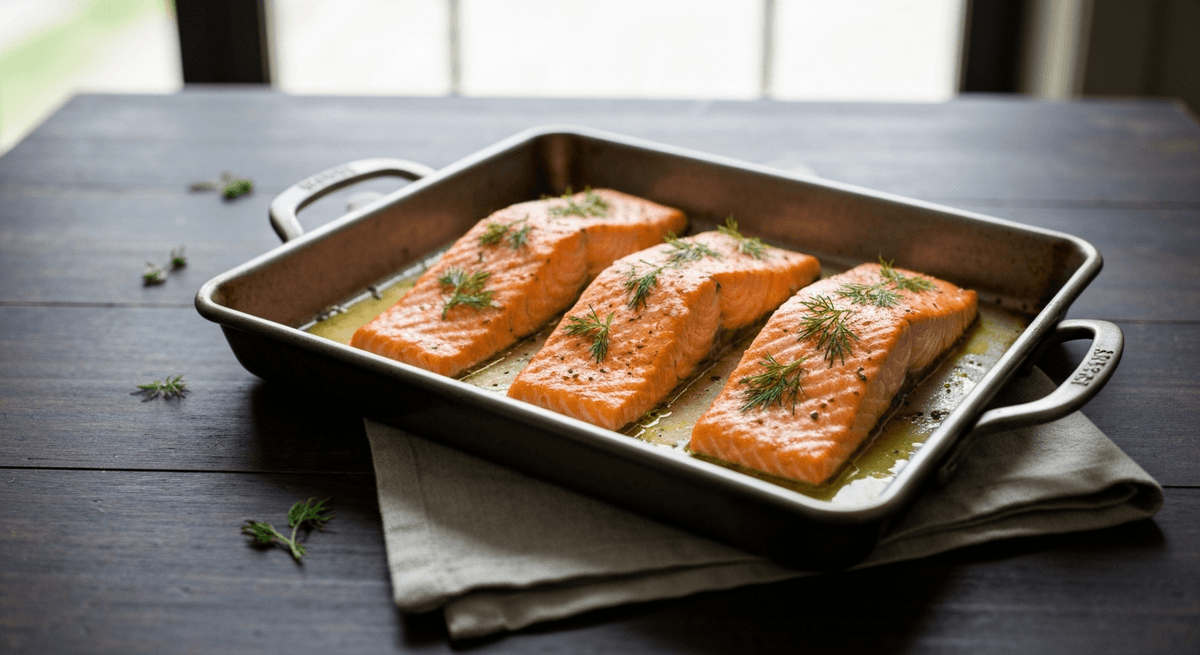
Sheet Pan Salmon (Lemon Dill, Moist Not Dry)
The weeknight salmon that never goes dry: hot roast, early pull, lemon-dill finish.
Sheet pan salmon that stays moist: dry surface, hot oven, and a strict pull temp. Finished with lemon and dill for clean flavor.
Dry the surface and pull salmon at 120-125F; carryover takes it to perfect without dryness.
The fit, timing, and key move are all here. If it is a yes, go straight into cook mode.
The weeknight salmon that never goes dry: hot roast, early pull, lemon-dill finish.
Timing note: 20 mins
Set your units, then drop the ingredients into grocery if this is happening later.
What matters before the pan gets hot
The shortest path to understanding the dish, the key move, and whether tonight is the right time to cook it.
The Hook
Stop cooking salmon until it's 'done.' Pull at 120F and let carryover do the damn work. Dry fish is for amateurs.
The Technique
Surface moisture steams the fish. Dry it. Then, proteins seize and expel water as they heat. Pulling at 120-125F leverages carryover cooking, finishing the process without squeezing out all the damn juice.
The History
This isn't rocket science; it's just not screwing up. The Mediterranean coast has been roasting fish simply for millennia. We're just not burning it to a crisp like your Aunt Mildred.
Food Facts
Sourced notes. Tap to verify.
A sheet-pan dinner leans on a baking sheet as a wide, hot surface so ingredients roast in a single layer. Spacing matters: crowding traps steam, while airflow helps browning.
Sheet pan salmon that stays moist: dry surface, hot oven, and a strict pull temp. Finished with lemon and dill for clean flavor.
Nutrition per Serving
Estimated valuesSatiety
Data estimatedTechnique, context, and fallback plans
The reason the method works, the prep you can do early, and what to change if the dish starts drifting.
The specter of dry, chalky salmon haunts too many weeknight dinners, a culinary ghost born not of the fish itself, but of a simple misunderstanding of timing. We’ve all been there, poking at the fillet until it flakes with a dramatic, yet ultimately disappointing, dryness. The true culprit is often overcooking, pushing the fish past its prime while waiting for that overt sign of doneness.
This method champions a different philosophy: the art of the early pull. By understanding that residual heat will continue to cook the salmon, we can achieve a glossy, tender interior. A fiercely hot oven provides the necessary char and depth of flavor on the edges, a beautiful contrast to the moist, yielding flesh. Finished with the bright, clean notes of lemon and dill, this salmon doesn't just taste good; it tastes alive, vibrant, and utterly satisfying. It's a testament to the power of precision, transforming a potentially disappointing ingredient into a weeknight triumph.
My salmon is dry and overcooked.
Ah, it looks like it went a little past perfect. That usually means it cooked past 130F. For next time, let's pull it out when it hits 120-125F. The residual heat will finish it be…
My salmon looks pale and has a lot of water on it.
This happens when the surface has too much moisture, or the oven wasn't quite hot enough.
Use this in Focus
Turn this nutrition profile into a week you can plan, shop, and actually cook.
Set up, cook, and remember what worked
The mise, the method, your notes, and the next recipes to master after this one lands.
The Setup
- Sheet Panhalf sheet
- Instant-Read Thermometer
The Mise en Place
5 of 6Your prep station before cooking begins
Chef's Notes
Refrigerate up to 3 days. Reheat gently or flake cold into salads.
PREHEAT
Heat oven to 425F (220C). Line a sheet pan.
Hot oven heat browns the surface fast so the center doesn't overcook. • Oven fully preheated
DRY
Pat salmon very dry. Rub with olive oil (1½ tbsp), then season with salt and pepper.
Dry surface prevents steaming and improves browning. • No visible moisture on the fish • Clean salmon aroma
Surface looks matte before oil, then lightly glossy after
ARRANGE
Place salmon on the pan. Add lemon (1 whole) slices around and on top.
Spacing helps airflow so the surface roasts instead of steaming. • Lemon slices not piled; salmon not touching • Fresh citrus smell
Fillets spaced with a little room around each
ROAST
Time-sensitiveRoast 10-13 minutes, until the thickest part hits 120-125F (49-52C) and the center is still glossy.
Carryover heat finishes the fish. Waiting for full flake is how it goes dry. • Edges opaque; center slightly translucent and glossy • Rich salmon aroma without burnt notes
120-125F in the thickest part; center glossy
FINISH
Rest 3 minutes. Squeeze lemon (1 whole) juice over salmon and sprinkle dill (¼ cups). Taste and adjust salt.
Herbs and acid go on after cooking so they stay fresh. • Juices stay in the fish; surface looks lightly glossy • Dill and lemon lift the aroma
Moist texture with bright finish
Service Log
Log your variables. Iterate like a pro.
Clean slate.
Log your variables after the first run.
Related Techniques
Master These Next
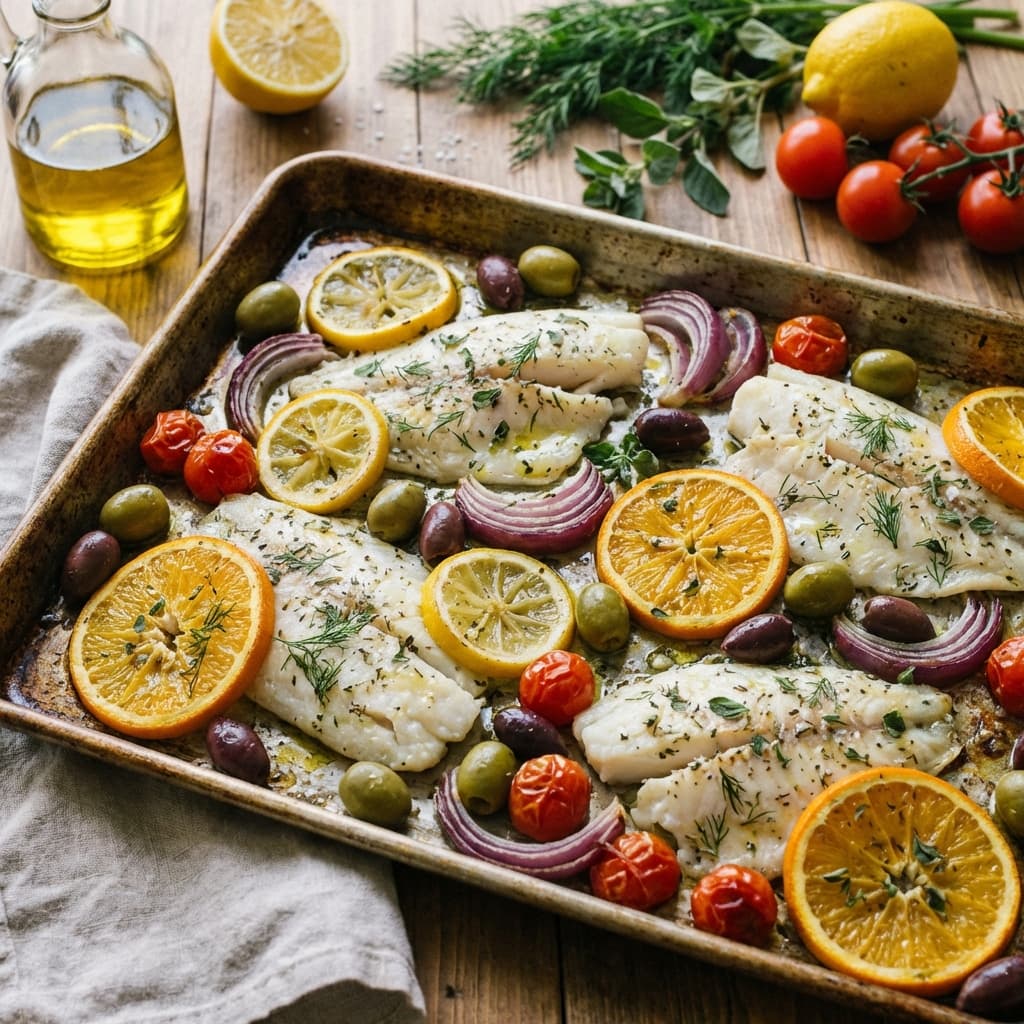
Sheet Pan Tilapia
Fast, clean fish dinner: flaky tilapia, bright citrus, olive oil finish. No dryness.
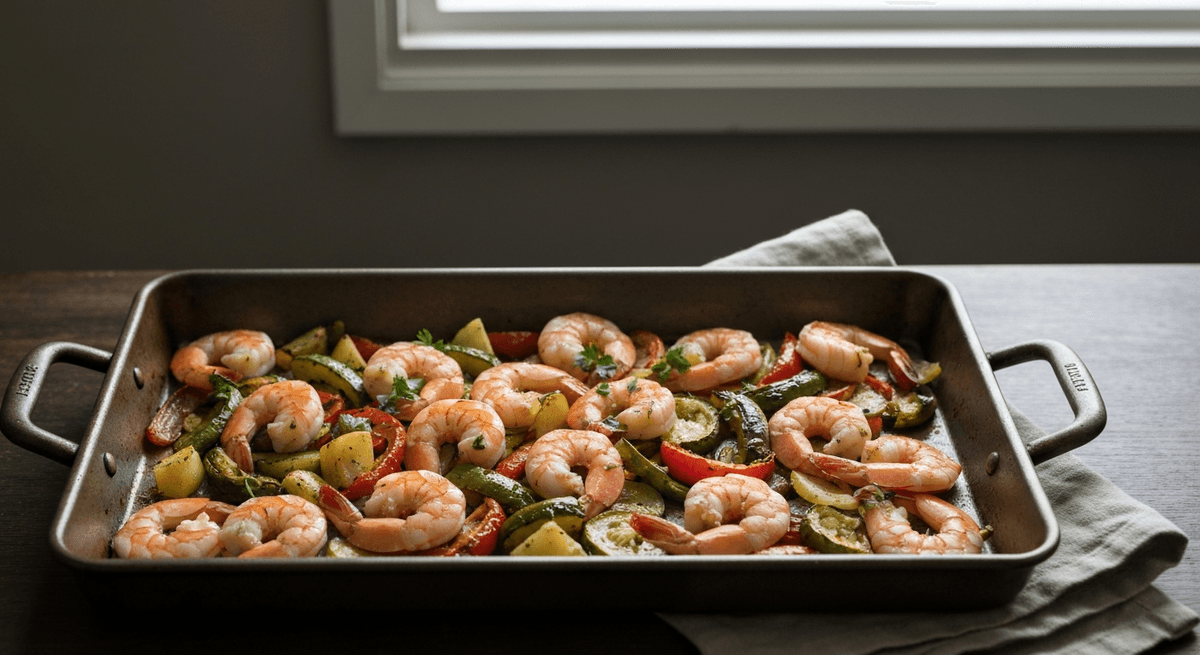
Sheet Pan Shrimp + Vegetables
One pan, real timing: roasted veg and shrimp that stays tender. Fast dinner with clean flavor.
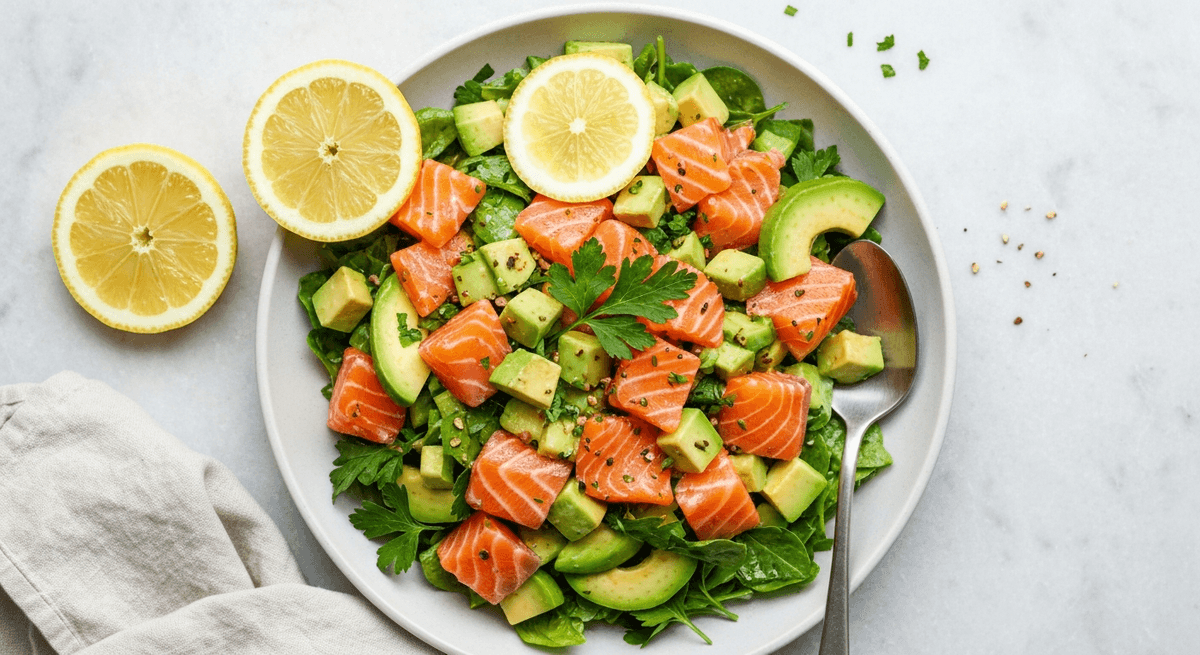
Salmon Avocado Citrus Salad
Fast, high-protein salad with real richness and a bright finish. No mayo, no bland.