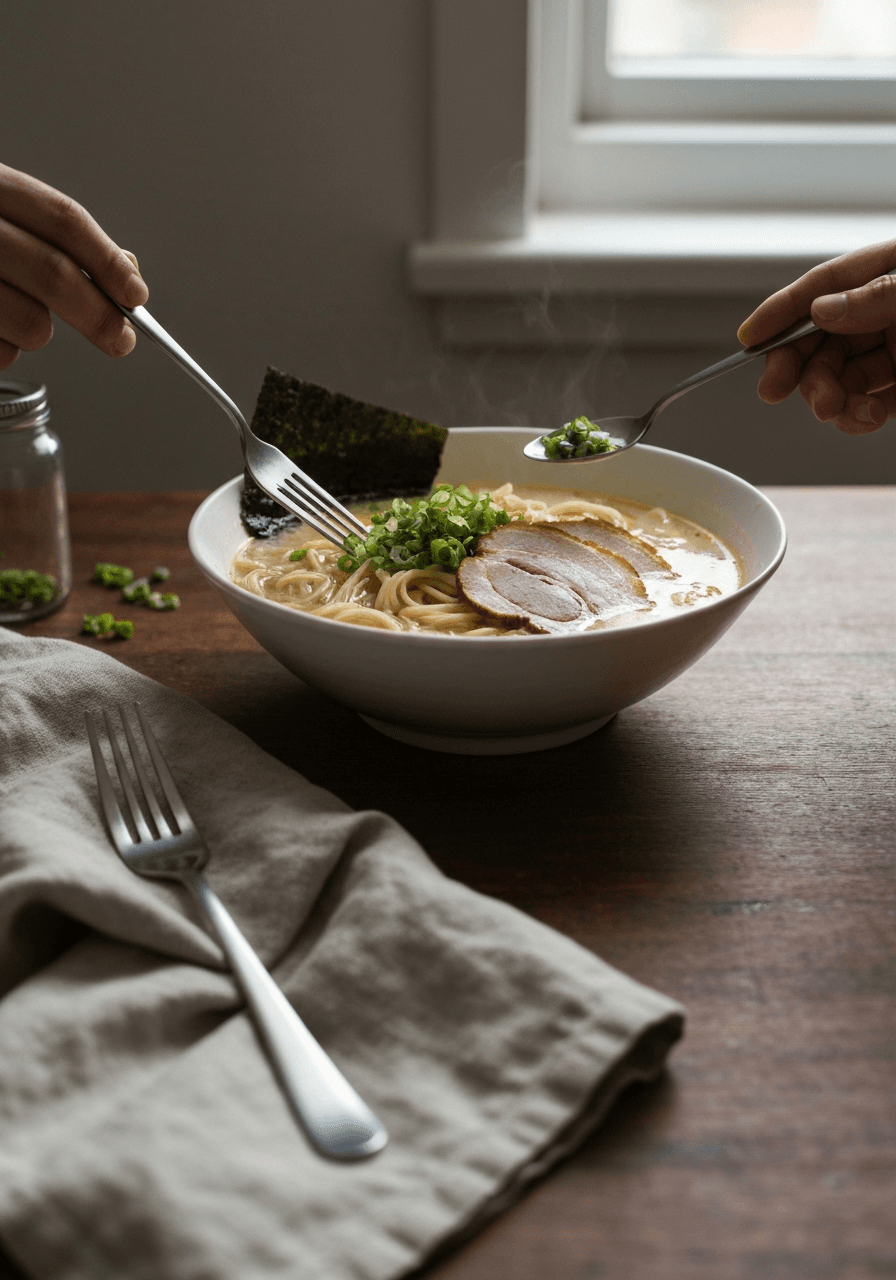
Ramen - Tonkotsu Style
Immerse yourself in the art of Tonkotsu Ramen: a rich, creamy broth and perfectly layered flavors, a true labor of love.
Authentic Tonkotsu Ramen: rich, creamy pork bone broth, tender pork belly, and perfectly cooked noodles. A labor of love, rewarded in every slurp.
Achieving the milky, emulsified broth requires a high bone-to-water ratio and a vigorous, sustained simmer.
The fit, timing, and key move are all here. If it is a yes, go straight into cook mode.
Immerse yourself in the art of Tonkotsu Ramen: a rich, creamy broth and perfectly layered flavors, a true labor of love.
Set your units, then drop the ingredients into grocery if this is happening later.
What matters before the pan gets hot
The shortest path to understanding the dish, the key move, and whether tonight is the right time to cook it.
The Hook
**The key to great tonkotsu is time and patience; don't rush the broth.**
The Technique
The milky appearance of tonkotsu broth comes from the emulsification of fats and collagen extracted from the pork bones during long simmering. This process creates a rich, creamy texture and deep flavor.
The History
Tonkotsu ramen originated in Fukuoka, Japan, known for its rich pork bone broth simmered for extended periods. It gained popularity throughout Japan and worldwide, becoming a staple of ramen culture.
Food Facts
Sourced notes. Tap to verify.
An emulsion is a stable mixture of two liquids that normally do not mix, like oil and water. Many dressings and sauces rely on emulsifiers and whisking to hold that texture.
Authentic Tonkotsu Ramen: rich, creamy pork bone broth, tender pork belly, and perfectly cooked noodles. A labor of love, rewarded in every slurp.
Nutrition per Serving
Estimated valuesSatiety
Data estimatedTechnique, context, and fallback plans
The reason the method works, the prep you can do early, and what to change if the dish starts drifting.
Tonkotsu ramen is more than just a dish; it's an experience, a journey into the heart of Japanese culinary artistry. The soul of tonkotsu lies in its broth, a milky elixir coaxed from pork bones simmered for hours, sometimes even days. It's a testament to patience, a dance between heat and time, transforming humble ingredients into a symphony of flavor.
Imagine the first spoonful – the velvety texture coating your tongue, the deep umami resonating through your senses. It's a comforting embrace, a warm hug on a cold day. The richness is balanced by the subtle sweetness of the pork, the salty tang of the tare, and the vibrant freshness of the toppings.
But tonkotsu is also about the art of layering. Each element – the perfectly cooked noodles, the melt-in-your-mouth chashu pork belly, the delicate marinated egg – plays a crucial role in the overall harmony. It's a culinary tapestry woven with intention and care.
This recipe is an invitation to embark on your own tonkotsu adventure. It requires dedication, but the reward is a bowl of ramen that will transport you to the bustling streets of Fukuoka, the birthplace of this beloved dish.
Broth is not milky white.
Ensure a high bone-to-water ratio and a vigorous simmer. Increase simmering time.
Broth tastes bland.
Adjust the amount of tare (soy sauce mixture) to taste. Ensure high-quality ingredients.
Use this in Focus
Turn this nutrition profile into a week you can plan, shop, and actually cook.
Set up, cook, and remember what worked
The mise, the method, your notes, and the next recipes to master after this one lands.
The Setup
- Stockpot8-quart
- Fine-mesh Sieve
- Cheesecloth
- SaucepanMedium
The Mise en Place
5 of 18Your prep station before cooking begins
Tare (Seasoning) (0/3)
Broth (0/4)
PREPARE
Prep aheadRinse the pork bones (8 lb) thoroughly under cold water (5 qt) to remove any impurities.
BLANCH
Prep aheadPlace the pork bones (8 lb) in a large pot, cover with cold water (5 qt), and bring to a boil. Boil for 10 minutes to remove impurities. Drain and rinse the bones again.
Foam and scum rising to the surface
TRANSFER
Prep aheadTransfer the blanched pork bones (8 lb) to a clean, large stockpot. Add 5 quarts of fresh, cold water (5 qt).
ADD
Prep aheadAdd sliced ginger (2 inches) and crushed garlic (6 cloves) to the pot.
BRING
Time-sensitivePrep aheadBring the pot to a rolling boil, then reduce the heat to a vigorous simmer. Simmer uncovered for at least 18 hours, or up to 24 hours.
Add more water if the liquid level drops significantly during simmering. • Broth should be milky white and opaque • Rich, porky aroma filling the kitchen
Scorch risk: Reductions can go from perfect to burnt fast. Keep an eye on the bottom and stir if needed.
SKIM
Prep aheadSkim off any scum or impurities that rise to the surface during the first few hours of simmering.
STRAIN
Prep aheadAfter simmering, strain the broth through a fine-mesh sieve lined with cheesecloth. Discard the solids.
COOL
Prep aheadCool the broth quickly in an ice bath. This helps to preserve the flavor and prevent spoilage. Once cooled, refrigerate until ready to use.
COMBINE
Prep aheadIn a small saucepan, combine soy sauce (½ cups)soy sauce (½ cups)soy sauce (¼ cups), mirin (¼ cups)mirin (¼ cups)mirin (¼ cups), and sake (¼ cups)sake (¼ cups) for the tare. Bring to a simmer over medium heat and cook for 2-3 minutes. Remove from heat and set aside.
PREPARE
Prep aheadPrepare the chashu pork belly (1000 g). Place the pork belly in a pot and cover with water (5 qt). Bring to a boil, then reduce heat and simmer for 1 hour, or until tender.
Scorch risk: Reductions can go from perfect to burnt fast. Keep an eye on the bottom and stir if needed.
COMBINE
Prep aheadIn a separate saucepan, combine soy sauce (½ cups)soy sauce (½ cups)soy sauce (¼ cups), mirin (¼ cups)mirin (¼ cups)mirin (¼ cups), sake (¼ cups)sake (¼ cups), and sugar (2 tbsp) for the chashu marinade. Bring to a simmer.
TRANSFER
Prep aheadTransfer the cooked pork belly (1000 g) to the marinade. Let it cool and marinate in the refrigerator for at least 4 hours, or preferably overnight.
SLICE
Prep aheadSlice the marinated pork belly (1000 g) into thin slices.
PREPARE
Prep aheadPrepare the ajitsuke tamago (marinated eggs (6 large)). Gently boil eggs for 6 minutes for a runny yolk. Immediately transfer to an ice bath to stop cooking.
PEEL
Prep aheadPeel the eggs (6 large) carefully and marinate in a mixture of soy sauce (½ cups)soy sauce (½ cups)soy sauce (¼ cups) and mirin (¼ cups)mirin (¼ cups)mirin (¼ cups) for at least 2 hours, or overnight.
HALVE
Prep aheadHalve the marinated eggs (6 large) lengthwise.
COOK
Time-sensitiveCook the ramen noodles (8 servings) according to package directions.
ASSEMBLE
To assemble the ramen, add the tare to each bowl. Then, add the hot tonkotsu broth. Add the cooked noodles, followed by slices of chashu pork belly (1000 g) and half of a marinated egg. Garnish with sliced green onions (4 stalks) and sesame seeds (2 tbsp).
A beautiful bowl of ramen with all the components artfully arranged
SERVE
Serve immediately and enjoy!
Service Log
Log your variables. Iterate like a pro.
Clean slate.
Log your variables after the first run.
Master These Next
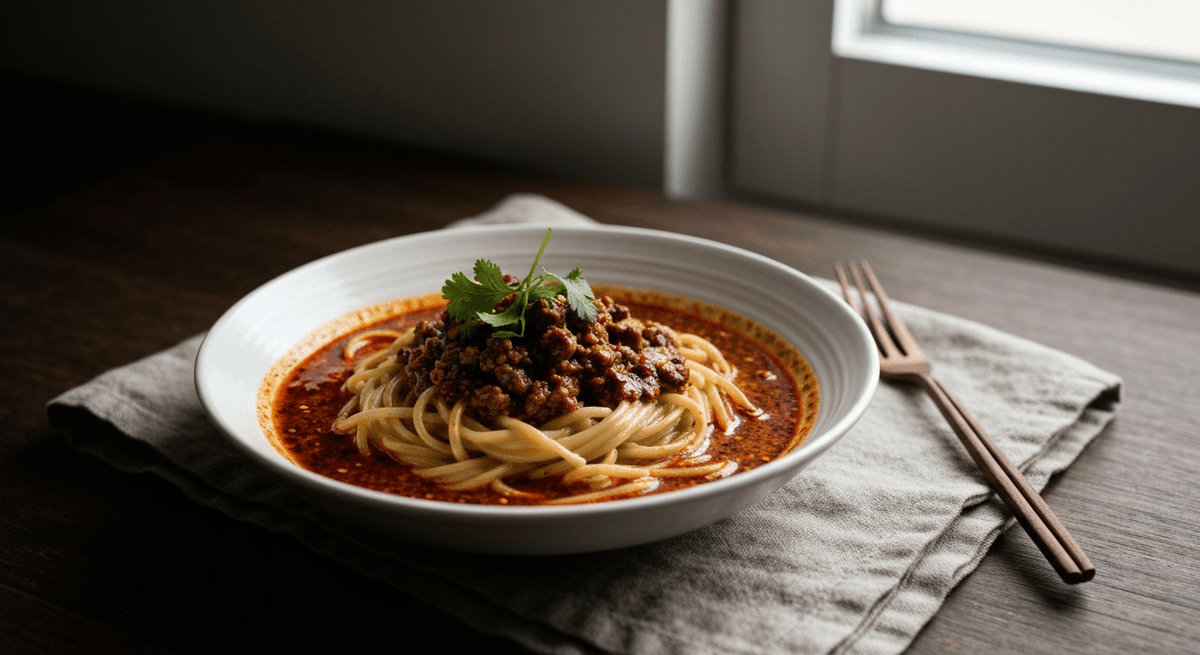
Dan Dan Noodles — Spicy Sesame
Fiery Sichuan street food, now in your kitchen. Experience the creamy, spicy, savory symphony of authentic Dan Dan Noodles.
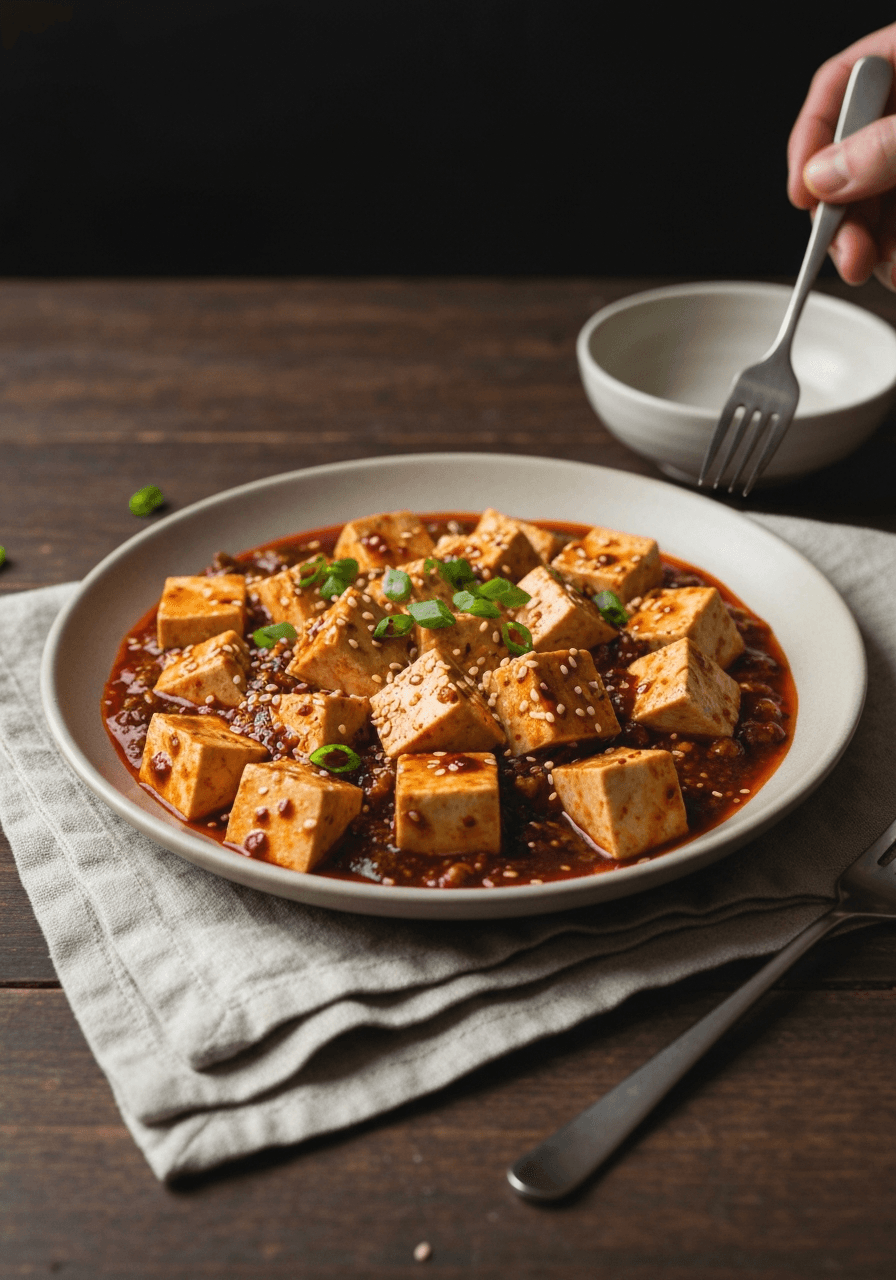
Mapo Tofu
Soft tofu in a raging red river. It’s not spicy; it’s electric.
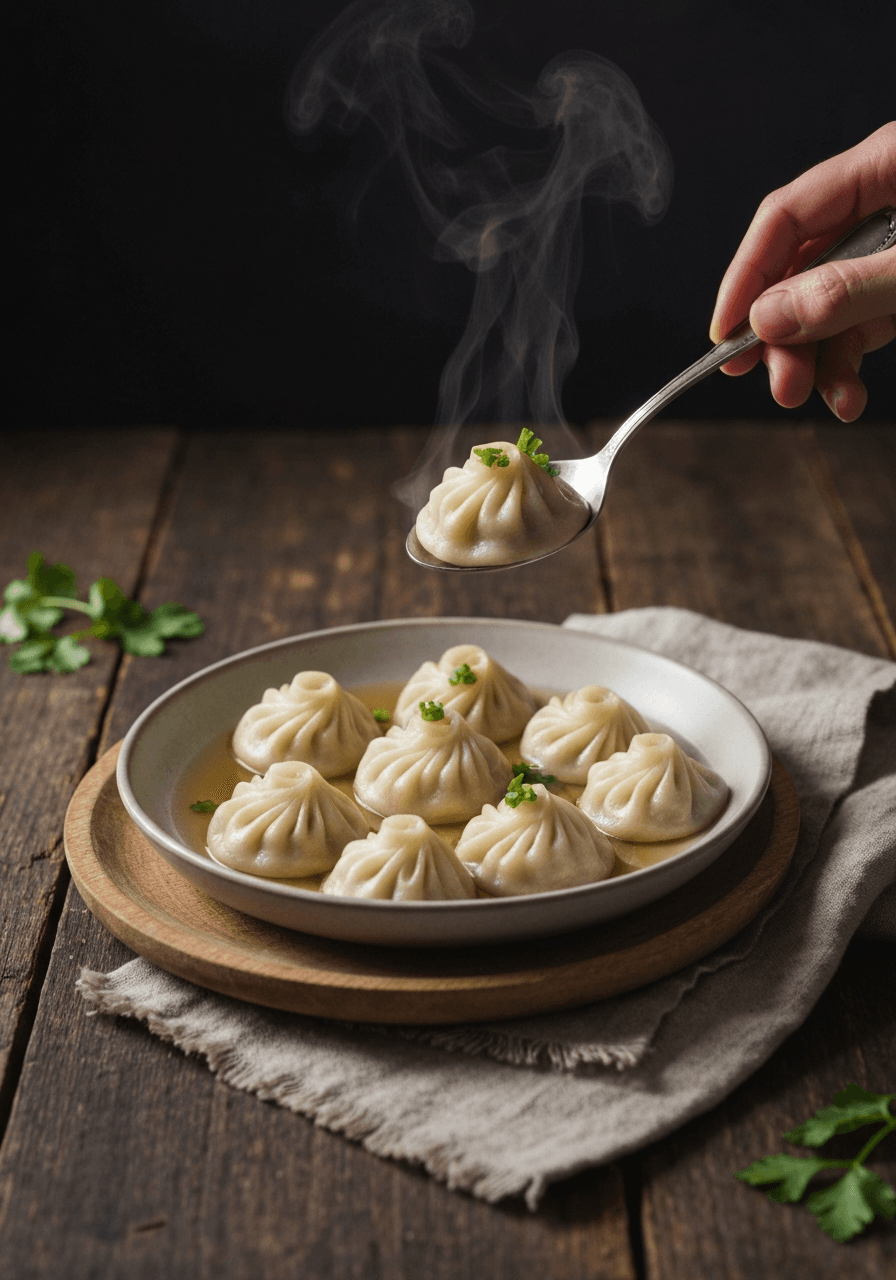
Xiaolongbao — Soup Dumplings
Experience the exquisite burst of flavor with homemade Xiaolongbao – delicate soup dumplings that are a true Shanghai specialty.