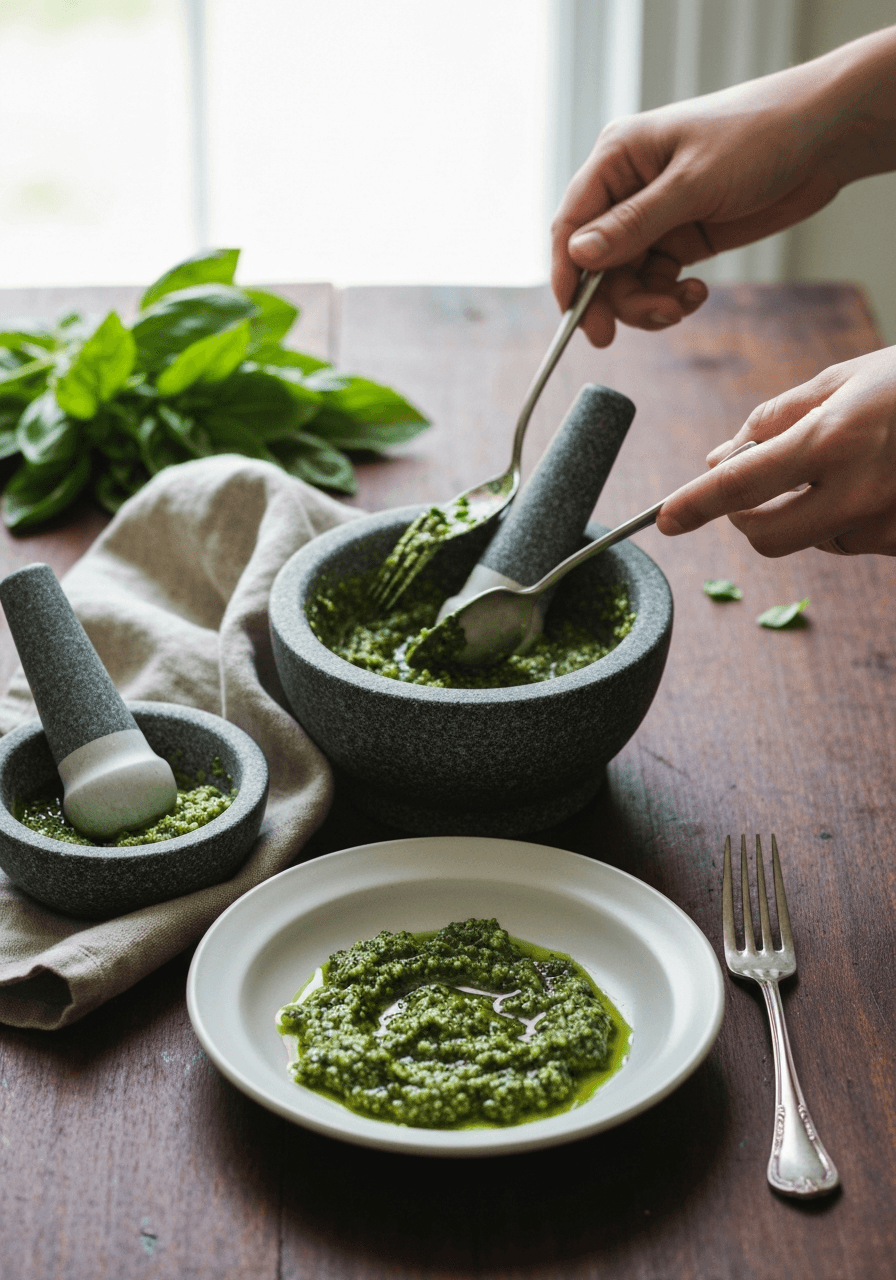
Pesto Genovese
Capture the essence of summer with this vibrant, homemade Pesto Genovese. The mortar and pestle unlocks a texture and flavor you won't believe.
Classic Pesto Genovese recipe using fresh basil, pine nuts, garlic, Parmesan, Pecorino, olive oil, and a mortar and pestle for the best texture.
Grind the ingredients with a mortar and pestle to achieve the perfect coarse yet creamy texture.
The fit, timing, and key move are all here. If it is a yes, go straight into cook mode.
Capture the essence of summer with this vibrant, homemade Pesto Genovese. The mortar and pestle unlocks a texture and flavor you won't believe.
Set your units, then drop the ingredients into grocery if this is happening later.
What matters before the pan gets hot
The shortest path to understanding the dish, the key move, and whether tonight is the right time to cook it.
The Hook
**The mortar and pestle is non-negotiable for authentic texture.**
The Technique
Grinding basil with a mortar and pestle prevents the bruising and oxidation that occurs with a food processor, preserving the bright green color and fresh flavor. The rough texture also holds sauce better.
The History
Pesto Genovese originates from Genoa, the capital city of Liguria, Italy. Its roots can be traced back to ancient Roman times, with variations evolving over centuries using local ingredients.
Food Facts
Sourced notes. Tap to verify.
Fermentation uses microorganisms to transform foods, often improving shelf life, flavor, and texture. It is one of the oldest food-processing techniques.
Classic Pesto Genovese recipe using fresh basil, pine nuts, garlic, Parmesan, Pecorino, olive oil, and a mortar and pestle for the best texture.
Nutrition per Serving
Estimated valuesSatiety
Data estimatedTechnique, context, and fallback plans
The reason the method works, the prep you can do early, and what to change if the dish starts drifting.
Pesto is more than just a sauce; it's a vibrant expression of summer, bottled in a jar. The fragrance of fresh basil, the nutty sweetness of pine nuts, the sharp bite of garlic, and the salty tang of Parmesan and Pecorino cheeses all meld together in a symphony of flavors. But the true magic of pesto lies in its texture. Forget the food processor – the mortar and pestle are the key to unlocking pesto's full potential, creating a sauce that's both coarse and creamy, with a depth of flavor that no machine can replicate.
Making pesto is an act of alchemy, transforming simple ingredients into something extraordinary. As you grind the basil leaves against the stone, their essential oils are released, filling the air with their intoxicating aroma. The pine nuts and garlic break down, their flavors intensifying as they combine with the cheeses and olive oil. With each turn of the pestle, the sauce becomes more than just a collection of ingredients; it becomes a living, breathing testament to the power of simple, fresh flavors.
This pesto is not just a sauce; it's a taste of Italy, a reminder of sun-drenched hillsides and the simple pleasures of life. Spread it on crusty bread, toss it with pasta, or dollop it on grilled vegetables – however you choose to enjoy it, this pesto will transport you to a place where the flavors are bold, the aromas are intoxicating, and the memories are sweet.
Each ingredient plays a vital role in the final symphony. The basil provides the fresh, herbaceous base, while the pine nuts offer a subtle sweetness and creamy texture. Garlic adds a pungent kick, while Parmesan and Pecorino cheeses provide a salty, umami depth. And the olive oil binds it all together, creating a smooth, luxurious sauce that coats the palate with flavor.
Pesto is too bitter.
The basil might be bruised. Use fresh, young basil leaves and avoid over-grinding.
Pesto is too thick.
Add more olive oil, a tablespoon at a time, until desired consistency is reached.
Set up, cook, and remember what worked
The mise, the method, your notes, and the next recipes to master after this one lands.
The Setup
- Mortar and Pestle
- Knife
The Mise en Place
5 of 7Your prep station before cooking begins
COMBINE
In a mortar, combine the basil leaves, pine nuts (½ cups), and garlic (2 cloves).
GRIND
Use the pestle to grind the ingredients into a coarse paste.
Ingredients should be broken down but not completely smooth. • The aroma of basil and garlic should be strong.
ADD
Add the Parmesan and Pecorino cheeses to the mortar.
GRIND
Continue to grind until the cheeses are well incorporated.
The mixture should start to become fragrant.
DRIZZLE
Slowly drizzle in the olive oil while continuing to grind, until a smooth, emulsified sauce forms.
The sauce should be thick and glossy.
SEASON
Season with salt (½ tsp) to taste. Mix well.
Taste and adjust seasoning as needed.
SERVE
Serve immediately or store in an airtight container in the refrigerator.
Service Log
Log your variables. Iterate like a pro.
Clean slate.
Log your variables after the first run.
Master These Next
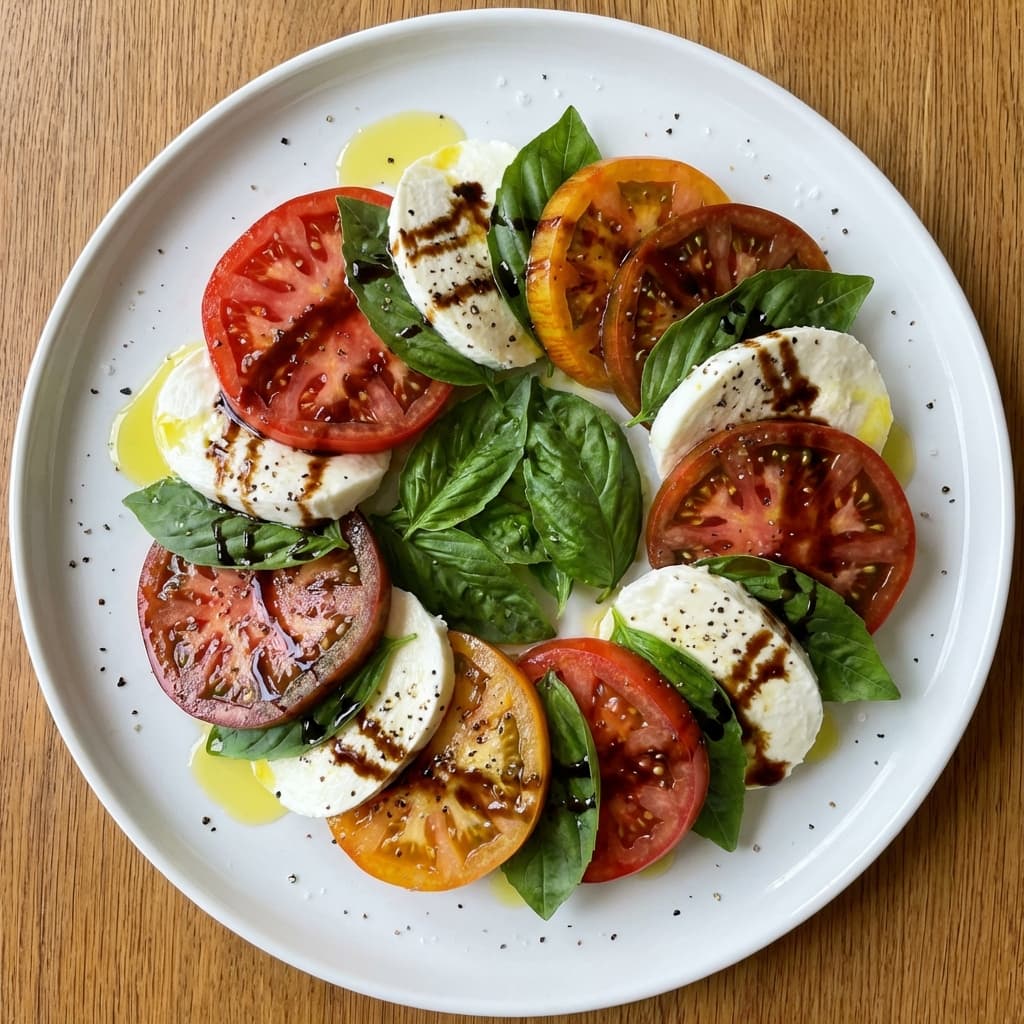
Caprese Salad
The edible Italian flag; no cooking required.

Cheese Straws — Sharp Cheddar
Crisp, cheesy, and utterly addictive, these sharp cheddar cheese straws are a taste of Southern comfort. The secret is cold butter for flaky layers.
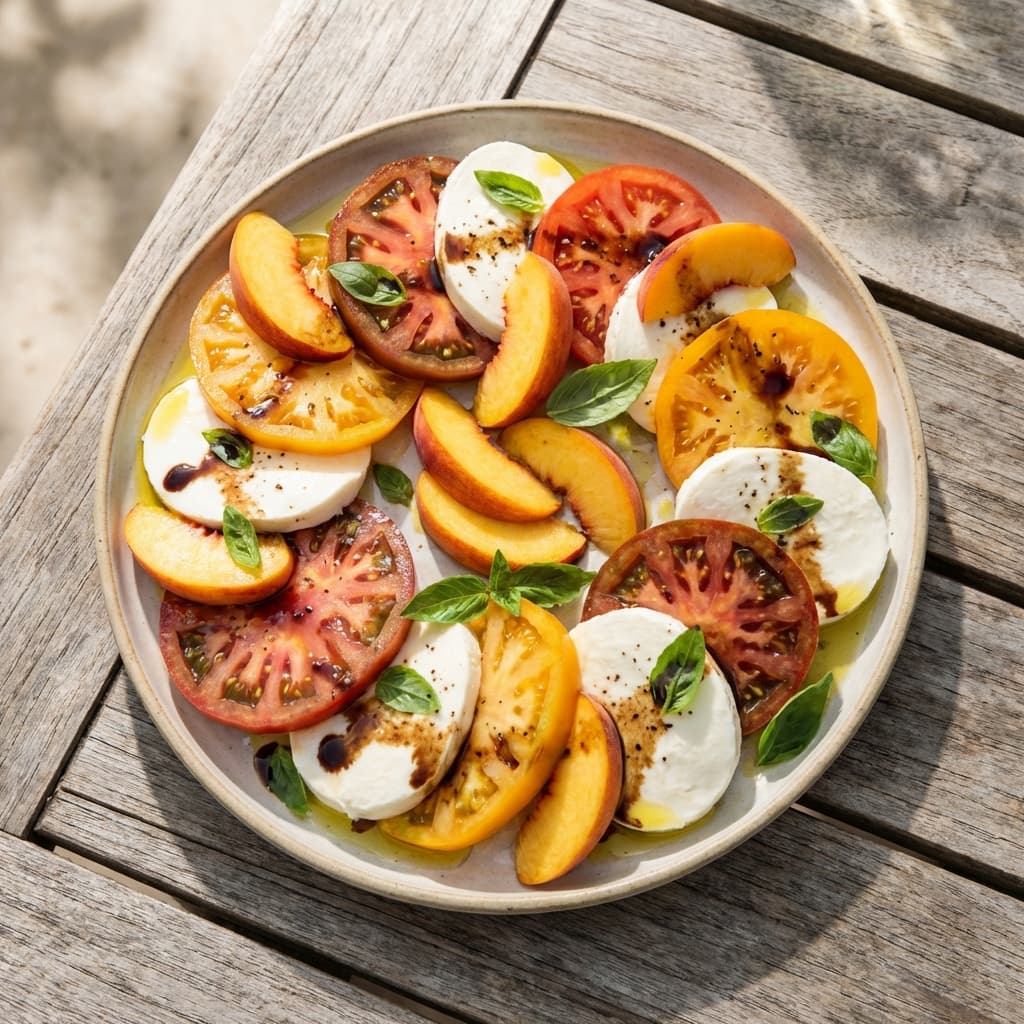
Peach + Pepper Vinegar Caprese
Tomato-mozz-peach with vinegar heat that makes it sing.