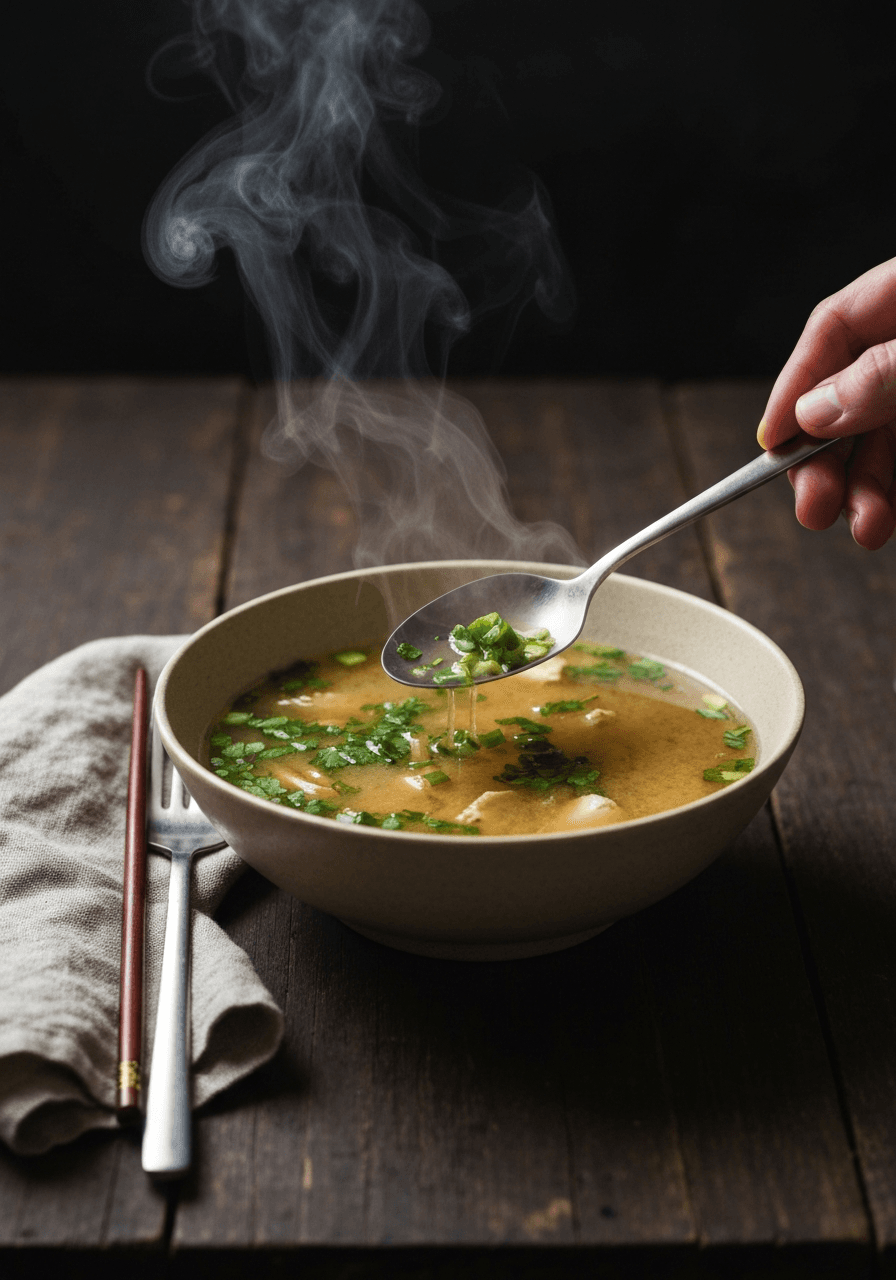
Miso Soup — Dashi Base
Unlock the secrets of Japanese cuisine with this umami-rich miso soup, starting with a perfectly extracted dashi base.
Umami-rich miso soup starts with proper dashi extraction. This recipe delivers a clean, warming broth that's essential to Japanese cuisine.
Gently simmer kombu and katsuobushi to extract maximum umami without bitterness.
The fit, timing, and key move are all here. If it is a yes, go straight into cook mode.
Unlock the secrets of Japanese cuisine with this umami-rich miso soup, starting with a perfectly extracted dashi base.
Set your units, then drop the ingredients into grocery if this is happening later.
What matters before the pan gets hot
The shortest path to understanding the dish, the key move, and whether tonight is the right time to cook it.
The Hook
**Proper dashi extraction is non-negotiable for authentic miso soup.**
The Technique
Kombu contains glutamic acid, an amino acid responsible for umami. Katsuobushi contains inosinic acid, which synergizes with glutamic acid to enhance the umami sensation. Simmering at low temperatures prevents the breakdown of these compounds.
The History
Miso soup has been a staple in Japanese cuisine since the Muromachi period (1336 to 1573). It evolved from a simple broth flavored with fermented soybeans to the complex and varied dish we know today.
Food Facts
Sourced notes. Tap to verify.
Mise en place means setting up your ingredients and tools before you start cooking. It is a professional workflow trick that reduces mistakes, keeps timing tight, and makes cooking feel calmer.
Umami-rich miso soup starts with proper dashi extraction. This recipe delivers a clean, warming broth that's essential to Japanese cuisine.
Nutrition per Serving
Estimated valuesSatiety
Data estimatedTechnique, context, and fallback plans
The reason the method works, the prep you can do early, and what to change if the dish starts drifting.
Miso soup is more than just a starter; it's a comforting ritual, a daily practice that grounds you in the present moment. The secret to a truly exceptional miso soup lies in the dashi, the clear broth that forms its foundation. It's a delicate balance of flavors, where the subtle sweetness of kombu seaweed dances with the smoky depth of katsuobushi (dried bonito flakes). Mastering dashi is like unlocking a secret language of Japanese cuisine.
Think of dashi as the soul of miso soup. It's not merely water; it's an infusion of umami, the fifth taste that elevates the entire dish. The gentle simmer extracts the essence of the kombu without bitterness, while the katsuobushi adds a savory richness that lingers on the palate. This careful process transforms simple ingredients into a complex and harmonious broth.
Once you have a beautiful dashi, the rest is simple. A swirl of miso paste, a sprinkle of tofu and wakame, and you have a bowl of pure comfort. Each spoonful is a reminder of the care and intention that goes into Japanese cooking. It's a taste of tradition, a warming embrace that nourishes both body and soul.
Experiment with different toppings and variations, but always start with a good dashi. It's the key to unlocking the true potential of miso soup, and a gateway to exploring the vast and delicious world of Japanese cuisine.
Dashi tastes bitter.
Do not boil the kombu. Remove it as soon as the water simmers.
Miso soup tastes too salty.
Use less miso paste or a milder variety.
Use this in Focus
Turn this nutrition profile into a week you can plan, shop, and actually cook.
Set up, cook, and remember what worked
The mise, the method, your notes, and the next recipes to master after this one lands.
The Setup
- PotMedium
- Fine-mesh Sieve
- Cheesecloth
The Mise en Place
5 of 7Your prep station before cooking begins
The Protein (0/1)
The Pantry (0/5)
SOAK
Prep aheadPlace kombu (4 inches) in a pot with 8 cups of water (8 cups) and let it soak for at least 30 minutes. This helps to soften the kombu and release its umami.
HEAT
Bring the water (8 cups) with the kombu (4 inches) to a gentle simmer over medium heat. Do not boil.
Small bubbles forming at the bottom of the pot
SIMMER
Simmer for 10 minutes, then remove the kombu (4 inches). Discard the kombu or save it for another use.
ADD
Add the katsuobushi (2 cups) to the pot and simmer for 1 minute. Then, turn off the heat and let it steep for 5 minutes.
Smoky aroma fills the air
STRAIN
Strain the dashi through a fine-mesh sieve lined with cheesecloth. Discard the katsuobushi (2 cups).
Clear, golden broth
RETURN
Return the dashi to the pot and gently warm it over low heat. Do not boil.
DISSOLVE
In a small bowl, whisk a small amount of the warm dashi into the miso paste (4 tbsp) until smooth. This prevents clumping.
Smooth, homogenous miso mixture
STIR
Gently stir the miso mixture into the warm dashi in the pot. Do not boil after adding the miso, as this can affect its flavor and nutritional value.
Miso is fully dissolved in the broth
ADD
Add the cubed tofu (1 block) and rehydrated wakame seaweed (¼ cups) to the soup.
GARNISH
Garnish with thinly sliced green onions (2 stalks) and serve immediately.
Warming, savory aroma
Service Log
Log your variables. Iterate like a pro.
Clean slate.
Log your variables after the first run.
Master These Next

Sheet Pan Tofu + Broccoli
Crisp tofu + roasted broccoli with a bright, savory peanut-lime drizzle. One pan, real texture, repeatable.
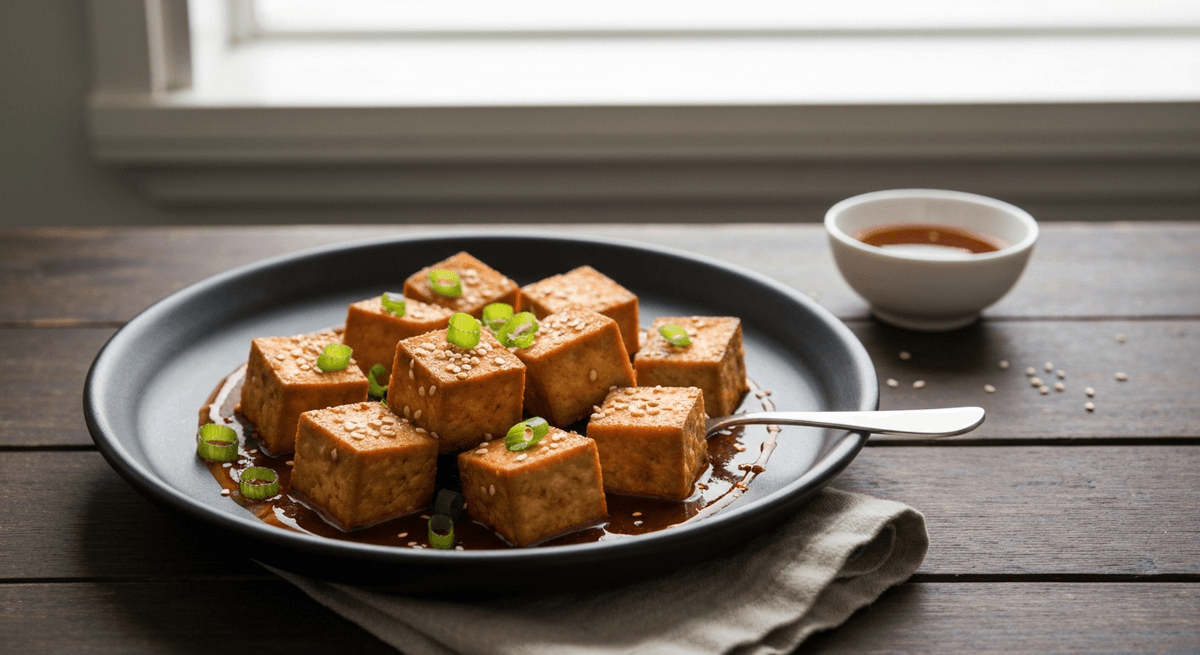
Air Fryer Tofu
Tofu that actually crisps and holds sauce. Quick press, hot roast, and a no-cornstarch path for clean texture.
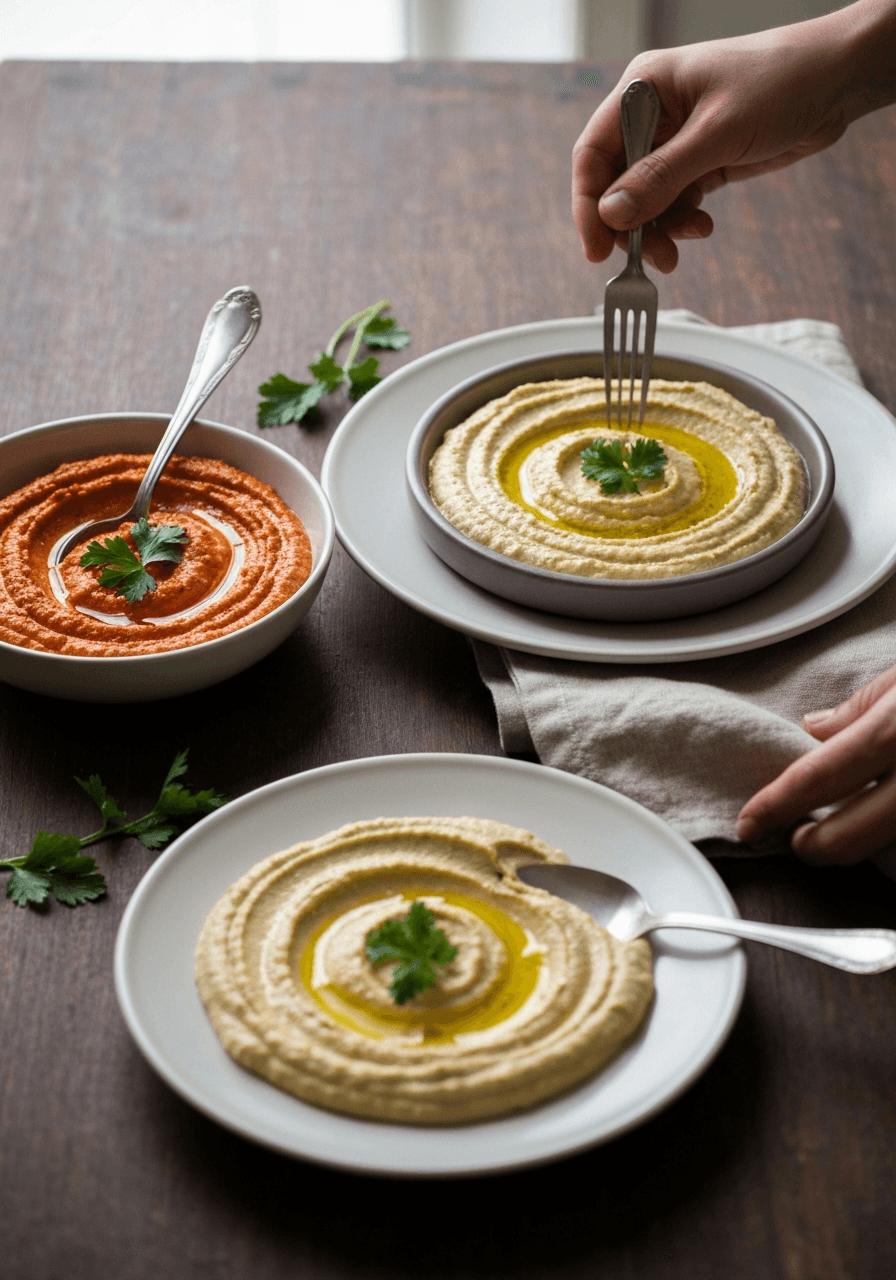
Hummus — Classic Plus 3 Variations
Master the classic hummus, then unleash your creativity with three delicious variations: roasted red pepper, spicy harissa, and zesty cilantro-lime.