Lièvre à la Royale (Royal Hare)
Spoon-tender game fit for a toothless King.
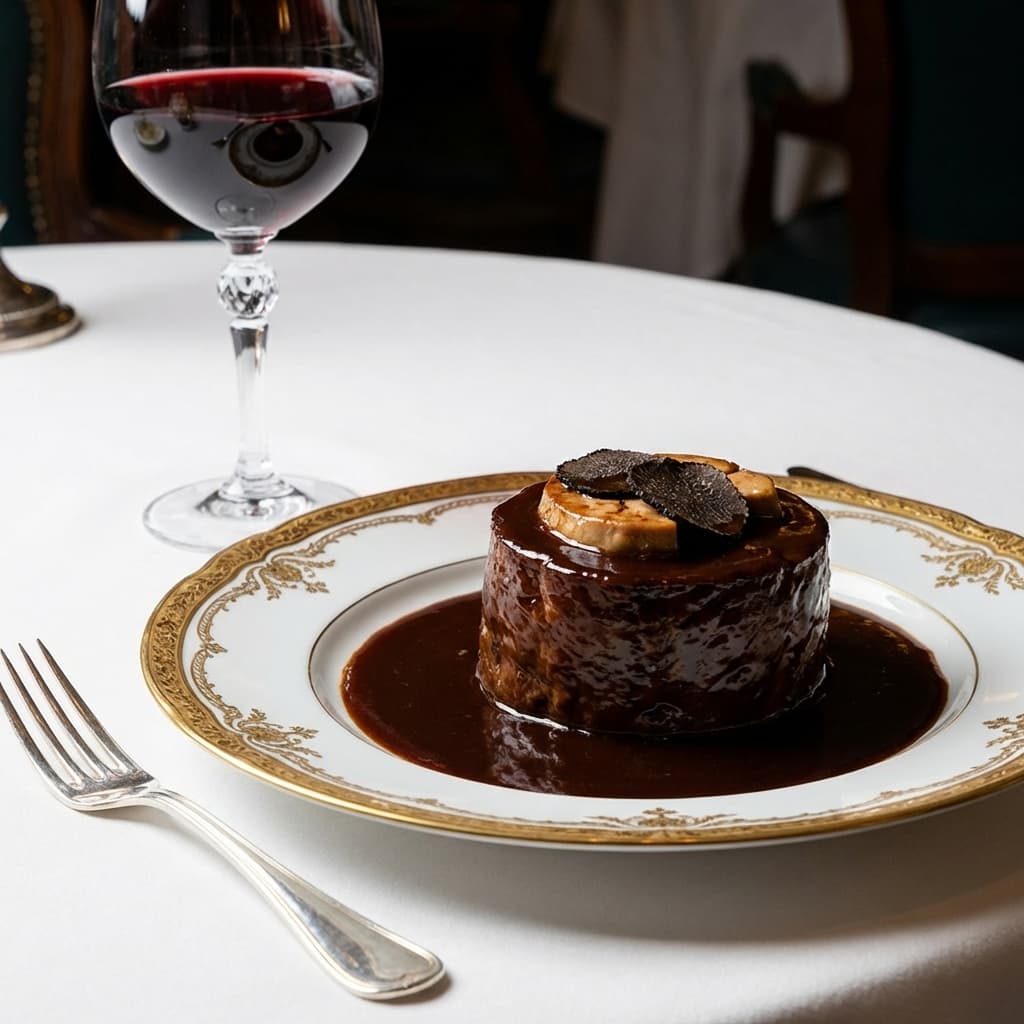
Lièvre à la Royale: Spoon-tender French game fit for royalty, featuring surgical deboning and a rich blood sauce
Surgical Deboning. Removing the skeleton without piercing the skin to create a roulade, followed by thickening the sauce with blood without letting it curdle
The fit, timing, and key move are all here. If it is a yes, go straight into cook mode.
Spoon-tender game fit for a toothless King.
Timing note: 2 days (Marinate) + 6 hrs (Cook)
Set your units, then drop the ingredients into grocery if this is happening later.
What matters before the pan gets hot
The shortest path to understanding the dish, the key move, and whether tonight is the right time to cook it.
The Hook
This ain't your grandma's rabbit stew. It's a week-long hunt, a week-long cook, and a week-long gamble with your sanity. Get it wrong, and you're just serving expensive, bloody mush.
The Technique
Surgical deboning is paramount; pierce that skin and you've failed. The slow braise breaks down collagen into gelatin for tenderness. The real tightrope walk? Blood thickening. Too hot, it curdles. Too cold, it won't emulsify. Get the temp right, and you've got velvet. Screw it up, and you've got a mess.
The History
Forget Louis XIV's dental issues. This is the dish that proved French chefs could tame the wild and make it edible, even for the toothless elite. It's a testament to turning a tough, gamey animal into a luxurious, spoon-tender masterpiece, often at the expense of the hunter's patience.
Food Facts
Sourced notes. Tap to verify.
Tough cuts feel chewy because they contain more collagen. With time and moist heat, collagen breaks down into gelatin, which is why braises and stews get richer the longer they cook.
Lièvre à la Royale: Spoon-tender French game fit for royalty, featuring surgical deboning and a rich blood sauce
Nutrition per Serving
Estimated valuesSatiety
Data estimatedTechnique, context, and fallback plans
The reason the method works, the prep you can do early, and what to change if the dish starts drifting.
Imagine the court of Louis XIV, a monarch whose reign was as opulent as his palate. Yet, time had rendered his regal teeth useless. Enter Lièvre à la Royale, a dish born of necessity and culinary genius. This wasn't merely food; it was an edible testament to French gastronomy's power to adapt, transforming a formidable wild hare into a spoon-tender marvel.
The dish's notorious "gross" part – the blood-thickened sauce, often enriched with pulverized foie gras – belies its divine flavor. It presents a dark, earthy hue, a stark contrast to the silken texture that would have graced the King's tongue. This was a dish where technique met artistry, where the skeleton was surgically removed from the hare without disturbing its skin, creating a roulade of unparalleled elegance. It’s a culinary Everest, a legend whispered among chefs, a dish that demands respect and rewards with unparalleled depth.
My hare meat feels tough and stringy after braising.
Ah, that often means the heat was a bit too high. For this dish, we want a gentle, slow braise, almost a whisper of a simmer. Keep your oven or flame very low, so the liquid is jus…
My sauce broke or separated after adding the foie gras and blood.
That's a common pitfall. The foie gras and blood are your final thickeners, but they can curdle if you add them to a boiling sauce. Take the sauce off the heat entirely before whis…
Use this in Focus
Turn this nutrition profile into a week you can plan, shop, and actually cook.
Set up, cook, and remember what worked
The mise, the method, your notes, and the next recipes to master after this one lands.
The Setup
- Skillet12-inch
- Dutch Oven5-7 qt
- SaucepanMedium (2-3 qt)
- Cutting Board
- Chef's Knife
- Whisk
- Fine-Mesh StrainerOptional
The Mise en Place
5 of 6Your prep station before cooking begins
The Protein (0/3)
The Aromatics (0/1)
The Braise (0/1)
Chef's Notes
For a richer sauce, deglaze the pan with a splash of brandy after searing the hare, scraping up any browned bits.
Marinating the hare overnight in red wine with aromatics tenderizes the meat and deepens the flavor.
Serve with creamy mashed potatoes or crusty bread to soak up the luxurious sauce.
The hare can be braised a day in advance; the flavors meld beautifully overnight.
DEBONE
Prep aheadCarefully remove all bones from the hare without piercing the skin. Keep the carcass in one piece.
Use a very sharp boning knife and work slowly • Hare should lay flat like a sheet
Skin should remain completely intact
MARINATE
Prep aheadSoak meat and bones in wine and aromatics for 24-48 hours.
Refrigerate during marination • Meat will darken and absorb wine color
Meat should be fully submerged in marinade
STUFF
Lay hare flat. Season. Place Foie Gras (½ lb) and Truffles in the center. Roll into a cylinder and truss (tie) tightly.
Use kitchen twine every 2 inches • Cylindrical shape, evenly tied
Roll should be tight and uniform
BRAISE
Sear the roulade. Add marinade and bones. Cover and braise at 300°F for 5-6 hours until falling apart.
Check liquid level periodically, add water if needed • Meat pulls apart easily • Rich, gamey aroma fills kitchen
Overcrowding: Crowding steams instead of browning. Sear in batches and leave space.
Meat should be fork-tender
STRAIN
Remove meat. Strain cooking liquid into a clean pot. Discard bones/veg.
Use fine mesh strainer or cheesecloth • Strained liquid is dark and rich
Liquid should be clear of solids
BIND
Time-sensitiveBring liquid to a simmer. Turn off heat. Whisk in Blood and Chocolate/Cream (optional). Critical: Do not boil once blood is added, or it will curdle. Sauce should coat a spoon perfectly.
Remove from heat before adding blood, whisk constantly • Dark, glossy sauce • Sauce should be smooth, not grainy
Scorch risk: Reductions can go from perfect to burnt fast. Keep an eye on the bottom and stir if needed.
The meat is ready when it falls off the bone with zero resistance (spoon-tender)
Service Log
Log your variables. Iterate like a pro.
Clean slate.
Log your variables after the first run.