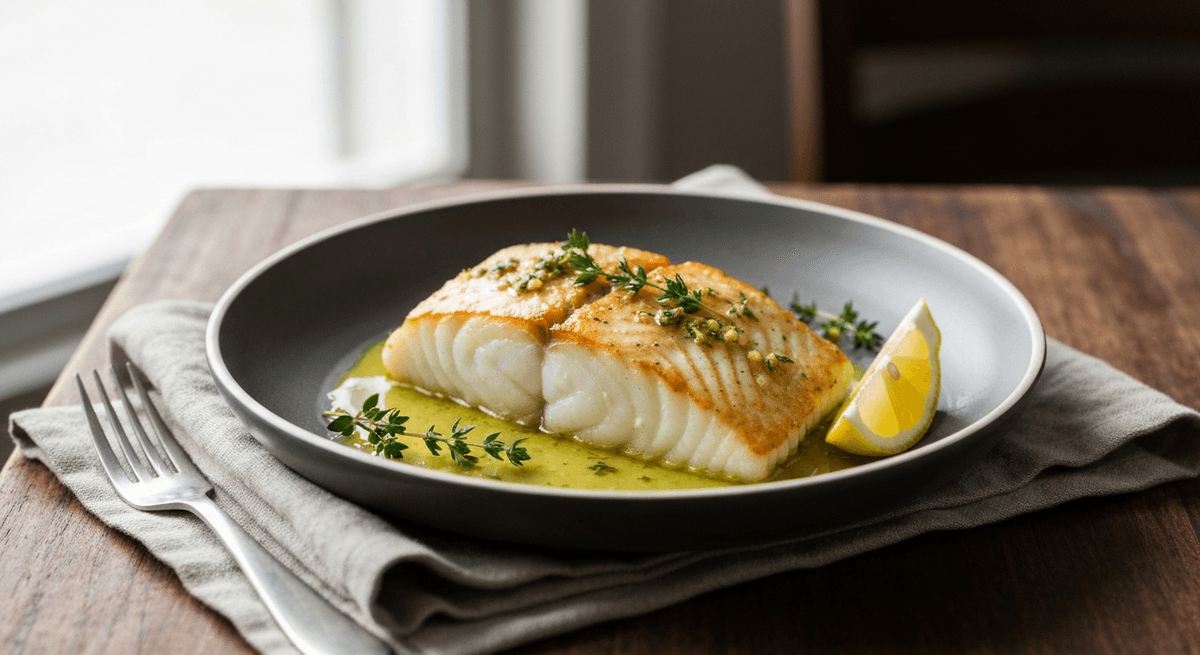
Lemon Garlic Cod (Flaky, Not Watery)
The easiest way to make cod taste clean and intentional: dry surface, hot roast, lemon finish.
Baked cod that stays flaky, not watery: dry the fish, roast hot, and finish with lemon and olive oil for clean flavor.
Pat the cod very dry and roast at 450F--dry surface plus high heat prevents steaming and keeps the fish flaky.
The fit, timing, and key move are all here. If it is a yes, go straight into cook mode.
The easiest way to make cod taste clean and intentional: dry surface, hot roast, lemon finish.
Timing note: 18 mins
Set your units, then drop the ingredients into grocery if this is happening later.
What matters before the pan gets hot
The shortest path to understanding the dish, the key move, and whether tonight is the right time to cook it.
The Hook
Cod is only watery if you're an idiot who doesn't know how to cook. Dry it. Roast it hot. Done.
The Technique
Surface moisture is the enemy of browning and the best friend of steaming. Pat that fish bone dry. High heat (450F) sears the exterior fast, setting the proteins before internal moisture can escape and steam the delicate flesh, ensuring a flaky, not soggy, result.
The History
Forget fancy Mediterranean origins. This is about fixing a fundamental screw-up: people steaming perfectly good fish. We're taking a basic high-heat roast, a technique as old as fire, and applying it to cod, because frankly, most of you can't be trusted not to drown it.
Food Facts
Sourced notes. Tap to verify.
Fish generally has less connective tissue than land meats, so it firms up and flakes quickly with heat. That is why seafood often goes from underdone to overdone in a small window.
Baked cod that stays flaky, not watery: dry the fish, roast hot, and finish with lemon and olive oil for clean flavor.
Nutrition per Serving
Estimated valuesSatiety
Data estimatedTechnique, context, and fallback plans
The reason the method works, the prep you can do early, and what to change if the dish starts drifting.
Cod, often unfairly labeled as bland, suffers from a common culinary misstep: steaming. Too often, fillets are seasoned and sent into the oven, only to languish in their own released moisture, transforming from delicate to disappointingly soft. This simple approach, however, reclaims cod's true potential by tackling the very essence of the problem – water.
By ensuring a thoroughly dry surface before introducing it to intense heat, we coax out a transformation. The high roast prevents the fish from steaming, instead encouraging a beautiful sear and a tender, flaky interior. Lemon and garlic are not mere disguises; they are elegant accompaniments, their bright acidity and aromatic punch serving to highlight the fish's clean, inherent flavor. The reward is a cod that yields in large, succulent petals, a testament to its unadulterated, pure taste.
My cod came out watery, not flaky.
Ah, that usually means the fish went into the oven a bit damp, or the oven wasn't quite hot enough.
My cod is a little dry.
Don't worry, that's a common one! It just means it spent a minute or two too long in the heat. The moment you see it flake easily with a fork and the center turns opaque, pull it o…
Use this in Focus
Turn this nutrition profile into a week you can plan, shop, and actually cook.
Set up, cook, and remember what worked
The mise, the method, your notes, and the next recipes to master after this one lands.
The Setup
- Sheet Panhalf sheet
- Microplane or ZesterOptional
The Mise en Place
5 of 6Your prep station before cooking begins
Chef's Notes
Refrigerate up to 2 days. Reheat gently to avoid drying out.
PREHEAT
Heat oven to 450F (232C). Line a sheet pan.
High heat cooks cod fast so it stays flaky. • Oven fully preheated
DRY
Pat cod very dry. Season with salt and pepper.
Wet fish steams itself. Dry fish roasts. • No visible moisture on the fish
Surface looks matte, not wet
ARRANGE
Place cod on the pan. Drizzle with olive oil (1½ tbsp) and scatter sliced garlic (4 cloves) and lemon (1 whole) slices around and on top.
A light oil coat helps browning without making the pan greasy. • Thin sheen of oil; garlic not piled • Fresh lemon aroma
Fish is lightly oiled, not swimming
ROAST
Time-sensitiveRoast 8-12 minutes, until cod flakes easily and the center is opaque.
Stop early rather than late. Cod goes from flaky to dry fast. • Cod turns opaque with slight separation at the edges • Clean roasted garlic-lemon smell
Flakes into large pieces; center just opaque
FINISH
Squeeze lemon (1 whole) juice over the fish. Drizzle a small spoon of olive oil (1½ tbsp) if desired. Taste and adjust salt.
Acid at the end keeps white fish tasting alive. • Fish looks glossy, not wet • Lemon lifts aroma instantly
Bright, clean finish
Service Log
Log your variables. Iterate like a pro.
Clean slate.
Log your variables after the first run.
Related Techniques
Master These Next
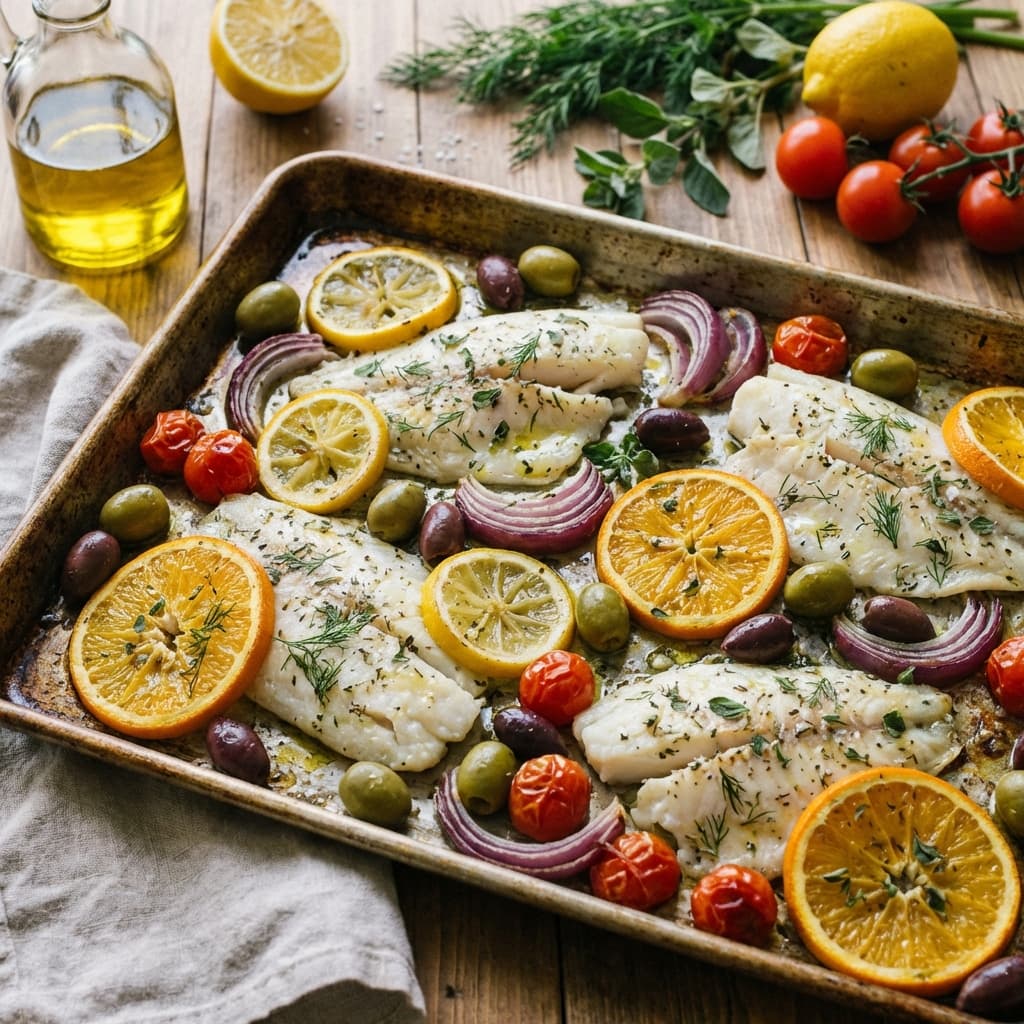
Sheet Pan Tilapia
Fast, clean fish dinner: flaky tilapia, bright citrus, olive oil finish. No dryness.
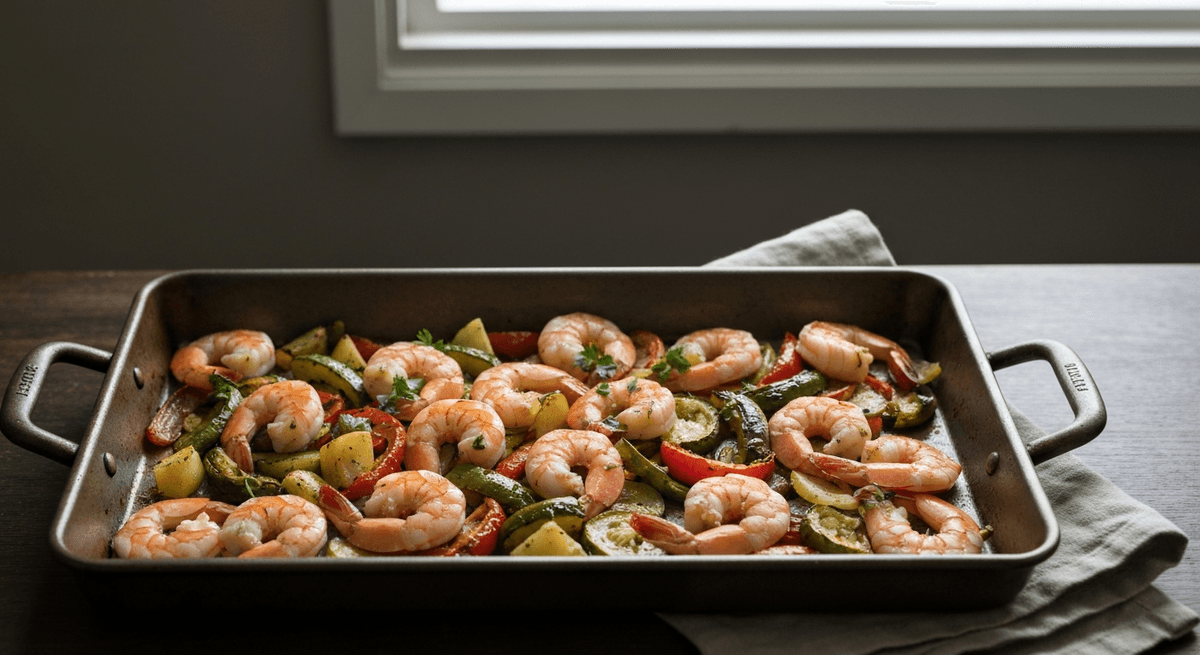
Sheet Pan Shrimp + Vegetables
One pan, real timing: roasted veg and shrimp that stays tender. Fast dinner with clean flavor.
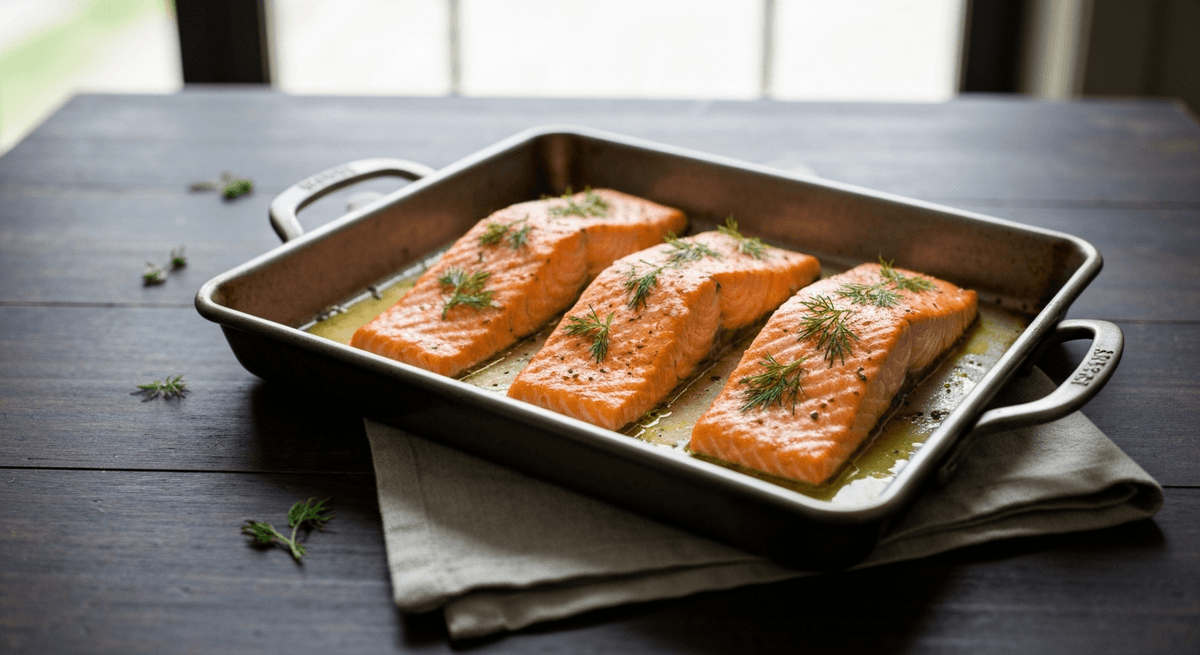
Sheet Pan Salmon
The weeknight salmon that never goes dry: hot roast, early pull, lemon-dill finish.