Fresh Pasta Dough (Egg Yolk)
Flour and yolks. Knead until your arms fall off.
Flour and yolks. Knead until your arms fall off. Boxed pasta is flour and water.
Boxed pasta is flour and water
The fit, timing, and key move are all here. If it is a yes, go straight into cook mode.
Flour and yolks. Knead until your arms fall off.
Timing note: 1 hour
Set your units, then drop the ingredients into grocery if this is happening later.
What matters before the pan gets hot
The shortest path to understanding the dish, the key move, and whether tonight is the right time to cook it.
The Hook
Boxed pasta is for suckers. This is the real deal. Get it wrong, and you're serving rubber.
The Technique
Egg yolks are fat and lecithin, your emulsifiers. They bind the flour, creating a pliable dough. Overworking or skipping the rest makes gluten a rigid bastard. Hydration needs time to equalize, making that dough rollable, not a damn brick.
The History
This isn't just pasta; it's the soul of Emilia-Romagna. Forget the bland stuff. We're talking rich, golden yolks from chickens fed like royalty, creating a silk purse from a sow's ear of flour. This is how pasta was meant to be – a vibrant, edible statement.
Food Facts
Sourced notes. Tap to verify.
Egg yolks contain lecithin, an emulsifier that helps stabilize mixtures of oil and water. That is the core trick behind glossy sauces and creamy dressings.
Flour and yolks. Knead until your arms fall off. Boxed pasta is flour and water.
Nutrition per Serving
Estimated valuesSatiety
Data estimatedTechnique, context, and fallback plans
The reason the method works, the prep you can do early, and what to change if the dish starts drifting.
The soul of Emilia-Romagna's famed pasta lies in its vibrant hue, a testament to the rich diet of Italian chickens, their yolks brimming with carotene from corn and other golden feeds. This tradition demands the darkest, most intensely colored yolks you can procure, transforming simple flour and eggs into a silken, elastic canvas. Unlike the utilitarian flour-and-water base of boxed varieties, fresh pasta, at its heart, is a celebration of richness and texture. The magic unfolds through patient kneading, a process that builds the dough's structure, followed by a crucial resting period. Wrapped tightly, the dough relaxes, allowing the gluten to develop, ensuring it will roll out with a delicate, yielding quality rather than a stubborn, rubbery resistance. This careful hydration and rest are the true secrets to achieving that luxurious mouthfeel, a world away from its dried counterpart.
My dough is just dry and crumbly, not coming together.
Ah, that usually means your eggs were a touch on the smaller side.
My dough feels way too sticky, like it's glued to my hands.
That's a common sign you might have a very humid kitchen or large eggs.
Use this in Focus
Turn this nutrition profile into a week you can plan, shop, and actually cook.
Set up, cook, and remember what worked
The mise, the method, your notes, and the next recipes to master after this one lands.
The Setup
- Mixing Bowls
- Whisk
- Rolling Pin
- Cutting Board
- Chef's Knife
Chef's Notes
Knead the dough for at least 10 minutes until smooth and elastic. This develops gluten for a tender texture.
Rest the dough for at least 30 minutes. This relaxes the gluten, making it easier to roll and preventing shrinkage.
Serve with a simple butter and sage sauce or a rich bolognese for a classic Italian dinner.
THE WELL
Dump flour on table. Make a wide crater. Pour eggs in center.
THE FORK
Time-sensitiveWhisk eggs gently, slowly pulling in flour from the inner walls.
⚠️ Do not break the wall. If the egg breaches the dam, it runs onto the floor. Game over.
THE KNEAD
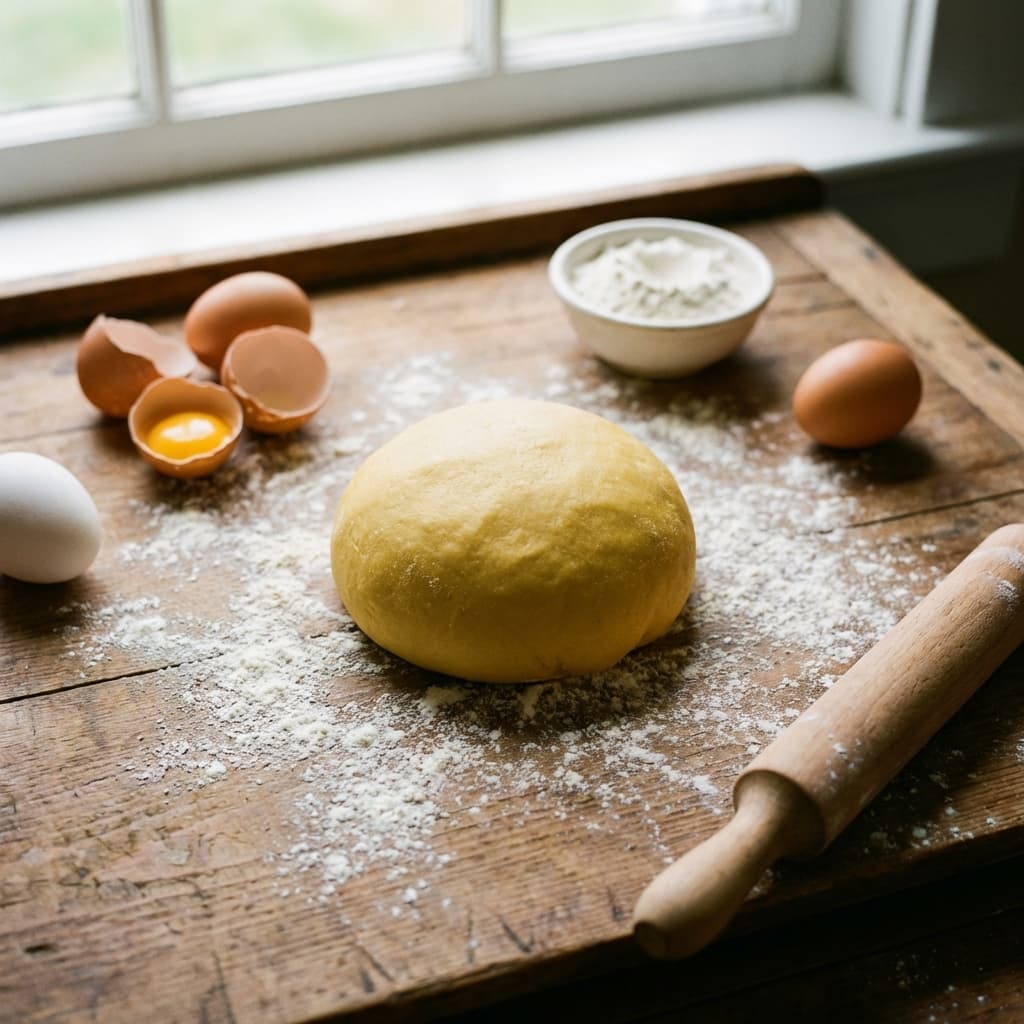
Time-sensitiveOnce a shaggy ball forms, KNEAD for 10 minutes. Push with the heel of your hand.
The "Poke Test." Poke the dough ball. It should spring back slowly. The skin should be smooth as a baby's cheek.
THE REST
Wrap tight in plastic. Rest 30 mins at room temp.
Why? This relaxes the gluten. Try rolling it now and it will fight you. Rest it, and it yields.
Service Log
Log your variables. Iterate like a pro.
Clean slate.
Log your variables after the first run.