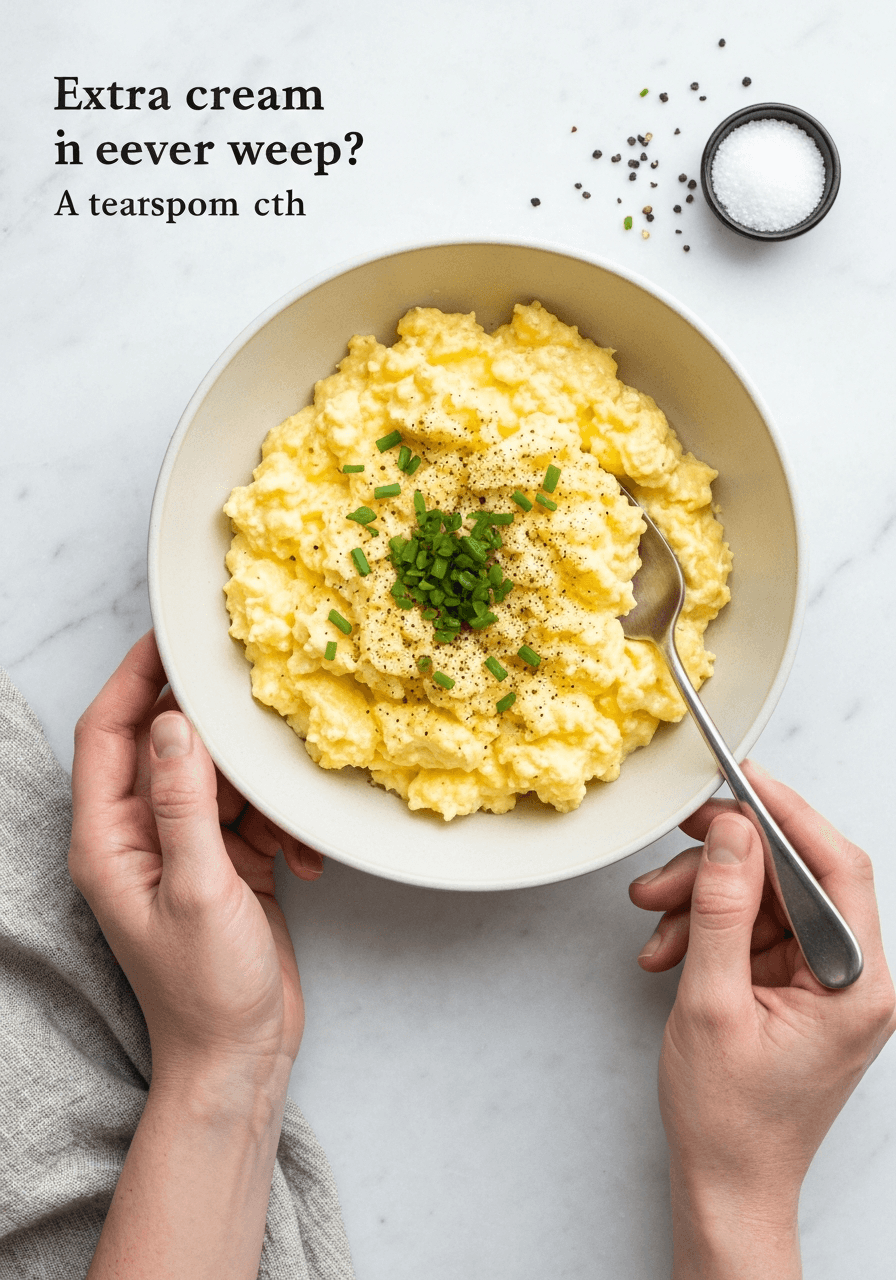
Extra-Creamy Scrambled Eggs
The secret to eggs that never weep? A teaspoon of cornstarch.
Master starch slurry technique for foolproof scrambled eggs. Cornstarch inhibits protein bonds, creating creamy texture even at high heat in 5 minutes.
Scrambled eggs get rubbery because proteins bond too tightly, squeezing out water (syneresis). Cornstarch slurry inhibits protein bonds. You can cook these eggs hard, and they will still be creamy. It's foolproof.
The fit, timing, and key move are all here. If it is a yes, go straight into cook mode.
The secret to eggs that never weep? A teaspoon of cornstarch.
Timing note: 5 mins
Set your units, then drop the ingredients into grocery if this is happening later.
What matters before the pan gets hot
The shortest path to understanding the dish, the key move, and whether tonight is the right time to cook it.
The Hook
This is foolproof scrambled eggs. Most recipes tell you to pull the eggs when they look undercooked. This one lets you cook them fully because the cornstarch prevents the proteins from bonding too tightly. It's chemistry, not intuition.
The Technique
Cornstarch (or any starch) inhibits protein coagulation. When egg proteins heat up, they unfold and bond together, squeezing out water (syneresis). Starch molecules physically block these bonds, allowing the proteins to set without becoming rubbery. This is the same principle used in Chinese velveting for meat.
The History
Popularized by J. Kenji López-Alt in The Food Lab (2021). The technique is rooted in Chinese velveting (using cornstarch to tenderize proteins).
Food Facts
Sourced notes. Tap to verify.
Egg yolks contain lecithin, an emulsifier that helps stabilize mixtures of oil and water. That is the core trick behind glossy sauces and creamy dressings.
A simmer uses lower agitation than a full boil, helping keep proteins tender and broths clearer while still cooking food through.
Master starch slurry technique for foolproof scrambled eggs. Cornstarch inhibits protein bonds, creating creamy texture even at high heat in 5 minutes.
Nutrition per Serving
Estimated valuesSatiety
Data estimatedTechnique, context, and fallback plans
The reason the method works, the prep you can do early, and what to change if the dish starts drifting.
Most scrambled eggs are rubbery because of a process called syneresis. When egg proteins (albumin) heat up, they bond together tightly, squeezing out water like wringing a sponge. That's why overcooked eggs weep liquid and turn dry and rubbery at the same time.
This recipe cheats physics. By adding a cornstarch slurry to the eggs, we introduce starch molecules that get in the way of protein bonds. The proteins can't squeeze together as tightly, so they retain more moisture. This means you can cook these eggs until they're fully set, and they'll still be creamy.
It mimics the texture of a French soft scramble, which traditionally takes 30 minutes of gentle stirring over low heat. This version takes about 45 seconds of aggressive stirring over medium heat. Same result, fraction of the effort.
The key is constant motion. We're making a custard, not curds. If you let the eggs sit still in the pan, they'll form large, dry clumps. If you keep them moving, they form tiny, creamy curds that blend into a smooth, glossy mass.
The final touch is mounting with cold butter off the heat. This stops the cooking immediately and adds a rich, silky finish.
Tastes chalky?
You used too much cornstarch or didn't whisk the slurry enough before adding the eggs.
Still rubbery?
You cooked them until dry. Pull them when they look wet and glossy—they finish cooking on the plate. If they look done in the pan, they're overcooked by the time you eat them.
Set up, cook, and remember what worked
The mise, the method, your notes, and the next recipes to master after this one lands.
The Setup
- Non-Stick Skillet8-10 inch·Essential for easy stirring and cleanup
- Silicone SpatulaFor constant stirring
The Mise en Place
5Your prep station before cooking begins
Chef's Notes
The cornstarch is invisible when done right. If you can taste it, you used too much.
Pull the eggs from the heat when they still look slightly wet. They'll finish cooking on the plate.
Serve on buttered toast, with hot sauce, or topped with chives and smoked salmon.
WHISK
Prep aheadIn a bowl, whisk cornstarch (½ tsp) and milk (1 tbsp) until smooth with no lumps. Add eggs and salt (¼ tsp). Whisk vigorously until no streaks of white remain and the mixture is uniform yellow.
Whisk the slurry first to avoid cornstarch clumps • Smooth, pale yellow liquid with small bubbles
Mixture is uniform yellow with no lumps
FOAM
Time-sensitiveHeat a non-stick pan over medium heat. Add half the butter (about 1.5 tbsp). Wait until the butter melts and foams but doesn't brown.
Foaming butter indicates the right temperature • Melted butter with white foam, sizzling gently • Butter smells nutty but not browned
Butter is foamy, pan is hot
STIR
Time-sensitivePour in the egg mixture. Immediately start stirring constantly and aggressively with a silicone spatula or wooden spoon. We aren't making curds; we are making a custard. Don't fold—swirl.
Constant motion prevents large curds and keeps texture smooth • Smooth, glossy yellow custard forming in waves • Eggs smell sweet and buttery
Eggs are forming soft, creamy curds
MOUNT
Time-sensitiveWhen eggs look wet but structured (like soft-set custard), remove from heat immediately. Stir in the remaining cold butter cubes off the heat. Continue stirring until butter melts and incorporates.
Cold butter stops cooking and adds richness. Remove from heat while eggs still look wet—they'll finish on the plate. • Single cohesive pile of yellow velvet, not separate dry nuggets
Eggs are glossy, creamy, and cohesive
SERVE
Plate immediately. The eggs will continue to cook from residual heat for about 30 seconds.
Don't wait—scrambled eggs are best eaten immediately • Smooth, velvety yellow pile
Eggs are glossy and creamy on the plate
Service Log
Log your variables. Iterate like a pro.
Clean slate.
Log your variables after the first run.
Master These Next
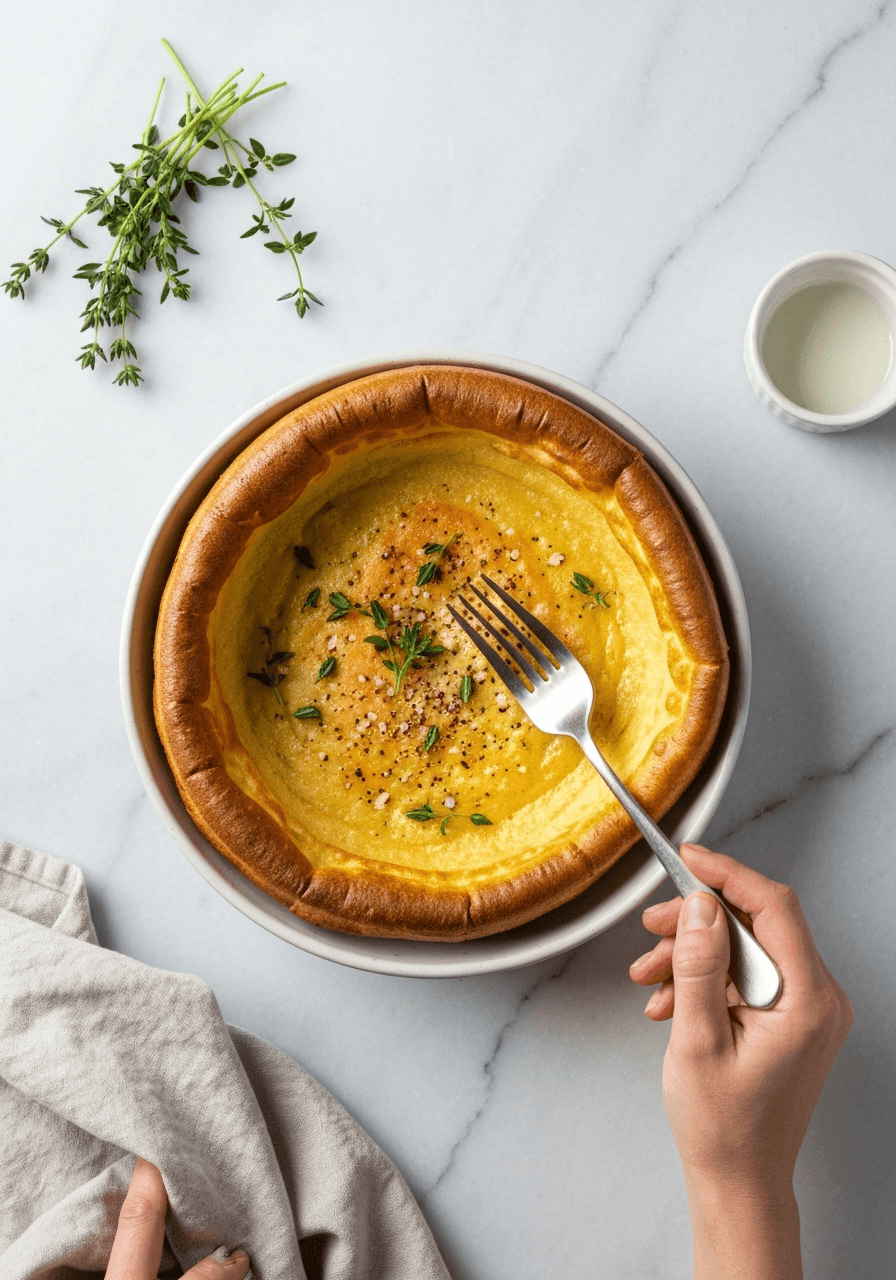
Dutch Baby
A giant, deflated popover. Custard meets pancake.
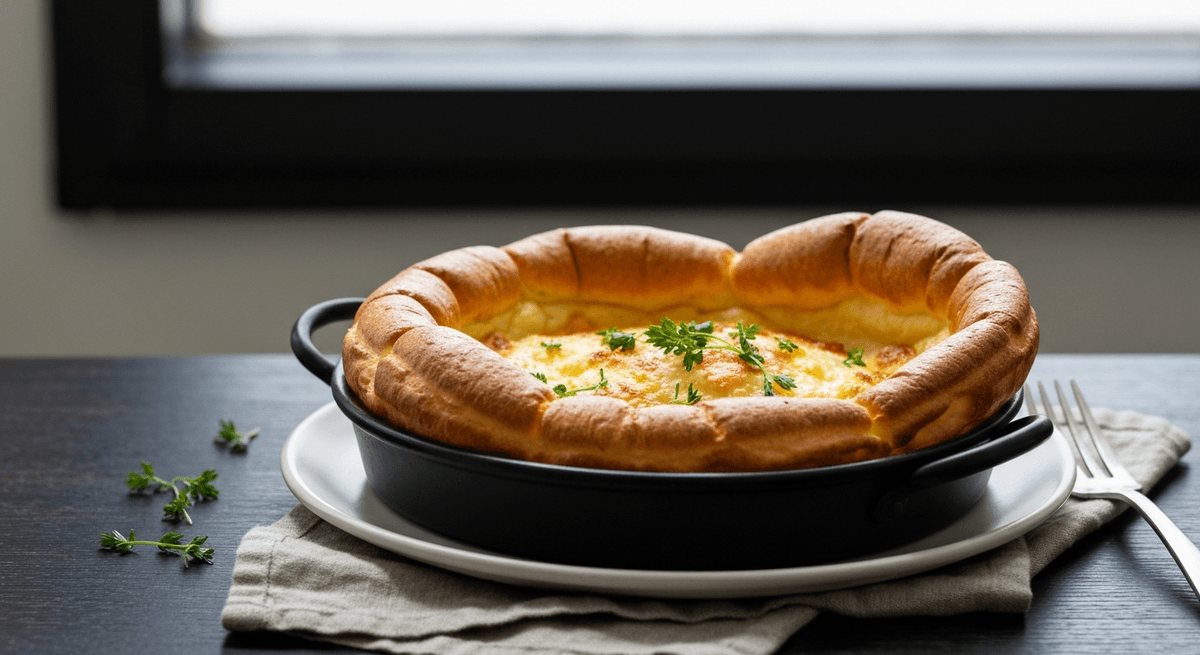
Dutch Baby — Puffy Pancake
A show-stopping breakfast that's surprisingly easy to make! This puffy pancake is a guaranteed crowd-pleaser.
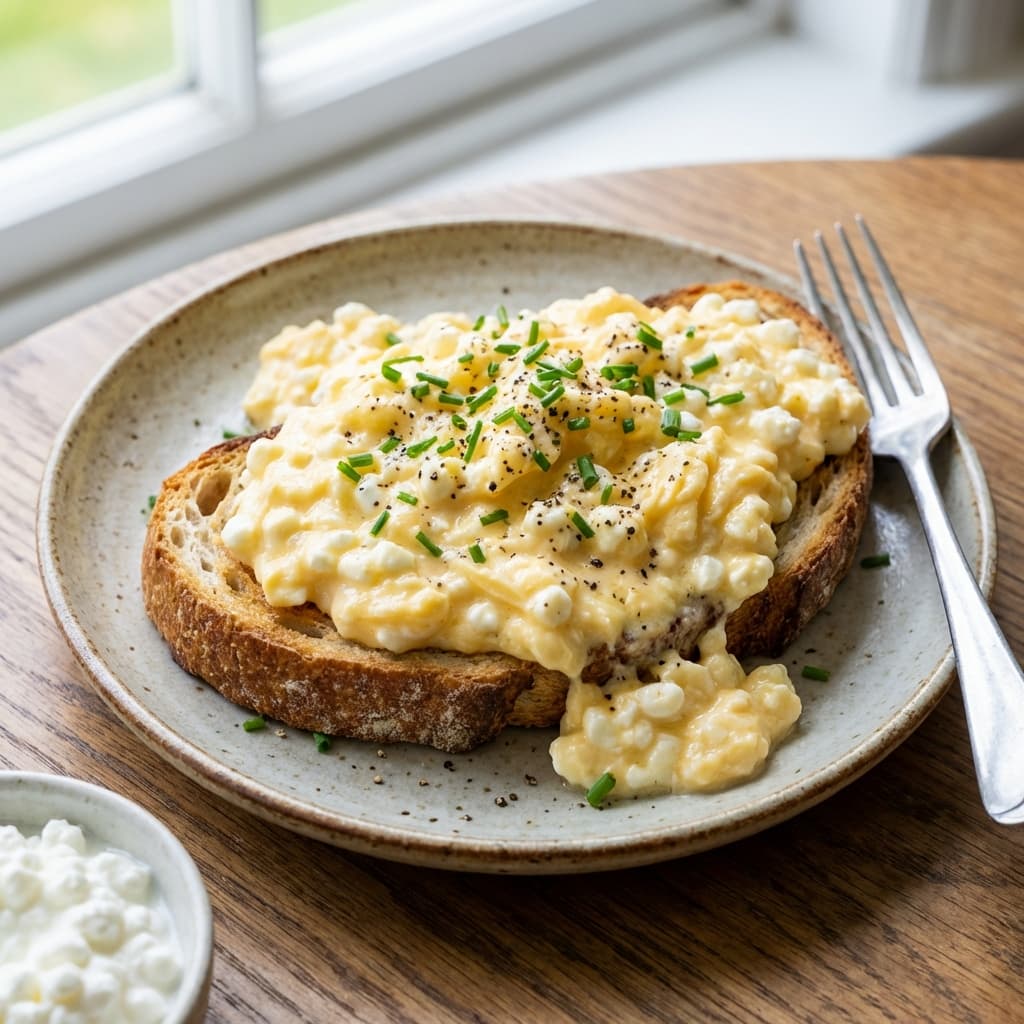
Cottage Cheese Scrambled Eggs
Soft, creamy scrambled eggs with extra protein. Low heat, gentle stir, bright finish.