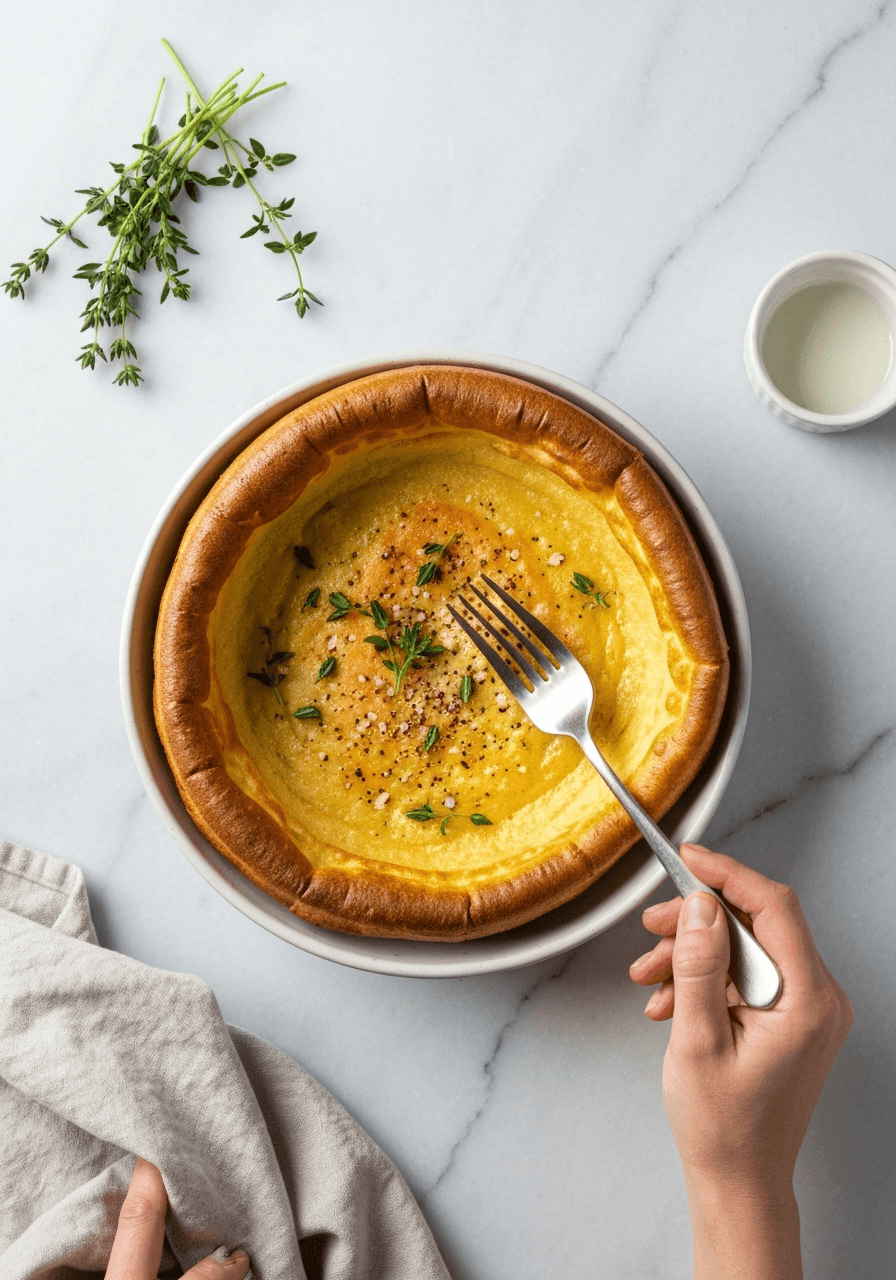
Dutch Baby
A giant, deflated popover. Custard meets pancake.
Master thermal shock leavening with Dutch baby pancake. Screaming hot pan, cold batter, steam inflation. No baking powder—just physics.
Preheat pan scorching hot. Blend batter with air. Pour into foaming butter. DO NOT open oven door—steam inflates the pancake.
The fit, timing, and key move are all here. If it is a yes, go straight into cook mode.
A giant, deflated popover. Custard meets pancake.
Timing note: 25 mins
Set your units, then drop the ingredients into grocery if this is happening later.
What matters before the pan gets hot
The shortest path to understanding the dish, the key move, and whether tonight is the right time to cook it.
The Hook
This is a physics lesson disguised as breakfast. Steam is the leavener, not baking powder. The thermal shock between cold batter and screaming hot pan creates the dramatic rise. It's the same principle as popovers, Yorkshire pudding, and cream puffs.
The Technique
Water in the batter heats rapidly in the hot pan, converting to steam. Steam expands, inflating the egg protein structure. The high oven heat sets the egg proteins quickly, creating a crispy shell. When you remove it from the oven, the steam condenses and the pancake deflates—but the structure holds enough to create that signature crater shape.
The History
Seattle, USA (Manca's Cafe, early 1900s). German immigrants made 'Deutsch' pancakes, which Americans mispronounced as 'Dutch.'
Food Facts
Sourced notes. Tap to verify.
Egg yolks contain lecithin, an emulsifier that helps stabilize mixtures of oil and water. That is the core trick behind glossy sauces and creamy dressings.
After cooking, starch molecules reorganize during cooling in a process called retrogradation, changing texture in breads, rice, and potatoes.
Master thermal shock leavening with Dutch baby pancake. Screaming hot pan, cold batter, steam inflation. No baking powder—just physics.
Nutrition per Serving
Estimated valuesSatiety
Data estimatedTechnique, context, and fallback plans
The reason the method works, the prep you can do early, and what to change if the dish starts drifting.
This isn't Dutch. It's a German pancake ('Deutsch') that got mispronounced by Americans. The name stuck, even though it has nothing to do with the Netherlands.
What makes this work is physical leavening—steam, not baking powder. The water in the batter turns to steam in the scorching hot oven, inflating the egg structure like a balloon. The result is a dramatic puff that climbs the walls of the pan before collapsing into a custardy crater.
The most critical rule: DO NOT open the oven door. If you let cold air in, the steam condenses immediately and the pancake collapses before it's set. You have to trust the process and wait the full 15-20 minutes.
The batter is identical to Yorkshire pudding—just eggs, milk, and flour. The difference is what you cook it in. Yorkshire pudding uses beef fat and goes with roast beef. Dutch baby uses butter and sugar and goes with lemon and powdered sugar.
Room temperature ingredients matter here. Cold eggs and milk won't whip enough air into the batter when you blend them, and you need that air for structure and rise.
Didn't rise—flat like a regular pancake?
Pan wasn't hot enough, or you opened the oven door during baking.
Gummy or dense texture?
Batter was too cold. Let eggs and milk come to room temperature before blending. Cold ingredients won't whip enough air into the batter, resulting in a dense pancake.
Set up, cook, and remember what worked
The mise, the method, your notes, and the next recipes to master after this one lands.
The Setup
- 10-inch Cast Iron Skillet10-inch·Cast iron retains heat best—essential for rise
- BlenderWhips air into batter for lift
- Oven MittsPan handle will be dangerously hot
The Mise en Place
5 of 10Your prep station before cooking begins
The Batter (0/7)
Chef's Notes
Room temperature ingredients are essential for proper rise. Take eggs and milk out 30 minutes before starting.
DO NOT open the oven door while baking—steam escapes and pancake collapses.
Classic toppings: powdered sugar and lemon. Also try fresh berries, maple syrup, or whipped cream.
PREHEAT
Time-sensitivePlace a 10-inch cast iron skillet in the oven. Preheat oven and skillet to 425°F (220°C) for at least 15 minutes.
The pan must be scorching hot—no heat means no rise • Pan will smoke slightly when you add butter
Oven and pan are screaming hot
BLEND
Prep aheadWhile oven heats, combine eggs, milk, flour, sugar, vanilla, nutmeg, and salt (⅛ tsp) in a blender. Blend on high for 30-60 seconds until smooth and slightly frothy.
Use a blender to whip air into batter—this creates lift • Light yellow, slightly airy
Batter is smooth with tiny bubbles on surface
MELT
Time-sensitiveCarefully remove hot skillet from oven using oven mitts. Add butter to the pan—it should sizzle and foam immediately. Swirl to coat the entire bottom and sides.
Move fast—butter burns quickly in a 425°F pan • Butter bubbling vigorously, light golden color • Butter sizzles loudly
Butter is foaming and starting to brown
POUR
Time-sensitiveImmediately pour batter into the center of the hot, buttered pan. Return to oven immediately.
Speed is key—don't hesitate or let the pan cool • Edges begin to bubble and puff • Batter sizzles on contact
Batter hits hot pan and starts to set instantly
BAKE
Time-sensitiveBake for 15-20 minutes. DO NOT open the oven door to peek. The Dutch baby is done when it's puffed dramatically, golden brown, and crispy at the edges.
Opening the door releases steam and pancake collapses—resist temptation • Dramatic puff, looks like a golden crater
Pancake has climbed the walls, golden and puffed
SERVE
Remove from oven. Dust immediately with powdered sugar (2 tbsp) and serve with lemon (1 whole) wedges. It will deflate quickly—this is normal.
Deflation is inevitable—enjoy the spectacle while it lasts • Puffed pancake deflating slightly, dusted with sugar
Served immediately while still hot
Service Log
Log your variables. Iterate like a pro.
Clean slate.
Log your variables after the first run.
Master These Next
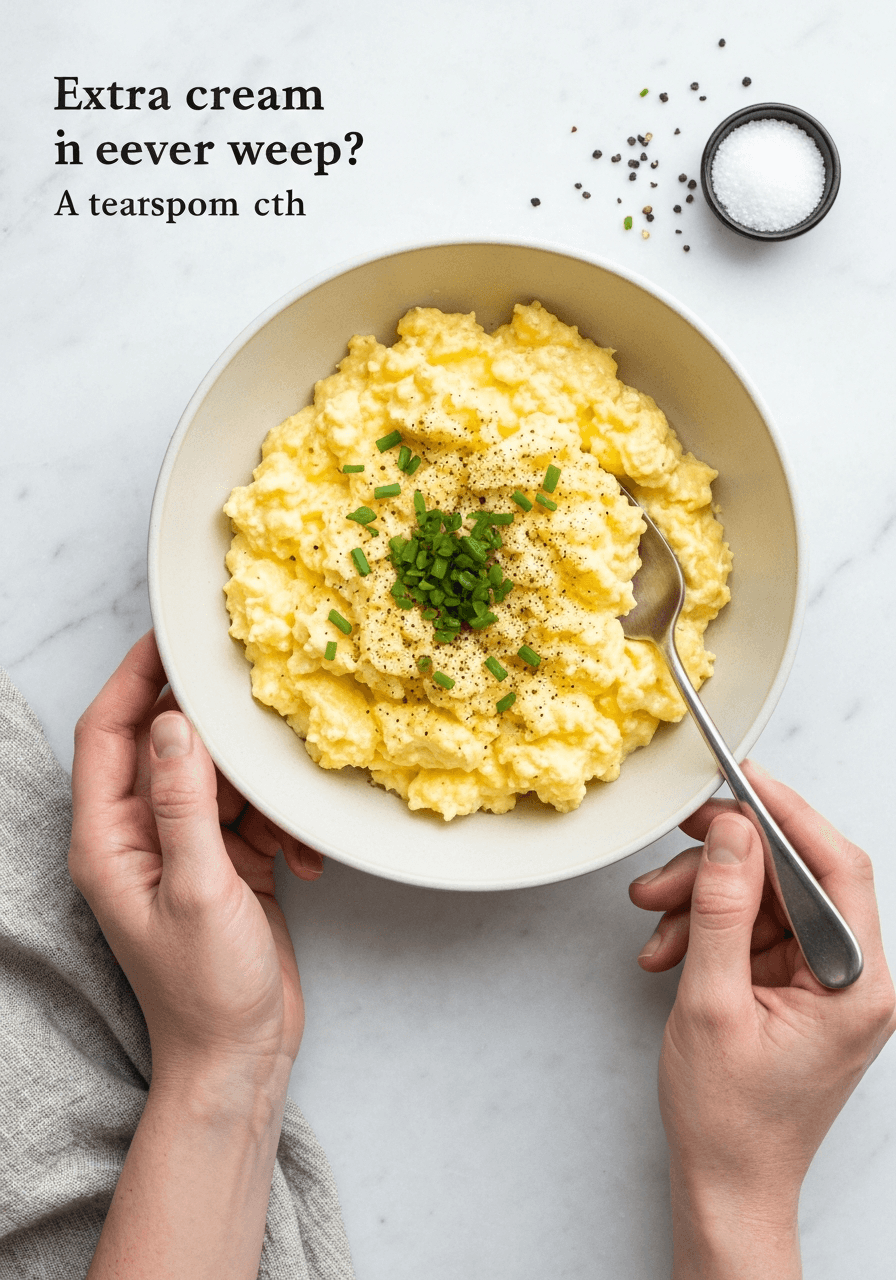
Extra-Creamy Scrambled Eggs
The secret to eggs that never weep? A teaspoon of cornstarch.
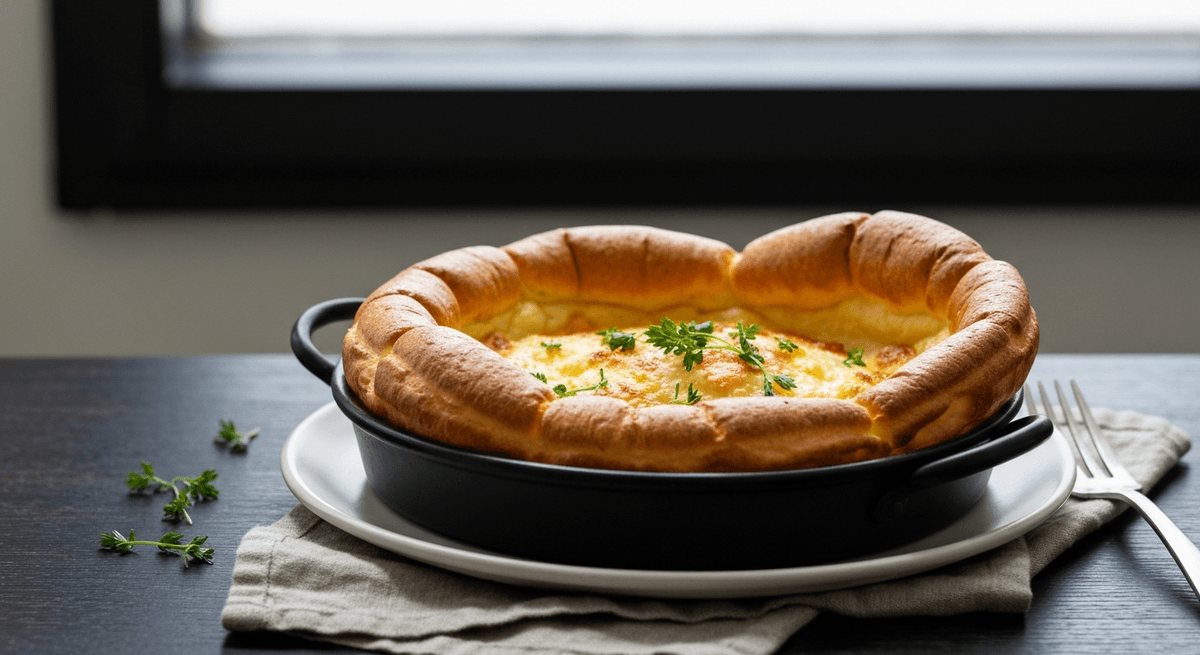
Dutch Baby — Puffy Pancake
A show-stopping breakfast that's surprisingly easy to make! This puffy pancake is a guaranteed crowd-pleaser.
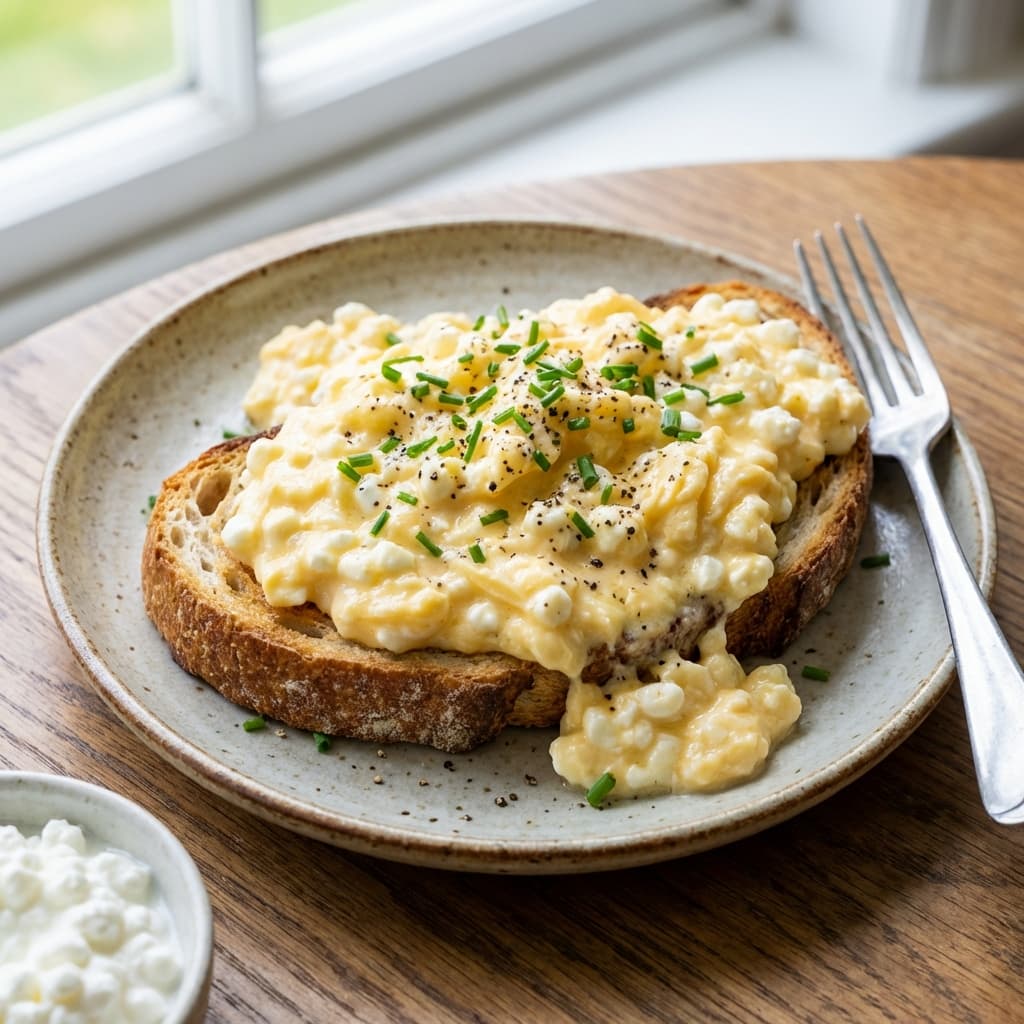
Cottage Cheese Scrambled Eggs
Soft, creamy scrambled eggs with extra protein. Low heat, gentle stir, bright finish.