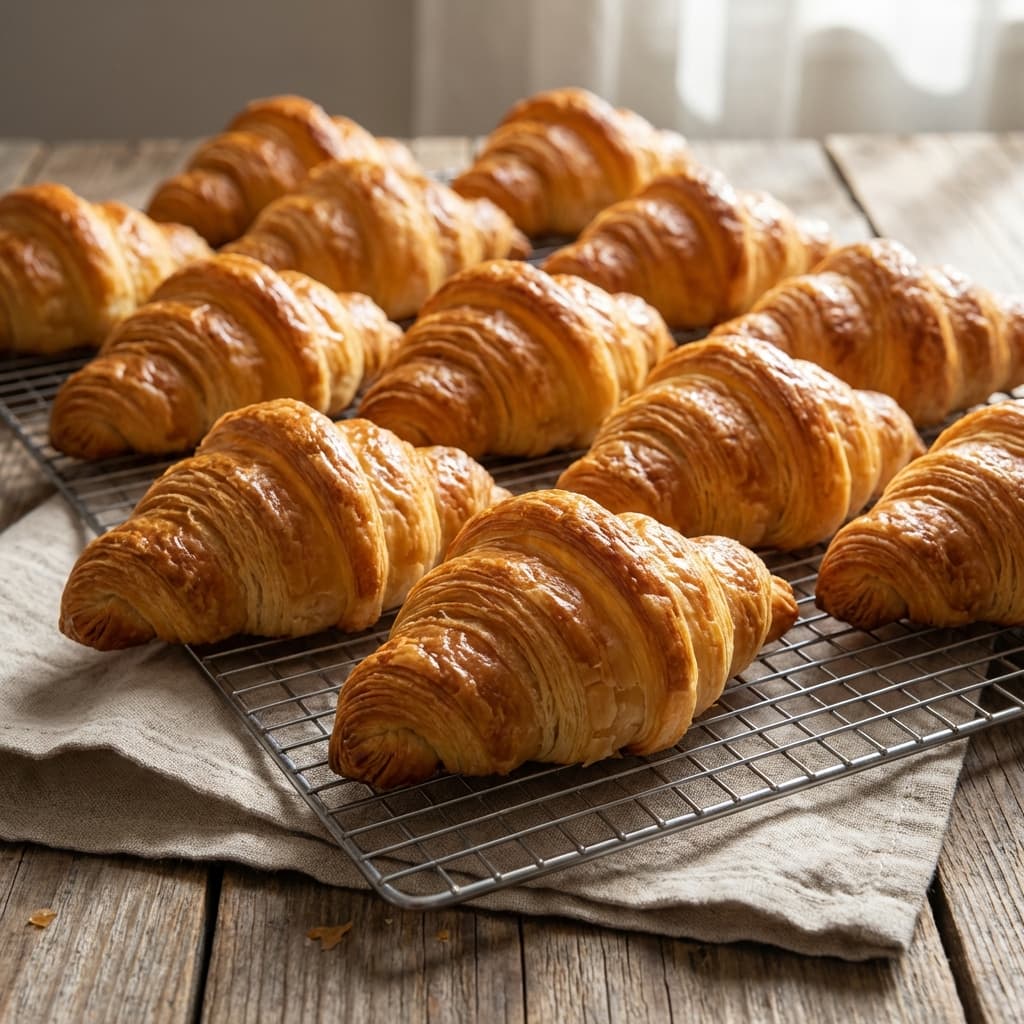
Croissants
27 layers of butter and dough. Zero compromise.
27 layers of butter and dough. Zero compromise. This is not a recipe; it is a battle against ambient temperature.
This is not a recipe; it is a battle against ambient temperature
The fit, timing, and key move are all here. If it is a yes, go straight into cook mode.
27 layers of butter and dough. Zero compromise.
Timing note: 3 days
Set your units, then drop the ingredients into grocery if this is happening later.
What matters before the pan gets hot
The shortest path to understanding the dish, the key move, and whether tonight is the right time to cook it.
The Hook
This isn't a recipe, it's a war against the damn heat. Your kitchen better be colder than your ex's heart, or you're just making buttered bread.
The Technique
It's all about temperature. We're creating 27 distinct layers of dough and butter. Too hot, the butter melts, you get brioche. Too cold, it shatters. During baking, steam from the butter forces those layers apart, creating the shatteringly crisp exterior and airy interior. Get it wrong, and you've wasted a lot of butter.
The History
Forget the Viennese romance. This flaky bastard child of the Kipferl got its ass to France in the 19th century and became a national obsession. It's a story of culinary adoption, sure, but mostly about French chefs taking something good and making it infinitely more complex and demanding.
Food Facts
Sourced notes. Tap to verify.
Egg yolks contain lecithin, an emulsifier that helps stabilize mixtures of oil and water. That is the core trick behind glossy sauces and creamy dressings.
27 layers of butter and dough. Zero compromise. This is not a recipe; it is a battle against ambient temperature.
Nutrition per Serving
Estimated valuesSatiety
Data estimatedTechnique, context, and fallback plans
The reason the method works, the prep you can do early, and what to change if the dish starts drifting.
The croissant is a testament to a delicate dance with temperature, a culinary battleground where precision reigns supreme. Forget mere recipes; this is an art form, a meticulous layering of dough and butter, aiming for that elusive 27-layer perfection. Each fold is a strategic move against the enemy: ambient heat. If the kitchen creeps above 75°F, the butter surrenders, melting into a state that yields only brioche, a pale imitation. Too cold, and the butter shatters, leading to a pastry of profound sadness.
This pursuit of airy, flaky perfection, with its signature honeycomb interior, is born from a simple scientific principle: the water within the butter transforms into steam, forcefully separating the dough layers. Originating as the humble Austrian Kipferl, it was in 19th-century France that this pastry ascended to iconic status. The key lies in the harmonious marriage of the détrempe, the rich butter block, and a glistening egg wash, all coming together in a zero-compromise creation that demands respect for the elements.
My croissants feel heavy and dense, not light and airy.
Ah, it sounds like they might be a bit under-proofed. Remember, for those beautiful layers and that airy crumb, they need to nearly double in size before they hit the oven. Give th…
Butter is pooling all over my baking sheet!
That tells me your proofing environment got a little too warm.
Set up, cook, and remember what worked
The mise, the method, your notes, and the next recipes to master after this one lands.
The Setup
- Cutting Board
- Chef's Knife
- Instant-Read ThermometerOptional
- Rolling Pin
The Mise en Place
3Your prep station before cooking begins
The Protein (0/1)
The Pantry (0/1)
Other (0/1)
Chef's Notes
Chill dough thoroughly between folds for distinct, flaky layers. Cold butter is key!
Egg wash just the top and sides to prevent the bottom from browning too quickly.
Serve warm with a drizzle of honey or a dollop of crème fraîche for a decadent treat.
THE LOCK-IN
Roll dough into a square. Place butter diamond in center. FOLD corners over to seal.
THE TURNS (Lamination)
Time-sensitiveROLL out into a long rectangle. FOLD like a letter (business letter fold). Rotate 90 degrees. Repeat.
⚠️ If the butter gets warm/soft, stop immediately and put it in the fridge. If it melts into the dough, you lose the layers.
THE SHAPE
Roll to 4mm thick. CUT triangles. STRETCH gently and ROLL tight.
THE PROOF
Time-sensitiveLet rise until puffy and wobbly (2-3 hours).
"The Wobble." Shake the tray. The croissants should jiggle like Jell-O. If you see a pool of butter underneath, they got too hot.
"The Wobble." Shake the tray. The croissants should jiggle like Jell-O. If you see a pool of butter underneath, they got too hot.
BAKE
BAKE at 400°F (200°C) initially, then lower to 375°F.
Service Log
Log your variables. Iterate like a pro.
Clean slate.
Log your variables after the first run.
Related Techniques
Master These Next
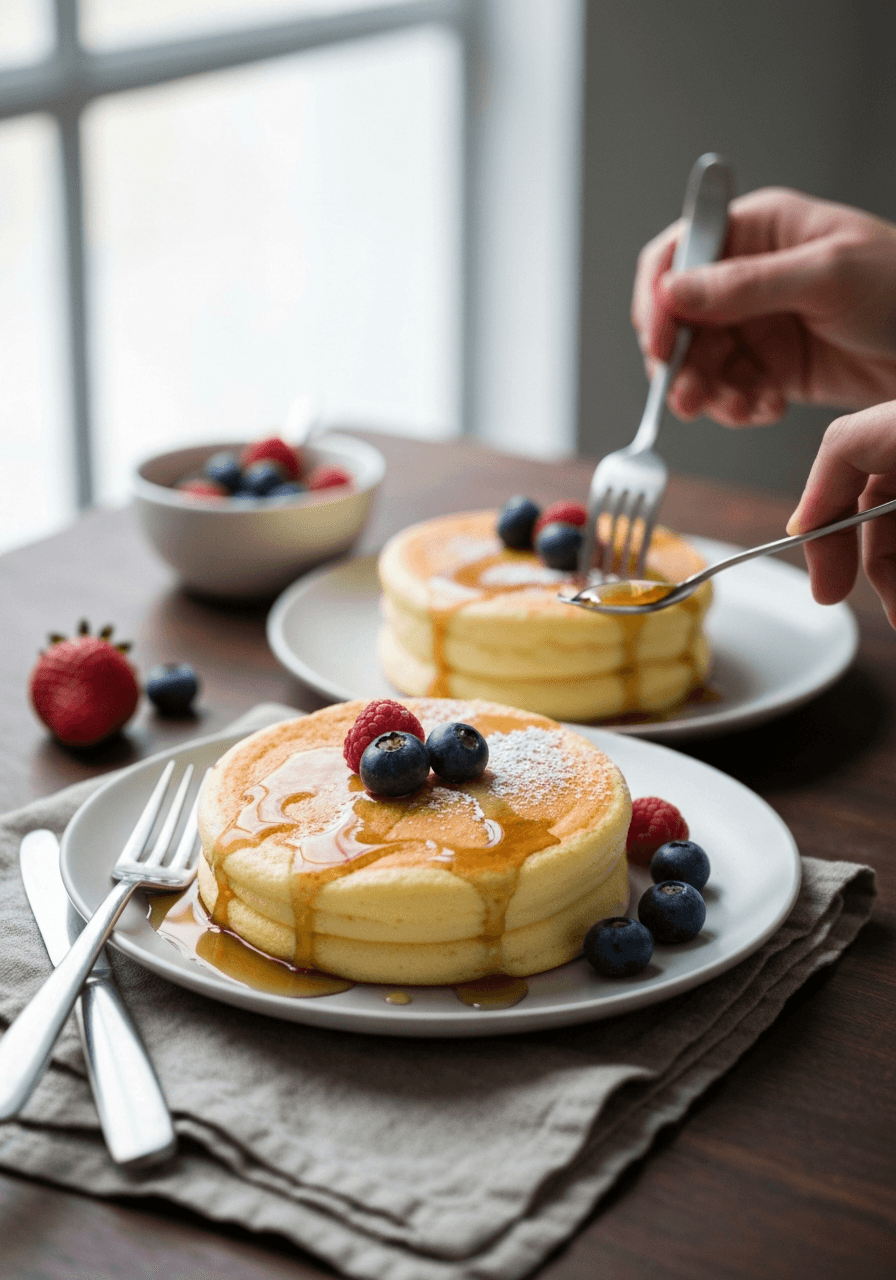
Japanese Souffle Pancakes
Experience breakfast bliss with these light, airy Japanese Souffle Pancakes. Each bite is a cloud of sweet, jiggly perfection.
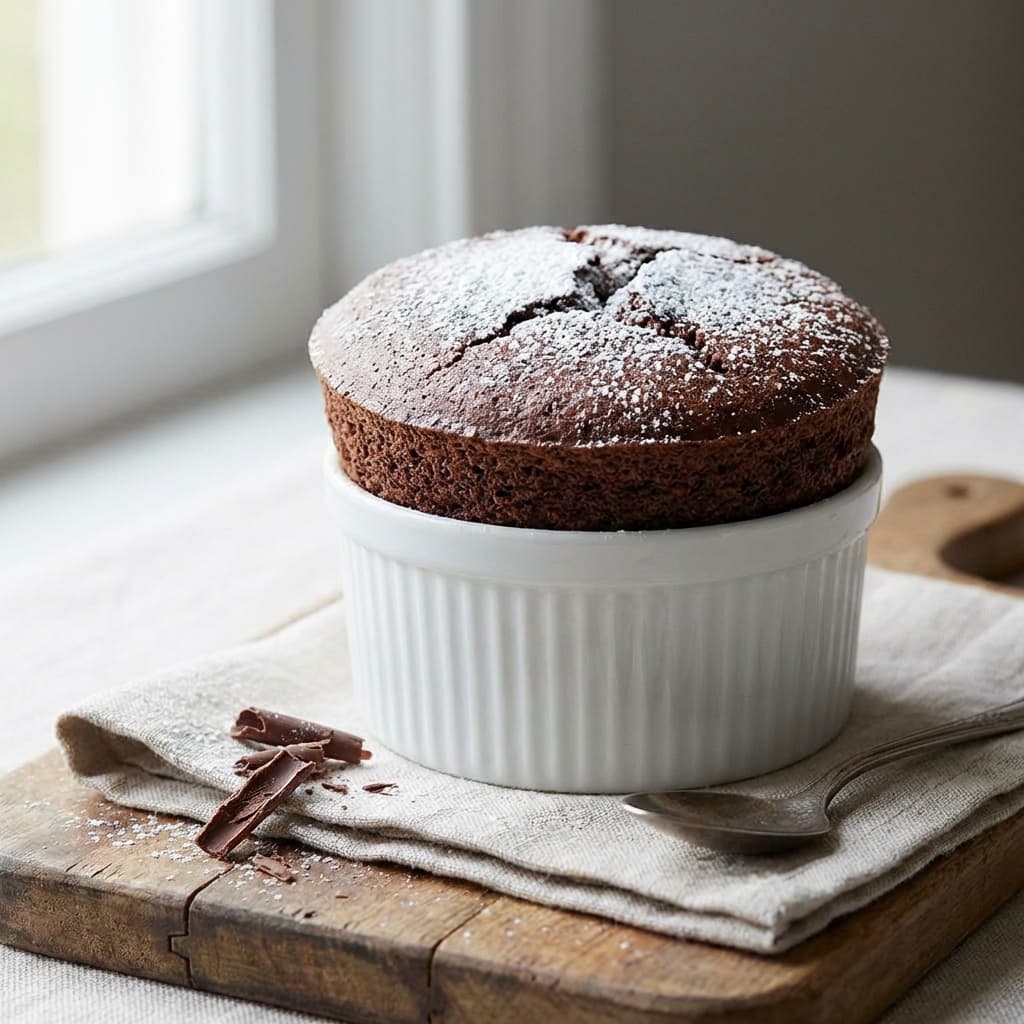
Chocolate Soufflé
Hot air, egg whites, and pure anxiety.
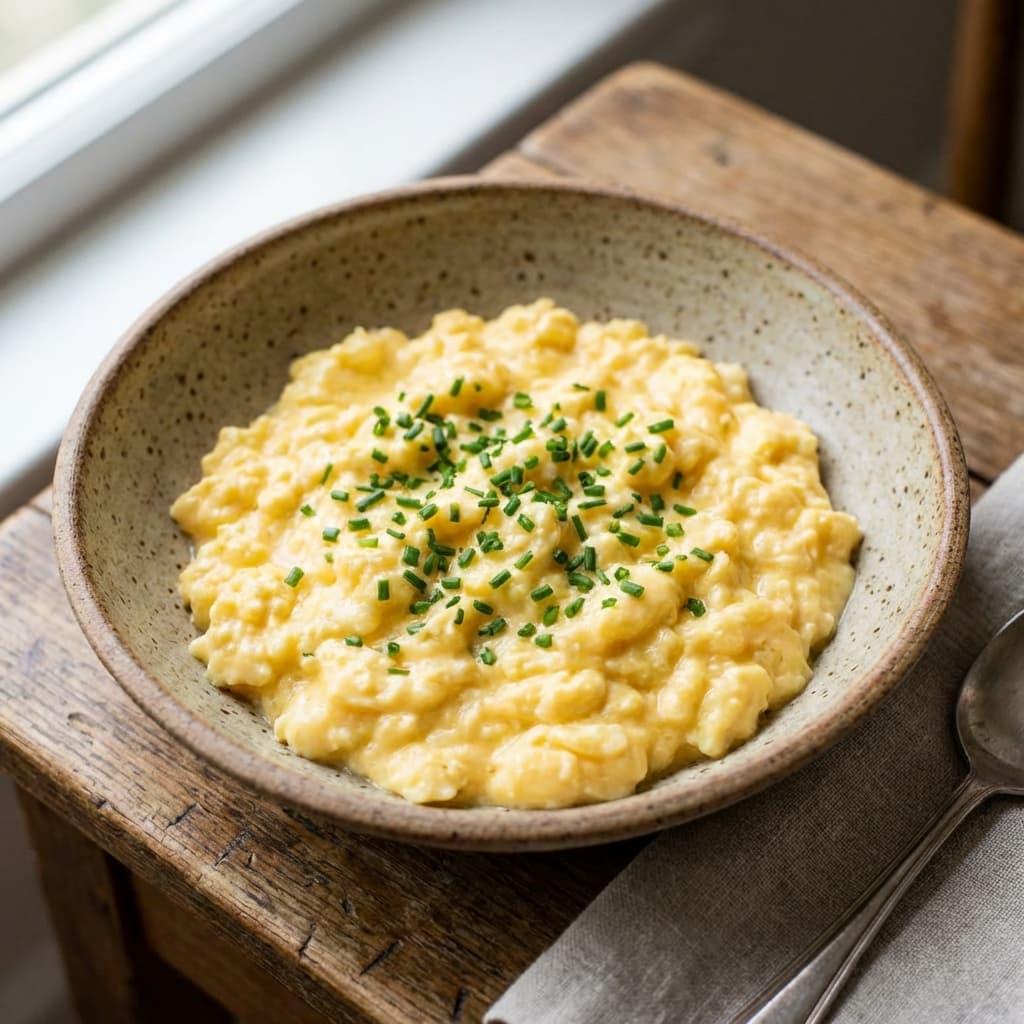
Scrambled Eggs
Buttery, golden ribbons of soft custard.