Puff Pastry Lamination
The technique of creating hundreds of paper-thin layers of dough and butter through repeated folding and rolling.
Deep Dive
The Lamination Process
Puff pastry gets its flaky, buttery layers through a process called lamination - creating alternating layers of dough and butter through folding.
The Classic Method (6-Fold):
- Encase butter - Wrap a butter block in dough (the "detrempe")
- First fold - Roll out, fold in thirds (like a letter)
- Rest - Chill 30 minutes (prevents butter from melting)
- Repeat - Roll and fold 5 more times
- Final rest - Chill before using
The Science:
Each fold creates 3x the layers. After 6 folds: 3^6 = 729 layers. When baked, the water in butter turns to steam, pushing layers apart. The butter fat fries the dough, creating that golden, flaky texture.
Common Mistakes:
- Butter too warm (melts into dough = no layers)
- Rolling too aggressively (breaks butter block)
- Not resting between folds (butter warms up)
The Science
Lamination works through the principle of creating discrete layers of fat (butter) between layers of dough. When baked, the water content in butter (about 15-20%) turns to steam at 212°F (100°C), creating pressure that pushes the layers apart. The butter fat (80-85%) then fries the dough layers, creating the characteristic golden, crispy texture. The key is keeping butter cold enough to remain solid during rolling, but warm enough to be pliable.
History
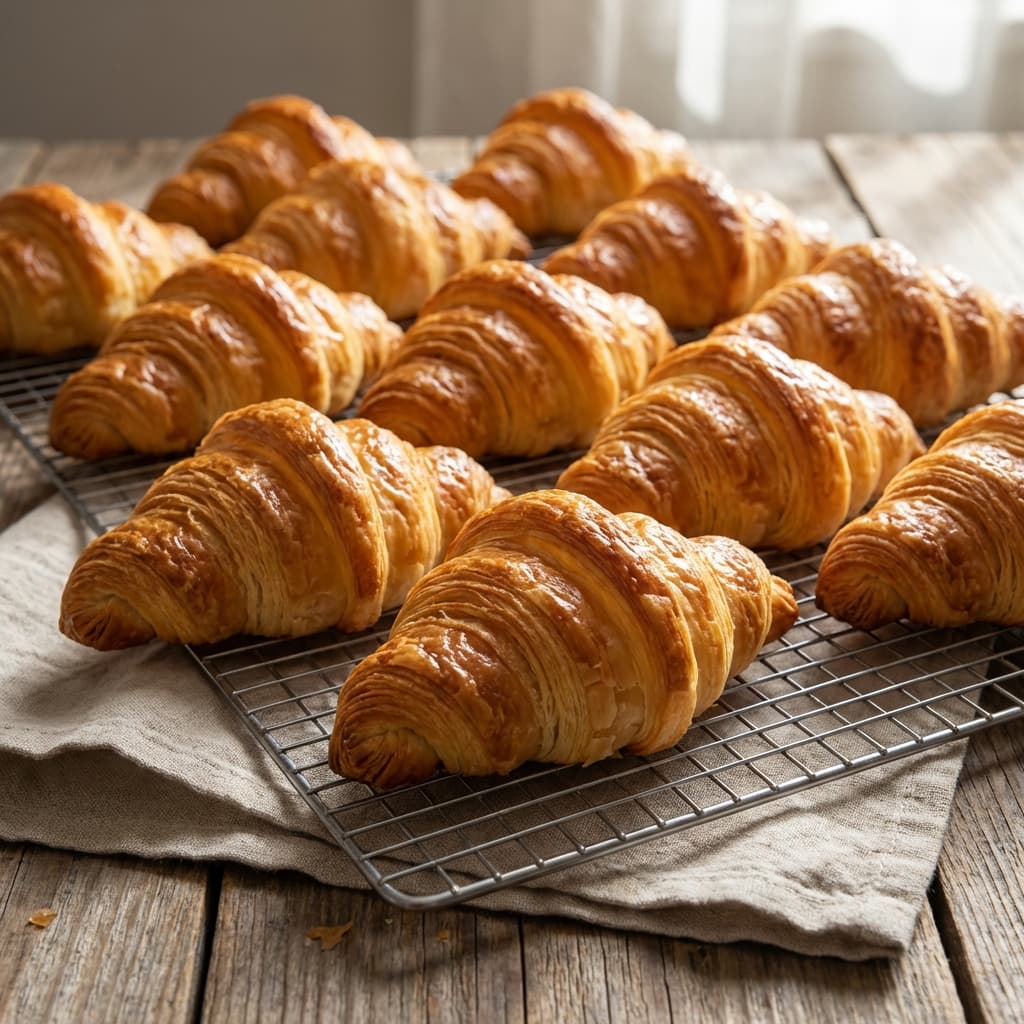
Puff pastry dates back to the 17th century, with credit often given to French pastry chef Claude Gelée. The technique was refined in French patisseries and became a cornerstone of classical pastry. The "inverse" method (butter outside, dough inside) was developed later for certain applications like croissants.