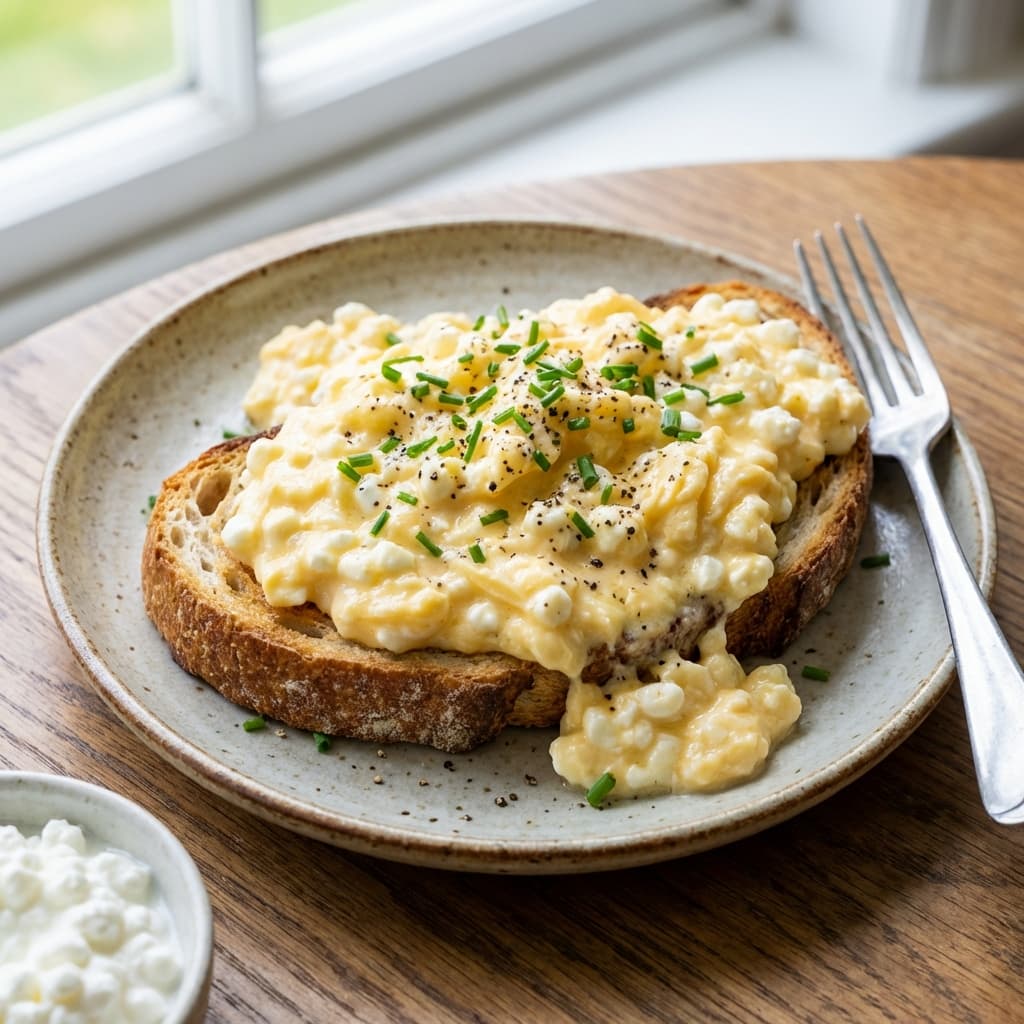
Cottage Cheese Scrambled Eggs (Creamy, Not Wet)
Soft, creamy scrambled eggs with extra protein. Low heat, gentle stir, bright finish.
Creamy scrambled eggs boosted with cottage cheese for protein. Low heat, gentle stirring, and a salt finish keep them tender--not watery.
Cook low and stop early--carryover finishes the eggs and keeps them creamy.
The fit, timing, and key move are all here. If it is a yes, go straight into cook mode.
Soft, creamy scrambled eggs with extra protein. Low heat, gentle stir, bright finish.
Timing note: 9 mins
Set your units, then drop the ingredients into grocery if this is happening later.
What matters before the pan gets hot
The shortest path to understanding the dish, the key move, and whether tonight is the right time to cook it.
The Hook
Cottage cheese in scrambled eggs? It's not a hack, it's a goddamn upgrade. Stop screwing up breakfast.
The Technique
Low heat and carryover cooking are your allies here. The cottage cheese emulsifies, preventing the egg proteins from tightening too aggressively. Cook it gently, pull it early. The residual heat finishes the job, ensuring a creamy, tender scramble, not a dry, sad mess.
The History
Forget the diner myth. This is about taking a breakfast staple and making it actually good. We’re ditching the watery, rubbery disaster and using a common ingredient to achieve actual texture and richness. It’s a quiet rebellion against bad cooking.
Food Facts
Sourced notes. Tap to verify.
Egg yolks contain lecithin, an emulsifier that helps stabilize mixtures of oil and water. That is the core trick behind glossy sauces and creamy dressings.
Creamy scrambled eggs boosted with cottage cheese for protein. Low heat, gentle stirring, and a salt finish keep them tender--not watery.
Nutrition per Serving
Estimated valuesSatiety
Data verifiedTechnique, context, and fallback plans
The reason the method works, the prep you can do early, and what to change if the dish starts drifting.
The common downfall of scrambled eggs is a pan that moves too fast, a heat too high, leaving behind dry, rubbery curds swimming in a watery abyss. It’s a breakfast tragedy many have experienced, a quick meal that ends up feeling like a compromise. The humble cottage cheese, however, offers a revolutionary solution, transforming the protein and texture profile.
When coaxed gently over low heat, cottage cheese melts into the eggs, creating an impossibly soft, creamy emulsion. The key is restraint—cooking just until the curds begin to set, then allowing the residual heat to finish the job. This technique ensures a tender, luscious scramble, a far cry from the grainy disappointment of its overcooked counterpart. It’s the fastest, most satisfying high-protein breakfast, proving that a little culinary wisdom can elevate the everyday into something truly special.
My eggs look watery.
Ah, a little watery, you say? This usually means the heat was a bit too high, or the salt went in too soon. Salt can draw out moisture. For that creamy texture, try cooking at a lo…
My eggs look dry and overcooked.
They've gone a little too far, huh? That means they cooked a touch too long. Remember, the key is to pull them off the heat when they're still a little glossy and wet-looking. The…
Set up, cook, and remember what worked
The mise, the method, your notes, and the next recipes to master after this one lands.
The Setup
- Nonstick Skillet10-inch
- Spatula
The Mise en Place
5 of 6Your prep station before cooking begins
Chef's Notes
If your stove runs hot, lift the pan on and off the heat while stirring to keep curds soft.
WHISK
Whisk eggs (4 whole) and cottage cheese (½ cups) until combined (small curds are fine).
Cottage cheese adds creaminess and protein without needing high heat. • Speckled mixture with no large cottage clumps • Clean dairy aroma
Mixture uniform with cottage cheese dispersed
MELT
Melt butter (1 tbsp) in a nonstick skillet over low heat until foamy, not browned.
Low heat prevents dry curds and watery weeping. • Small bubbles; no browning • Buttery aroma
Butter foams gently
SCRAMBLE
Time-sensitiveAdd egg mixture and cook 3-5 minutes, stirring slowly and constantly, until soft curds form and eggs (4 whole) are just set.
Stop early—carryover sets the last bit without drying. • Creamy curds that hold shape when pushed • Gentle sizzling
Soft curds; no liquid pooling
SEASON
Remove from heat. Season with salt and pepper. Add chives (1 tbsp) if using.
Salt at the end helps avoid watery eggs from early salting. • No steam cloud; eggs look creamy • Fresh pepper and chive aroma
Balanced seasoning; creamy texture
Service Log
Log your variables. Iterate like a pro.
Clean slate.
Log your variables after the first run.
Related Techniques
Master These Next
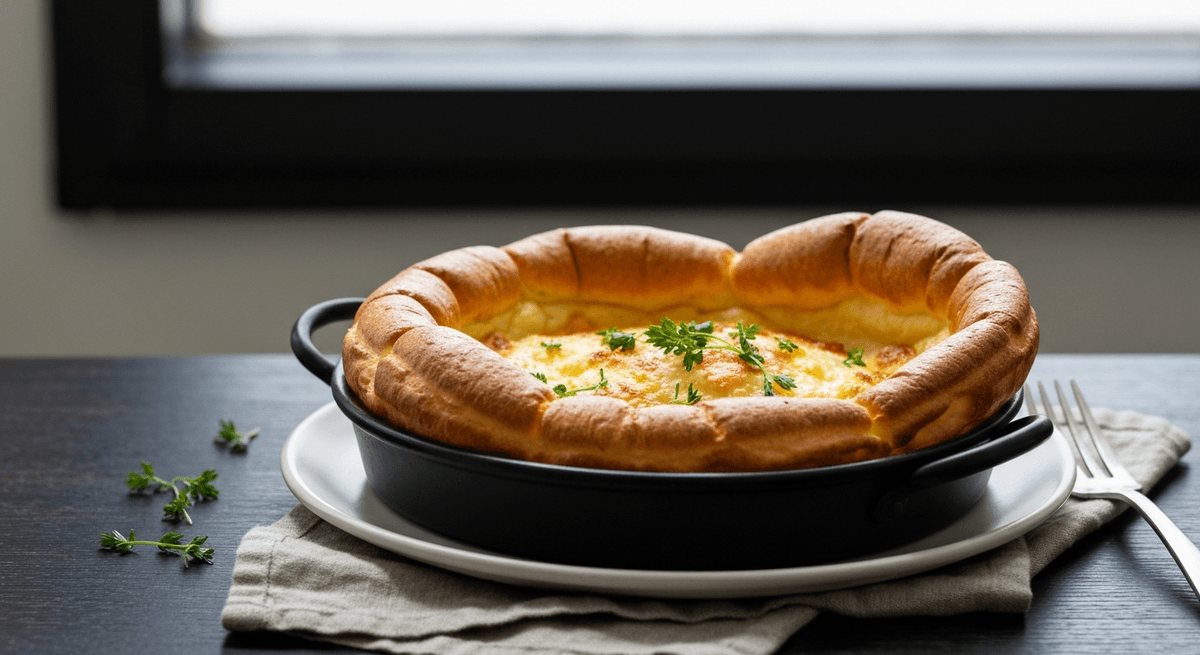
Dutch Baby — Puffy Pancake
A show-stopping breakfast that's surprisingly easy to make! This puffy pancake is a guaranteed crowd-pleaser.
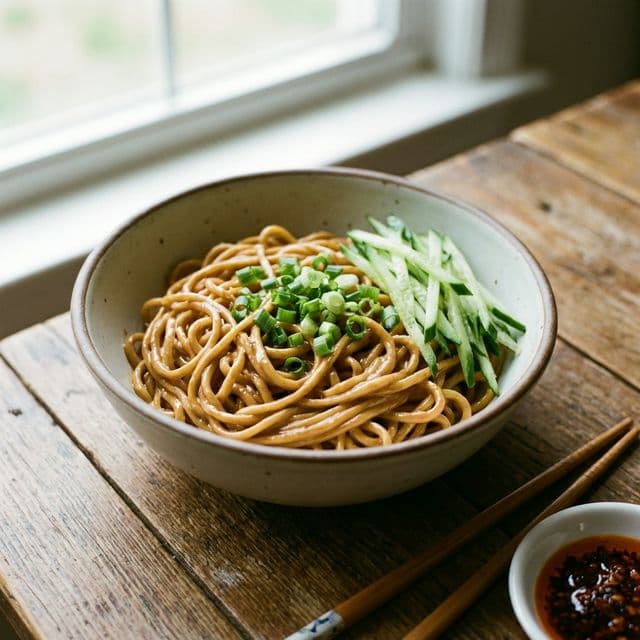
Takeout-Style Sesame Noodles
Cold noodles, hot sauce. Peanut butter and sesame paste sludge.
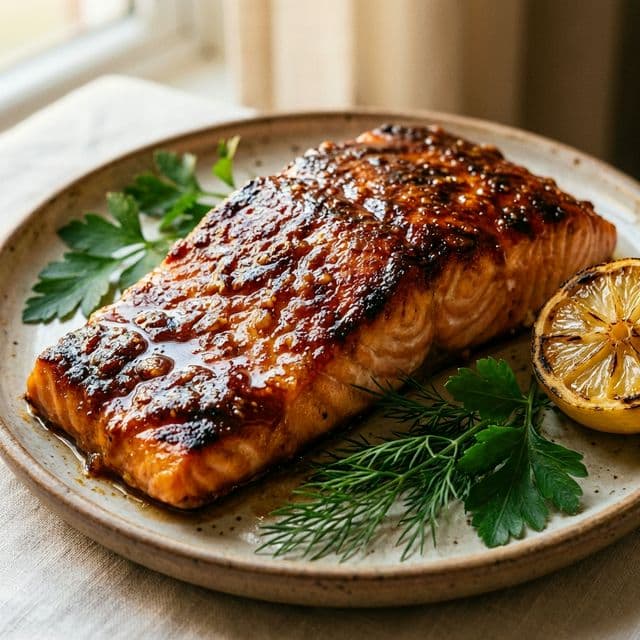
Roasted Salmon with Brown Sugar & Mustard
12 minutes to glory. The glaze protects the fish.