Low & Slow Scrambled Eggs
The technique of cooking eggs over very low heat with constant stirring to create creamy, custard-like texture.
Deep Dive
The French Method
Unlike American diner-style scrambled eggs (high heat, quick cook), the French technique uses low heat and constant agitation to create a creamy, almost custard-like texture.
The Process:
- Low heat - Use the lowest possible heat setting
- Constant motion - Stir continuously with a rubber spatula
- Remove early - Take off heat when still slightly wet (carryover cooking finishes it)
- Butter finish - Fold in cold butter at the end for richness
Temperature Control:
- Too hot = rubbery, dry eggs
- Too cold = takes forever, risk of undercooking
- Sweet spot = 160-170°F (71-77°C) - just below the coagulation point
The Science:
Egg proteins coagulate at different temperatures. By keeping heat low and stirring constantly, you create tiny, tender curds rather than large, tough ones.
The Science
Egg proteins (primarily ovalbumin) begin to denature and coagulate around 144°F (62°C) and fully coagulate at 180°F (82°C). By maintaining temperature between 160-170°F (71-77°C) with constant agitation, you create many small, tender curds rather than fewer large, tough ones. The constant motion prevents proteins from bonding too tightly, resulting in a creamy texture. Adding cold butter at the end stops the cooking process and adds richness.
History
This technique was perfected in French kitchens, particularly by chefs like Escoffier. The method emphasizes patience and technique over speed - a hallmark of classical French cooking. It's the same principle used in making custards and crème anglaise.
Recipes Using This Technique
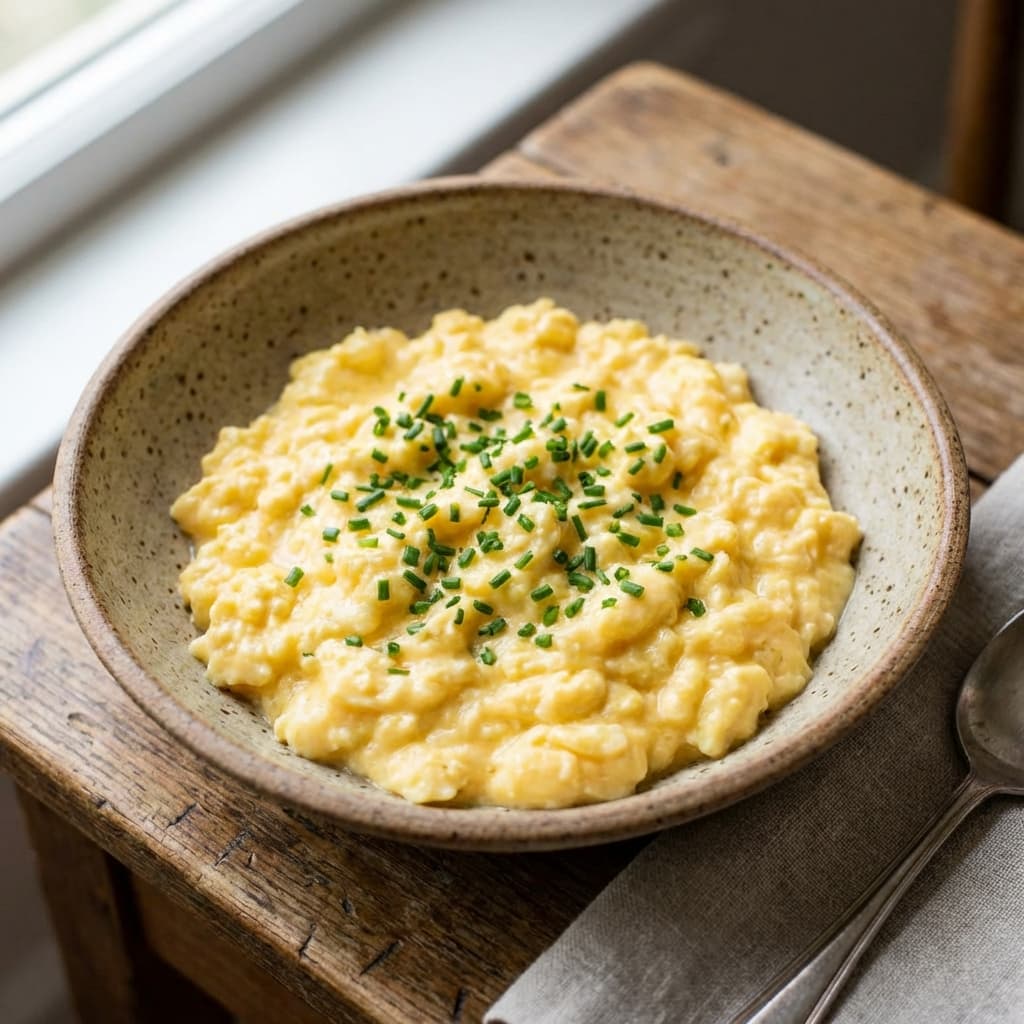
Scrambled Eggs
Buttery, golden ribbons of soft custard.
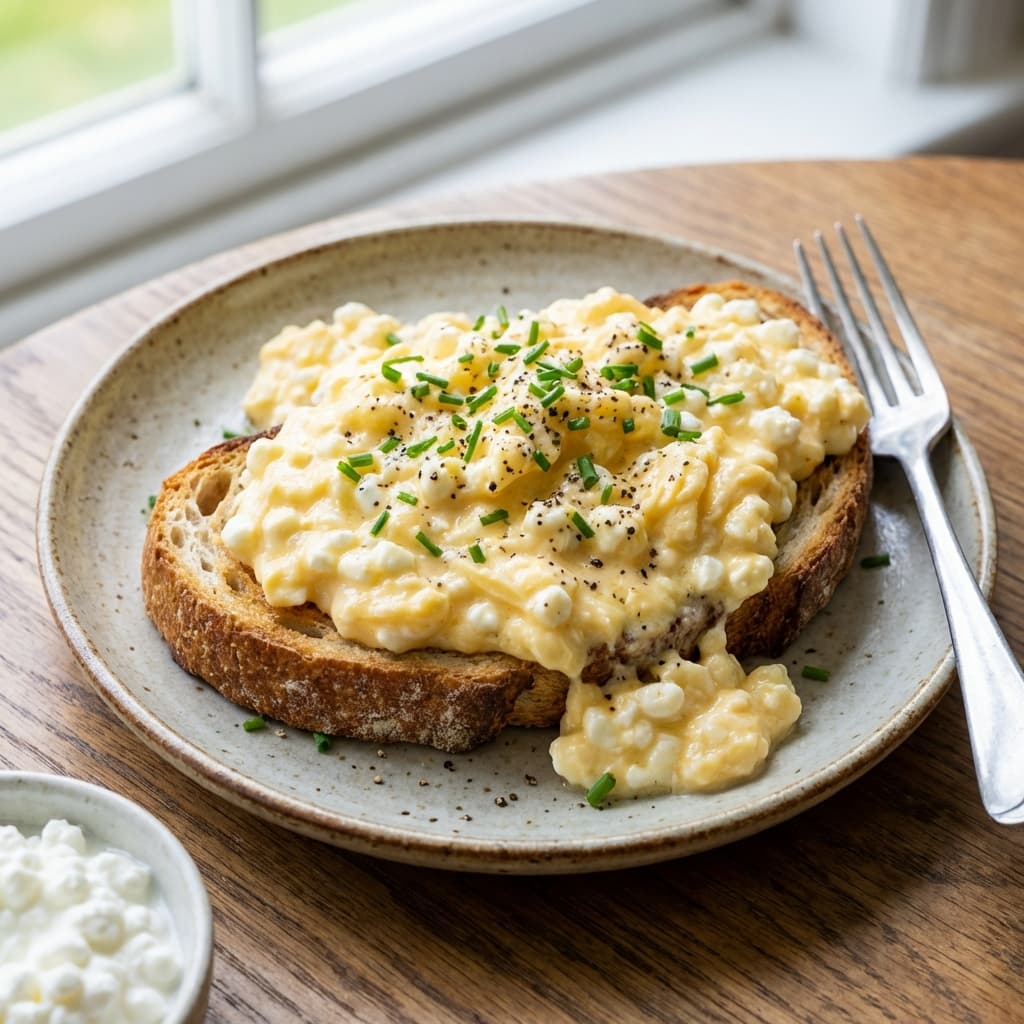
Cottage Cheese Scrambled Eggs
Soft, creamy scrambled eggs with extra protein. Low heat, gentle stir, bright finish.
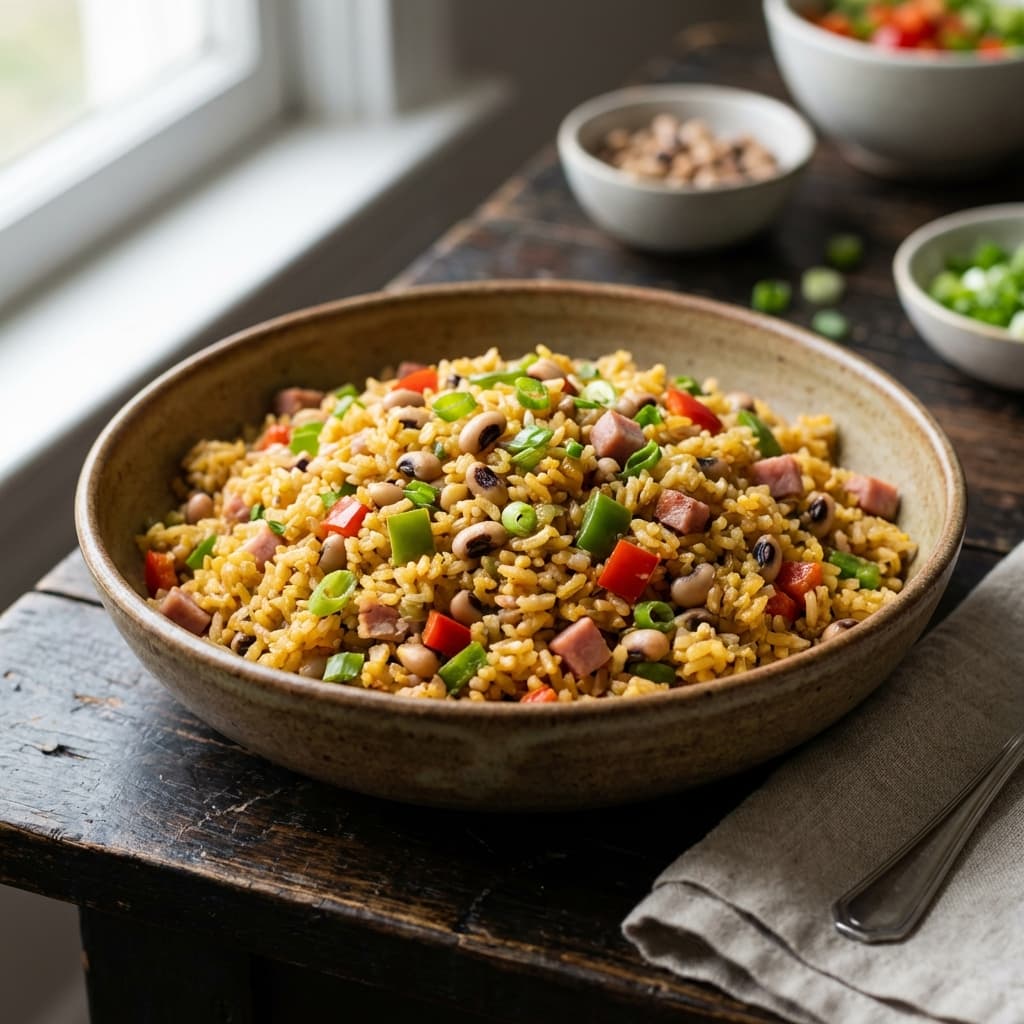
Hoppin' John Fried Rice
Black-eyed peas meet fried rice, and it makes ridiculous sense.