Confit Potatoes (Pave)
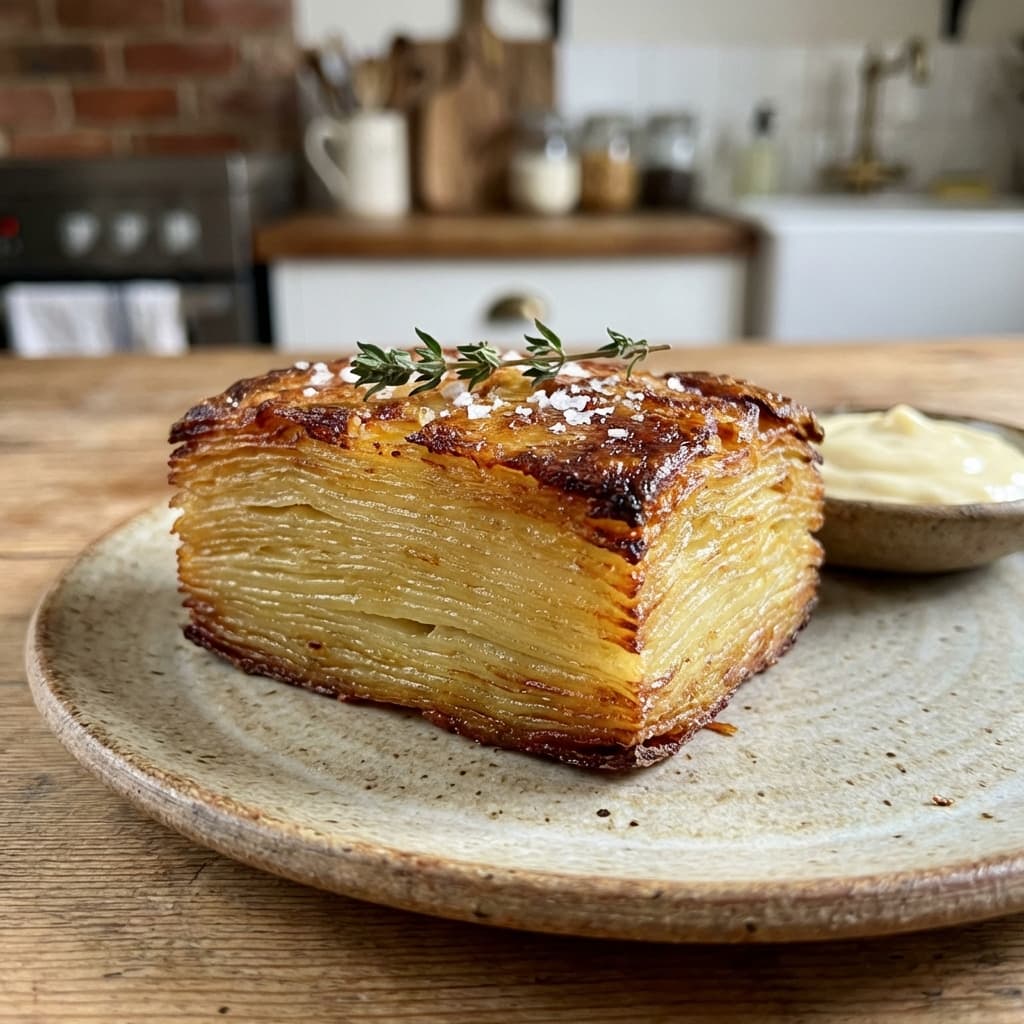
Thousand-layer potato brick, fried in fat.
Thousand-layer potato brick, fried in fat. This is the most viral potato dish for a reason.
This is the most viral potato dish for a reason
The fit, timing, and key move are all here. If it is a yes, go straight into cook mode.
Thousand-layer potato brick, fried in fat.
Timing note: 24 hours
Set your units, then drop the ingredients into grocery if this is happening later.
What matters before the pan gets hot
The shortest path to understanding the dish, the key move, and whether tonight is the right time to cook it.
The Hook
This isn't a side dish, it's a two-day potato prison break. Get it wrong, and you've just wasted a lot of duck fat.
The Technique
We're building a starch brick. Thin slices maximize fat and cream absorption. Baking gelatinizes the starch, creating a paste. Pressing and chilling solidify it. The final sear? Pure Maillard reaction. Screw up the layering or pressing, and you get a greasy, mushy mess instead of crispy, creamy perfection. Don't be that cook.
The History
Forget some fancy French chef inventing this. This is modern bistronomy's answer to making a potato last. It's technique disguised as comfort food, a calculated layering of starch and fat that's more engineering than cooking, born from necessity and perfected in kitchens that understand the value of time and fat.
Food Facts
Sourced notes. Tap to verify.
A lot of dairy texture comes from milk proteins like casein. When those proteins coagulate (from acid, heat, or enzymes), you get curds, thickeners, and the backbone of cheeses and creamy sauces.
Thousand-layer potato brick, fried in fat. This is the most viral potato dish for a reason.
Nutrition per Serving
Estimated valuesSatiety
Data estimatedTechnique, context, and fallback plans
The reason the method works, the prep you can do early, and what to change if the dish starts drifting.
The humble potato, transformed into a culinary marvel, has taken the internet by storm, and for good reason. This isn't just a side dish; it's a testament to technique, a 'tater tot' elevated to an art form over two painstaking days. The magic lies in the potato's own starch, the invisible 'glue' that binds hundreds of paper-thin slices together. Rinsing away this precious starch is a cardinal sin, ensuring the carefully constructed brick crumbles into a sad pile rather than a golden masterpiece.
Born from the modern bistronomy movement in France, this confit potato, or pave, is a study in contrasts. Layers are meticulously assembled, bathed in luxurious duck fat or clarified butter and rich cream, then compressed into a dense brick. After baking and chilling, the true transformation occurs: a final fry renders the exterior shatteringly crisp, revealing a tender, impossibly layered interior. It’s a dish that demands respect for its process, delivering an unparalleled textural and flavor experience.
My potato pave fell apart in the pan.
Ah, it lost its structure? That usually means we didn't let enough starch bind those layers together. Make sure you're pressing it really well, and for a good long while, to really…
It's burnt on the outside but still cold inside.
That dense brick needs a moment to catch up. You likely went straight from the fridge to the hot pan. Let those slices come up to room temperature first – it ensures the heat penet…
Use this in Focus
Turn this nutrition profile into a week you can plan, shop, and actually cook.
Set up, cook, and remember what worked
The mise, the method, your notes, and the next recipes to master after this one lands.
The Setup
- Skillet12-inch
- Loaf Pan9×5 inch
- Cutting Board
- Chef's Knife
- Mixing Bowls
The Mise en Place
3Your prep station before cooking begins
The Protein (0/1)
Other (0/2)
Chef's Notes
For perfectly crisp edges, ensure the potatoes are evenly layered and pressed firmly before chilling. This creates a dense block for clean slicing.
When frying, use a neutral oil with a high smoke point (like canola or grapeseed) and maintain a consistent temperature for even browning.
Serve confit potatoes alongside grilled steak or roasted chicken for a luxurious side dish that complements rich flavors.
The potato block can be fully assembled and chilled overnight before slicing and frying, saving significant prep time on the day of serving.
THE SLICE & TOSS
Slice potatoes. Toss in a bowl with melted fat, salt, and cream.
THE STACK
Time-sensitiveLayer slices into the loaf pan like shingles. Overlap them perfectly.
⚠️ No gaps. If you leave air pockets, the fryer oil will penetrate and explode the pave.
THE BAKE
Time-sensitiveCover with foil. Bake at 350°F (175°C) for 90 mins.
A knife should slide through with zero resistance.
THE PRESS
Remove from oven. Place a second loaf pan on top. Fill it with heavy cans. CHILL overnight.
Why? The starch sets and glues the layers into a solid block.
THE FRY
Unmold. Slice into rectangles. SEAR the cut sides in a hot pan until crispy.
Overcrowding: Crowding steams instead of browning. Sear in batches and leave space.
Service Log
Log your variables. Iterate like a pro.
Clean slate.
Log your variables after the first run.