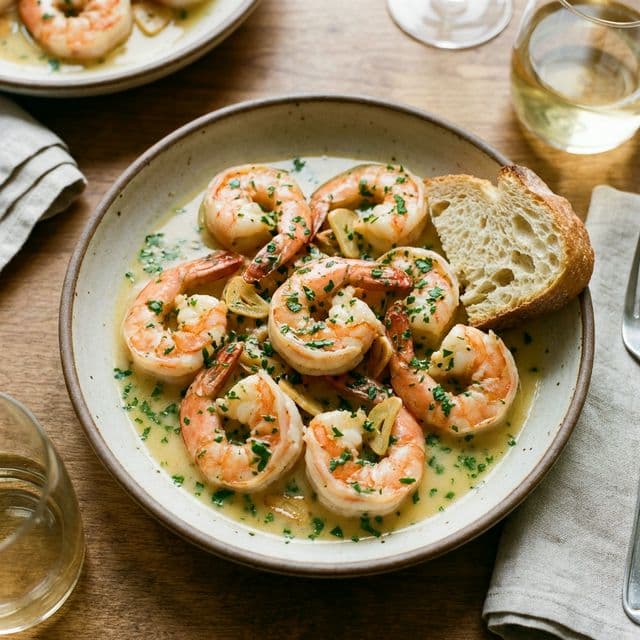
Classic Shrimp Scampi
Garlic, wine, butter. Do not overcook the shrimp.
Master butter emulsification with shrimp scampi. Mount cold butter into hot wine for creamy sauce. Garlic burns at 375°F—watch carefully. Shrimp cook in 2-3 min
Scampi is butter emulsification. Mount cold butter into hot wine off-heat by swirling. If pan is too hot, butter separates into oil. Shrimp should be C-shaped, not O-shaped (overcooked).
The fit, timing, and key move are all here. If it is a yes, go straight into cook mode.
Garlic, wine, butter. Do not overcook the shrimp.
Timing note: 15 mins
Set your units, then drop the ingredients into grocery if this is happening later.
What matters before the pan gets hot
The shortest path to understanding the dish, the key move, and whether tonight is the right time to cook it.
The Hook
Most people make scampi wrong by either burning the garlic or breaking the butter sauce. The garlic must be pale gold—brown garlic is bitter. The butter must go in off-heat and be swirled, not stirred. It's a 15-minute dish that requires your full attention.
The Technique
A beurre monté is an emulsion of butter fat suspended in liquid. Butter is about 80% fat and 20% water. When you add cold butter to hot liquid off-heat, the fat melts while the water disperses. Vigorous agitation (swirling) creates tiny fat droplets that stay suspended in the wine, forming a creamy sauce. If the pan is too hot, the proteins denature and the emulsion breaks, leaving you with yellow oil floating on top.
The History
Italian-American. Italian cooks in the US swapped langoustines (scampi) for shrimp, creating this now-classic dish.
Food Facts
Sourced notes. Tap to verify.
Fish generally has less connective tissue than land meats, so it firms up and flakes quickly with heat. That is why seafood often goes from underdone to overdone in a small window.
The browned bits stuck to the pan (fond) dissolve into liquid when deglazed, creating a fast flavor base for sauces.
Master butter emulsification with shrimp scampi. Mount cold butter into hot wine for creamy sauce. Garlic burns at 375°F—watch carefully. Shrimp cook in 2-3 min
Nutrition per Serving
Estimated valuesSatiety
Data estimatedTechnique, context, and fallback plans
The reason the method works, the prep you can do early, and what to change if the dish starts drifting.
Scampi is an exercise in butter emulsification. We are making a beurre monté—mounting cold butter into hot wine and garlic. If the pan is too hot, the butter separates into oil. If it's just right, it becomes a creamy, opaque sauce that clings to the shrimp.
'Scampi' is actually the Italian name for langoustines (tiny lobsters). 'Shrimp scampi' literally means 'shrimp lobster'—a linguistic redundancy that happened when Italian cooks in America swapped langoustines for the more available Gulf shrimp. The name stuck.
The technique here is all about temperature control. Garlic burns at 375°F, turning bitter and acrid. By cooking it gently in oil, we extract its flavor without burning. Shrimp cook in 2-3 minutes total—any longer and they turn rubbery. The butter emulsion happens off-heat, where the cooling pan allows the fat and water in the butter to combine with the wine into a stable sauce.
The swirling motion is critical. When you swirl the pan, you're creating turbulence that forces the fat droplets to stay suspended in the liquid. Stirring with a spoon doesn't create enough agitation—you need that shaking motion to build the emulsion.
Sauce is oily and broken (yellow oil floating)?
Pan was too hot when you added the butter, or you didn't swirl enough.
Shrimp are rubbery?
You overcooked them. Shrimp take only 2-3 minutes total. They're done when they form a C-shape and turn pink-orange. If they're tightly curled into an O-shape, they're overcooked.…
Use this in Focus
Turn this nutrition profile into a week you can plan, shop, and actually cook.
Set up, cook, and remember what worked
The mise, the method, your notes, and the next recipes to master after this one lands.
The Setup
- Large Skillet12-inch·Must be large enough to hold shrimp in single layer
The Mise en Place
5 of 10Your prep station before cooking begins
The Protein (0/1)
The Aromatics (0/1)
Seasoning (0/3)
Chef's Notes
Slice garlic thin, don't mince—it burns less easily.
Mount butter off-heat by swirling (not stirring) for proper emulsion.
Serve over angel hair pasta, linguine, or with crusty bread to soak up the sauce.
INFUSE
Time-sensitiveHeat olive oil (2 tbsp) in a large skillet over medium heat. Add sliced garlic (4 cloves) and red pepper flakes (¼ tsp). Cook gently, stirring, until garlic is pale golden (about 1-2 minutes). Do not let it brown.
Garlic burns at 375°F—watch like a hawk. Brown garlic is bitter. • Garlic slices are translucent with golden edges • Gentle sizzle, aromatic garlic smell (not burnt)
Garlic is fragrant and golden, not brown
COOK
Time-sensitiveAdd shrimp to the pan in a single layer. Season with salt (½ tsp) and pepper. Cook without moving for 1 minute until bottom is pink. Flip and cook 1 more minute.
Don't move them—let one side sear first • Shrimp turn from gray to pink-orange • Shrimp sizzle, smell sweet and briny
Shrimp are pink and curled into C-shape
DEGLAZE
Time-sensitiveAdd wine to the pan. Bring to a simmer and cook for 1 minute, letting alcohol evaporate.
Brief simmer cooks off raw alcohol taste • Liquid reduces slightly, shrimp finish cooking • Sharp alcohol smell fades to fruity wine aroma
Hot-pan splash: Deglazing can steam and spit. Pour slowly and keep your face/hands back.
Wine is bubbling, alcohol smell mellows
MOUNT
Time-sensitiveRemove pan from heat. Add cold butter cubes and swirl the pan constantly (do not stir with a spoon) until butter melts and creates a creamy sauce.
Agitation + Cooling = Emulsion. Swirl, don't stir. • Sauce is pale, opaque, and glossy—emulsified • Sauce thickens and becomes silky
Sauce looks like heavy cream, not yellow oil
FINISH
Stir in lemon (1 whole) juice and parsley. Taste and adjust seasoning.
C-shape = perfect. O-shape (tightly curled) = overcooked. • Shrimp are pink, curled, coated in creamy sauce • Bright lemon and herb aroma
Shrimp are C-shaped (not O-shaped)
SERVE
Serve immediately over pasta or with crusty bread.
Serve immediately—emulsion breaks as it cools • Shrimp and sauce coat pasta
Dish is hot and ready
Service Log
Log your variables. Iterate like a pro.
Clean slate.
Log your variables after the first run.
Master These Next
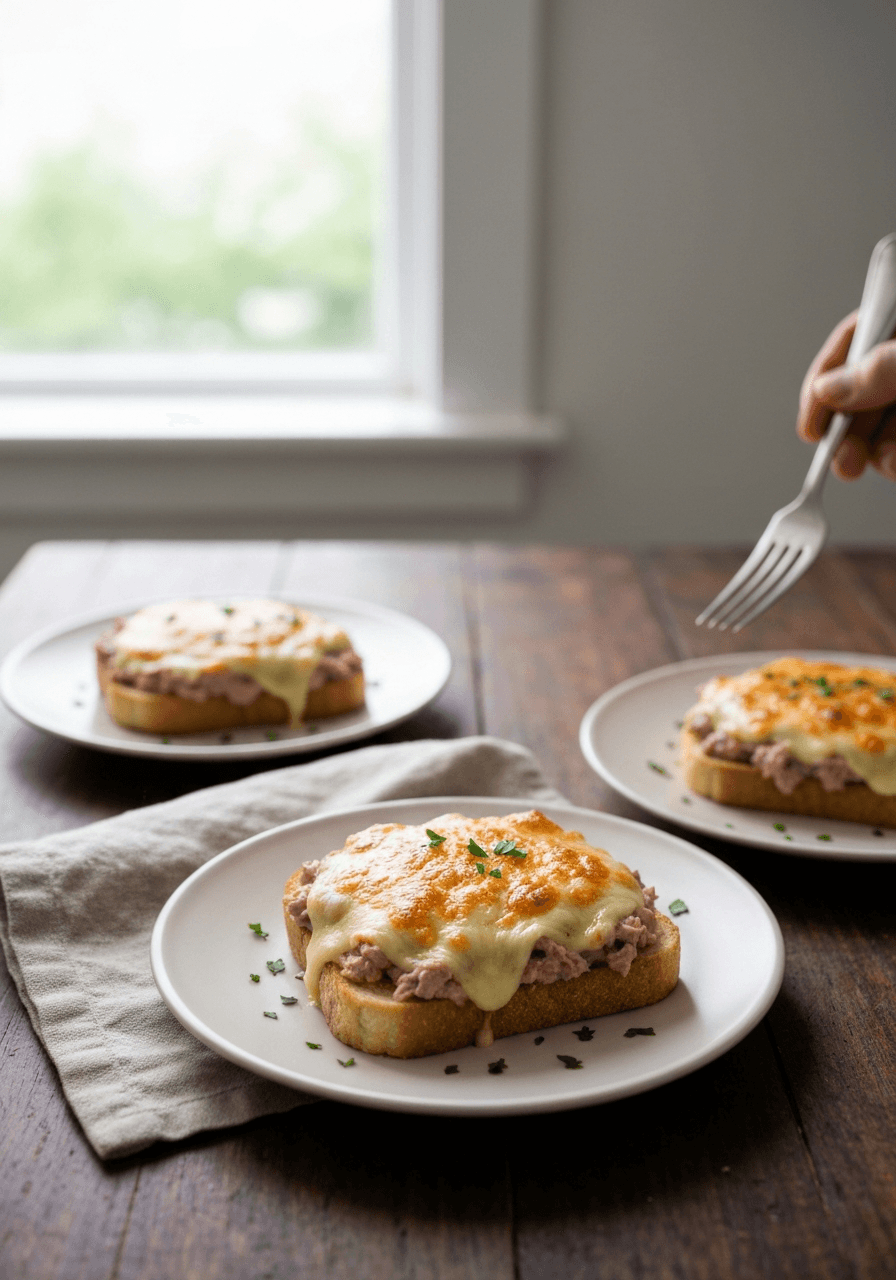
Tuna Melt — Open-Faced
A bubbly, cheesy, elevated take on the diner classic. Broiling brings out the best flavors and textures.
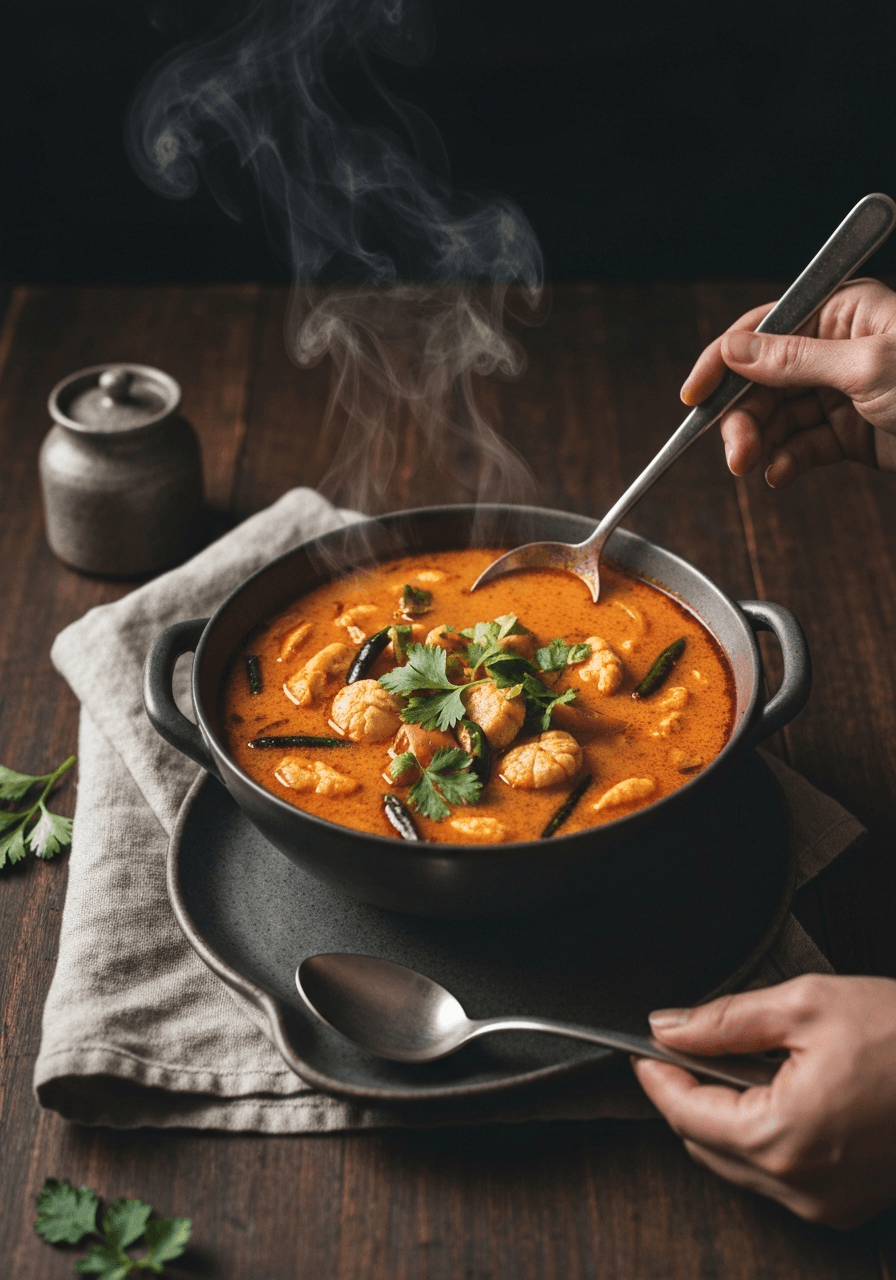
Tom Yum Soup — Hot and Sour
Experience the vibrant flavors of Thailand with this authentic Tom Yum soup. A perfect balance of spicy, sour, and aromatic, it's a culinary adventure in every spoonful.
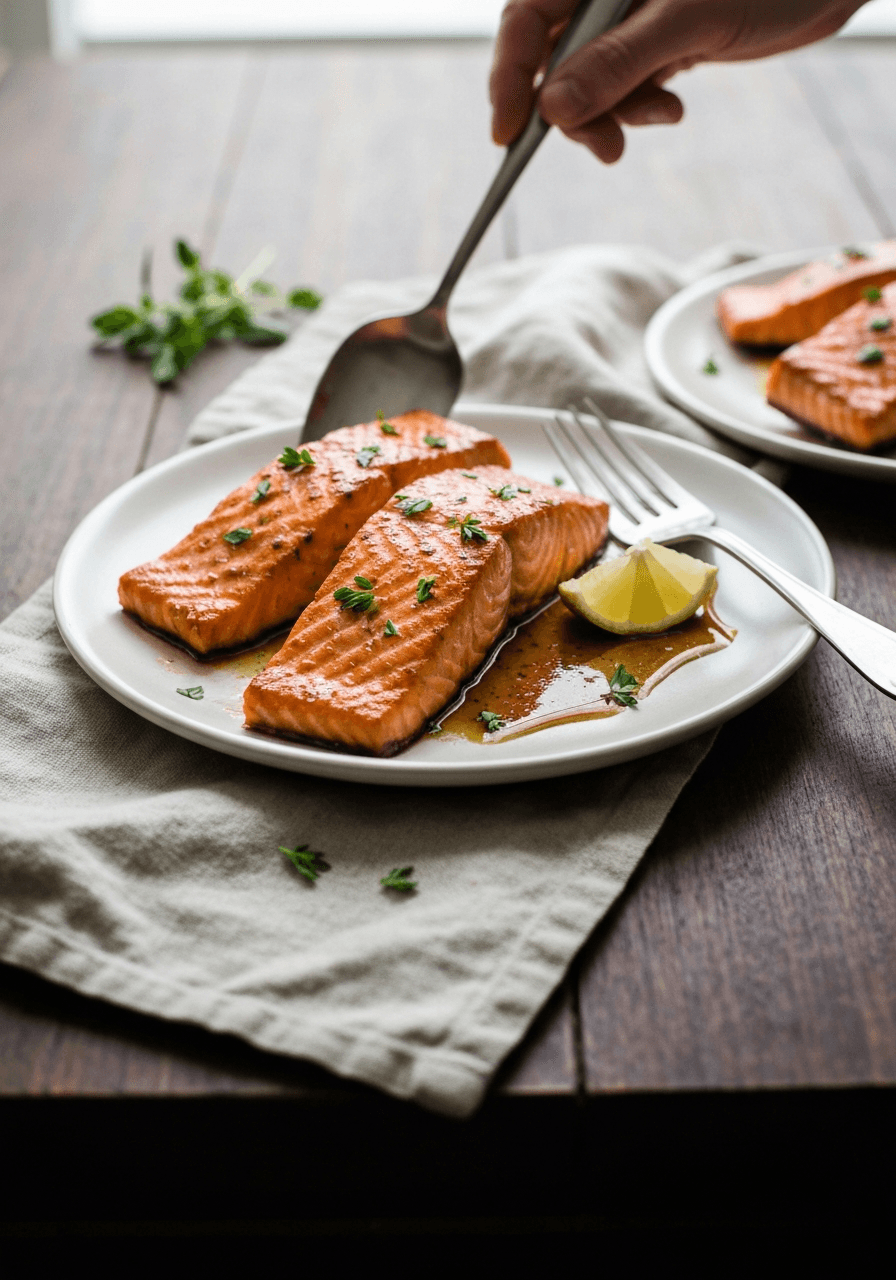
Teriyaki Salmon — Glazed
Sweet, savory, and irresistibly glazed, this teriyaki salmon is a weeknight showstopper. The secret? Glazing at the end for perfect caramelization.