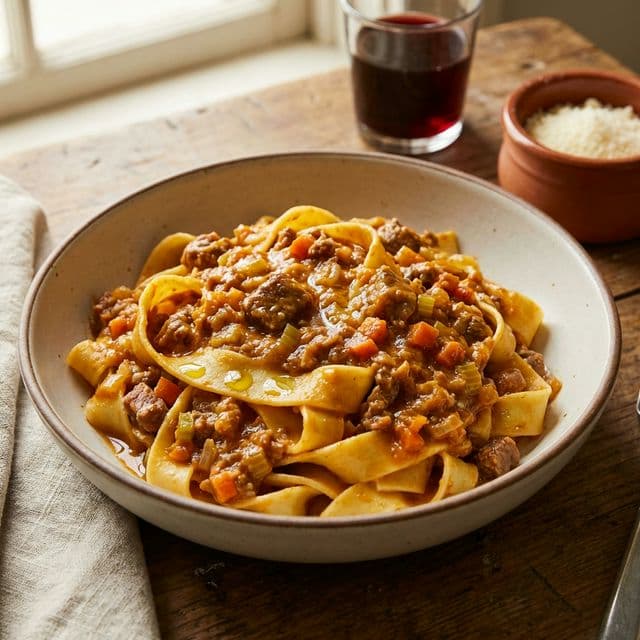
Bolognese (The Real Way)
Meat, milk, wine, time. NOT a tomato sauce.
Master authentic Bolognese ragu with milk-protected meat, wine reduction, and 4-hour simmering. Orange-brown sauce, not red. No basil, no garlic—just technique.
Cook meat in milk first to coat protein fibers and prevent toughness. Evaporate milk completely before adding wine. Simmer low for 3-4 hours until fat separates.
The fit, timing, and key move are all here. If it is a yes, go straight into cook mode.
Meat, milk, wine, time. NOT a tomato sauce.
Timing note: 4 hours
Set your units, then drop the ingredients into grocery if this is happening later.
What matters before the pan gets hot
The shortest path to understanding the dish, the key move, and whether tonight is the right time to cook it.
The Hook
Americans ruin Bolognese by treating it like spaghetti sauce. It's not about the tomato. It's about coaxing flavor from meat through careful layering of milk, wine, and time. The nutmeg is the secret weapon—it ties everything together.
The Technique
The milk isn't for creaminess; it coats the meat proteins to protect them from the wine's acidity, preventing toughness. The long, slow simmer breaks down collagen in the beef, creating a silky, rich texture. The fat separation is a sign that the proteins have released their moisture and the sauce has concentrated properly.
The History
Bologna, Italy, 18th century. The official recipe was registered with the Bologna Chamber of Commerce in 1982.
Food Facts
Sourced notes. Tap to verify.
Tough cuts feel chewy because they contain more collagen. With time and moist heat, collagen breaks down into gelatin, which is why braises and stews get richer the longer they cook.
A roux works because flour starches swell in liquid; longer-cooked roux gains flavor but loses thickening strength compared with pale roux.
Master authentic Bolognese ragu with milk-protected meat, wine reduction, and 4-hour simmering. Orange-brown sauce, not red. No basil, no garlic—just technique.
Nutrition per Serving
Estimated valuesSatiety
Data estimatedTechnique, context, and fallback plans
The reason the method works, the prep you can do early, and what to change if the dish starts drifting.
If you put basil and garlic in this, you're making American meat sauce, not Bolognese. True Ragu alla Bolognese is about the meat, not the tomato. The tomato is a whisper, not a shout.
We cook the meat in milk first. This isn't for creaminess—it's chemistry. The milk coats the meat fibers, protecting them from the acidity of the wine that comes next. Without this step, the wine's acid would make the beef tough and stringy.
Then comes the wine. You must let it evaporate completely before adding the tomatoes. If you rush this step, the sauce tastes sour and alcoholic. Patience here is non-negotiable.
Finally, the long simmer. Three to four hours on the lowest heat. This is where the magic happens. The meat breaks down, the flavors meld, and the fat separates, creating those telltale orange pools on the surface. That's how you know it's done.
The result is orange-brown, not red. It's meaty, rich, and complex in a way that quick meat sauces can never be. This is the real deal.
Sauce is dry and sticking to pot?
You boiled it too hard. Lower the heat immediately and add a splash of water or stock. Stir gently. Next time, keep it at the barest simmer—you should see occasional bubbles, not c…
Tastes sour or sharp?
You didn't cook the wine out long enough before adding the tomatoes.
Use this in Focus
Turn this nutrition profile into a week you can plan, shop, and actually cook.
Set up, cook, and remember what worked
The mise, the method, your notes, and the next recipes to master after this one lands.
The Setup
- Heavy-Bottomed Pot or Dutch Oven4-6 qt·Heavy bottom prevents scorching during long simmer
- Wooden Spoon
The Mise en Place
5 of 11Your prep station before cooking begins
Seasoning (0/2)
The Soffritto (0/4)
Chef's Notes
The nutmeg is essential—it's the secret ingredient that ties everything together.
Serve over fresh tagliatelle or pappardelle, not spaghetti. Wide noodles hold this thick sauce better.
Actually improves after a day in the fridge as flavors meld. Make ahead and reheat gently.
SWEAT
Prep aheadMelt butter in a heavy-bottomed pot over medium heat. Add onion (1 medium), celery (1 stalk), and carrot (1 medium) (soffritto). Cook, stirring occasionally, until vegetables are soft and translucent but not browned, about 8 minutes.
Do not brown—we want soft and sweet, not caramelized • Onions are translucent, not golden • Sweet vegetable aroma
Vegetables are soft, sweet-smelling, not browned
COOK
Add ground beef (1 lb). Break it up with a wooden spoon. Cook, stirring, until meat loses its raw color but is not browned hard. Season with salt (1 tsp) and pepper.
Do not brown too hard—we want soft meat, not burger crust • Beef is gray-pink, broken into small pieces • Savory meat aroma
Meat is cooked through but not crusty
SIMMER
Time-sensitiveAdd milk and nutmeg (¼ tsp). Stir well. Simmer gently, stirring occasionally, until the milk has completely evaporated. This can take 30-45 minutes.
You must let the milk disappear before adding wine—rushing causes curdling • No white liquid, just meat and vegetables • Sweet, creamy aroma fades as milk evaporates
No liquid visible—milk has fully evaporated
DEGLAZE
Time-sensitiveAdd white wine. Simmer until the wine has completely evaporated, about 20 minutes.
Cook wine out completely before adding tomatoes or it will taste sour • Pan looks dry again • Sharp alcohol smell fades
Hot-pan splash: Deglazing can steam and spit. Pour slowly and keep your face/hands back.
No liquid visible, smell is no longer alcoholic
BRAISE
Time-sensitiveAdd crushed tomatoes. Stir well. Reduce heat to the lowest possible setting. Simmer very gently, uncovered, for 3-4 hours. Stir every 30 minutes. Add a splash of water if it looks too dry.
Low and slow—if it boils hard, the sauce dries out and the meat toughens • Sauce is orange-brown, not red. Fat glistens on surface. • Deep, rich, meaty aroma
Scorch risk: Reductions can go from perfect to burnt fast. Keep an eye on the bottom and stir if needed.
Fat separates and floats on top in orange pools
FINISH
Taste and adjust salt (1 tsp). Serve over pasta (traditionally tagliatelle or pappardelle), tossing with pasta water to help the sauce coat.
Toss sauce with hot pasta and pasta water for best coating • Sauce coats pasta thickly
Sauce is thick, meaty, orange-brown
Service Log
Log your variables. Iterate like a pro.
Clean slate.
Log your variables after the first run.
Master These Next
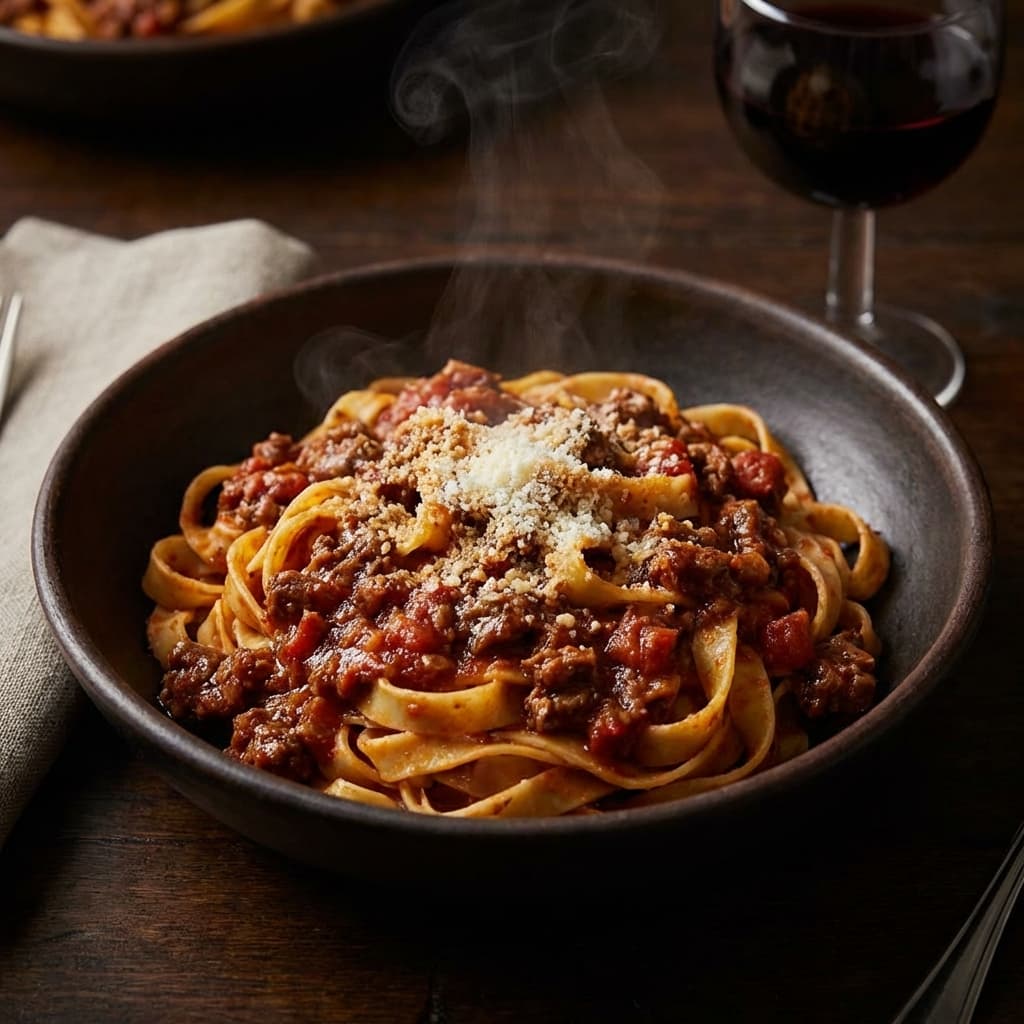
Bolognese
Meat sauce stewed in milk. Tomatoes are an afterthought.
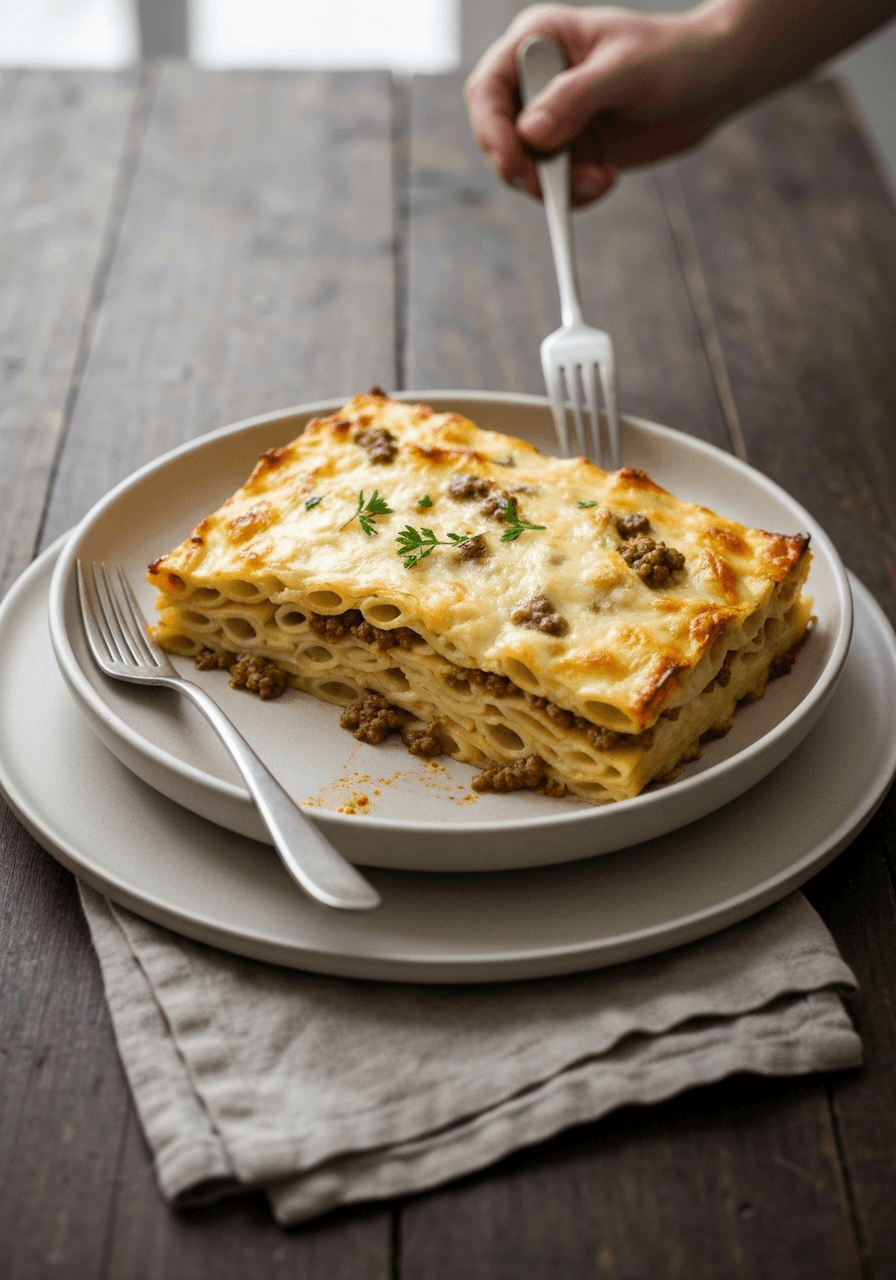
Pastitsio — Greek Pasta Bake
Experience the comforting flavors of Greece with this layered pasta bake. The cinnamon-spiced meat sauce and creamy béchamel will transport you to a sun-drenched taverna.
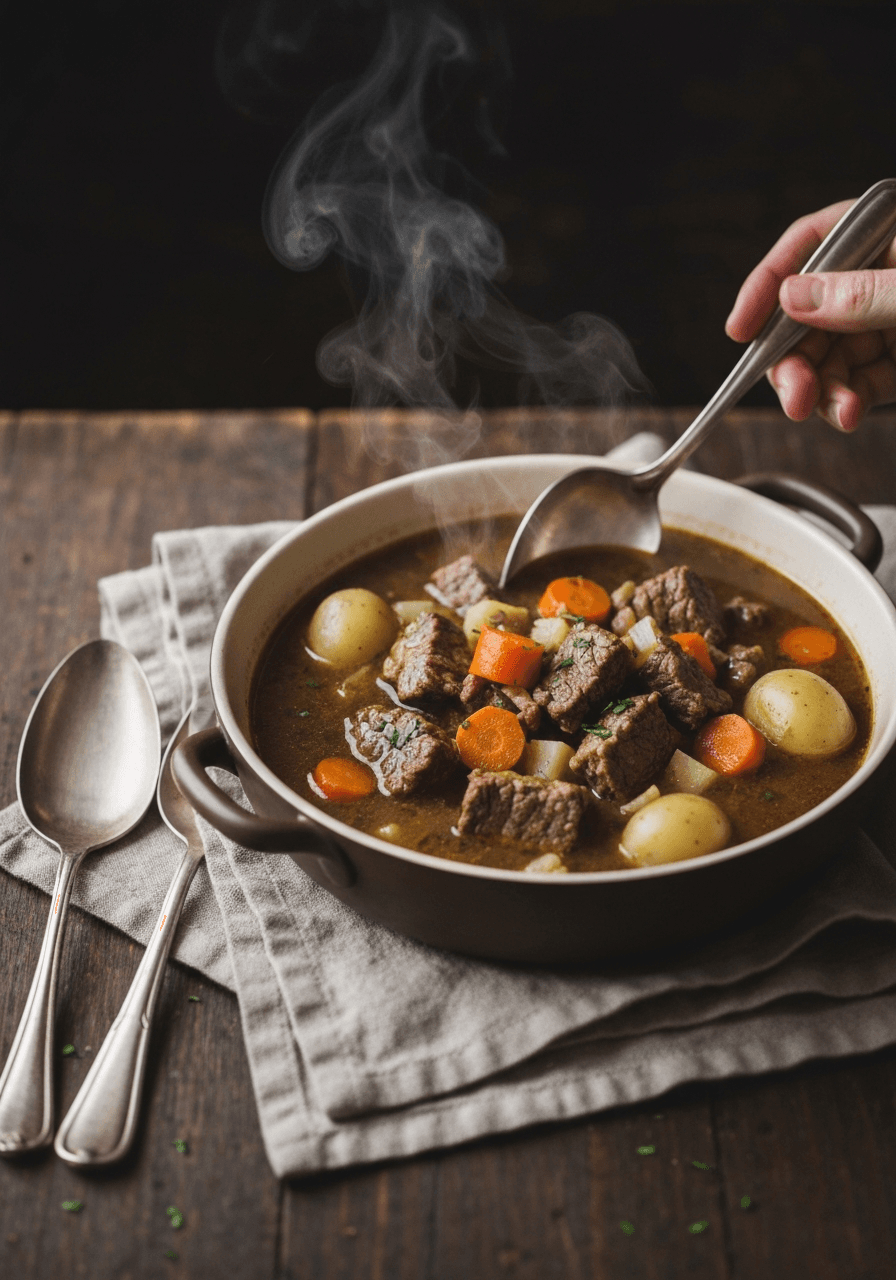
Old-Fashioned Beef Stew
No wine, just beef, carrots, and potatoes. Brown the meat or don't bother.