Vegetable Tempura
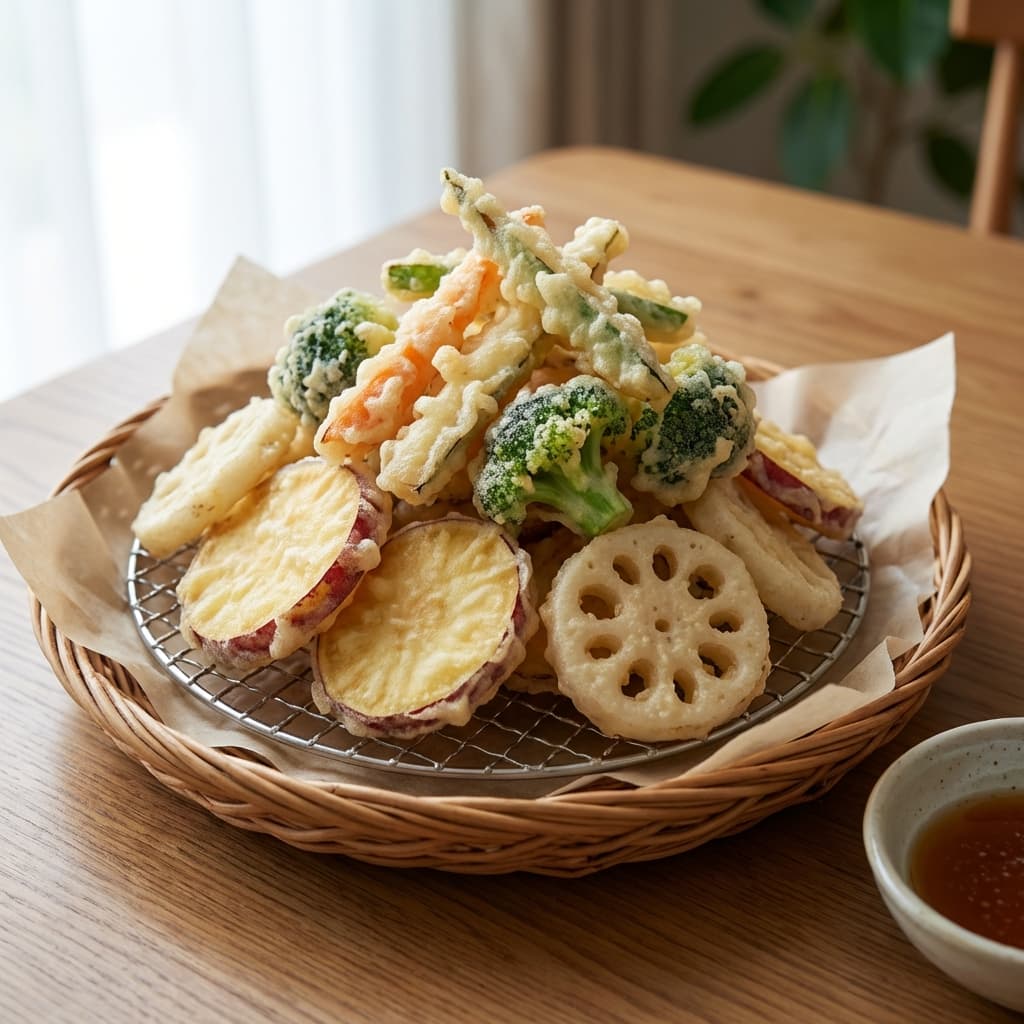
Ice-cold batter meets hot oil. Lace-like crunch.
Ice-cold batter meets hot oil. Lace-like crunch. Tempura is a paradox.
Tempura is a paradox
The fit, timing, and key move are all here. If it is a yes, go straight into cook mode.
Ice-cold batter meets hot oil. Lace-like crunch.
Timing note: 30 mins
Set your units, then drop the ingredients into grocery if this is happening later.
What matters before the pan gets hot
The shortest path to understanding the dish, the key move, and whether tonight is the right time to cook it.
The Hook
This ain't fried chicken. It's a delicate dance. Screw it up, and you've made greasy vegetables. Nail it, and it's pure, ethereal crunch.
The Technique
The magic is in the shock. Ice-cold batter hitting screaming hot oil. That thermal difference creates steam, which puffs the batter into a shell. Overwork the flour, use warm liquid, and you get a dense, greasy disaster. We want air, not dough.
The History
Don't let anyone tell you this is purely Japanese. Portuguese missionaries, looking for a way to eat fish during Lent, left this batter-fried mess behind in the 16th century. We refined it. We perfected it. They just invented it.
Food Facts
Sourced notes. Tap to verify.
Mise en place means setting up your ingredients and tools before you start cooking. It is a professional workflow trick that reduces mistakes, keeps timing tight, and makes cooking feel calmer.
Ice-cold batter meets hot oil. Lace-like crunch. Tempura is a paradox.
Nutrition per Serving
Estimated valuesSatiety
Data estimatedTechnique, context, and fallback plans
The reason the method works, the prep you can do early, and what to change if the dish starts drifting.
Tempura is a delightful paradox, a culinary dance between extreme temperatures. Imagine ice-cold batter hitting the shimmering, hot oil – a shock that creates an ethereal, lace-like crunch. This isn't just frying; it's a masterful technique born from 16th-century Portuguese missionaries in Japan. The magic lies in the steam escaping the vegetable, inflating the batter into a delicate shield, ensuring the food itself never truly touches the searing oil. Professional chefs even employ a secret weapon: flicking stray batter into the oil beforehand to create Tenkasu, or 'heavenly crumbs,' for an extra layer of crispiness. Achieving this perfect, glass-like crispness demands precision; over-mixed batter or lukewarm water can lead to a heavy, donut-like coating instead of the desired delicate crisp. It’s a testament to the pursuit of lightness and texture, a fleeting moment of perfection.
My tempura is coming out heavy and bready, not light and crisp.
That usually means the batter got over-mixed, or the water wasn't quite cold enough.
The batter is sliding right off my vegetables.
Ah, that tells me the vegetables might have been a little too wet, or we skipped the crucial first step of lightly dusting them in flour.
Set up, cook, and remember what worked
The mise, the method, your notes, and the next recipes to master after this one lands.
The Setup
- Cutting Board
- Chef's Knife
- Whisk
The Mise en Place
4Your prep station before cooking begins
The Pantry (0/2)
The Finish (0/1)
Other (0/1)
Chef's Notes
Ensure oil is hot (350°F) for crispy tempura. Too cool, and it'll be greasy. Too hot, and it'll burn.
Don't overcrowd the baking sheet. Give veggies space for even cooking and crisping.
Serve immediately with tentsuyu dipping sauce and grated daikon for best texture.
THE DRY
Slice vegetables (300 g). DUST lightly in dry flour. Shake off excess.
Why? Batter slides off wet vegetables. The dust is the primer.
THE MIX (The Lazy Whisk)
Time-sensitiveMix soda water (500 mL) and flour. STIR with chopsticks only 5-6 times.
There should be lumps. It should look like a mistake. If it's smooth, throw it out—you made gluten (bread).
There should be lumps. It should look like a mistake. If it's smooth, throw it out--you made gluten (bread).
THE DIP & DROP
Dip veg into batter. DROP into 350°F (175°C) oil immediately.
THE FRY
Time-sensitiveCook until pale gold and stiff. Do not let it turn dark brown.
⚠️ If the oil temp drops below 325°F, the batter absorbs oil and becomes greasy. Don't crowd the pot.
Service Log
Log your variables. Iterate like a pro.
Clean slate.
Log your variables after the first run.