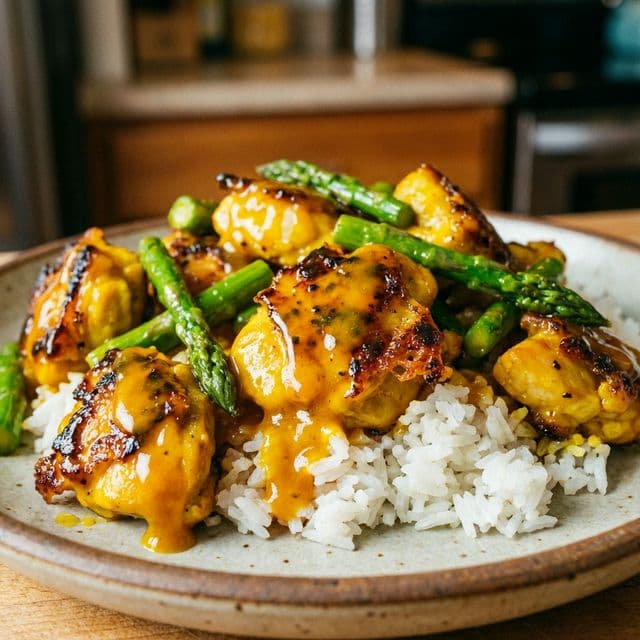
Turmeric-Black Pepper Chicken
Neon yellow, sticky, sweet, and spicy. The honey is the glue.
Master the reduction glaze technique with turmeric chicken. Honey agrodolce glaze creates sticky lacquer coating. Black pepper boosts turmeric absorption by 200
Cook chicken in water and honey, then boil away the water until only sticky sugar and turmeric remain. Sound changes from 'hiss' (steam) to 'sputter' (frying sugar) when ready.
The fit, timing, and key move are all here. If it is a yes, go straight into cook mode.
Neon yellow, sticky, sweet, and spicy. The honey is the glue.
Timing note: 20 mins
Set your units, then drop the ingredients into grocery if this is happening later.
What matters before the pan gets hot
The shortest path to understanding the dish, the key move, and whether tonight is the right time to cook it.
The Hook
This recipe works because of the reduction technique—you're building the glaze in the pan rather than making it separately. The honey and water create a steaming environment that cooks the chicken gently, then concentrates into a glaze. It's one-pot efficiency with restaurant-quality results.
The Technique
Honey is mostly fructose and glucose. When you boil away the water, these sugars concentrate and begin to caramelize around 320°F. The turmeric's fat-soluble compounds bind to the chicken's surface proteins, while the vinegar's acidity balances the sweetness. Black pepper's piperine inhibits the enzymes that break down curcumin, dramatically increasing its bioavailability.
The History
NYT Cooking (2019), developed by Ali Slagle as a quick weeknight adaptation of Asian glazing techniques.
Food Facts
Sourced notes. Tap to verify.
Tough cuts feel chewy because they contain more collagen. With time and moist heat, collagen breaks down into gelatin, which is why braises and stews get richer the longer they cook.
Searing creates a browned crust and flavor compounds on the exterior. It does not seal in juices, but it does improve texture and taste.
Master the reduction glaze technique with turmeric chicken. Honey agrodolce glaze creates sticky lacquer coating. Black pepper boosts turmeric absorption by 200
Nutrition per Serving
Estimated valuesSatiety
Data estimatedTechnique, context, and fallback plans
The reason the method works, the prep you can do early, and what to change if the dish starts drifting.
This recipe went viral because it uses the agrodolce (sour-sweet) concept without being fancy. You cook chicken in water and honey, then boil the water away until only the sticky sugar and turmeric remain. It glazes itself.
The technique is deceptively simple: brown the chicken for flavor, steam it briefly to cook through, then reduce the liquid down to a concentrated glaze. The honey is the structural glue—as the water evaporates, the sugar concentrates and caramelizes slightly, creating that signature sticky coating.
The black pepper is not just seasoning—it's a bioavailability hack. Piperine (the compound that makes pepper spicy) increases the absorption of curcumin (the active compound in turmeric) by up to 2000%. Without the pepper, your body barely absorbs the turmeric. With it, you're getting the full anti-inflammatory benefit.
The sound is your guide here. When the liquid is still mostly water, you'll hear a hissing steam. As it reduces and the sugar starts to fry, the sound changes to a sputter. That's when you know the glaze is ready.
Sauce is watery, not sticky?
You didn't reduce it long enough. Keep boiling until the sound changes from a hiss (steam) to a sputter (frying sugar). The glaze should coat the back of a spoon and leave a sticky…
Asparagus is mushy?
You steamed it too long, or your pieces were too thin. Asparagus should be barely tender when you add the glaze—it continues cooking during the reduction. Cut thicker next time (1-…
Use this in Focus
Turn this nutrition profile into a week you can plan, shop, and actually cook.
Set up, cook, and remember what worked
The mise, the method, your notes, and the next recipes to master after this one lands.
The Setup
- Large Skillet with Lid12-inch·Must have a lid for steaming step
- Wooden Spoon
The Mise en Place
5 of 9Your prep station before cooking begins
Chef's Notes
Listen for the sound change—from hiss to sputter. This audio cue tells you when the glaze is ready.
Don't skip the black pepper—it increases turmeric absorption by 2000%.
Serve over jasmine rice or with flatbread to soak up the sticky glaze.
SEASON
Toss chicken chunks with salt (1 tsp) and half the black pepper (1 tsp) in a bowl.
Season generously—most flavor comes from this step • Chicken pieces are uniformly speckled with pepper
Chicken is evenly coated with seasoning
SEAR
Time-sensitiveHeat oil in a large skillet over medium-high heat. Add chicken in a single layer. Cook without moving for 3-4 minutes until browned on one side. Flip.
Don't touch it—let the crust form naturally • Dark brown caramelization, not gray steamed chicken • Sizzling sound, chicken releases from pan easily
Overcrowding: Crowding steams instead of browning. Sear in batches and leave space.
Golden brown crust on one side
STEAM
Time-sensitiveAdd asparagus (1 lb), turmeric, remaining black pepper (1 tsp), and water (¼ cups). Cover and steam for 2 minutes.
Don't overcook—asparagus continues cooking in the glaze • Steam rising from pan, asparagus softening • Hissing steam, earthy turmeric aroma
Asparagus is bright green and barely tender
GLAZE
Time-sensitiveUncover. Add honey (3 tbsp) and vinegar. Increase heat to high and boil aggressively, stirring frequently.
The water must evaporate completely—patience here creates the sticky glaze • Liquid reduces to thick, sticky glaze coating chicken like lacquer • Sound shifts from steam hiss to frying sputter—this is your audio cue
Scorch risk: Reductions can go from perfect to burnt fast. Keep an eye on the bottom and stir if needed.
Sound changes from hiss to sputter
SERVE
Remove from heat immediately when glaze coats chicken. Serve over rice.
Glaze thickens as it cools—serve immediately • Bright yellow-orange glaze clinging to chicken and asparagus
Chicken is glossy and sticky
Service Log
Log your variables. Iterate like a pro.
Clean slate.
Log your variables after the first run.
Master These Next
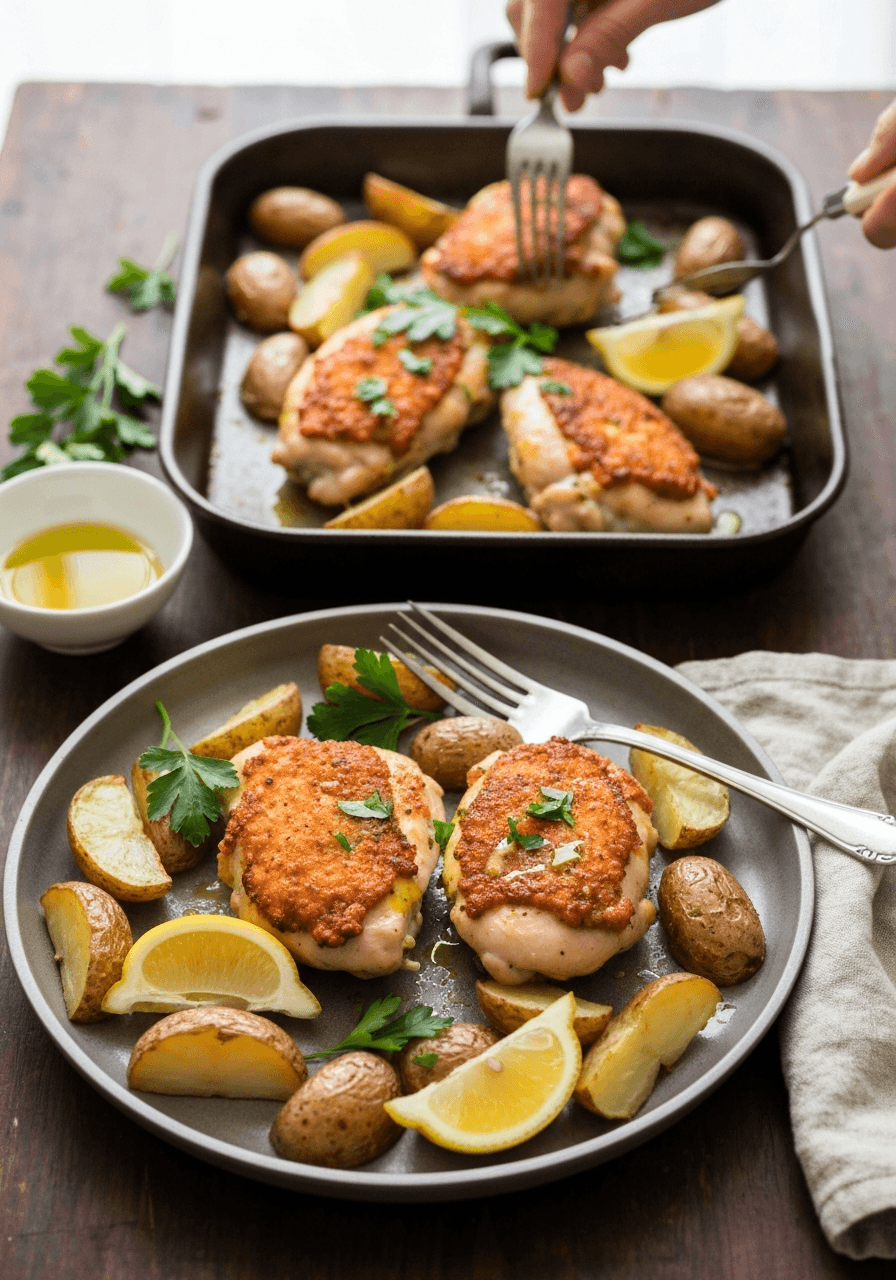
Sheet-Pan Chicken & Potatoes
Schmaltz-roasted potatoes and crispy chicken. One pan.
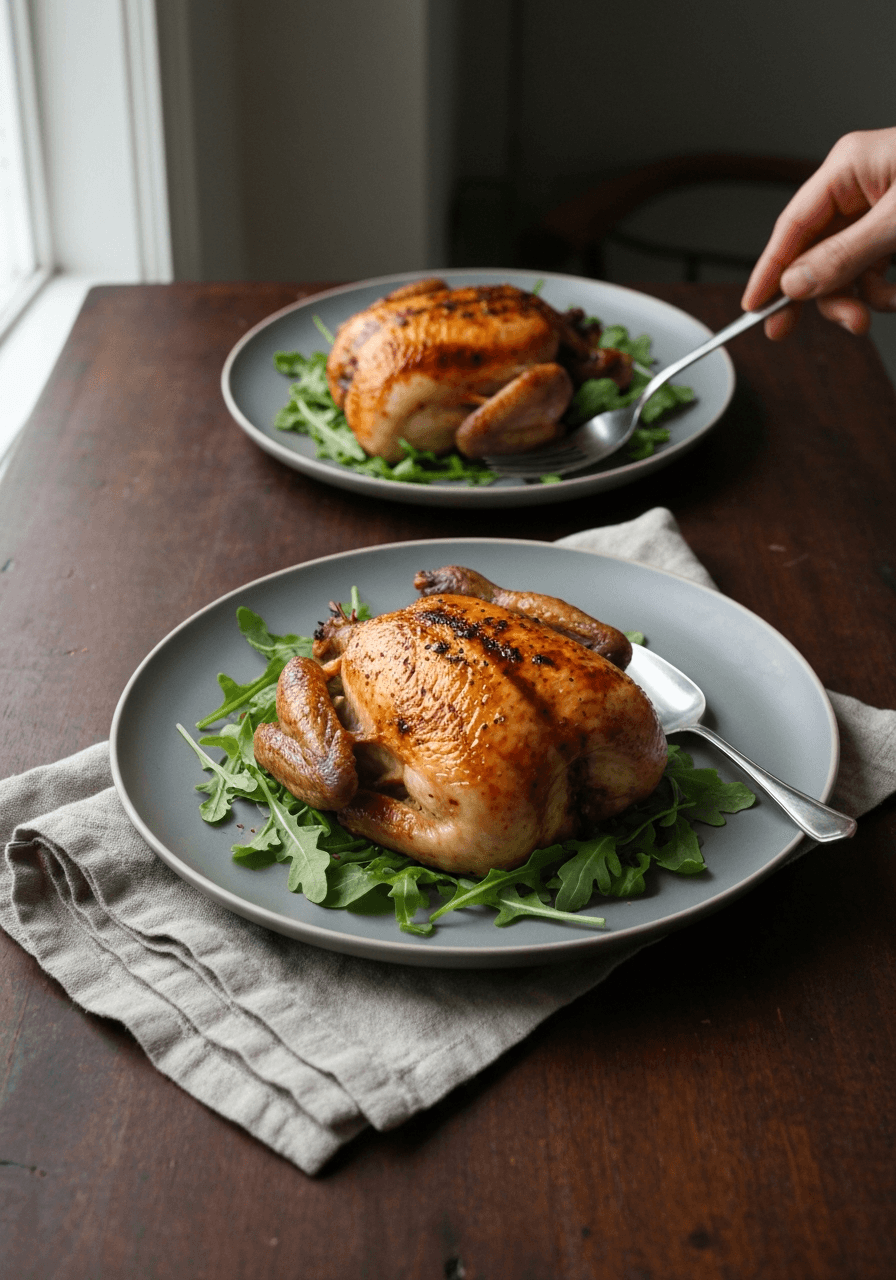
Zuni-Style Roast Chicken
Salt it 24 hours early. Small bird, high heat. The salad drinks the drippings.
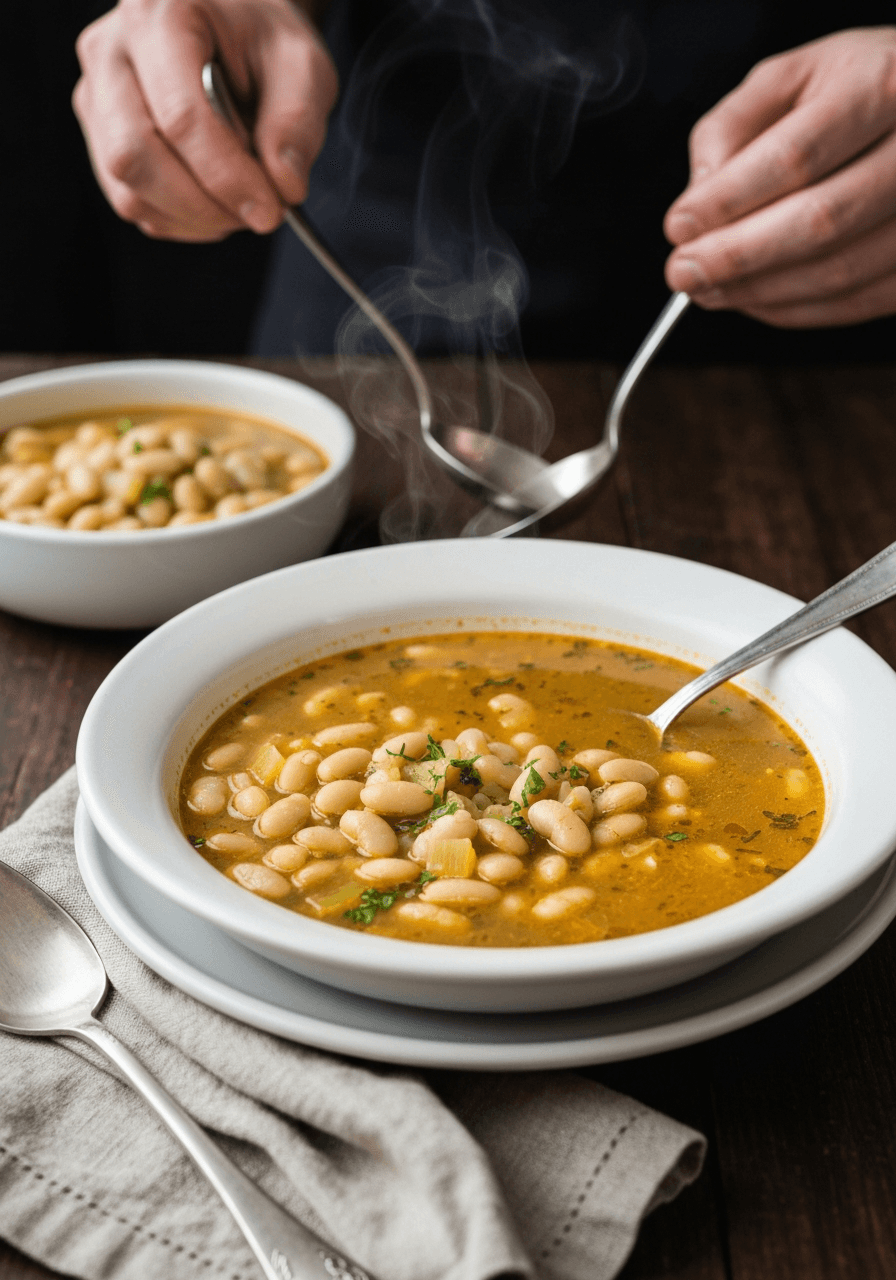
Lemony White Bean Soup with Turkey
Ground turkey that actually tastes good. Scrape the bottom of the pot.