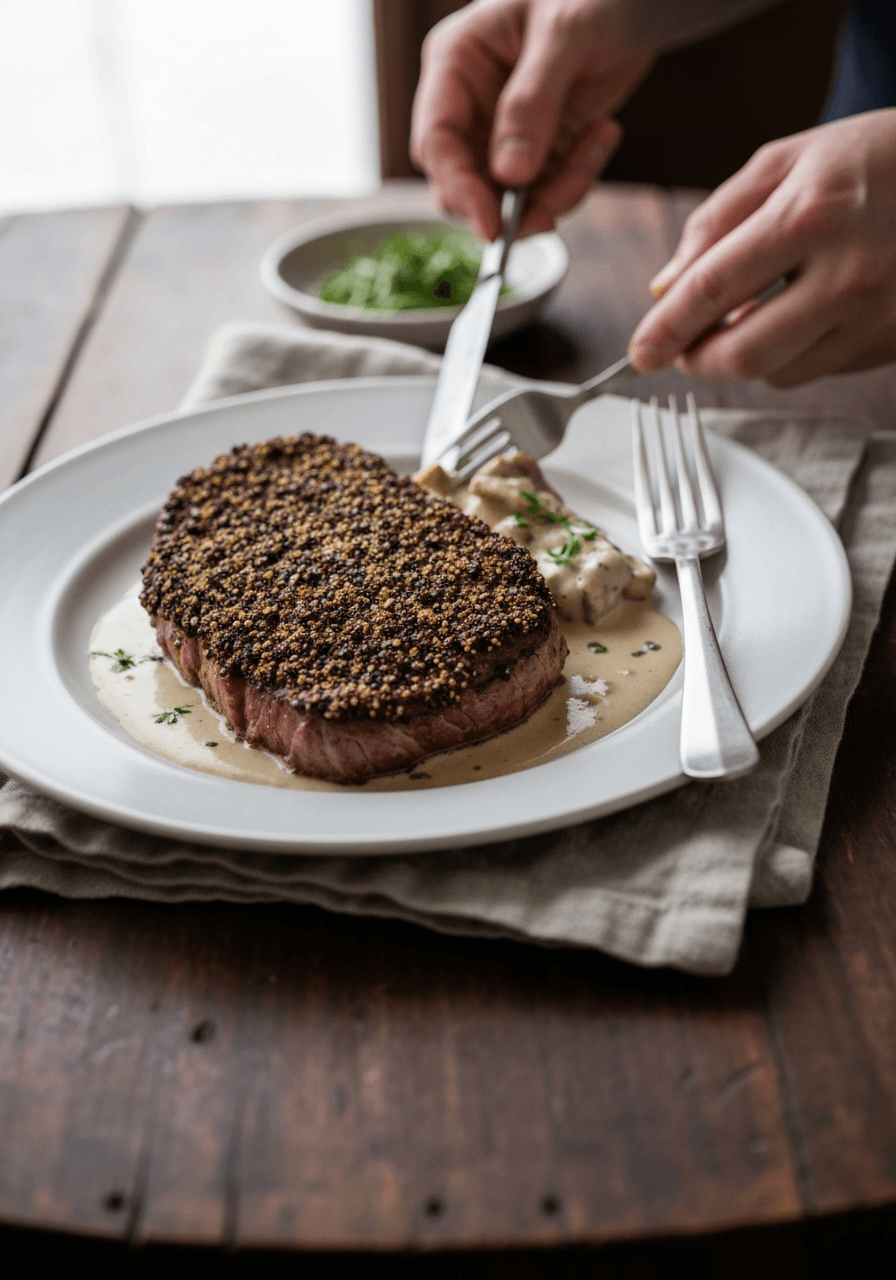
Steak au Poivre — Pepper Crusted
Experience the rich flavors of a French bistro with this classic steak au poivre recipe. Perfectly seared steak, bold pepper crust, and a decadent cream sauce.
Classic French bistro steak au poivre recipe with a rich, creamy pan sauce. Perfectly seared, pepper-crusted steak in under 30 minutes.
Achieve a deep, even sear on the steak to maximize the pepper flavor and create a flavorful fond for the sauce.
The fit, timing, and key move are all here. If it is a yes, go straight into cook mode.
Experience the rich flavors of a French bistro with this classic steak au poivre recipe. Perfectly seared steak, bold pepper crust, and a decadent cream sauce.
Set your units, then drop the ingredients into grocery if this is happening later.
What matters before the pan gets hot
The shortest path to understanding the dish, the key move, and whether tonight is the right time to cook it.
The Hook
**Don't be shy with the pepper! It's the star of the show.**
The Technique
The high heat and fat from the butter help to bloom the peppercorns, releasing their essential oils and creating a complex, aromatic crust. Deglazing the pan with cognac and cream creates a rich, emulsified sauce.
The History
Steak au Poivre is a classic French dish, believed to have originated in Parisian bistros in the early 20th century. It quickly became a staple, celebrated for its bold flavors and simple preparation.
Food Facts
Sourced notes. Tap to verify.
The Maillard reaction is a chemical reaction between amino acids and sugars that creates many of the roasted, toasted, and deeply savory flavors in cooked food.
Classic French bistro steak au poivre recipe with a rich, creamy pan sauce. Perfectly seared, pepper-crusted steak in under 30 minutes.
Nutrition per Serving
Estimated valuesSatiety
Data estimatedTechnique, context, and fallback plans
The reason the method works, the prep you can do early, and what to change if the dish starts drifting.
Steak au Poivre, or pepper steak, is more than just a dish; it's an experience. Imagine the sizzle as the crushed peppercorns meet the hot pan, releasing their pungent aroma. The creamy sauce, born from the fond left behind, clings to the steak, creating a symphony of flavors and textures.
This dish transports you to a cozy Parisian bistro, where the clinking of glasses and the murmur of conversation fill the air. It's a celebration of simple ingredients, elevated by technique and a touch of indulgence. The key is to embrace the boldness of the pepper, allowing it to dance on your palate with each bite.
Think of this recipe as a journey, a chance to connect with the culinary heritage of France. Each step, from searing the steak to deglazing the pan, is an opportunity to create something truly special. It's about more than just cooking; it's about creating a moment, a memory, a taste of pure bliss.
So, gather your ingredients, put on some French music, and prepare to be transported. This Steak au Poivre is not just a meal; it's an invitation to savor the simple pleasures of life, one delicious bite at a time.
Steak is not searing properly and is steaming instead.
The pan is not hot enough. Ensure the pan is smoking hot before adding the steak.
Sauce is too thin.
Continue simmering the sauce until it thickens to your desired consistency.
Set up, cook, and remember what worked
The mise, the method, your notes, and the next recipes to master after this one lands.
The Setup
- Skillet12-inch
- Wire Rack
The Mise en Place
5 of 9Your prep station before cooking begins
PREPARE
Pat the steaks dry with paper towels and generously coat both sides with the crushed black peppercorns (2 tbsp). Season with salt.
HEAT
Time-sensitiveHeat olive oil (1 tbsp) in a heavy skillet over high heat until smoking hot.
Oil should shimmer and almost smoke.
SEAR
Time-sensitiveCarefully place the steaks in the hot skillet and sear for 3-4 minutes per side for medium-rare, or longer for desired doneness. Do not overcrowd the pan; sear in batches if necessary.
Deep brown crust on the steak.
Overcrowding: Crowding steams instead of browning. Sear in batches and leave space.
REMOVE
Remove the steaks from the skillet and set aside to rest on a wire rack.
MELT
Reduce heat to medium. Add butter (2 tbsp) to the skillet and melt. Add the minced shallot (½ medium) and cook until softened and translucent, about 2 minutes.
Shallots should be soft and fragrant.
Scorch risk: Reductions can go from perfect to burnt fast. Keep an eye on the bottom and stir if needed.
DEGLAZE
Time-sensitivePour in the cognac (¼ cups) (or brandy) and carefully ignite it with a long match or lighter. Let the alcohol burn off completely, scraping up any browned bits from the bottom of the pan (fond).
Be careful when igniting the cognac. • Flame subsides and the alcohol smell dissipates.
Hot-pan splash: Deglazing can steam and spit. Pour slowly and keep your face/hands back.
STIR
Pour in the heavy cream (½ cups) and beef broth (¼ cups). Bring to a simmer and cook until the sauce has thickened slightly, about 3-5 minutes.
Sauce should coat the back of a spoon.
SEASON
Season the sauce with salt to taste. Return the steaks to the skillet and spoon the sauce over them to warm through.
SERVE
Garnish with fresh parsley (2 tbsp) and serve immediately.
Service Log
Log your variables. Iterate like a pro.
Clean slate.
Log your variables after the first run.
Master These Next
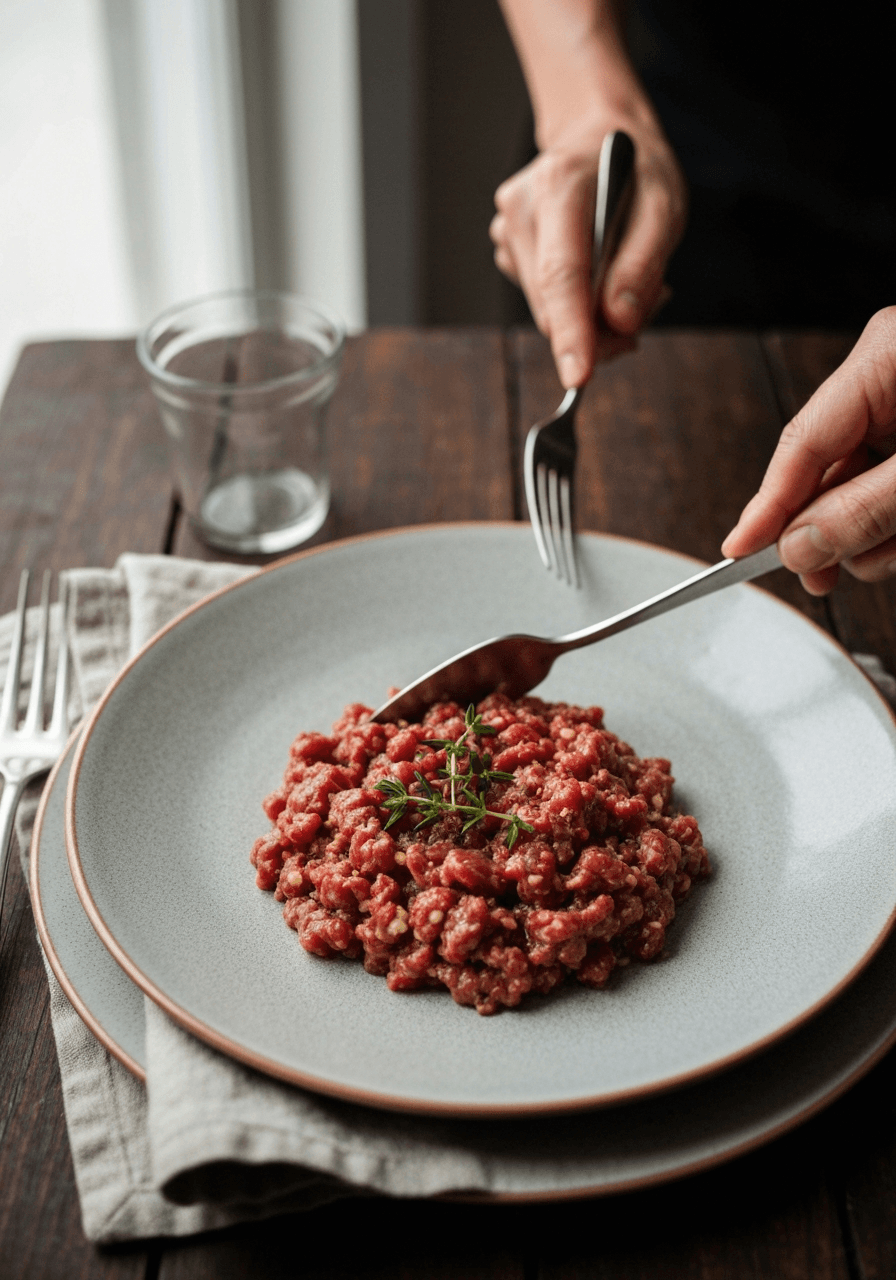
Steak Tartare — Raw Perfection
Indulge in the exquisite simplicity of steak tartare, where hand-cut beef meets vibrant seasonings for a symphony of flavor and texture.
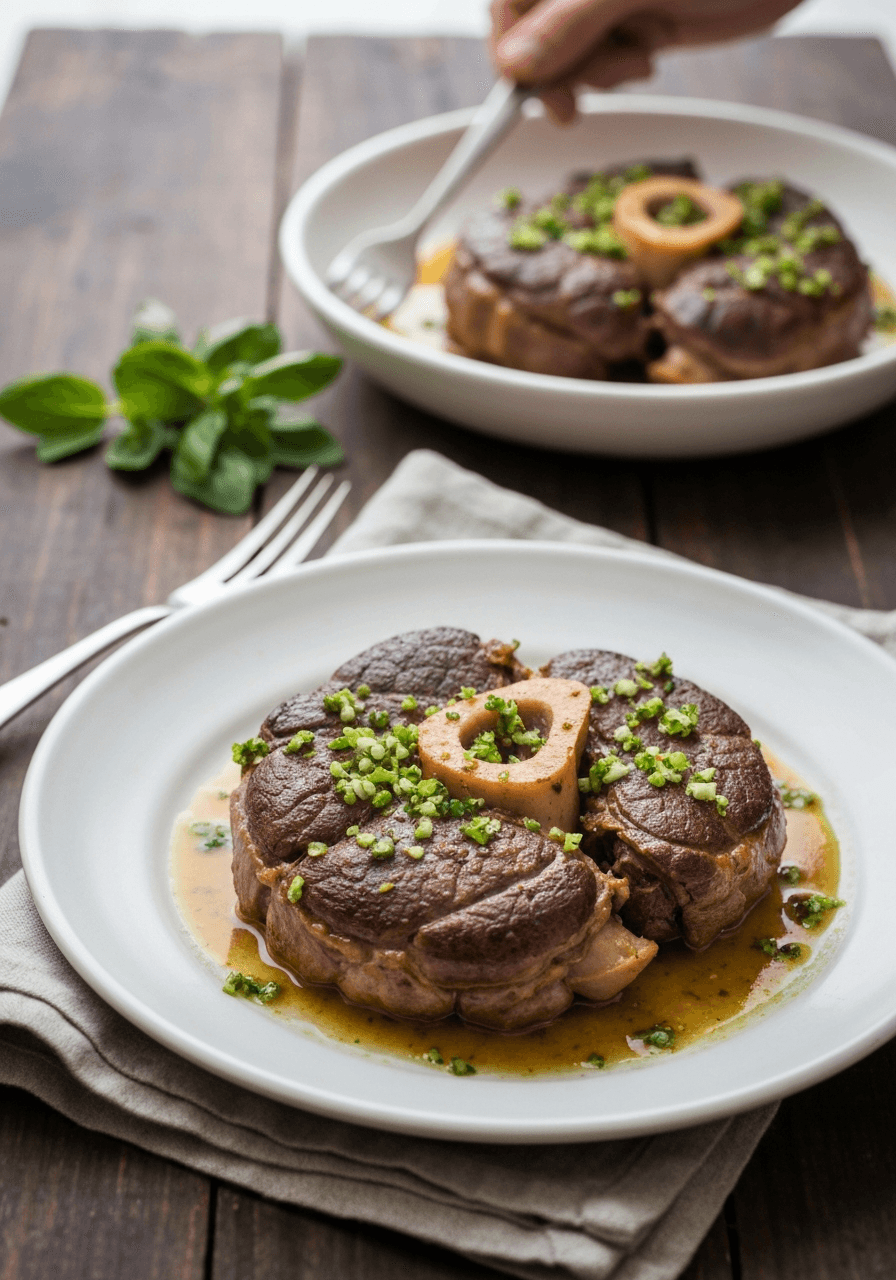
Osso Buco with Gremolata
Indulge in the richness of slow-braised veal shanks, brightened by the zesty flavors of gremolata. A classic Italian dish that's both comforting and impressive.
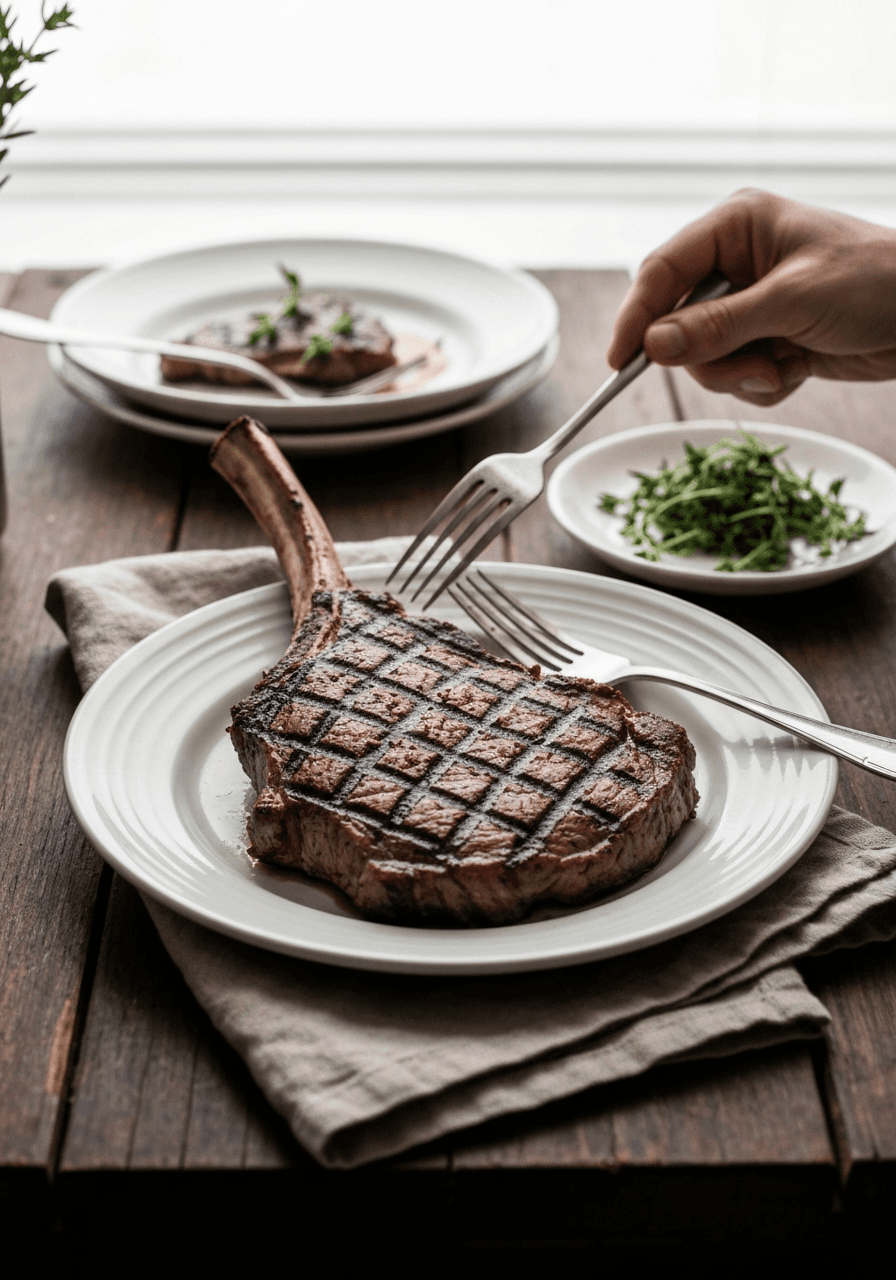
Grilled Ribeye — Reverse Sear
Unlock steakhouse-quality results at home with this reverse-seared grilled ribeye recipe. Achieve a perfectly rosy center and a deep, flavorful crust every time.