Sourdough Starter (Beginner, Reliable)
A living culture you can keep alive with a jar, flour, and routine.
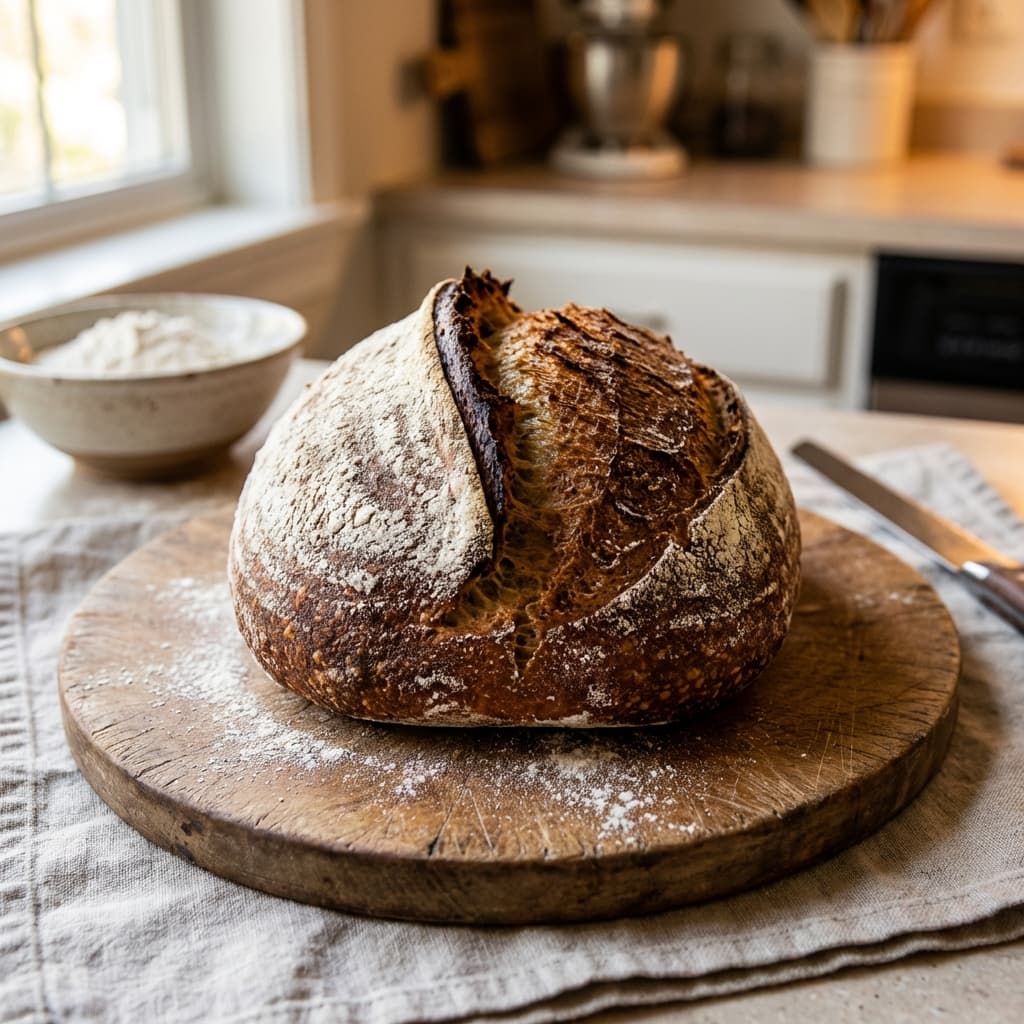
Make your own beginner-friendly Sourdough Starter, a living culture that transforms flour and water into delicious baked goods, using whole wheat early on
Use whole wheat early for faster microbial activity, then switch to all-purpose for a calmer, more predictable starter.
The fit, timing, and key move are all here. If it is a yes, go straight into cook mode.
A living culture you can keep alive with a jar, flour, and routine.
Timing note: 10 mins
Set your units, then drop the ingredients into grocery if this is happening later.
What matters before the pan gets hot
The shortest path to understanding the dish, the key move, and whether tonight is the right time to cook it.
The Hook
This ain't your grandma's pet rock. It's a living, breathing science project that'll either make you a hero or a damn fool. Get it right.
The Technique
We start with whole wheat to kickstart the yeast and bacteria party. Then, we switch to AP flour for a more stable, predictable culture. Regular feeding controls the pH, prevents it from going sour, and keeps those wild microbes happy and active. Ignore it, and you've got a jar of regret.
The History
Forget romantic notions of ancient bakers. This is just flour, water, and whatever microscopic freeloaders are floating around your kitchen. We're not reinventing the wheel, just taming the chaos with a feeding schedule. It's less 'legend' and more 'controlled infestation.'
Food Facts
Sourced notes. Tap to verify.
The Maillard reaction is a chemical reaction between amino acids and sugars that creates many of the roasted, toasted, and deeply savory flavors in cooked food.
Make your own beginner-friendly Sourdough Starter, a living culture that transforms flour and water into delicious baked goods, using whole wheat early on
Nutrition per Serving
Estimated valuesSatiety
Data estimatedTechnique, context, and fallback plans
The reason the method works, the prep you can do early, and what to change if the dish starts drifting.
Your sourdough starter is more than just flour and water; it's a living ecosystem, a tiny, edible houseplant gracing your countertop. It thrives on routine and patience, rewarding consistency far more than innate talent. The initial week is a dance of creation, establishing the perfect environment with regular feedings, a breathable cover, and unwavering trust in the process. As it begins its predictable rise, the science experiment transforms into a reliable culinary companion, a testament to the magic of wild yeast.
Embracing whole wheat in these formative days accelerates the microbial activity, awakening the dormant yeasts and bacteria. This initial boost helps establish a robust culture. Later, transitioning to all-purpose flour cultivates a calmer, more predictable starter, ready to imbue your baked goods with that signature tang and airy crumb. It’s a living link to centuries of baking tradition, a simple yet profound alchemy passed down through generations.
It's just watery paste, no bubbles after Day 3.
Ah, it's a bit sluggish, is it? That usually means the little guys need a warmer home or a bit more encouragement. Make sure your kitchen is cozy, around 70-80°F (21-27°C). Sometim…
It smells like nail polish or vinegar after Day 4.
That sharp smell means your starter is hungry and working overtime!
Set up, cook, and remember what worked
The mise, the method, your notes, and the next recipes to master after this one lands.
The Setup
- Cutting Board
- Chef's Knife
- Mixing Bowls
The Mise en Place
3Your prep station before cooking begins
The Pantry (0/2)
Other (0/1)
Chef's Notes
If your kitchen is cold, put the jar in the oven with the light on (oven OFF) for gentle warmth.
If it smells like nail polish remover, it’s starving—feed and reduce discard amount for a day.
Refrigerated starter: feed once weekly; bring to room temp and feed 1–2 times before baking.
MIX
Day 1: In a clean jar, mix 60g whole wheat flour (½ cups) with 60ml water (¼ cups). Cover loosely and leave at room temperature.
Mixture looks like thick pancake batter and is not sealed airtight.
FEED
Days 2-3: Discard half. Add 60g whole wheat flour (½ cups) + 60ml water (¼ cups). Stir, cover loosely, rest 24 hours.
You may see small bubbles and a faint tang; that counts.
FEED
Days 4-7: Switch to all-purpose flour (½ cups). Discard all but ~2 tbsp. Add 60g flour + 60ml water (¼ cups) daily. If it rises and falls within 8-12 hours, you're close.
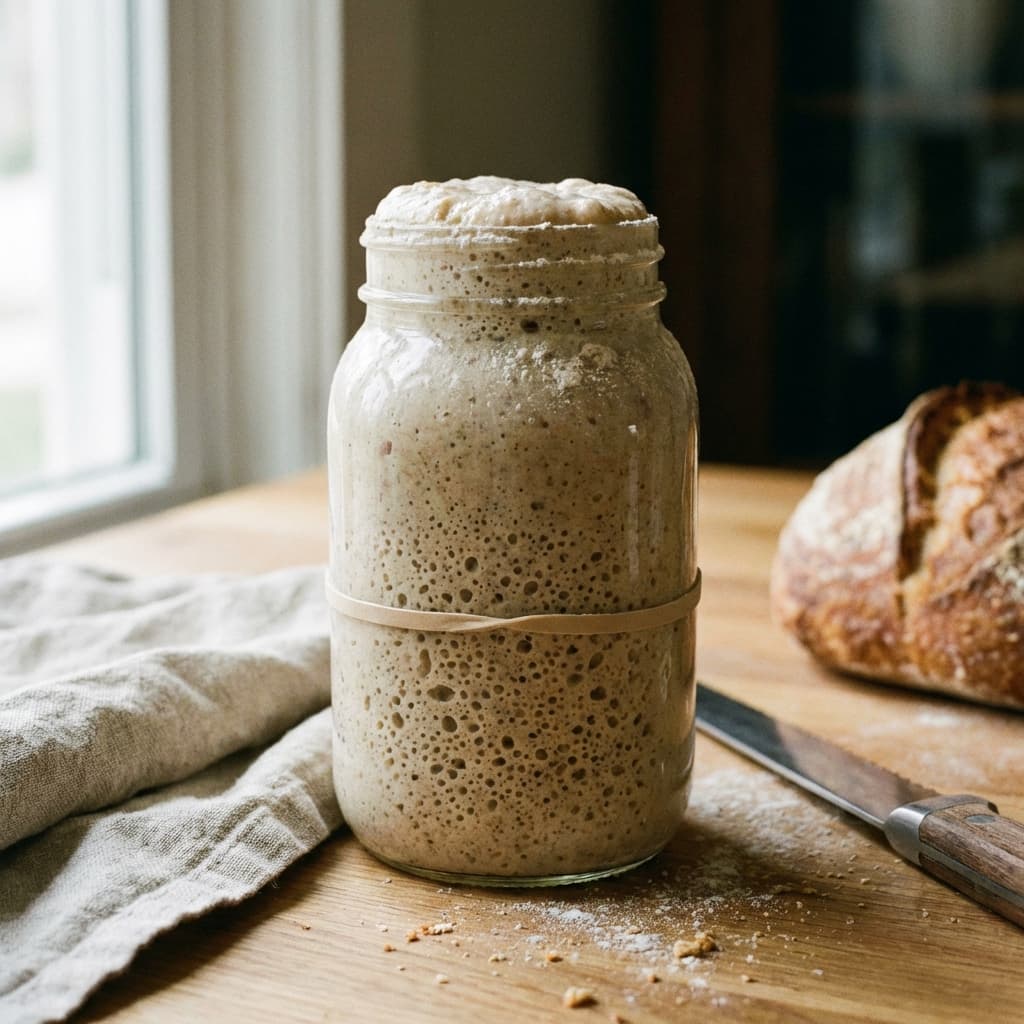
Starter doubles in volume and then starts to recede; smell is pleasantly tangy, not rotten.
MAINTAIN
After it reliably doubles: feed daily at room temp, or refrigerate and feed weekly. Use after a feed when it's at peak rise.
Peak starter looks domed, bubbly, and airy; it feels lighter when stirred.
Service Log
Log your variables. Iterate like a pro.
Clean slate.
Log your variables after the first run.