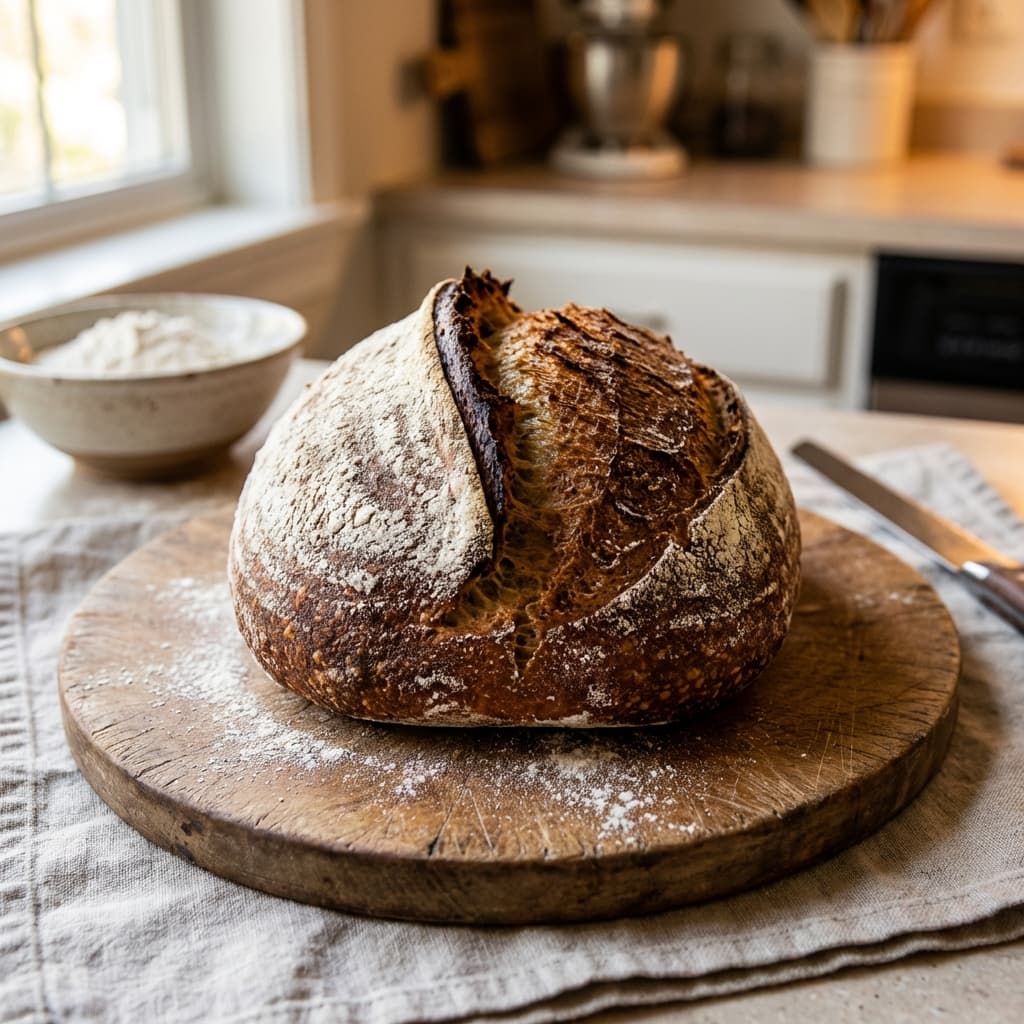
Sourdough Bread
Tamagotchi for adults: keeping a wild yeast colony alive.
Tamagotchi for adults: keeping a wild yeast colony alive. This isn't cooking; it's microbiology.
This isn't cooking; it's microbiology
The fit, timing, and key move are all here. If it is a yes, go straight into cook mode.
Tamagotchi for adults: keeping a wild yeast colony alive.
Timing note: 2 days
Set your units, then drop the ingredients into grocery if this is happening later.
What matters before the pan gets hot
The shortest path to understanding the dish, the key move, and whether tonight is the right time to cook it.
The Hook
This isn't bread, it's a science project. Your starter is a pet. Starve it, and it dies. Treat it right, and it gives you that ear. Don't screw it up.
The Technique
Your starter is a living colony. Yeast eats sugar, makes gas. Bacteria make it sour. Keep it warm, feed it right. That autolyse? It hydrates flour, starts gluten. Stretch and folds build structure. Cold retard develops flavor. Get it wrong, you get a flat, sour brick.
The History
Forget Egypt. This is ancient. It's the result of microbes doing their thing in grain and water. Bakers didn't invent it; they stumbled on it. It's less a recipe, more a happy accident that's been refined by generations of people who actually paid attention.
Food Facts
Sourced notes. Tap to verify.
An emulsion is a stable mixture of two liquids that normally do not mix, like oil and water. Many dressings and sauces rely on emulsifiers and whisking to hold that texture.
Tamagotchi for adults: keeping a wild yeast colony alive. This isn't cooking; it's microbiology.
Nutrition per Serving
Estimated valuesSatiety
Data verifiedTechnique, context, and fallback plans
The reason the method works, the prep you can do early, and what to change if the dish starts drifting.
Forget the instant gratification of commercial yeast; sourdough is a commitment, a living partnership with a microbial world that predates civilization. Think of your starter not as an ingredient, but as a Tamagotchi for adults, a wild yeast colony demanding care and attention. This is less about following steps and more about engaging in a delicate dance of microbiology, where you are the diligent farmer of a bustling ecosystem. Neglect your starter, and its vibrant life fades; nurture it, and it rewards you with a loaf possessing a depth of flavor and a glorious, crispy 'ear' – that coveted flap of crust that bakers proudly showcase.
The origin of this ancient craft traces back to accidental fermentation in the dusty ovens of Ancient Egypt around 1500 BC. It’s a testament to human ingenuity, coaxing complex flavors from the simplest elements: flour, water, and time. The resulting bread isn't just food; it's a tangible connection to millennia of culinary history, a delicious outcome of patient cultivation and a deep respect for the wild yeasts that transform humble ingredients into something truly extraordinary.
My bread came out dense and gummy, like a frisbee.
Ah, the classic frisbee! This usually means your starter wasn't quite ready for prime time, or you didn't let that dough develop enough during its bulk rise. Give your starter a go…
My loaf spread out completely flat.
It went flat, huh? That's usually one of two things: either the dough fermented a bit too long and the gluten structure got tired, or it wasn't shaped with enough tension. When you…
Set up, cook, and remember what worked
The mise, the method, your notes, and the next recipes to master after this one lands.
The Setup
- Dutch Oven5-7 qt·for steam baking
- Bench Scraper
- Mixing Bowls
- Wire Cooling Rack
- Instant-Read ThermometerOptionalfor internal temp check
The Mise en Place
3Your prep station before cooking begins
The Pantry (0/2)
Other (0/1)
Chef's Notes
For a crispier crust, spritz the oven walls with water during the first 10 minutes of baking.
Score the dough just before baking to control expansion and create a beautiful pattern.
Serve warm with butter, jam, or a drizzle of honey for a simple, satisfying snack.
AUTOLYSE
MIX flour (500g) and water (350g) into a shaggy dough. Let it sit for 1 hour.
Why? This allows the gluten to start forming before the yeast attacks. It makes the dough extensible.
BULK FERMENT
Time-sensitivePINCH in the starter (100g) and salt. Every 30 minutes, perform a "Stretch and Fold." Grab the side, pull it up, slap it over. Do this 4 times.
The dough should turn from a sticky mess into a smooth, bouncy pillow that holds its shape.
SHAPE & PROOF
Time-sensitiveSHAPE into a tight ball (create surface tension). Place in a banneton (basket) and refrigerate overnight (Cold Retard).
⚠️ If you don't create surface tension, the bread will spread into a pancake in the oven.
THE SCORE & BAKE
Preheat Dutch Oven to 500°F (260°C). SLASH the dough with a razor (lame) at a 45° angle. BAKE covered for 20 mins, uncovered for 25 mins.
Service Log
Log your variables. Iterate like a pro.
Clean slate.
Log your variables after the first run.
Related Techniques
Master These Next
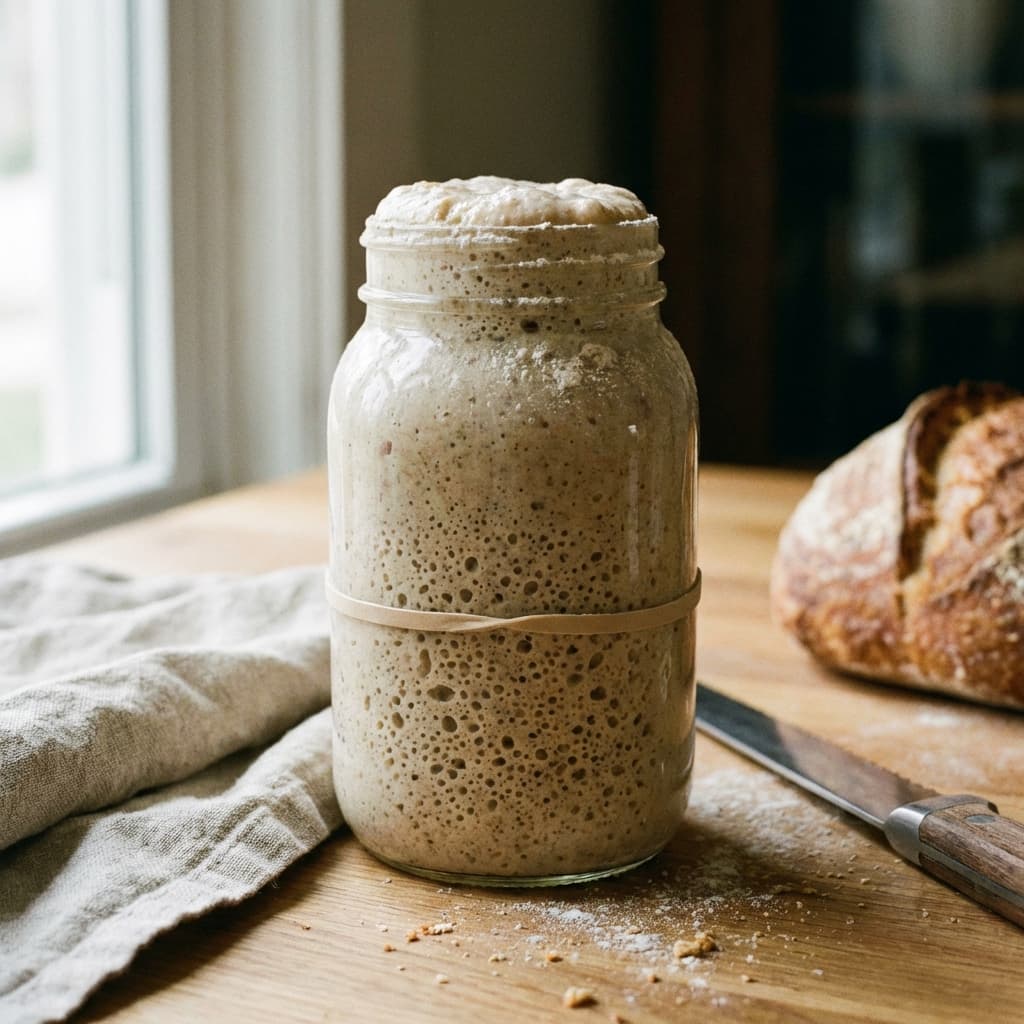
Sourdough Starter
A living culture you can keep alive with a jar, flour, and routine.
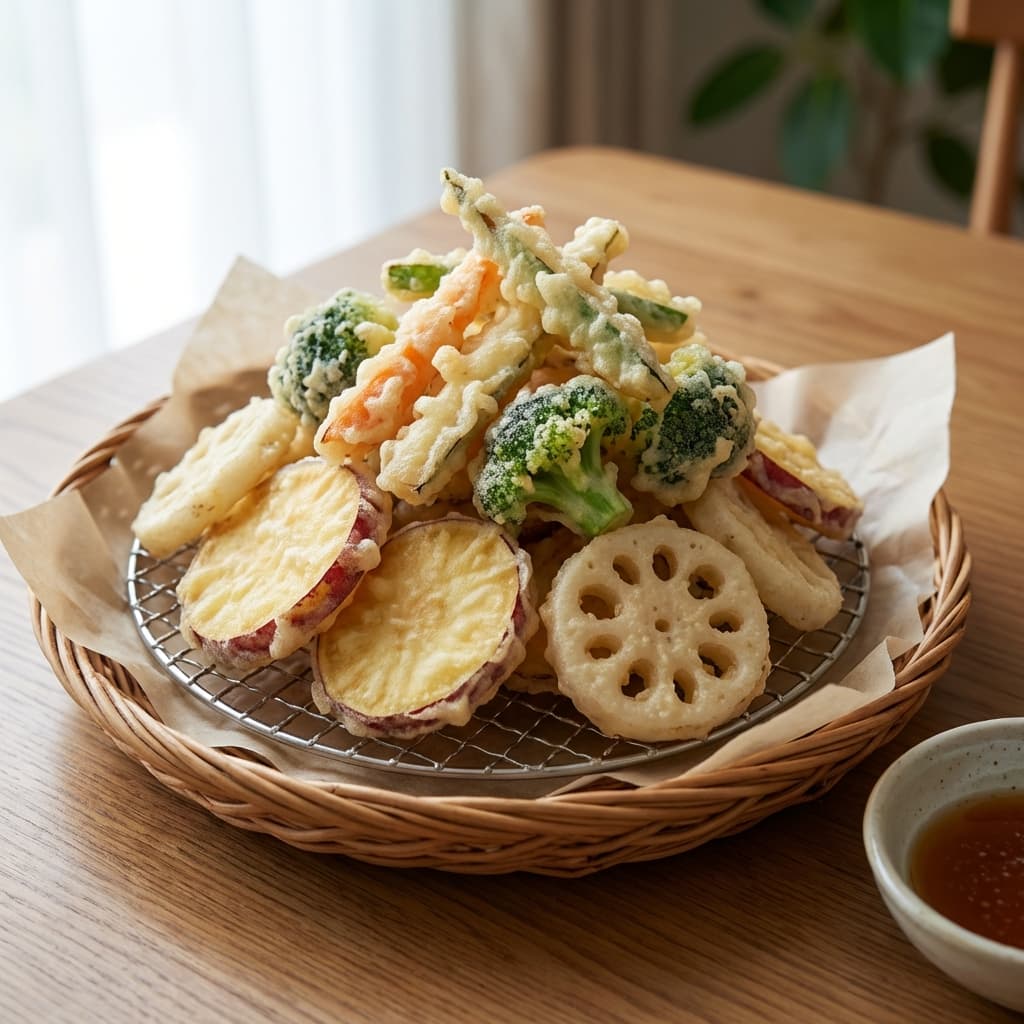
Vegetable Tempura
Ice-cold batter meets hot oil. Lace-like crunch.

Seared Scallops
Golden crust, translucent center, sweet ocean candy.