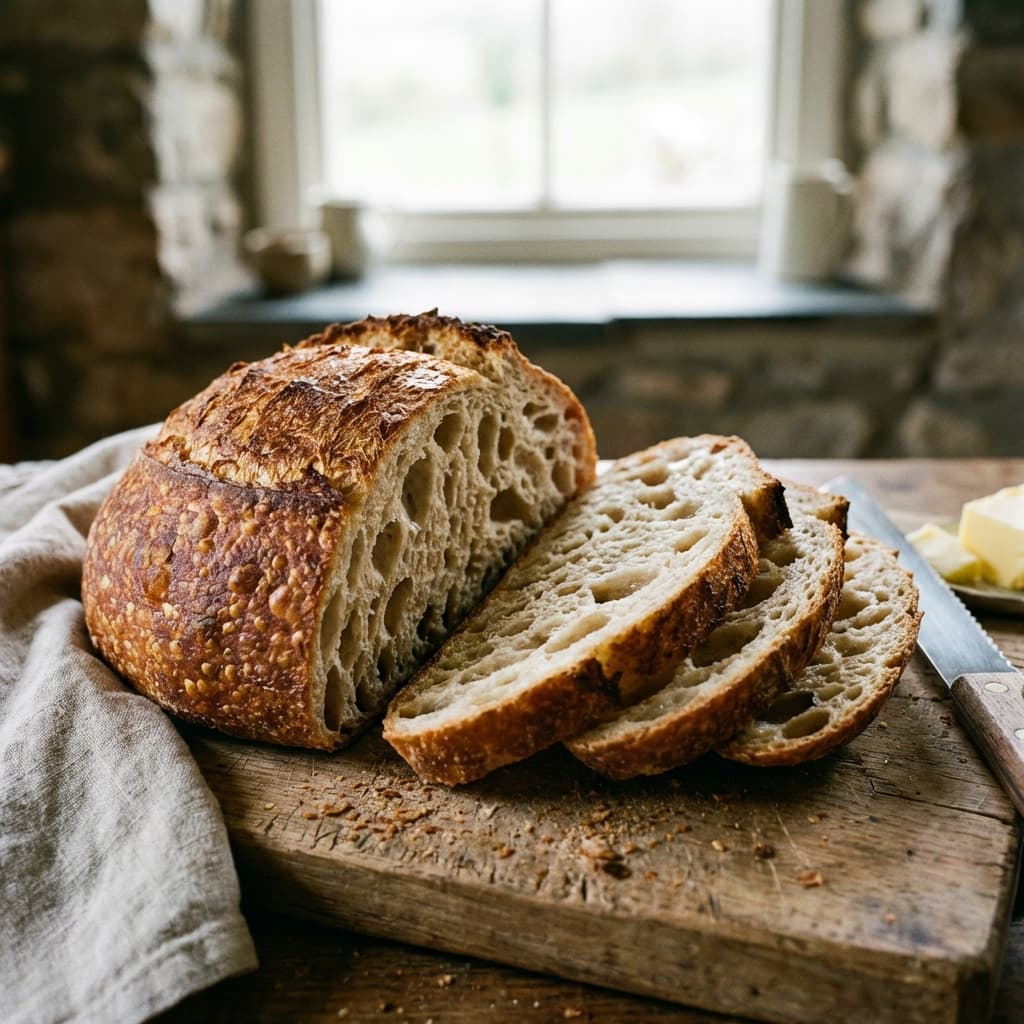
Sourdough Bread (Beginner Loaf)
A crackling crust and chewy crumb without turning your kitchen into a lab.
Bake your own beginner sourdough bread with a crackling crust and chewy crumb, mastering overnight proofing for flavor and ease
Use the fridge as your control knob--overnight proofing improves both flavor and handling.
The fit, timing, and key move are all here. If it is a yes, go straight into cook mode.
A crackling crust and chewy crumb without turning your kitchen into a lab.
Timing note: 35 mins
Set your units, then drop the ingredients into grocery if this is happening later.
What matters before the pan gets hot
The shortest path to understanding the dish, the key move, and whether tonight is the right time to cook it.
The Hook
This ain't your grandma's sourdough. The fridge is your secret weapon for flavor and handling. Don't screw it up.
The Technique
Cold fermentation in the fridge is key. It slows yeast activity, allowing wild bacteria to develop complex organic acids, boosting flavor and improving dough structure. The covered bake traps steam, maximizing oven spring by keeping the crust pliable for initial expansion before it sets.
The History
Forget the romanticized peasant origins. Sourdough is a testament to human ingenuity and necessity, a microbial battleground that predates modern baking. This version strips away the arcane rituals, focusing on a straightforward, repeatable loaf for the home cook who wants results, not dogma.
Food Facts
Sourced notes. Tap to verify.
When starch granules heat in water, they absorb moisture and swell, thickening the liquid. This is the basic physics behind many sauces, custards, and pan gravies.
Bake your own beginner sourdough bread with a crackling crust and chewy crumb, mastering overnight proofing for flavor and ease
Nutrition per Serving
Estimated valuesSatiety
Data estimatedTechnique, context, and fallback plans
The reason the method works, the prep you can do early, and what to change if the dish starts drifting.
This loaf is the gateway, the moment sourdough transcends from an arcane art to an achievable, repeatable delight. Forget the pressure of chasing elusive perfection; instead, embrace a gentle, intuitive rhythm: a simple mix, a patient rest, a few gentle folds, a quiet overnight slumber, and finally, the triumphant bake. The magic truly unfolds in the cool embrace of the refrigerator. This cold fermentation is where the dough’s character deepens, its flavors maturing into something rich and complex, while simultaneously transforming it into a dough that’s a pleasure, not a puzzle, to handle.
This simplified, classic country-style method, tailored for the home baker and the trusty Dutch oven, demystifies the process. It’s about understanding that the refrigerator acts as your ultimate control knob, a silent partner that enhances both the bread's nuanced flavor profile and its manageable texture. The result is a loaf with a crackling crust that sings when you slice it and a chewy, open crumb that whispers of time and careful cultivation, all without turning your kitchen into a science experiment.
Dough is too sticky and hard to handle during Step 3 (SHAPE).
Cause: Insufficient gluten development during Step 2 (FOLD) or dough is too warm.
The loaf spread flat in the bowl during Step 3 (SHAPE) and didn't hold its dome.
Cause: Under-proofed dough or weak gluten structure. Fix: Ensure the dough passed the 'volume increase' checkpoint in Step 2. If it spread flat, try to gently reshape it into a tau…
Set up, cook, and remember what worked
The mise, the method, your notes, and the next recipes to master after this one lands.
The Setup
- Dutch Oven5-7 qt
- Cutting Board
- Chef's Knife
The Mise en Place
4Your prep station before cooking begins
Chef's Notes
If your dough is very sticky, add 20–30g extra flour next time; hydration varies by flour.
Underproofed looks dense and tight; overproofed spreads and bakes flatter—aim for a jiggly, aerated dough at the end of bulk.
Keep cut-side down on a board for 1 day; freeze slices for long storage.
MIX
Mix flour and water (1½ cups) until no dry flour remains. Rest 30 minutes.
Dough looks shaggy but fully hydrated; no dry pockets.
ADD
Add starter and salt. Pinch and fold until incorporated.
Dough feels more elastic and cohesive; starter streaks disappear.
FOLD
Bulk ferment 4-6 hours at room temp with 3 sets of stretch-and-folds in the first 90 minutes (every 30 minutes).
Dough becomes smoother and holds shape; volume increases noticeably.
SHAPE
Shape into a tight round. Place seam-side up in a floured towel-lined bowl. Refrigerate 8-16 hours.
Surface is taut; the dough holds a dome rather than spreading flat.
BAKE
Heat oven to 475°F with a Dutch oven inside. Turn dough onto parchment, score, and bake covered 20 minutes, uncovered 20-25 minutes, until Crust is deep brown and the loaf sounds hollow when tapped..
Crust is deep brown and the loaf sounds hollow when tapped.
COOL
Cool at least 60 minutes before slicing.
Crumb sets; slicing early makes it gummy.
Service Log
Log your variables. Iterate like a pro.
Clean slate.
Log your variables after the first run.
Related Techniques
Master These Next
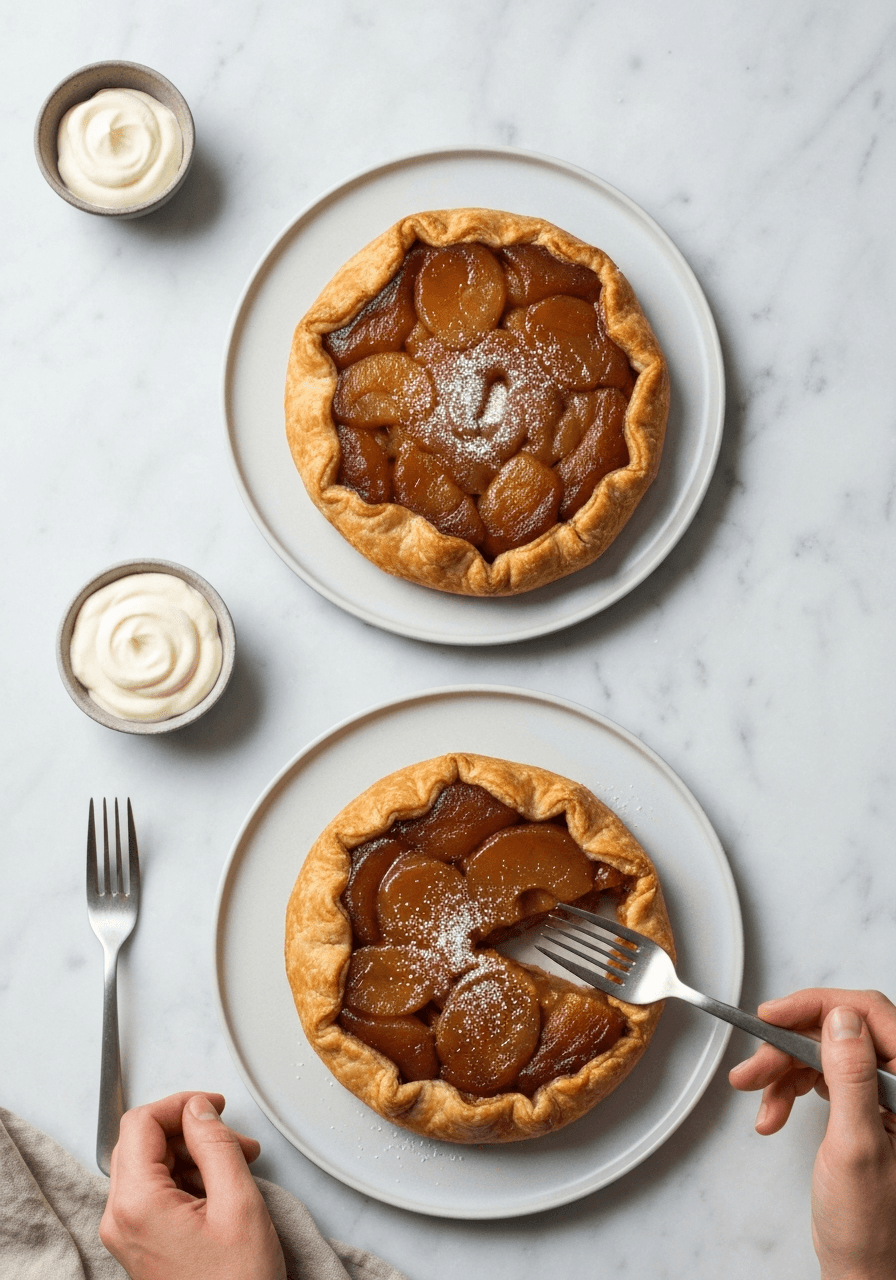
Tarte Tatin — Upside Down
A French classic reimagined: tender, caramelized apples baked upside down under a golden, flaky crust. Simple elegance in every bite.
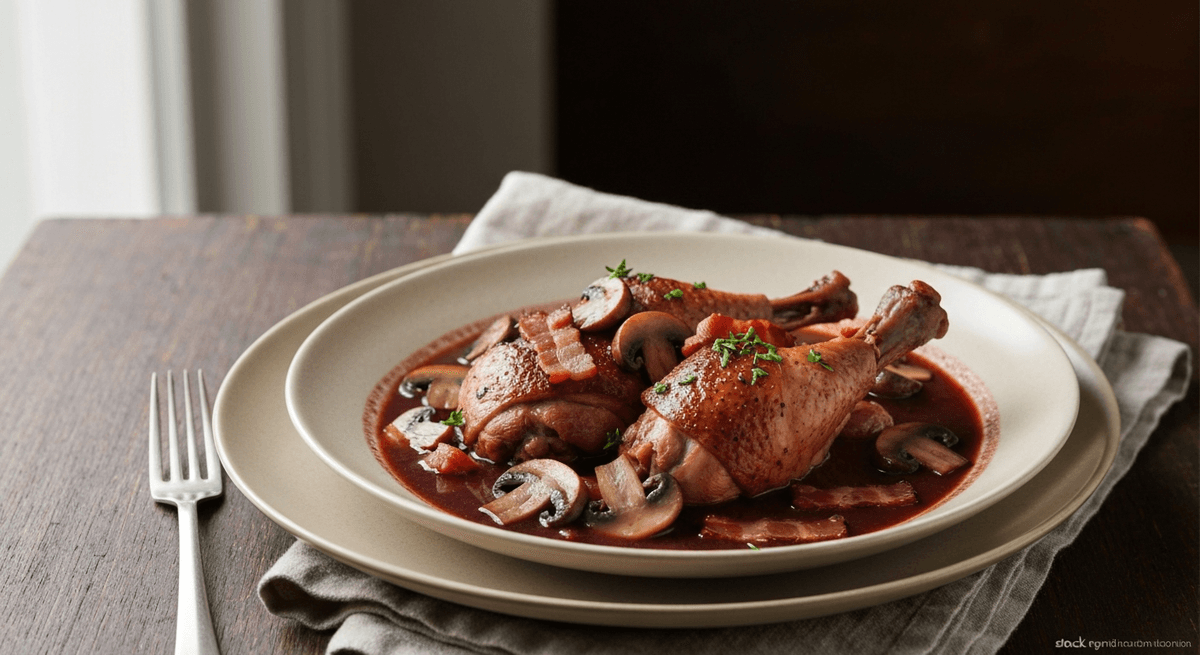
Coq au Vin — Chicken in Wine
Experience the rich flavors of classic French cuisine with this Coq au Vin recipe. Tender chicken braised in red wine with mushrooms and bacon, perfect for a comforting and elegant meal.
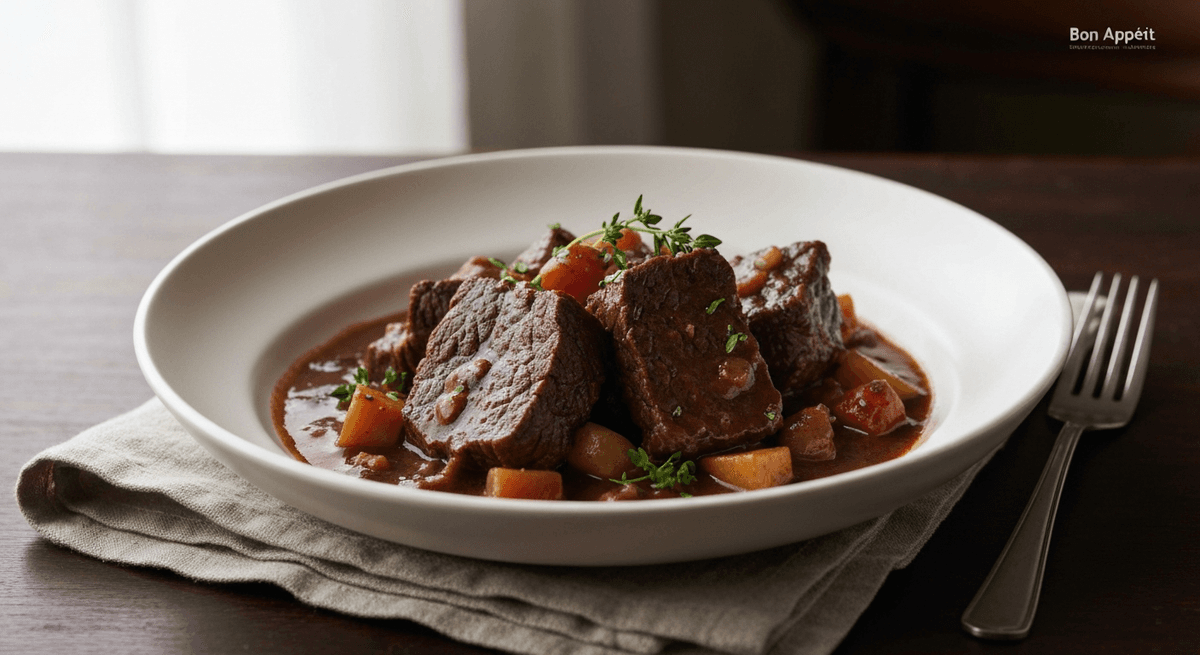
Beef Bourguignon
Indulge in the ultimate comfort food: tender beef, rich wine sauce, and earthy vegetables, all simmered to perfection. A taste of France in every bite.