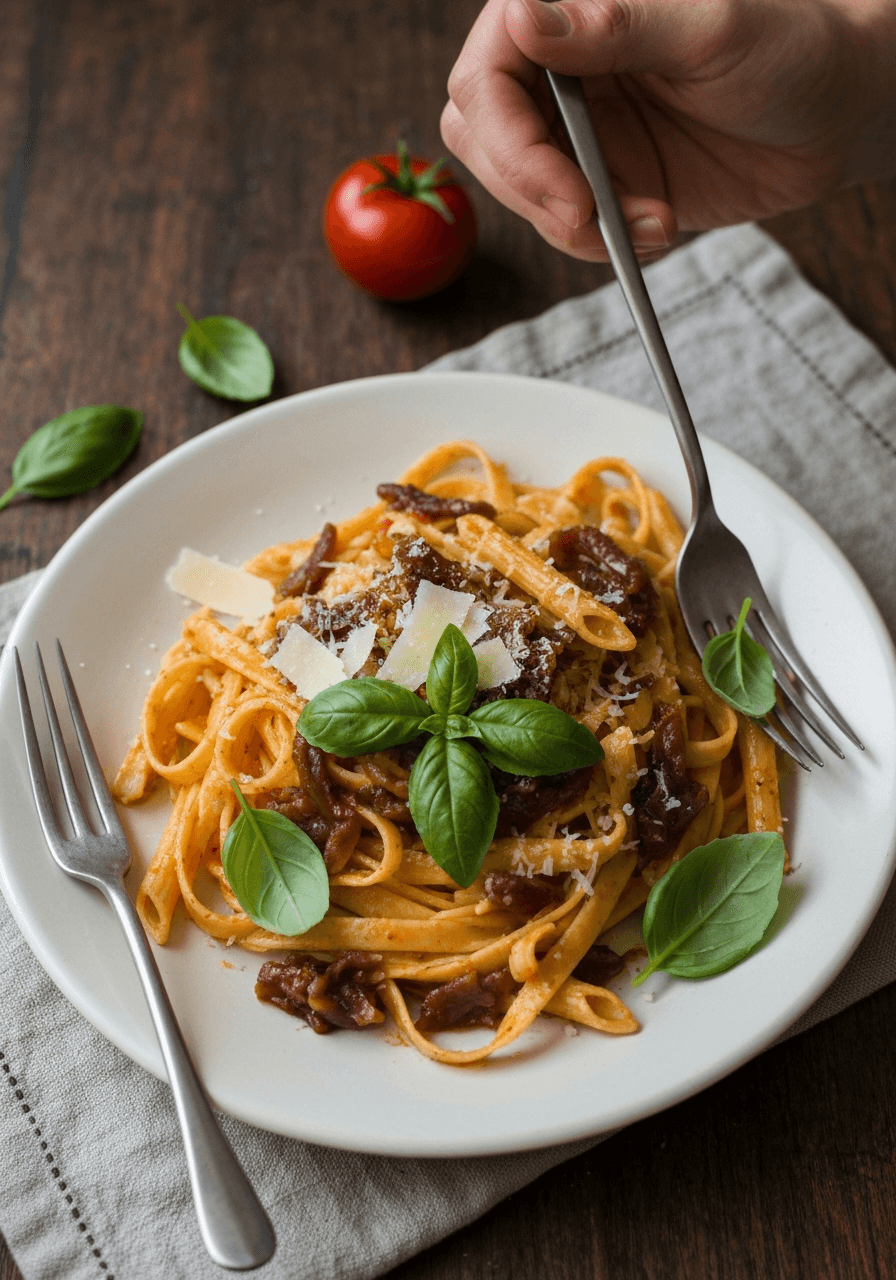
Caramelized Shallot Pasta
A whole tube of tomato paste, a tin of anchovies, and zero apologies.
Master compound paste technique with viral shallot pasta. Anchovies dissolved, tomato paste caramelized brick-red, shallots golden. Umami stacked on umami.
Fry shallots golden, melt anchovies into oil, caramelize tomato paste until brick-red. Deglaze with pasta water to create glossy emulsion.
The fit, timing, and key move are all here. If it is a yes, go straight into cook mode.
A whole tube of tomato paste, a tin of anchovies, and zero apologies.
Timing note: 40 mins
Set your units, then drop the ingredients into grocery if this is happening later.
What matters before the pan gets hot
The shortest path to understanding the dish, the key move, and whether tonight is the right time to cook it.
The Hook
This recipe is a masterclass in compound paste technique. Instead of building flavor slowly through braising, we concentrate it quickly through aggressive caramelization. It's high-heat alchemy.
The Technique
Anchovies provide glutamates (umami), Parmesan provides both glutamates and nucleotides (another umami compound), and caramelized tomato paste provides sweetness from Maillard browning. Stacking multiple umami sources creates synergistic flavor—1+1=3. The pasta water's starch acts as an emulsifier, binding the oil and water into a creamy sauce.
The History
Popularized by Alison Roman via the internet (2020). Inspired by Italian aglio e olio and puttanesca techniques.
Food Facts
Sourced notes. Tap to verify.
When starch granules heat in water, they absorb moisture and swell, thickening the liquid. This is the basic physics behind many sauces, custards, and pan gravies.
Searing creates a browned crust and flavor compounds on the exterior. It does not seal in juices, but it does improve texture and taste.
Master compound paste technique with viral shallot pasta. Anchovies dissolved, tomato paste caramelized brick-red, shallots golden. Umami stacked on umami.
Nutrition per Serving
Estimated valuesSatiety
Data estimatedTechnique, context, and fallback plans
The reason the method works, the prep you can do early, and what to change if the dish starts drifting.
This recipe proves that 'anchovy' is just a scary word for 'umami.' You dissolve 12 anchovies into hot oil until they completely disappear. You're not eating fish; you're eating liquid salt and glutamates.
The key is cooking the tomato paste until it threatens to burn. Most people pull it off the heat when it's still orange and raw-tasting. You have to push it further—stir constantly and wait for it to turn dark brick-red and separate from the oil. That's when it goes from metallic to sweet and toasted.
This is technically a compound paste—by caramelizing the aromatics before adding the pasta water, we create a flavor base that usually requires 8-hour stews. The Maillard reaction (browning) transforms simple ingredients into complex flavor.
The crispy shallots at the end provide textural contrast. Without them, the dish is one-dimensional. With them, you get the crunch against the slick, glossy noodles.
This went viral because it breaks the rules. Parmesan with anchovies? A whole tube of tomato paste? It works because all three ingredients—anchovies, tomato paste, Parmesan—are umami bombs. They stack on each other to create a depth that feels like it took all day.
Oil separated on the plate—sauce looks greasy?
The emulsion broke. This happens when you don't add enough pasta water or don't toss vigorously enough. Add a splash of hot pasta water and stir hard to re-emulsify.
Tastes metallic or sharp?
You didn't cook the tomato paste long enough. It needs to caramelize to become sweet and toasted. Raw paste tastes acidic and metallic. Unfortunately, there's no fix once it's mixe…
Set up, cook, and remember what worked
The mise, the method, your notes, and the next recipes to master after this one lands.
The Setup
- Large Skillet12-inch·For frying shallots and building sauce
- Large Pot6-8 qt·For boiling pasta
- Wooden SpoonFor mashing anchovies and stirring paste
The Mise en Place
5 of 10Your prep station before cooking begins
Seasoning (0/2)
The Finish (0/1)
Chef's Notes
The tomato paste must turn brick-red and smell toasted, not raw. This is the critical step.
Reserve crispy shallots for garnish—they provide essential textural contrast.
Serve with extra Parmesan and red pepper flakes on the table.
FRY
Heat olive oil (½ cups) in a large skillet over medium heat. Add shallots (6 large). Cook, stirring occasionally, until golden brown and starting to crisp, about 12-15 minutes. Remove half the shallots and reserve for garnish.
Don't rush—golden shallots take time. Burnt shallots are bitter. • Shallots are light golden brown, some edges crispy • Sweet, caramelized onion aroma
Half the shallots are golden and slightly crispy
DISSOLVE
Time-sensitiveTo the remaining shallots (6 large) in the pan, add anchovies (1 tin) with their oil and garlic (4 cloves). Cook, mashing anchovies with a wooden spoon, until they dissolve completely into the oil, about 2 minutes.
Medium heat only—high heat makes garlic/anchovies bitter • Oil looks slightly cloudy, no solid anchovy pieces • Savory, fishy aroma mellows into umami
Anchovies have disappeared—no visible fish
CARAMELIZE
Time-sensitiveAdd tomato paste (5 oz) and red pepper flakes (2 tsp). Cook, stirring constantly, for 5-8 minutes. The paste should separate from the oil, turn dark brick-red, and smell toasted, not raw.
This step is critical—raw paste tastes metallic, caramelized paste tastes sweet • Paste looks like dark rust, oil pools around edges • Smells like toasted bread, not metallic tomatoes
Scorch risk: Tomato paste can blacken quickly. Keep it moving; if it burns, it will taste bitter.
Paste is brick-red, separated from oil, smells sweet/toasted
BOIL
While paste cooks, boil pasta in salted water until al dente. Reserve 1.5 cups pasta water before draining.
Salt the water heavily—it should taste like the sea • Pasta is tender but firm in center
Pasta is al dente, water is reserved
EMULSIFY
Time-sensitiveAdd cooked pasta to the pan with the tomato paste (5 oz) mixture. Add 1 cup pasta water. Toss vigorously over medium heat until the oil and water bind into a glossy red sauce that coats the pasta.
Add more pasta water if too dry—starch is the emulsifier • Pasta is evenly coated, sauce looks creamy not oily
Breaking: Add fat slowly while whisking to keep it smooth. Too fast can split the sauce.
Sauce is glossy, clings to pasta—no separated oil
FINISH
Remove from heat. Toss with Parmesan. Top with reserved crispy shallots (6 large). Serve immediately.
Eat immediately—emulsions break as they cool • Red pasta with golden shallots on top
Pasta is glossy, topped with crispy shallots
Service Log
Log your variables. Iterate like a pro.
Clean slate.
Log your variables after the first run.
Master These Next
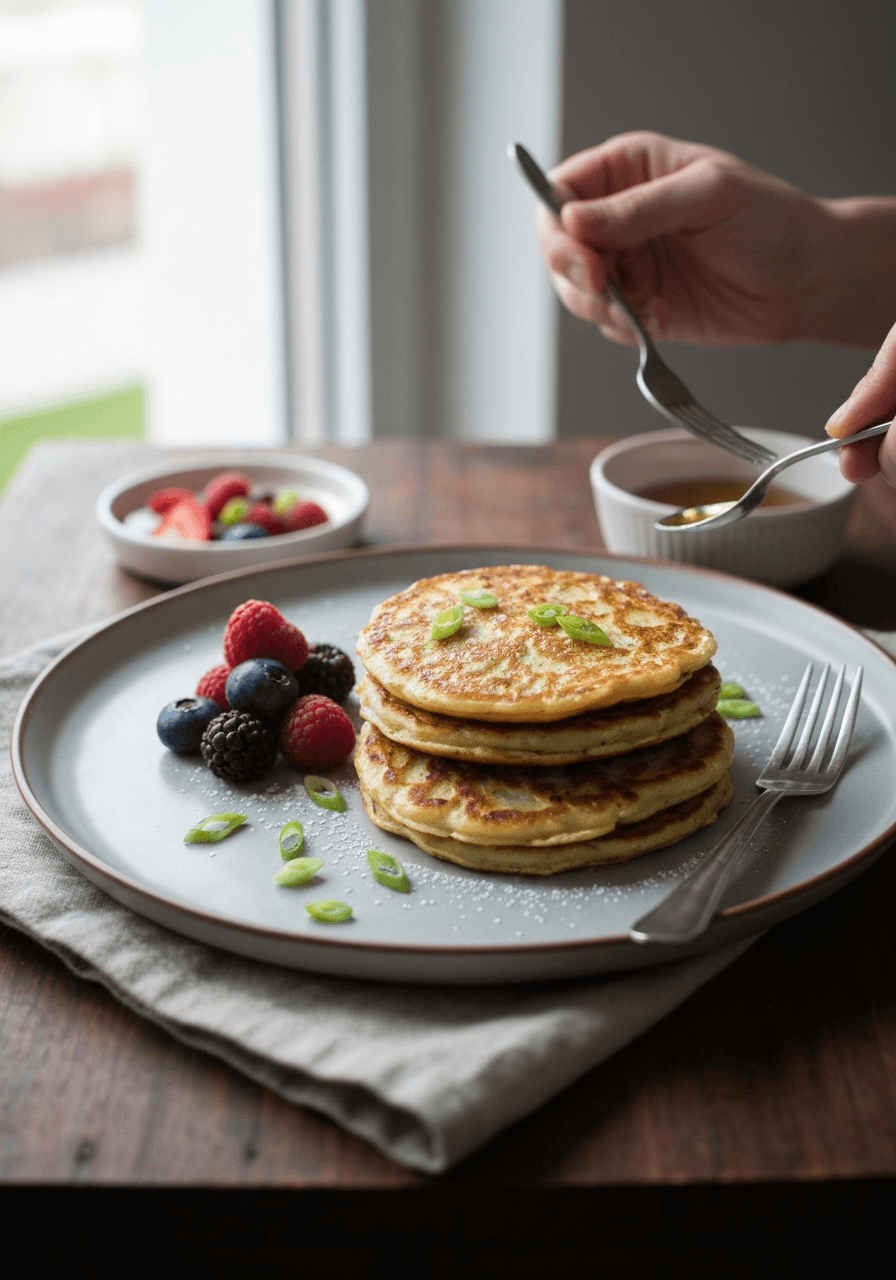
Scallion Pancakes — Crispy Layers
Unlock the secrets to perfect scallion pancakes! Crispy on the outside, chewy on the inside, and bursting with savory flavor.
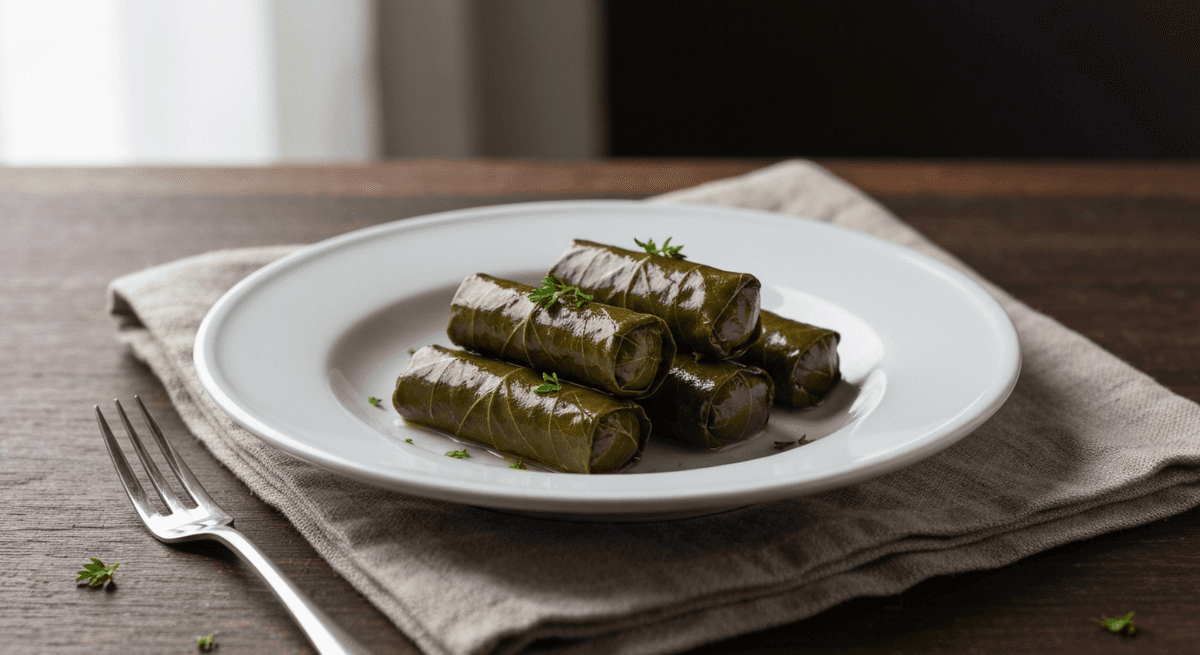
Dolmades — Stuffed Grape Leaves
Experience the taste of Greece with these delicate, herb-infused stuffed grape leaves. A perfect balance of flavors and textures in every bite.
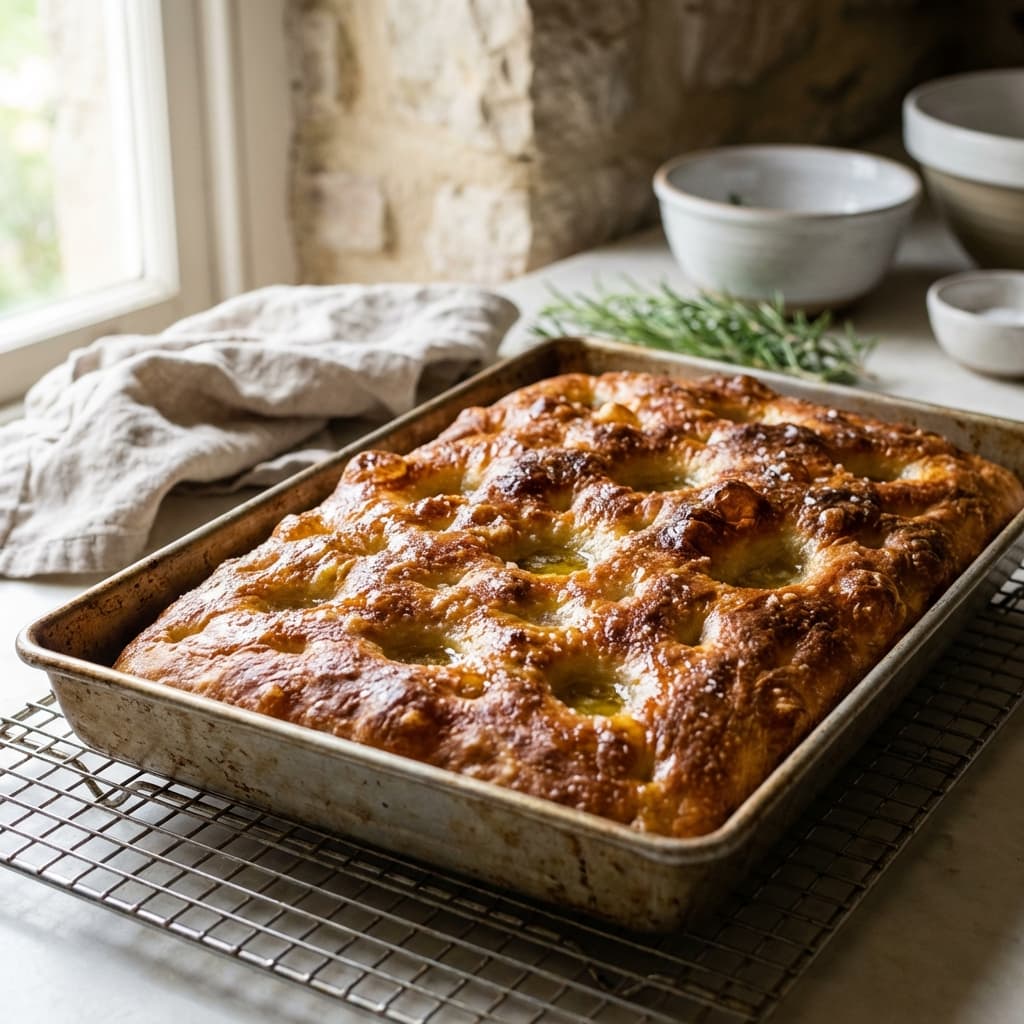
High-Hydration Focaccia
No-knead bread. Just time, water, and aggressive dimpling.