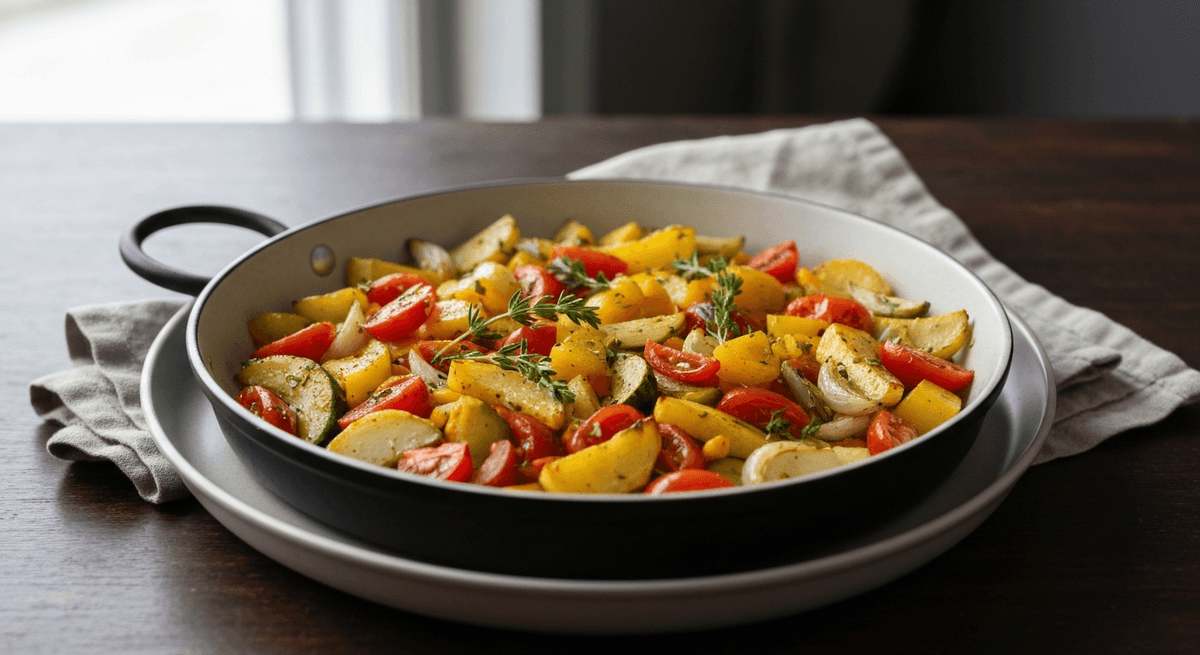
Roasted Vegetable Timing Map (Hard to Soft)
The cheat sheet for roasting mixed vegetables without guesswork: order, timing, and cues that prevent sogginess.
A simple roasting timing map so mixed vegetables finish together: hard veg starts first, tender veg goes in later. No more soggy trays.
Stagger vegetables by density and water content--hard veg starts first, soft veg joins later, and space prevents steaming.
The fit, timing, and key move are all here. If it is a yes, go straight into cook mode.
The cheat sheet for roasting mixed vegetables without guesswork: order, timing, and cues that prevent sogginess.
Timing note: 8 mins
Set your units, then drop the ingredients into grocery if this is happening later.
What matters before the pan gets hot
The shortest path to understanding the dish, the key move, and whether tonight is the right time to cook it.
The Hook
Stop steaming your damn vegetables. Hard stuff first, soft stuff last. It's not rocket science, it's basic fucking timing.
The Technique
Density and water content are the enemies of even roasting. Hard roots need time for Maillard reactions to develop before they turn to mush. Soft veg, loaded with water, will steam and turn flabby if they start too early. Staggering them prevents this culinary disaster.
The History
This isn't some ancient Mediterranean secret. It's a survival tactic born from the chaos of a busy kitchen. Anyone who throws everything on a pan at once is either lazy or an idiot. We learned this the hard way, watching perfectly good produce turn to mush.
Food Facts
Sourced notes. Tap to verify.
The Maillard reaction is a chemical reaction between amino acids and sugars that creates many of the roasted, toasted, and deeply savory flavors in cooked food.
A simple roasting timing map so mixed vegetables finish together: hard veg starts first, tender veg goes in later. No more soggy trays.
Nutrition per Serving
Estimated valuesTechnique, context, and fallback plans
The reason the method works, the prep you can do early, and what to change if the dish starts drifting.
The common pitfall of sheet-pan roasting isn't a lack of skill, but a misunderstanding of time. We often lament soggy vegetables, blaming the pan or the oven, when the real culprit is a failure to recognize that not all produce cooks at the same pace. Carrots and zucchini, for instance, inhabit entirely different culinary time zones, their densities and water content dictating vastly different roasting journeys.
This simple timing map liberates us from that guesswork. It’s a practical framework born from the desire for perfectly caramelized edges and tender interiors, not a tray of steamed disappointment. By understanding the hierarchy of vegetables—starting the dense, hardier roots first, then introducing the more delicate, water-rich varieties later—we unlock the potential for consistent browning and texture. The key isn't just the order, but also ensuring adequate space, allowing each piece to roast rather than steam. It’s a subtle shift in approach that transforms a weekly chore into a reliably delicious outcome.
My vegetables look pale and aren't browned.
That usually means the pan was too crowded, or the oven temperature wasn't quite hot enough.
Some of my vegetables are burnt while others are still hard.
Ah, it sounds like they needed a little staggering. Remember, we want to give the denser, harder vegetables a head start. Add your root vegetables first, and then bring in the soft…
Set up, cook, and remember what worked
The mise, the method, your notes, and the next recipes to master after this one lands.
The Setup
- Sheet Panhalf sheet
The Mise en Place
3Your prep station before cooking begins
Baseline (0/3)
Chef's Notes
Always dry washed vegetables before roasting. Wet veg steams and never browns properly.
PREHEAT
Heat oven to 425F (220C). Preheat the sheet pan if you want extra browning.
Hot pan = faster browning, less steaming. • Oven fully preheated
START
Hard vegetables first (25-35 min): carrots, sweet potato, beets, winter squash. Roast them alone for 10-15 minutes before adding others.
Hard veg needs a head start or it forces everything else to overcook. • Light browned spots begin forming
Hard veg has started to soften at edges
ADD
Medium vegetables next (15-25 min): broccoli, cauliflower, Brussels sprouts, onions, peppers. Add after the head start and roast until browned.
These can take heat and brown well if given space. • Dark roasted spots appear
Edges brown; centers tender
FINISH
Time-sensitiveSoft vegetables last (6-12 min): zucchini, mushrooms, asparagus, cherry tomatoes. Add near the end so they roast, not collapse.
Soft veg overcooks fast—late addition preserves texture. • Light blistering without puddles
Soft veg browned but still holds shape
SPACE
Rule: if pieces touch, you're steaming. Use two pans or roast in batches.
Airflow is the heat source. Crowding blocks it. • Single layer with spacing • Steam vents when you open the oven—less steam is better
Visible gaps between most pieces
Service Log
Log your variables. Iterate like a pro.
Clean slate.
Log your variables after the first run.
Related Techniques
Master These Next
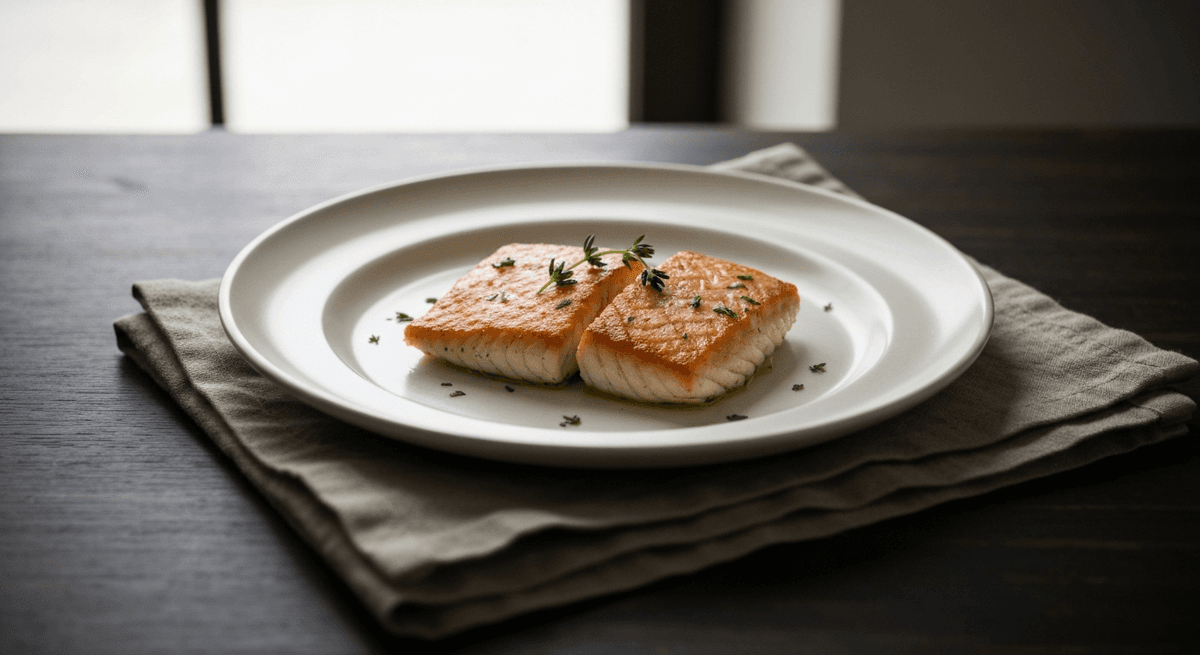
Fish Doneness Targets
The cheat sheet for moist fish: doneness targets, cues, and what 'done' actually looks like.
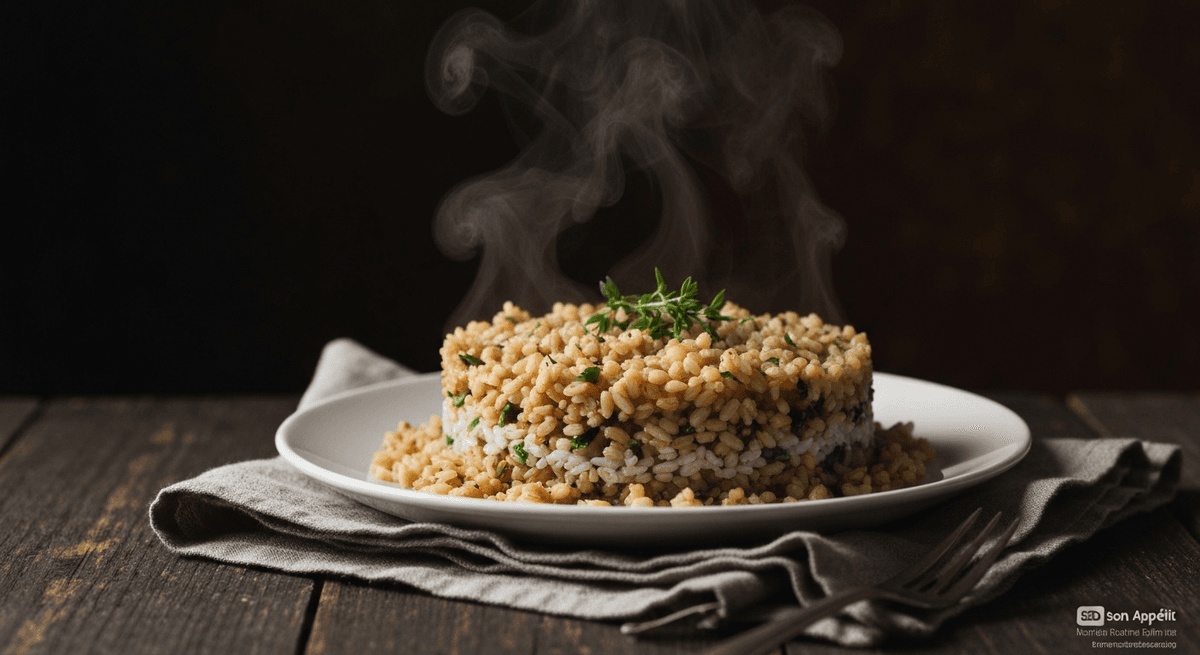
Whole Grain Batch Cook
Batch-cook whole grains once and reheat them like they were freshly made. Texture rules that actually work.
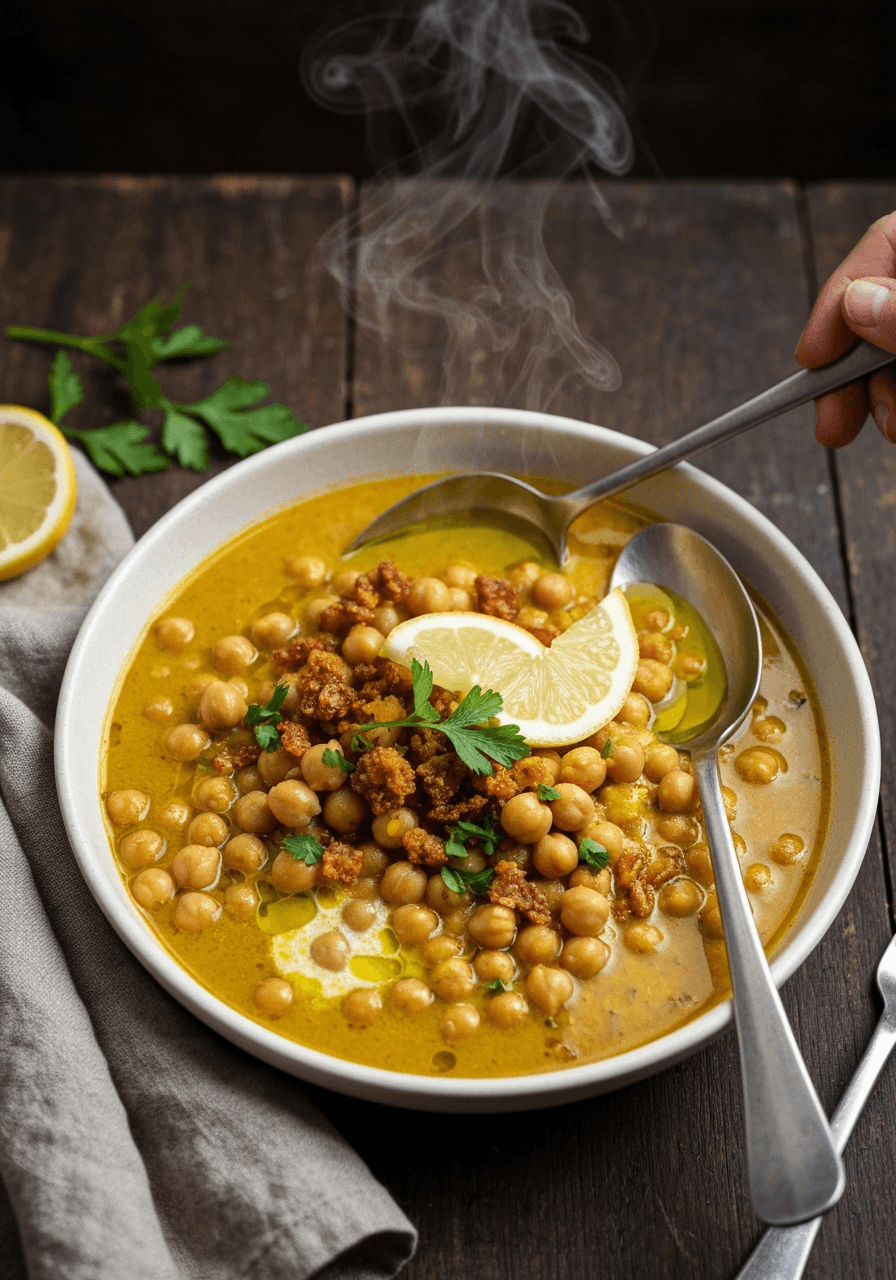
Spiced Chickpeas
Crispy bits, creamy broth, and a turmeric gold rush.