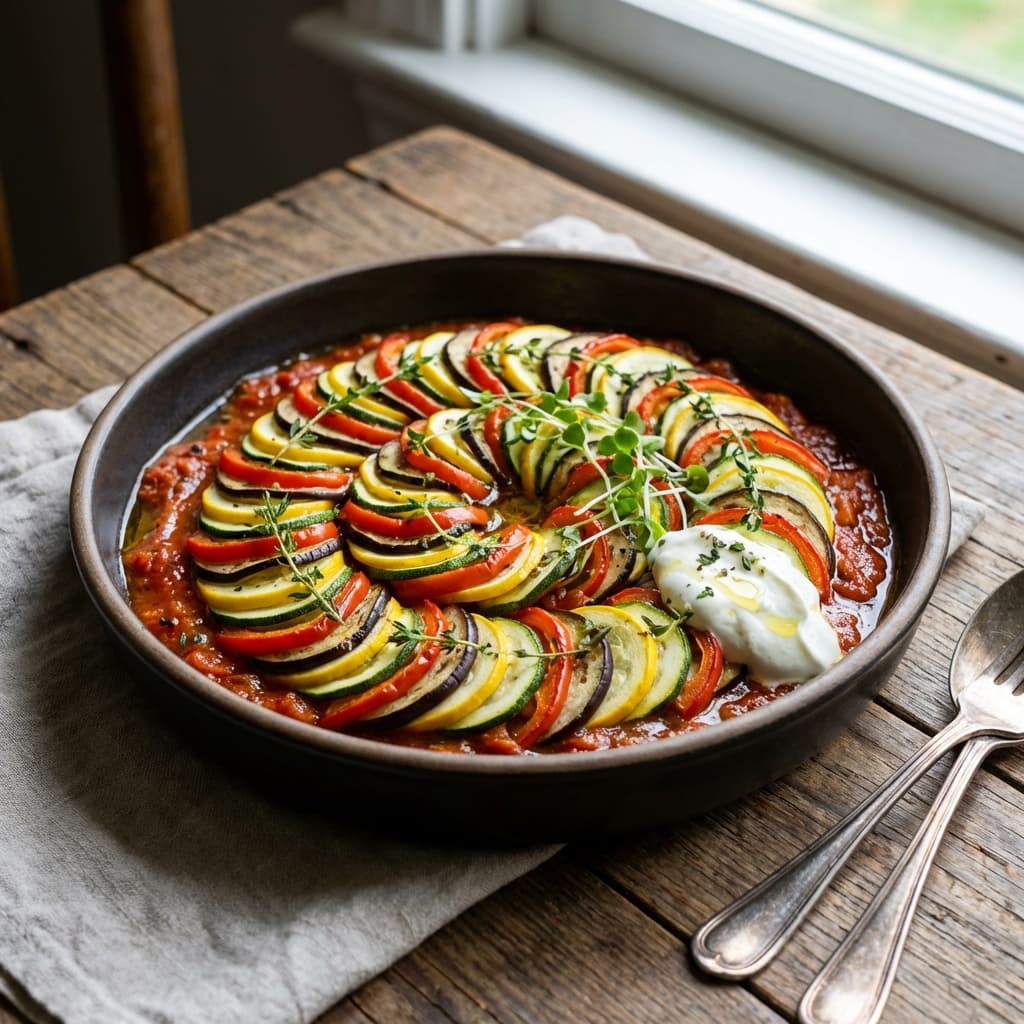
Ratatouille (Confit Byaldi)
Vegetables arranged like dominoes, baked until melting.
Vegetables arranged like dominoes, baked until melting. Standard Ratatouille is a stew.
Standard Ratatouille is a stew
The fit, timing, and key move are all here. If it is a yes, go straight into cook mode.
Vegetables arranged like dominoes, baked until melting.
Timing note: 1h 30m
Set your units, then drop the ingredients into grocery if this is happening later.
What matters before the pan gets hot
The shortest path to understanding the dish, the key move, and whether tonight is the right time to cook it.
The Hook
This isn't your grandma's ratatouille. We're not making peasant mush; we're building architecture. Get it wrong, and you've failed twice.
The Technique
Uniform slices are key. Controlled dehydration and gentle steam-roasting prevent mush. The piperade base caramelizes, building flavor. We're coaxing the vegetables to surrender their water slowly, denaturing proteins and gelatinizing starches without collapsing. It’s a slow burn, aiming for melt-in-your-mouth texture, not a soggy mess.
The History
Forget the rustic peasant stew myth. This is Provençal summer vegetables, refined by Michel Guérard into *Confit Byaldi*. It's about precision, not desperation. We take a humble dish and give it the respect it deserves, turning chaos into controlled elegance.
Food Facts
Sourced notes. Tap to verify.
An emulsion is a stable mixture of two liquids that normally do not mix, like oil and water. Many dressings and sauces rely on emulsifiers and whisking to hold that texture.
Vegetables arranged like dominoes, baked until melting. Standard Ratatouille is a stew.
Nutrition per Serving
Estimated valuesSatiety
Data estimatedTechnique, context, and fallback plans
The reason the method works, the prep you can do early, and what to change if the dish starts drifting.
Ratatouille began as a rustic Provençal stew, a way for farmers to use up the glut of summer vegetables by boiling them into a soft, indistinct mush. In the 1970s, French chef Michel Guérard elevated it into Confit Byaldi, turning a chaotic pot into architectural precision. Instead of stewing, the vegetables are sliced paper-thin and arranged in a hypnotic shingle pattern.
This method changes everything. By steaming the vegetables gently over a bed of piperade (roasted pepper sauce), they retain their individual integrity and texture while absorbing the aromatic steam. It is a dish that demands patience and knife skills, but the reward is visual and sensory: a meltingly soft kaleidoscope of summer produce that tastes as vibrant as it looks. It is the ultimate example of how technique can refine even the humblest ingredients.
My sauce is a little too thin, not rich enough.
Ah, that happens. The vegetables released a bit more liquid than expected. For next time, try reducing your piperade base a little longer to concentrate its flavor, or you can alwa…
My vegetables feel a little firm, not tender enough.
Don't worry, that's a common point with this dish. Remember, the 'confit' style is all about slow cooking until incredibly tender. If they're still a bit firm, just pop it back int…
Set up, cook, and remember what worked
The mise, the method, your notes, and the next recipes to master after this one lands.
The Setup
- Baking Dish9×13 inch
- Cutting Board
- Chef's Knife
The Mise en Place
3Your prep station before cooking begins
The Pantry (0/1)
Chef's Notes
Slice vegetables uniformly thin for even cooking and a beautiful presentation.
Roast the tomato sauce base briefly before assembling to deepen its flavor.
Serve hot with crusty bread or over polenta for a complete meal.
The tomato sauce can be made a day ahead and refrigerated.
THE SLICE
Time-sensitiveMandoline all vegetables to 1/8th inch (2mm) thick.
Consistency is key. If some are thick and some thin, they will cook unevenly.
THE BED
Spread the Piperade sauce on the bottom of a baking dish.
THE SHINGLE
Arrange vegetable slices in an alternating spiral pattern. Pack them tight. They shrink when cooked.
THE STEAM-ROAST
Drizzle with vinaigrette (100 mL). Cover tightly with parchment paper (cartouche) or foil. BAKE at 275°F (135°C) for 2-3 hours.
Why? Low and slow breaks down the cellulose without browning/burning.
THE GLACAGE
Remove cover. Broil for 5 mins to caramelize the edges slightly.
Service Log
Log your variables. Iterate like a pro.
Clean slate.
Log your variables after the first run.
Related Techniques
Master These Next
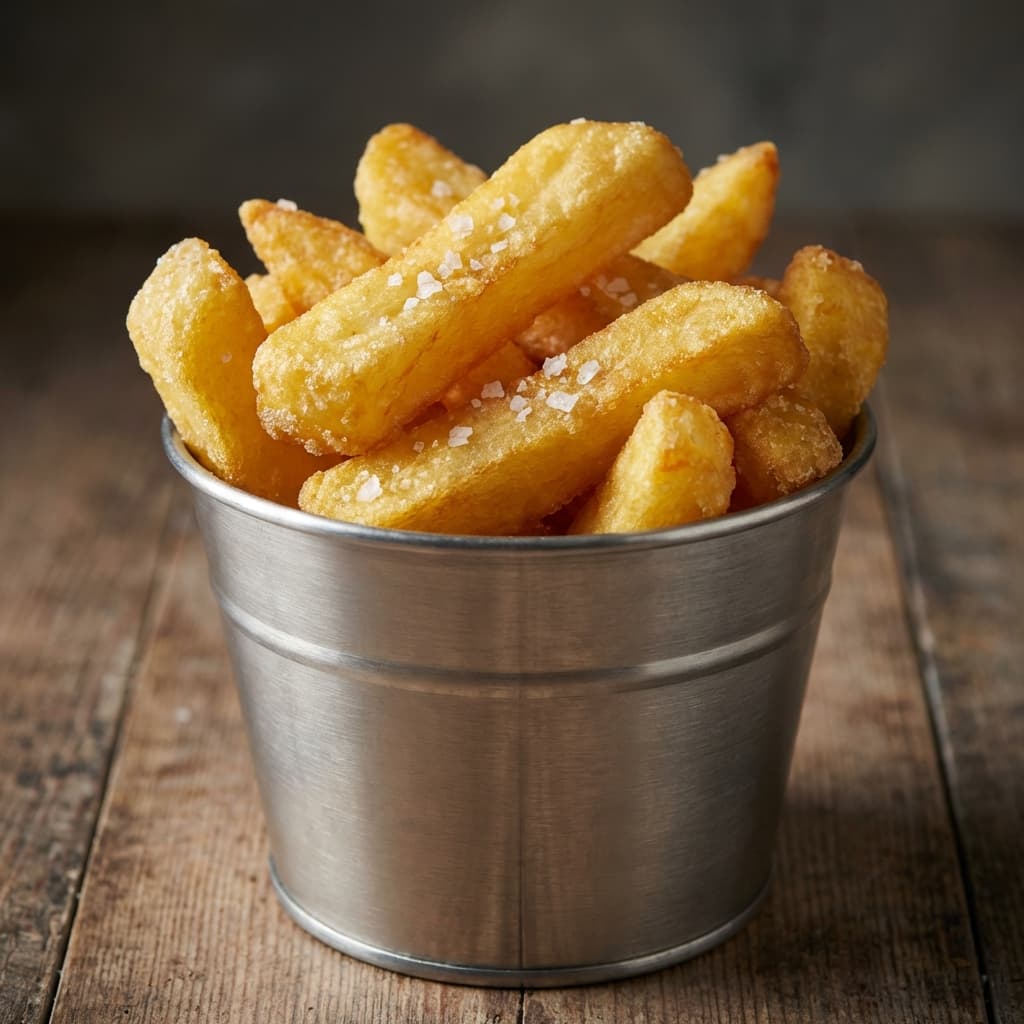
Triple Cooked Chips
Boil, freeze, fry, freeze, fry. Glassy crust, mash center.
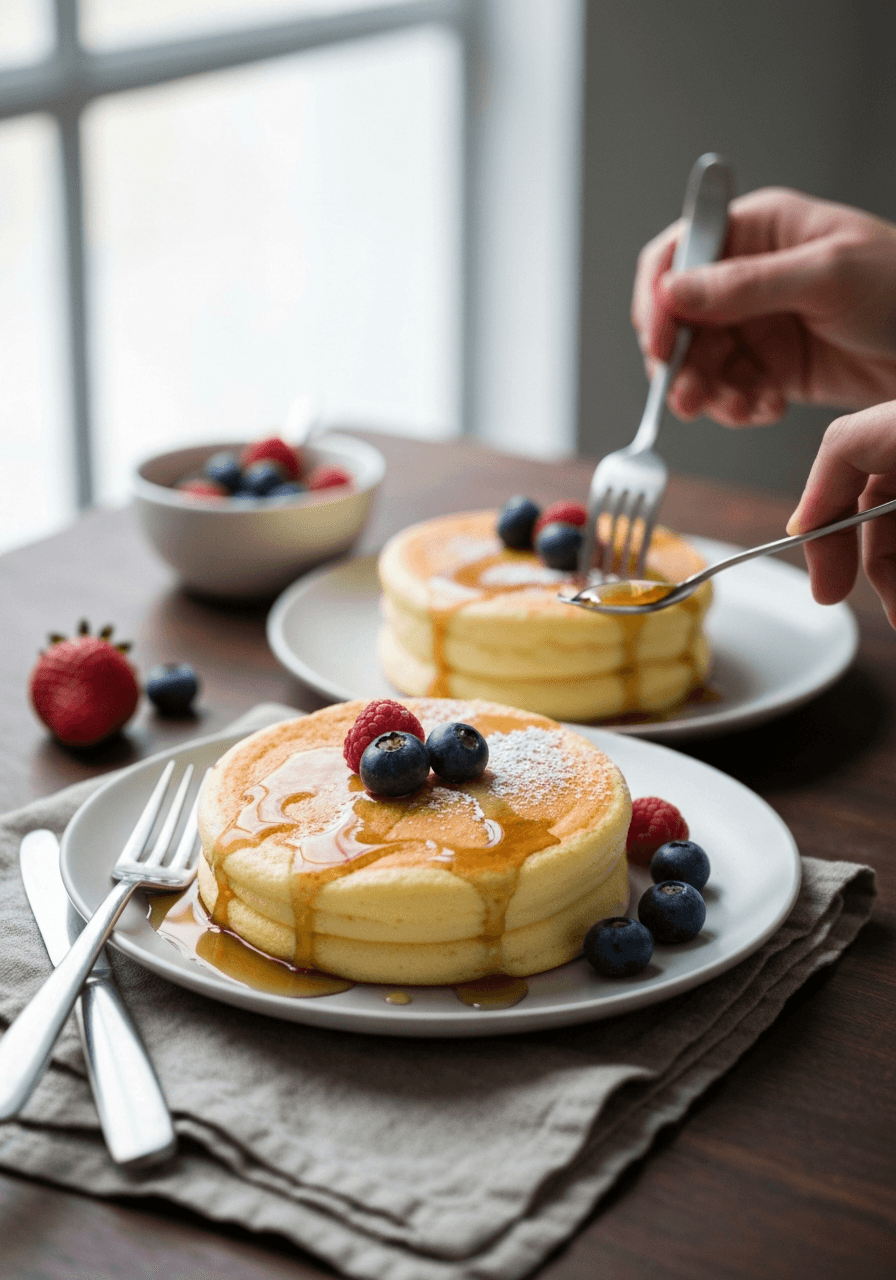
Japanese Souffle Pancakes
Experience breakfast bliss with these light, airy Japanese Souffle Pancakes. Each bite is a cloud of sweet, jiggly perfection.
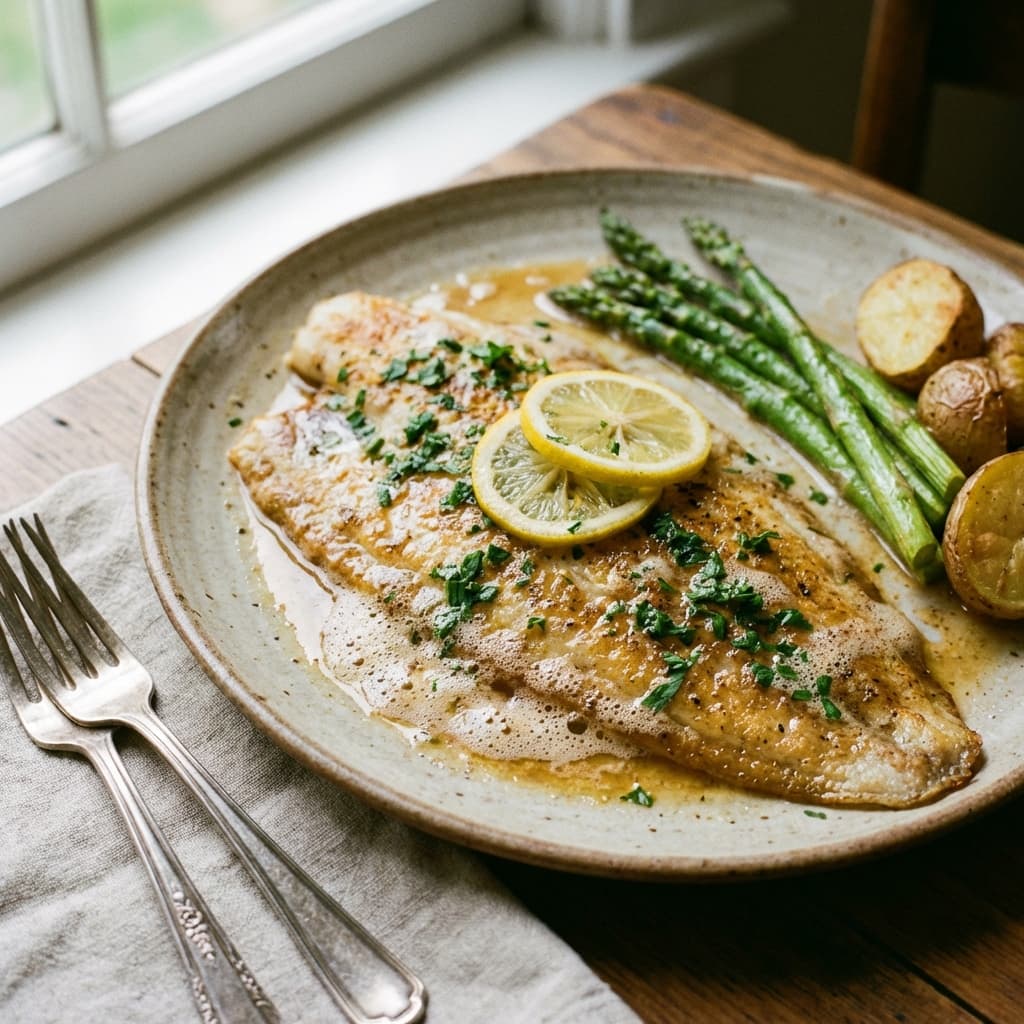
Sole Meunière
Dover Sole, brown butter, lemon, parsley. Do not blink.