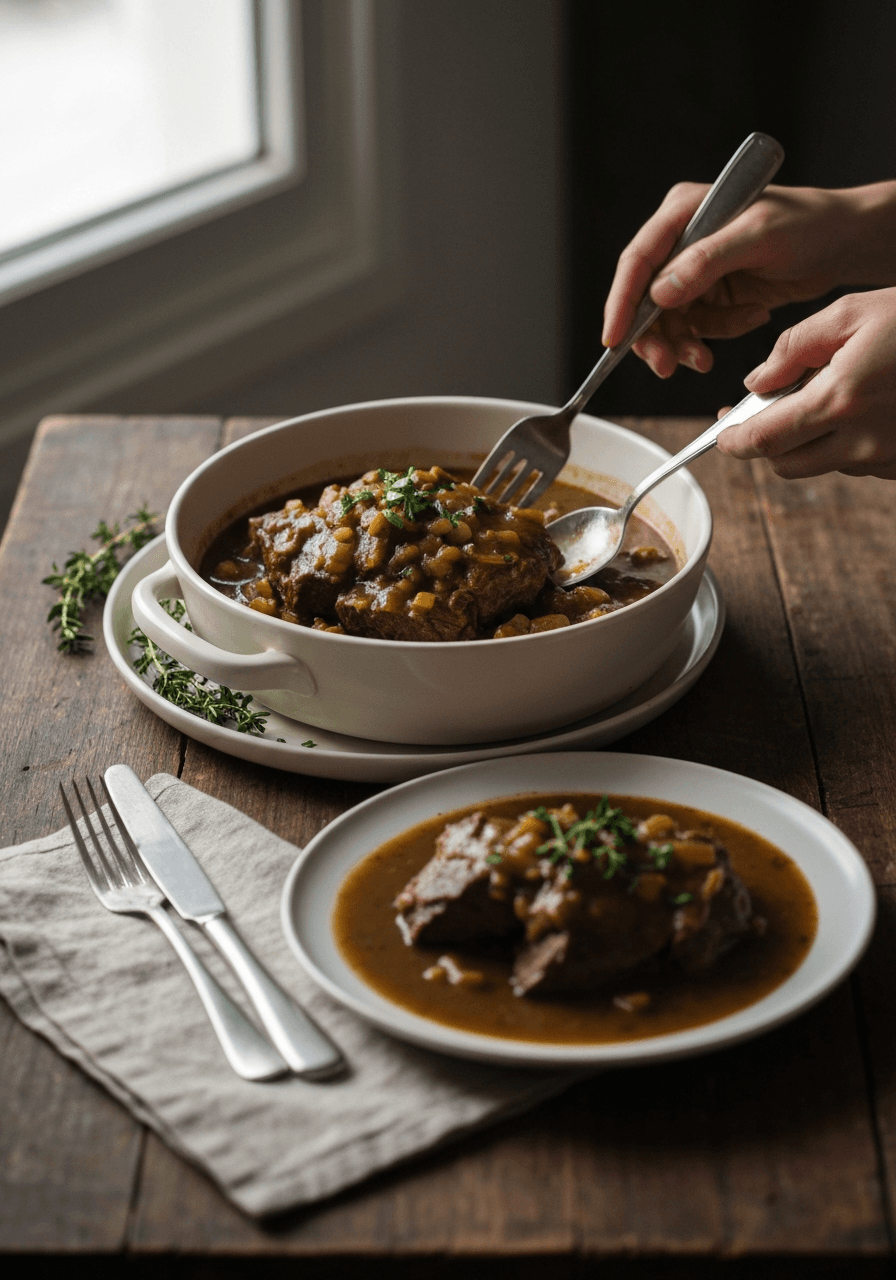
Pot Roast — Sunday Dinner
A classic American comfort food, slow-braised until fork-tender, creating a rich gravy and deeply flavorful meat.
240 min total, minimal dishes
Pot Roast — Sunday Dinner
A classic American comfort food, slow-braised until fork-tender, creating a rich gravy and deeply flavorful meat.
240 min total, minimal dishes
Key move
Sear the chuck roast aggressively on all sides to develop a deep, flavorful crust before braising.
Cook mode keeps your place
Larger text, ingredients in reach, and saved step progress while you cook.
The Setup
- Dutch Oven6-quart
- Cutting Board
- Knife
The Mise en Place
5 of 14Your prep station before cooking begins
The Dry Mix (0/12)
Roast is tough after braising.
Braise for a longer period until fork-tender. The exact time depends on the size and quality of the roast.
Gravy is too thin.
Cook the gravy for a longer period to allow it to thicken. Alternatively, make a thicker flour slurry.
Chef's Notes
Sear the roast on all sides in a hot pan before braising to develop a rich, flavorful crust.
For incredibly tender meat, cook the roast at a low temperature (275-300°F) for a longer period.
Serve with mashed potatoes or crusty bread to soak up the delicious braising liquid.
The pot roast can be made a day ahead and reheated gently on the stovetop or in the oven.
The Method
PREHEAT
Preheat oven to 325°F (163°C).
Uneven heating: Avoid placing the rack too high or low to prevent the top from scorching or the bottom from undercooking.
Oven is preheated to 325°F (163°C)
SEASON
Pat the chuck roast (1500 g) dry with paper towels. Season generously with salt (1 tsp) and pepper.
Moisture barrier: Wet meat will steam rather than sear, preventing the development of a dark, flavorful crust.
Chuck roast is patted dry and seasoned
SEAR
Heat olive oil (2 tbsp) in a large Dutch oven or oven-safe pot over medium-high heat. Sear the chuck roast (1500 g) on all sides until deeply browned, about 3-4 minutes per side.
Sticking meat: If the meat resists when you try to turn it, it is not fully seared. Wait another minute for the crust to release naturally.
Deep brown crust on all sides
REMOVE
Remove the roast from the pot and set aside.
Stuck meat: If the roast resists, it is not seared enough. Wait 30 seconds longer before pulling.
Roast is removed from the pot
ADD
Add the chopped onion, carrots (4 whole), and celery to the pot. Cook until softened, about 5-7 minutes.
Vegetable scorching: Keep heat at medium to prevent the sugars in the onions from burning before the vegetables soften.
Vegetables softened and slightly translucent
ADD
Add the minced garlic (4 cloves) and cook for another minute until fragrant.
Burned garlic: Garlic turns bitter instantly if scorched. If it browns too fast, add a splash of broth to cool the pan.
Garlic is fragrant
DEGLAZE
Pour in the red wine (if using) and deglaze the pot, scraping up any browned bits from the bottom.
Incomplete deglaze: Leaving browned bits behind can result in a burnt flavor during the long braise.
Pot is deglazed, browned bits are scraped up
ADD
Pour in the beef broth (4 cups), then add the thyme sprigs and bay leaf (1 whole).
Steam burn: The pan is extremely hot; pour slowly to avoid a sudden plume of scalding steam.
Beef broth, thyme, and bay leaf are added
RETURN
Return the chuck roast (1500 g) to the pot. The liquid should cover about two-thirds of the roast. Add the potatoes (6 medium) around the roast.
Liquid overflow: Do not submerge the roast completely; excess liquid can boil over and create a mess in the oven.
Roast and potatoes are in the pot, liquid level is correct
COVER
Time-sensitiveCover the pot and transfer to the preheated oven. Braise for 3-4 hours, or until the roast is fork-tender.
Dry roast: Check liquid levels halfway through; if the meat is exposed, add a splash of beef stock to prevent drying.
Roast is easily pierced with a fork
REMOVE
Remove the pot from the oven. Transfer the roast and vegetables to a serving platter and cover to keep warm.
Fragile roast: The meat is extremely tender; lift with two tools to prevent it from breaking into pieces.
Roast and vegetables are transferred to a platter and covered
MAKE
To make the gravy, skim off any excess fat from the braising liquid. In a small bowl, whisk together the flour with 1/4 cup of cold water to make a slurry.
Lumpy gravy: Adding dry flour directly to hot liquid creates lumps; always use a cold water slurry.
Excess fat skimmed, flour slurry made
BRING
Bring the braising liquid to a simmer over medium heat. Slowly whisk in the flour slurry and cook, stirring constantly, until the gravy has thickened, about 3-5 minutes.
Raw flour taste: Ensure the gravy simmers for the full duration to cook out the starchiness of the flour.
Gravy thick enough to coat the back of a spoon
SEASON
Season the gravy with salt (1 tsp) and pepper to taste. Strain the gravy through a fine-mesh sieve for a smoother consistency (optional).
Over-salting: The sauce reduces and intensifies in saltiness. Season in small increments.
Gravy seasoned and strained (optional)
SERVE
Serve the pot roast and vegetables with the gravy.
Temperature loss: Pot roast loses heat rapidly once portioned; serve immediately on pre-warmed plates.
Pot roast and vegetables served with gravy
Appears in collections
Keep browsing by the kind of recipe choice this supports, not just this single dish.
Master These Next
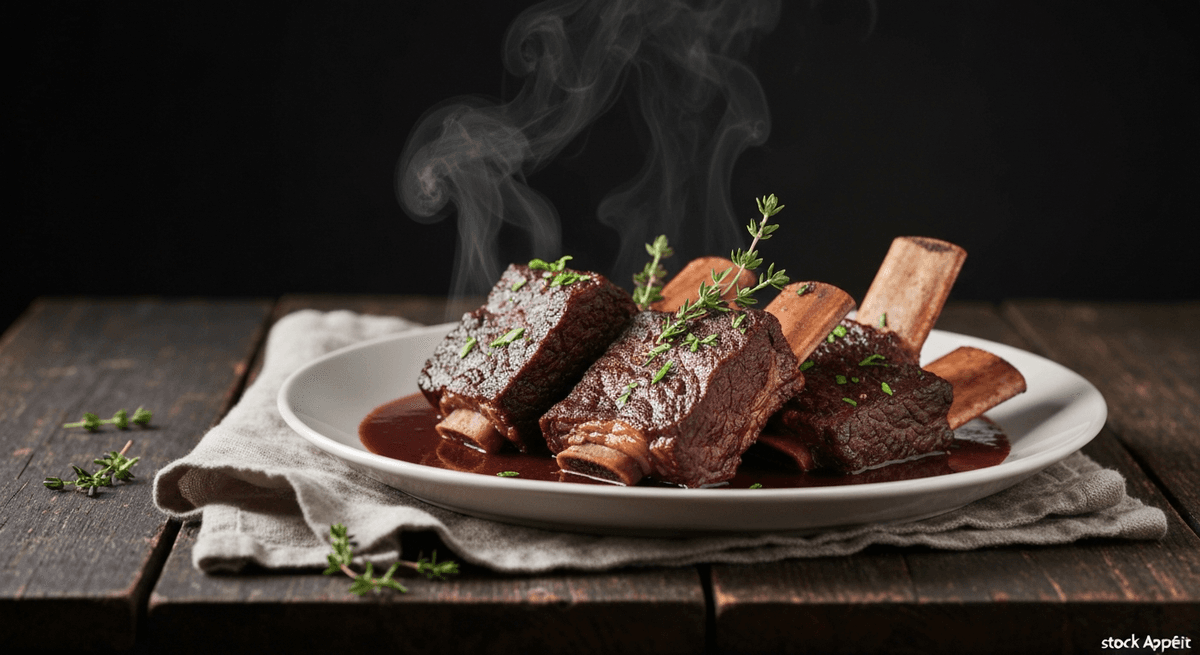
Beef Short Ribs — Red Wine Braise
Tender beef short ribs, slow-braised in red wine until fall-off-the-bone perfection. A comforting and elegant dish that's surprisingly easy to make.
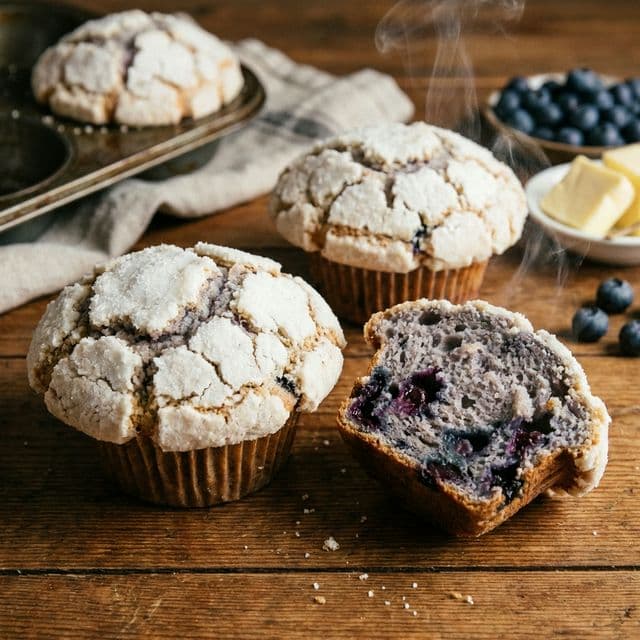
Jordan Marsh Blueberry Muffins
The department store legend. Mash half the berries, keep half whole.
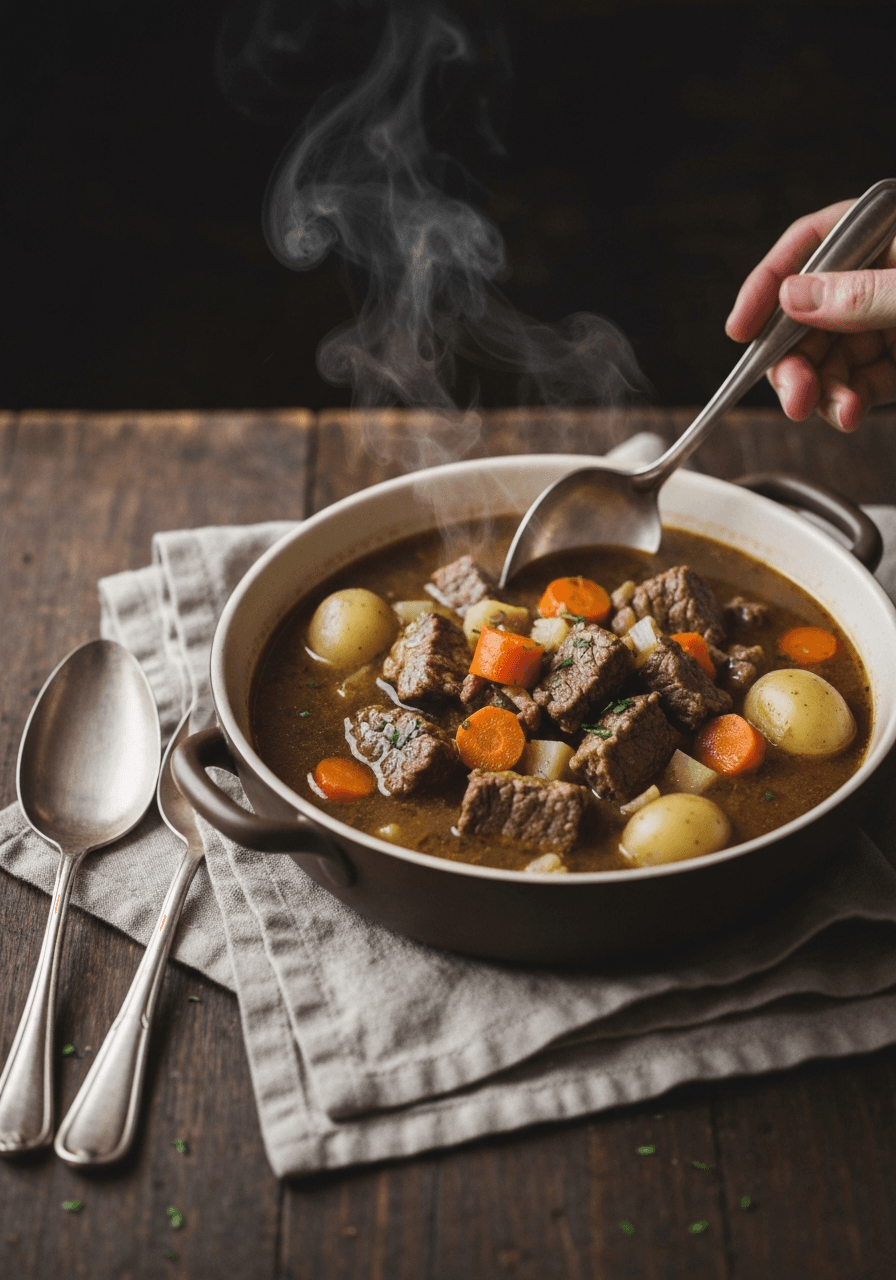
Old-Fashioned Beef Stew
No wine, just beef, carrots, and potatoes. Brown the meat or don't bother.