Macarons
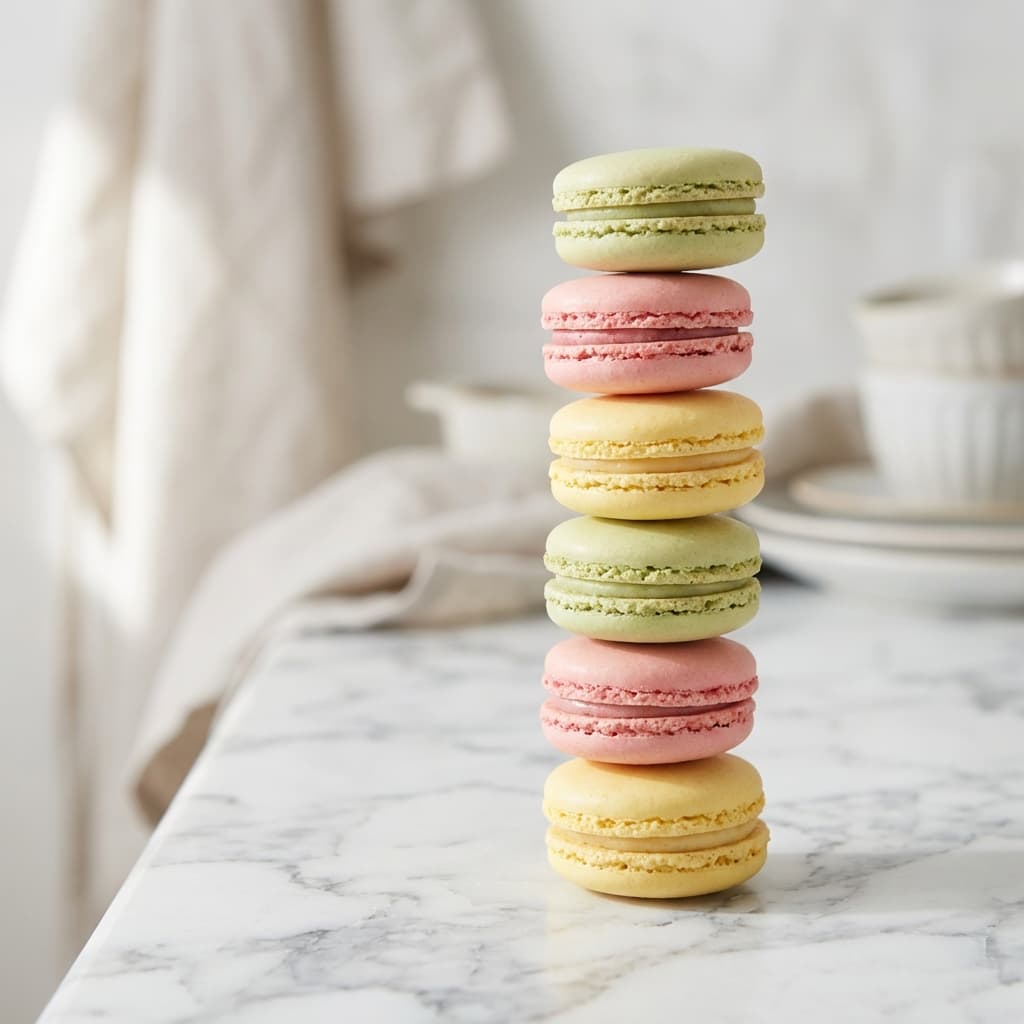
Humidity-sensitive almond cookies with an ego problem.
Humidity-sensitive almond cookies with an ego problem. These are not cookies; they are meringues that went to finishing school.
These are not cookies; they are meringues that went to finishing school
The fit, timing, and key move are all here. If it is a yes, go straight into cook mode.
Humidity-sensitive almond cookies with an ego problem.
Timing note: 2 hours
Set your units, then drop the ingredients into grocery if this is happening later.
What matters before the pan gets hot
The shortest path to understanding the dish, the key move, and whether tonight is the right time to cook it.
The Hook
These aren't cookies, they're meringues that went to finishing school. They smell fear. If it's raining, don't bother.
The Technique
It's all about egg white protein structure. Whip them right, and you get a stable foam. Overmix the 'macaronage,' and you shatter that delicate network. The 'feet' are the tell-tale sign of proper drying and oven spring – too much moisture, and you've got flat, cracked disappointments. Precision is non-negotiable.
The History
Forget Catherine de' Medici. These delicate almond meringues likely evolved from simpler Italian almond cookies. They found their true calling and fancy French form in Parisian patisseries. Don't let anyone tell you they invented them overnight; this took centuries of refinement and a few culinary skirmishes.
Food Facts
Sourced notes. Tap to verify.
Egg yolks contain lecithin, an emulsifier that helps stabilize mixtures of oil and water. That is the core trick behind glossy sauces and creamy dressings.
Humidity-sensitive almond cookies with an ego problem. These are not cookies; they are meringues that went to finishing school.
Nutrition per Serving
Estimated valuesSatiety
Data verifiedTechnique, context, and fallback plans
The reason the method works, the prep you can do early, and what to change if the dish starts drifting.
The "Feet" (pieds) are the ruffled edges at the bottom. They form because the top dries out, forcing the rising air to escape out the sides. No feet = failure.
My macaron shells have cracks on top.
Ah, those cracks tell me you might have rushed the resting period, or perhaps there was a bit too much air trapped in the batter.
My macarons look hollow inside and collapsed.
That hollow appearance usually means the oven was a touch too hot.
Set up, cook, and remember what worked
The mise, the method, your notes, and the next recipes to master after this one lands.
The Setup
- Sheet PanHalf sheet (18×13)
- Mixing Bowls
- Whisk
- Spatula
- Fine-Mesh Strainer
The Mise en Place
3Your prep station before cooking begins
The Dry Mix (0/1)
The Wet Mix (0/1)
The Add-ins (0/1)
Chef's Notes
Weigh ingredients for consistent macaron shells. Volume measurements can be inaccurate.
Rest piped macaron shells until a dry skin forms. This prevents cracking during baking.
Serve macarons chilled for a firmer texture, or at room temp for a chewier bite.
MERINGUE
Time-sensitiveWHISK egg whites (100 g) (100g) and sugar to stiff peaks.
You should be able to hold the bowl upside down over your head without wearing it.
MACARONAGE (The Fold)
Time-sensitiveFOLD the dry ingredients into the meringue. This is the danger zone.
⚠️ Under-mix and they crack. Over-mix and they spread flat.
The "Lava Flow." The batter should flow off the spatula in a continuous ribbon that creates a figure-8, then disappears after 10 seconds.
REST
Pipe onto mats and WAIT. Let them sit on the counter for 30-60 mins.
Why? They need to form a "skin." If you touch them, they shouldn't be sticky.
BAKE
BAKE at 300°F (150°C). Do not open the door.
Service Log
Log your variables. Iterate like a pro.
Clean slate.
Log your variables after the first run.