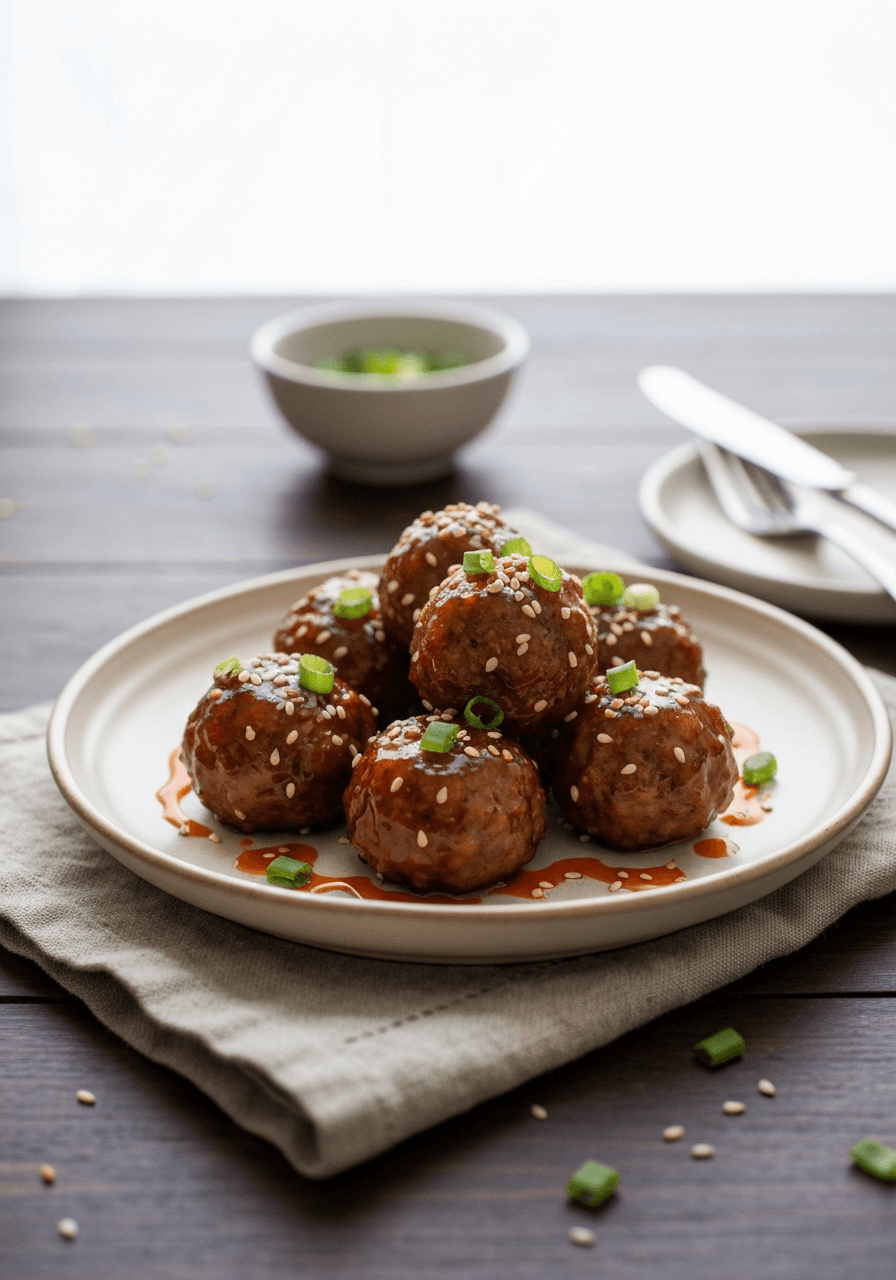
Korean BBQ-Style Meatballs
Ritz crackers in the meat, sugar glaze on top. Sticky perfection.
Master glaze adherence with Korean-style meatballs. Buttery Ritz crackers keep meat tender while sugar-soy glaze creates lacquer coating in 25 minutes.
Most meatballs are tough because people overwork the meat. We use Ritz Crackers (buttery crushed crackers) instead of breadcrumbs. The fat in the crackers melts into the meat, creating pockets of juice. The glaze relies on sugar caramelization—if you don't boil until it foams, it won't stick.
The fit, timing, and key move are all here. If it is a yes, go straight into cook mode.
Ritz crackers in the meat, sugar glaze on top. Sticky perfection.
Timing note: 25 mins
Set your units, then drop the ingredients into grocery if this is happening later.
What matters before the pan gets hot
The shortest path to understanding the dish, the key move, and whether tonight is the right time to cook it.
The Hook
The Ritz crackers are genius. Most people use dry breadcrumbs, which absorb moisture and make dense meatballs. Ritz crackers add moisture because they contain butter. The glaze works because we reduce it until the sugar caramelizes—that's what makes it stick.
The Technique
Ground meat contains myosin (a protein). When you compress it or overwork it, you activate the myosin, creating a tight, rubbery texture (like sausage). Gentle mixing keeps myosin relaxed. The Ritz crackers add fat, which coats the protein strands and prevents them from bonding tightly. Sugar caramelizes at 320°F, creating a sticky, glossy coating.
The History
Popularized by Kay Chun as part of Korean-American fusion cooking. The technique draws from Korean galbi (short rib) glazes and American comfort food.
Food Facts
Sourced notes. Tap to verify.
Tough cuts feel chewy because they contain more collagen. With time and moist heat, collagen breaks down into gelatin, which is why braises and stews get richer the longer they cook.
A simmer uses lower agitation than a full boil, helping keep proteins tender and broths clearer while still cooking food through.
Master glaze adherence with Korean-style meatballs. Buttery Ritz crackers keep meat tender while sugar-soy glaze creates lacquer coating in 25 minutes.
Nutrition per Serving
Estimated valuesSatiety
Data estimatedTechnique, context, and fallback plans
The reason the method works, the prep you can do early, and what to change if the dish starts drifting.
Most meatballs are tough because people treat ground meat like dough. They squeeze it, compress it, and roll it into dense balls that cook up like rubber. This recipe fixes that with two tricks: buttery crackers and a light touch.
Ritz crackers contain fat (butter). When you mix crushed crackers into the meat, that fat melts during cooking, creating pockets of moisture and tenderness. It's the same principle as adding pork fat to a beef burger—fat equals juice.
The second trick is the glaze. Most glazes slide right off meatballs because they're too thin. This one works because we reduce it until the sugar caramelizes. When sugar heats past a certain point, it transforms from sweet liquid into sticky syrup. That's what makes the glaze cling like lacquer instead of running off like sauce.
The result is a meatball that's tender on the inside and coated in a sticky, sweet-savory glaze on the outside. It's Korean BBQ flavors (soy, sesame, gochujang) applied to an Italian format (meatballs). Fusion done right.
Meatballs fell apart?
You didn't crush the crackers fine enough, or you didn't use an egg binder.
Glaze burned?
Sugar burns fast. Watch the reduction closely—it goes from syrup to carbon in 30 seconds. If it starts smoking, pull it immediately. You can't rescue burnt sugar.
Use this in Focus
Turn this nutrition profile into a week you can plan, shop, and actually cook.
Set up, cook, and remember what worked
The mise, the method, your notes, and the next recipes to master after this one lands.
The Setup
- Rimmed Baking SheetLine with foil or parchment
- Small Saucepan1-2 qt·For making glaze
The Mise en Place
5 of 11Your prep station before cooking begins
The Aromatics (0/2)
Finishing (0/2)
The Meat (0/1)
Chef's Notes
Crush crackers in a zip-top bag with a rolling pin for easy cleanup.
Make the glaze while meatballs cook to save time.
Serve over rice, in lettuce wraps, or as party appetizers with toothpicks.
MIX
Prep aheadPreheat broiler to high. In a bowl, combine ground beef (1 lb), crushed Ritz crackers (15 crackers), egg, garlic (3 cloves), ginger, and a pinch of salt. Mix gently with your fingertips—do not squeeze or compress the meat. Stop as soon as everything is combined. Loose packing is key to tender meatballs.
If you compress the meat, you make hockey pucks. Loose pack only. • Meat mixture holds together but looks loose, not dense • Smell of garlic and ginger
Mixture is just combined, not compressed
FORM
Prep aheadForm mixture into 12-16 meatballs (about 1.5 inches each). Roll gently—don't pack tightly. Arrange on a rimmed baking sheet lined with foil or parchment, spacing them 1 inch apart.
Wet your hands to prevent sticking • Golf ball-sized meatballs on baking sheet
Meatballs are uniform size and spaced evenly
BROIL
Time-sensitiveBroil meatballs on high (about 6 inches from heat) for 10 minutes until browned and cooked through. They should be caramelized on top but still juicy inside.
Watch closely—broilers vary. If burning, move rack lower. • Dark brown tops, sizzling fat • Smell of browning meat
Meatballs are browned and firm
REDUCE
Time-sensitivePrep aheadWhile meatballs cook, make the glaze. In a small saucepan, combine soy sauce (¼ cups), brown sugar (¼ cups), sesame oil (1 tbsp), gochujang (1 tbsp), and 2 tbsp water. Bring to a boil over medium-high heat. Simmer until thick and bubbly, about 5 minutes. The glaze should foam and reduce by half—it will look like lacquer.
Sugar burns fast. Watch the reduction—it goes from syrup to carbon in 30 seconds. • Dark, glossy syrup that coats the back of a spoon • Sweet, savory caramel smell
Scorch risk: Reductions can go from perfect to burnt fast. Keep an eye on the bottom and stir if needed.
Glaze is thick, glossy, and foamy
COAT
Transfer cooked meatballs to a large bowl. Pour glaze over and toss gently to coat every surface. The glaze should cling like lacquer, not run off.
If glaze runs off, return it to the pan and reduce more • Shiny, dark brown meatballs
Meatballs are glossy and evenly coated
SERVE
Transfer to a serving plate. Sprinkle with sesame seeds (1 tbsp) and scallions (2 whole). Serve immediately with rice or as an appetizer.
Glaze sets as it cools—serve hot • Glossy meatballs topped with white sesame and green scallions
Meatballs are hot, glazed, and garnished
Service Log
Log your variables. Iterate like a pro.
Clean slate.
Log your variables after the first run.
Master These Next
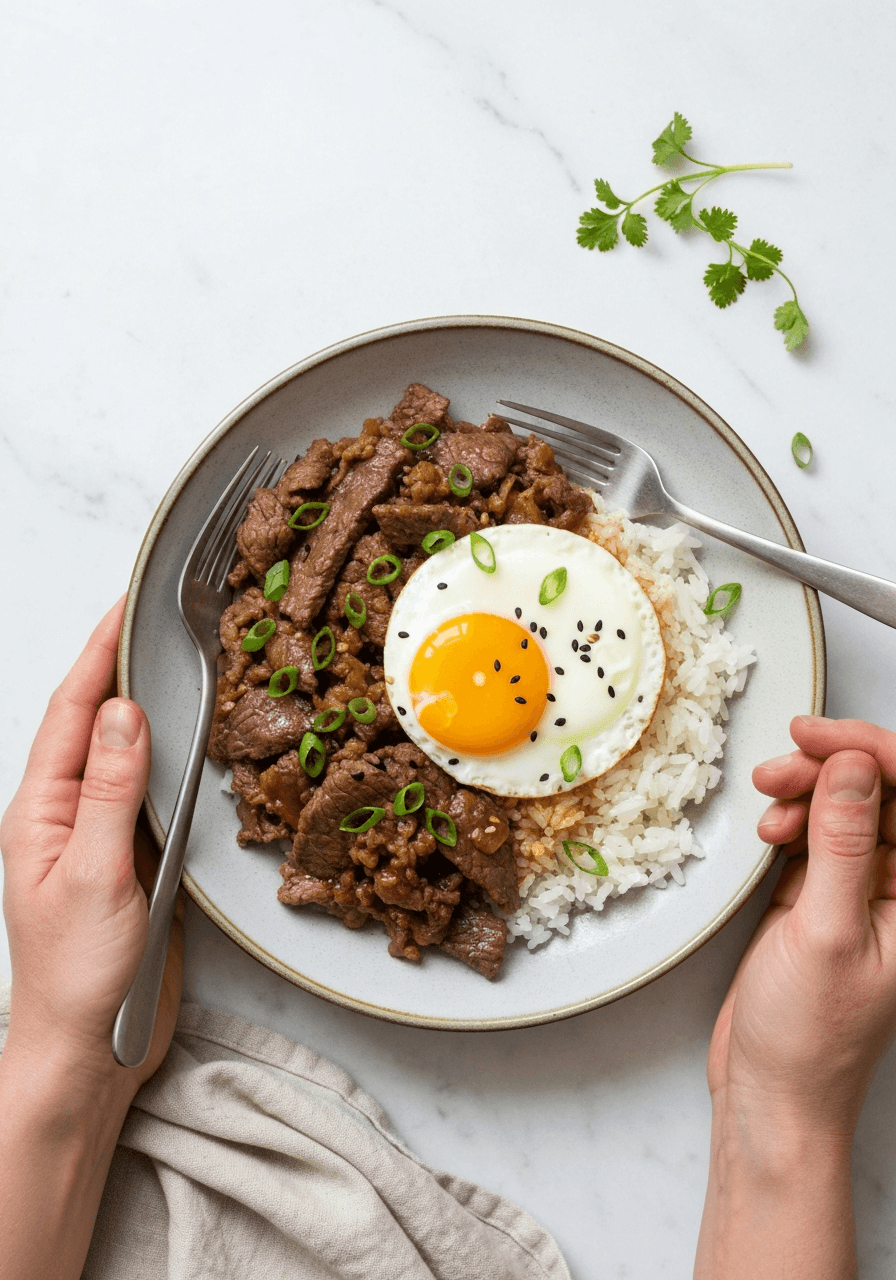
Gyudon — Beef Rice Bowl
Experience the comforting flavors of Japan with this easy Gyudon recipe. Thinly sliced beef simmered in a savory-sweet sauce, served over rice with a perfectly runny egg.
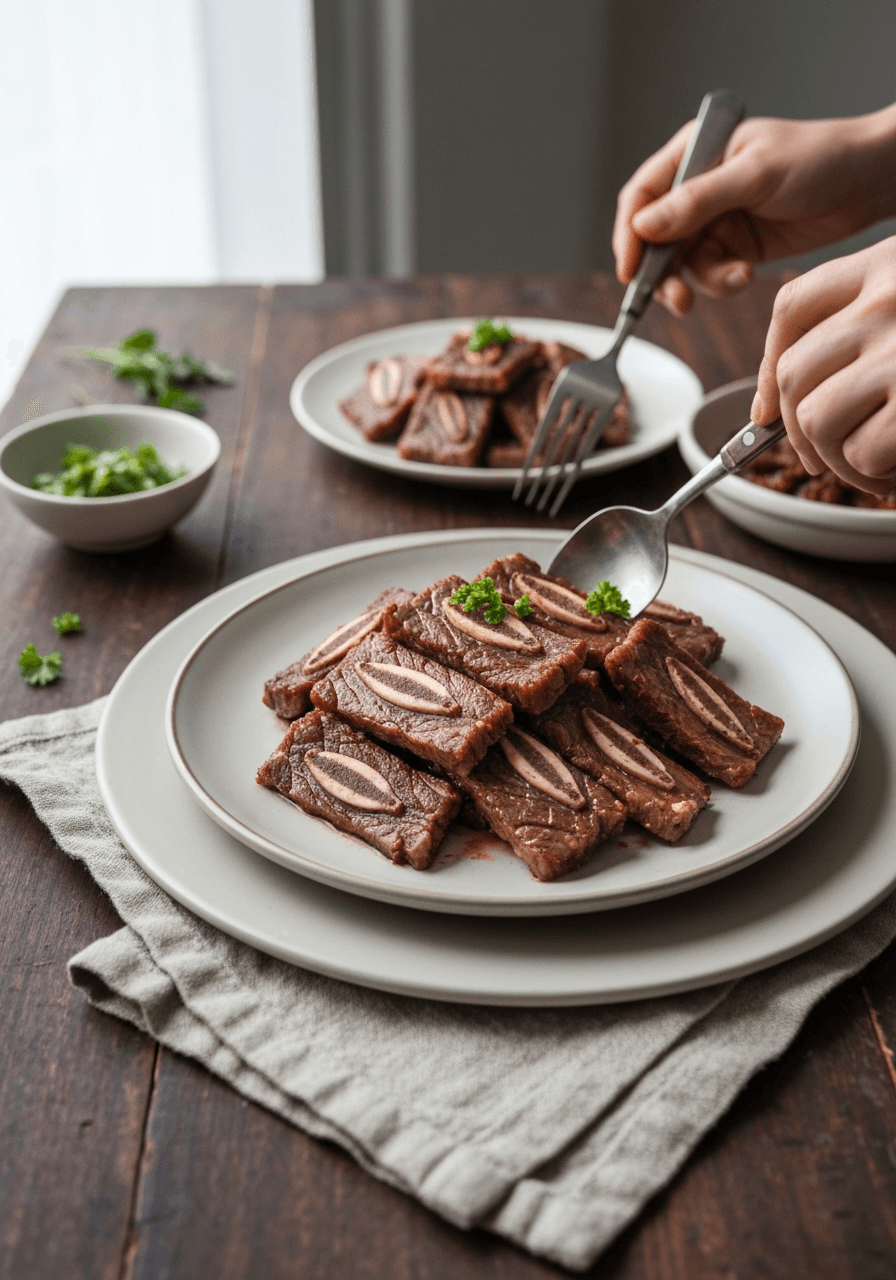
Korean BBQ Short Ribs — Kalbi
Sweet, savory, and utterly addictive, these Korean BBQ short ribs are a guaranteed crowd-pleaser. Thinly sliced and marinated to perfection, they're ready to grill in minutes!
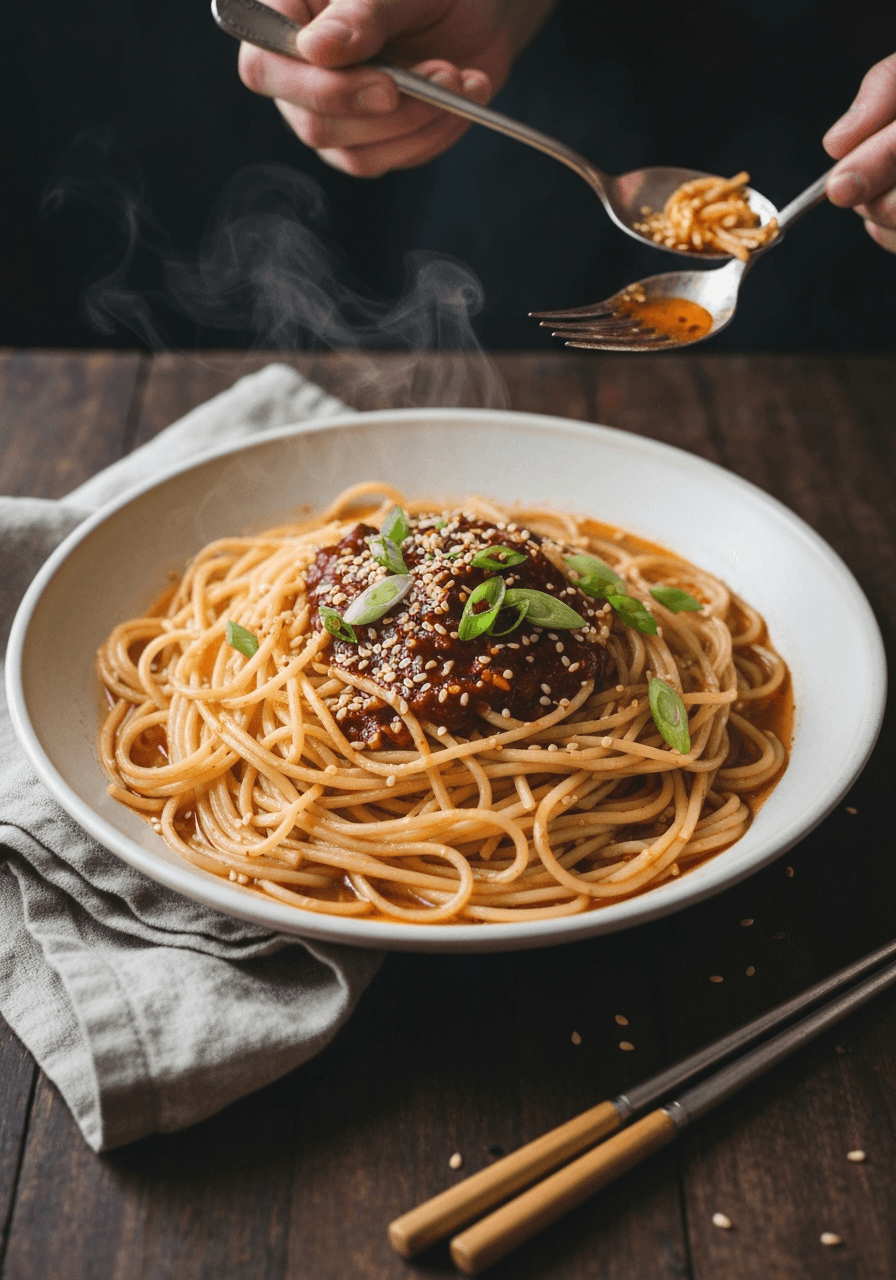
Gochujang Butter Noodles
Spaghetti meets Korean fermentation. 10 minutes to glory.