Gravlax
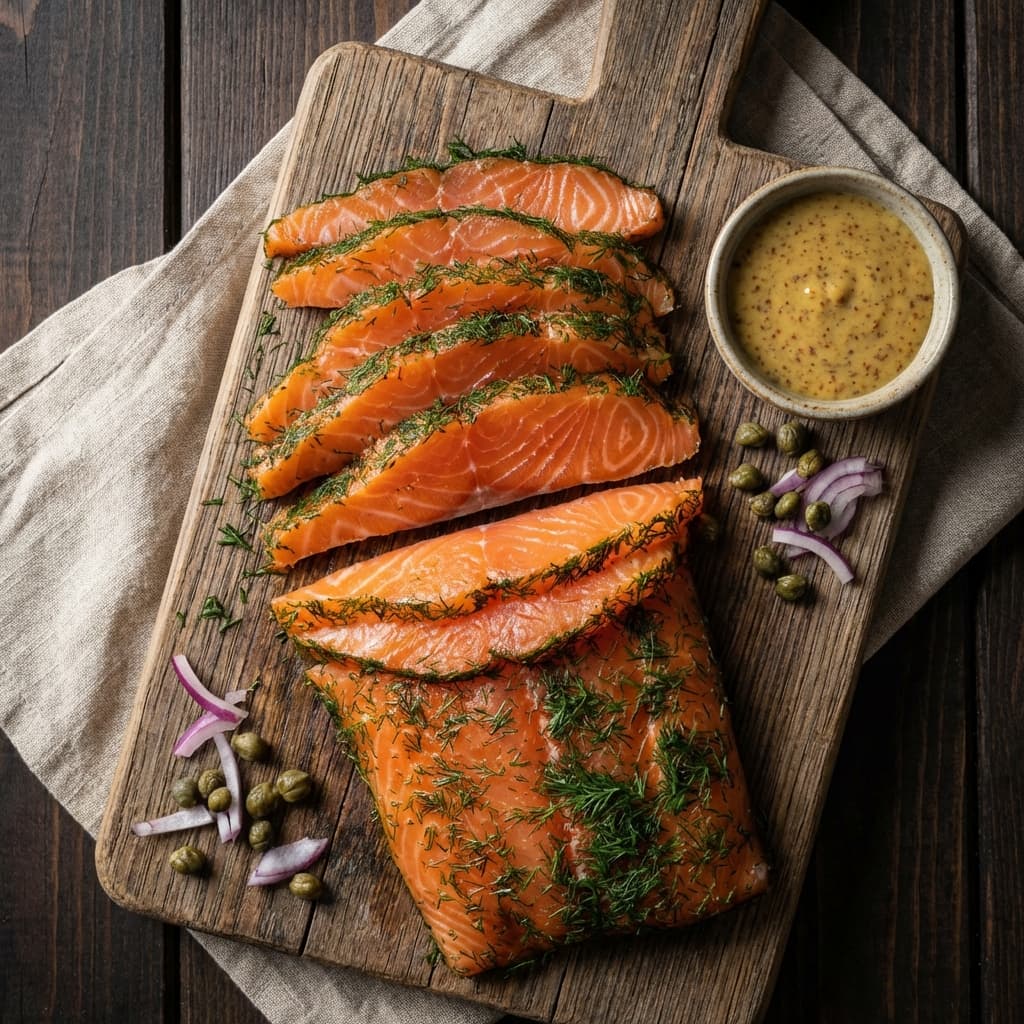
Cooking fish with salt and time. No heat required.
Cooking fish with salt and time. No heat required. You are creating a hostile environment for bacteria while pulling moisture out of the fish cells.
You are creating a hostile environment for bacteria while pulling moisture out of the fish cells
The fit, timing, and key move are all here. If it is a yes, go straight into cook mode.
Cooking fish with salt and time. No heat required.
Timing note: 48 hours
Set your units, then drop the ingredients into grocery if this is happening later.
What matters before the pan gets hot
The shortest path to understanding the dish, the key move, and whether tonight is the right time to cook it.
The Hook
This isn't raw fish, it's a preservation hack from the Dark Ages that we've glammed up. Don't screw it up.
The Technique
Osmotic dehydration. Salt and sugar suck the water out, firming the flesh and killing bugs. Dill and gin aren't just for show; they're flavor bombs absorbed during the cure. Get the balance wrong, and you've got salty, mushy fish or worse.
The History
Forget fancy origins. This is Viking survival food. Fishermen buried salted salmon in the ground – hence 'gravlax' – to keep it from rotting through brutal winters. Modern chefs just pretend it's elegant now.
Food Facts
Sourced notes. Tap to verify.
Fish generally has less connective tissue than land meats, so it firms up and flakes quickly with heat. That is why seafood often goes from underdone to overdone in a small window.
Cooking fish with salt and time. No heat required. You are creating a hostile environment for bacteria while pulling moisture out of the fish cells.
Nutrition per Serving
Estimated valuesSatiety
Data estimatedTechnique, context, and fallback plans
The reason the method works, the prep you can do early, and what to change if the dish starts drifting.
The name gravlax is a history lesson in itself. It comes from the Swedish words grav (grave) and lax (salmon). In the Middle Ages, fishermen would salt their catch and bury it in the sand above the high-tide line to preserve it for the harsh winter. The sand acted as a temperature regulator, and the salt acted as the preservative.
Modern curing is less about survival and more about texture. By burying the fish in salt and sugar, you create a hostile environment for bacteria while drawing moisture out of the cells through osmosis. This process tightens the muscle fibers, transforming the raw, soft flesh into something firm, translucent, and jewel-like. It is cooking without heat, patience without fire. The addition of dill and aquavit gives it that distinct Scandinavian herbal brightness, cutting through the richness of the cured fat.
My gravlax tastes way too salty.
Ah, that happens if it cures for more than three days or if you didn't rinse off all that salt properly.
The texture is a bit too soft and mushy.
That usually means the fish wasn't pressed down firmly enough, or perhaps the salmon you started with was a bit watery.
Use this in Focus
Turn this nutrition profile into a week you can plan, shop, and actually cook.
Set up, cook, and remember what worked
The mise, the method, your notes, and the next recipes to master after this one lands.
The Setup
- Cutting Board
- Chef's Knife
- Spatula
The Mise en Place
4Your prep station before cooking begins
The Protein (0/1)
The Spice Blend (0/1)
The Pantry (0/1)
Other (0/1)
Chef's Notes
Press the salmon firmly to ensure even curing and a dense texture.
Serve thinly sliced with dill, mustard sauce, rye bread, or a squeeze of lemon.
Gravlax can be made up to 3 days ahead. The flavor deepens over time.
THE RUB
MIX salt, sugar, and crushed pepper. PAT the splash of alcohol onto the fish. PACK the cure (50 g) onto the flesh side like a sandcastle.
THE BURIAL
Cover completely with dill. Wrap tightly in plastic wrap.
THE PRESS
Place in a dish. Put a smaller dish on top. Put soup cans (weights) on top of that. Refrigerate.
Why? The weight forces the water out faster.
THE FLIP
Every 12 hours, FLIP the fish over. Drain the liquid that accumulates in the pan. * ✅ Checkpoint (48 hrs): The flesh should feel firm, like the heel of your hand. If it's squishy, it needs more time.
THE SLICE
Rinse off the cure (50 g). SLICE paper-thin on a bias.
Service Log
Log your variables. Iterate like a pro.
Clean slate.
Log your variables after the first run.