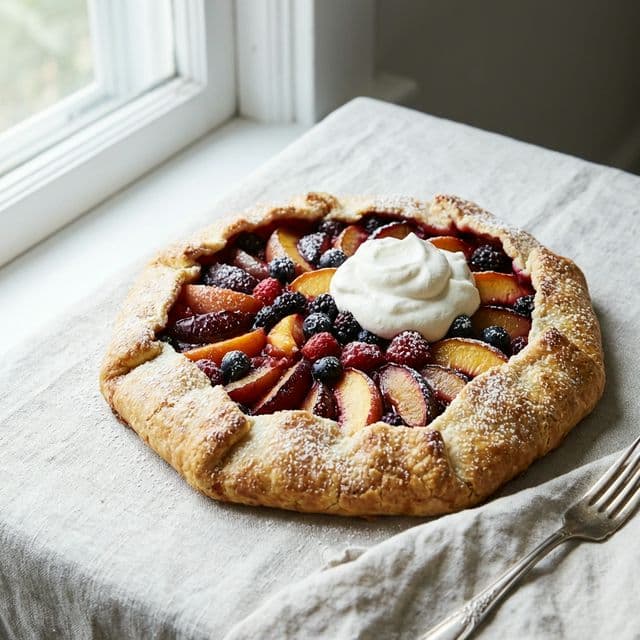
Galette — Freeform Tart
Embrace rustic charm with this freeform tart, showcasing seasonal fruits in a buttery, flaky crust. Simple, adaptable, and utterly delicious!
25 min active, minimal dishes
Galette — Freeform Tart
Embrace rustic charm with this freeform tart, showcasing seasonal fruits in a buttery, flaky crust. Simple, adaptable, and utterly delicious!
25 min active, minimal dishes
Key move
Keep the butter cold and don't overwork the dough for a flaky, tender crust.
Cook mode keeps your place
Larger text, ingredients in reach, and saved step progress while you cook.
The Setup
- Large Bowl
- Pastry BlenderOptional
- Baking Sheet
- Parchment Paper
The Mise en Place
5 of 10Your prep station before cooking begins
Crust (0/4)
Filling (0/4)
Crust is not flaky.
Make sure the butter is very cold and don't overwork the dough.
Fruit is too watery.
Increase the amount of cornstarch or use a drier fruit.
Chef's Notes
Chill dough for at least 30 mins before rolling to prevent sticking and tearing.
Brush crust with egg wash and sprinkle with coarse sugar for a golden, crisp finish.
Serve warm with a dollop of crème fraîche or a scoop of vanilla ice cream.
Unbaked galette can be assembled and frozen on a baking sheet, then baked from frozen.
The Method
COMBINE
Prep aheadIn a large bowl, whisk together flour and salt (½ tsp).
Uneven seasoning: Failing to whisk thoroughly creates pockets of salt that can ruin the flavor profile.
Flour and salt are evenly combined.
CUT IN
Time-sensitivePrep aheadCut in cold butter using a pastry blender or your fingers until the mixture resembles coarse crumbs.
Melting butter: If the butter melts into the flour, the crust will be tough rather than flaky.
Mixture resembles coarse crumbs with pea-sized butter pieces.
ADD
Prep aheadGradually add ice water (¼ cups)water (1 tsp), mixing until the dough just comes together.
Tough crust: Overworking the dough develops too much gluten, resulting in a chewy rather than flaky crust.
Dough just begins to come together, not sticky.
FORM
Prep aheadForm the dough into a disc, wrap in plastic wrap, and refrigerate for at least 30 minutes.
Overworking: Kneading too much develops gluten, resulting in a tough, chewy crust instead of a flaky one.
Dough is formed into a disc, wrapped, and chilling.
PREHEAT
Preheat oven to 375°F (190°C).
Uneven heating: Avoid overcrowding the oven racks to ensure proper airflow for even browning.
Oven is preheated to the correct temperature.
MIX
Prep aheadIn a separate bowl, mix together seasonal fruit (4 cups), sugar, cornstarch (1 tbsp), and lemon juice (1 tbsp).
Over-macerating: Letting the fruit sit too long before baking will release too much juice and make the crust soggy.
Fruit is evenly coated with sugar and cornstarch.
ROLL OUT
On a lightly floured surface, roll out the dough into a 12-inch circle.
Dough tearing: If the dough sticks, lift it gently and dust more flour underneath to prevent breakage.
Warming butter: If the dough feels soft or sticky, chill it again to keep the butter solid for a flaky crust.
Dough is rolled into a 12-inch circle.
TRANSFER
Transfer the dough to a baking sheet lined with parchment paper.
Tearing: If the dough is too warm, it may stretch or tear during the transfer.
Dough is on the prepared baking sheet.
ARRANGE
Arrange the fruit mixture in the center of the dough, leaving a 2-inch border.
Soggy bottom: Spreading fruit too close to the edge will cause the crust to become mushy during baking.
Fruit is centered on the dough with a clear border.
FOLD
Fold the edges of the dough over the fruit, pleating as needed.
Dough tearing: If the dough is too warm, it will tear easily when pleated. Chill if it loses structure.
Dough edges are folded over the fruit, creating a rustic border.
BRUSH
Brush the crust with egg (1 whole) wash and sprinkle with sugar, if desired.
Soggy bottom: Excess egg wash pooling at the base of the galette can cause the bottom crust to steam rather than crisp.
Crust is evenly coated with egg wash and sugar.
BAKE
Bake for 30-35 minutes, or until the crust is golden brown and the fruit is bubbly.
Undercooked bottom: If the bottom crust is pale or soggy, the galette needs more time on the lower rack.
Crust is golden brown and fruit filling is bubbly.
COOL
Let cool slightly before serving.
Soggy bottom: Leaving the galette on the hot baking sheet traps steam, softening the crisp crust.
Galette has cooled slightly and is ready to serve.
Appears in collections
Keep browsing by the kind of recipe choice this supports, not just this single dish.
Master These Next
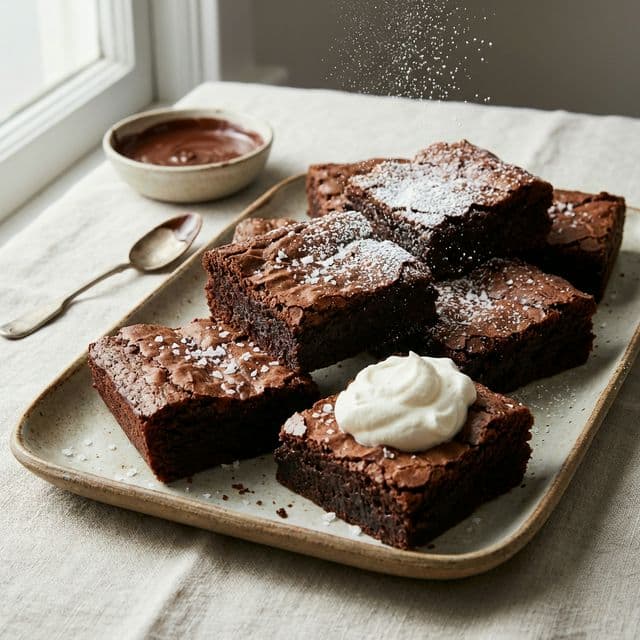
Fudgy Brownies — Salted Not Cakey
Unleash intense chocolate flavor with these salted, fudgy brownies. Blooming the cocoa in butter is the secret to their irresistible depth.
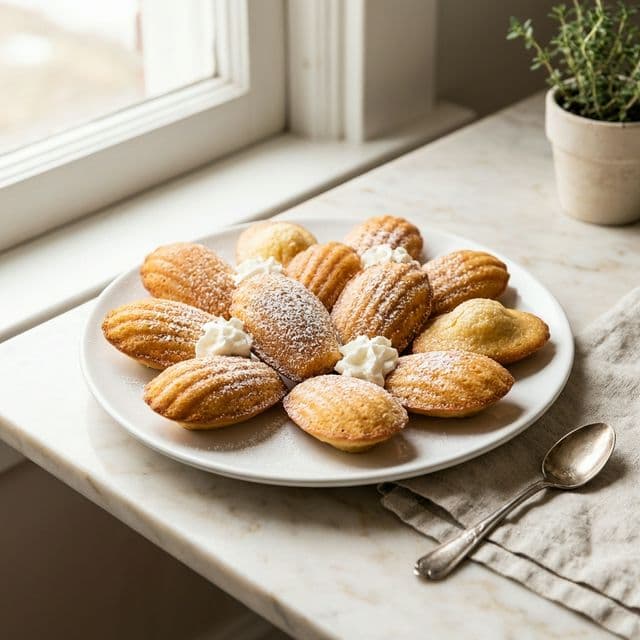
Madeleines — Shell Cakes
Experience the delicate, buttery flavor and iconic shell shape of classic French madeleines. A simple batter and a crucial resting period are all it takes to create these delightful tea cakes.
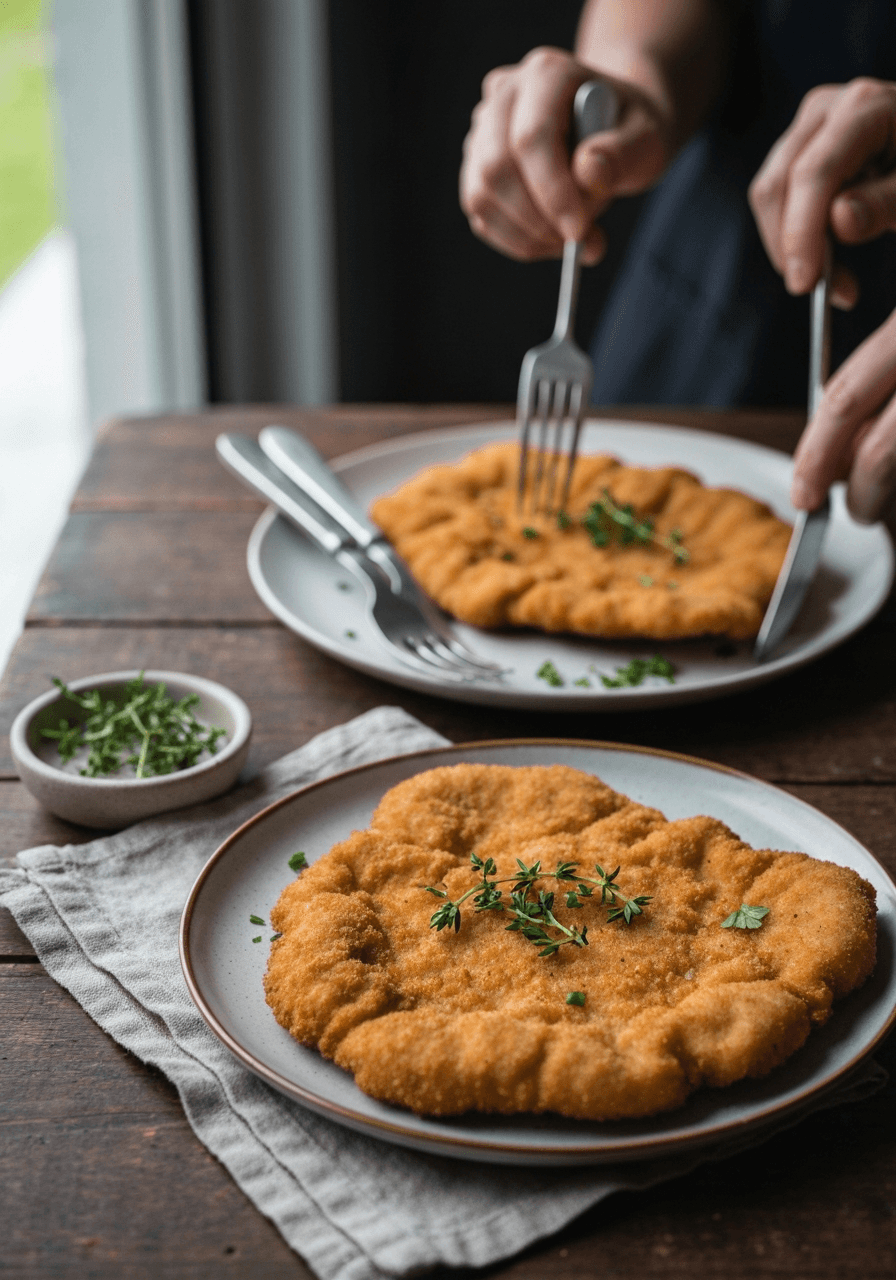
Schnitzel — Wiener Style
Experience the Austrian classic: thin, crispy, and golden perfection. The secret lies in the proper pounding technique.