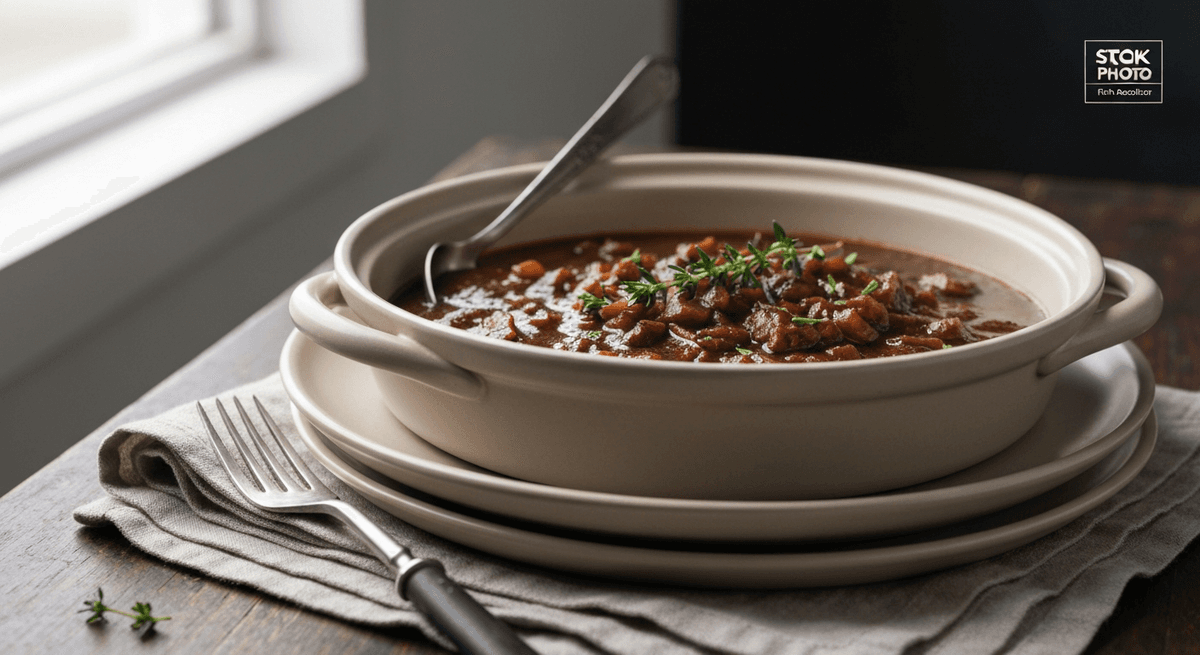
Demi-Glace — Rich Reduction
Unlock the secrets of French cuisine with this intensely flavorful demi-glace. Transform simple dishes into culinary masterpieces with its rich, savory depth.
Master the art of demi-glace, a rich, glossy brown sauce essential to French cuisine. Deeply savory flavor achieved through bone roasting and patient reduction.
Roast the bones deeply and deglaze the pan thoroughly to extract maximum flavor.
The fit, timing, and key move are all here. If it is a yes, go straight into cook mode.
Unlock the secrets of French cuisine with this intensely flavorful demi-glace. Transform simple dishes into culinary masterpieces with its rich, savory depth.
Set your units, then drop the ingredients into grocery if this is happening later.
What matters before the pan gets hot
The shortest path to understanding the dish, the key move, and whether tonight is the right time to cook it.
The Hook
**Roasting the bones deeply is non-negotiable; it unlocks the deepest savory notes.**
The Technique
The Maillard reaction, a chemical reaction between amino acids and reducing sugars, is key to the deep color and flavor of demi-glace. Roasting the bones and vegetables promotes this reaction, creating hundreds of flavor compounds that contribute to the sauce's complexity.
The History
Demi-glace is a classic French sauce, derived from brown stock, and is a fundamental element of French haute cuisine. Its origins can be traced back to the development of French sauces in the 19th century, evolving from earlier brown sauce recipes.
Food Facts
Sourced notes. Tap to verify.
When starch granules heat in water, they absorb moisture and swell, thickening the liquid. This is the basic physics behind many sauces, custards, and pan gravies.
Master the art of demi-glace, a rich, glossy brown sauce essential to French cuisine. Deeply savory flavor achieved through bone roasting and patient reduction.
Nutrition per Serving
Estimated valuesSatiety
Data estimatedTechnique, context, and fallback plans
The reason the method works, the prep you can do early, and what to change if the dish starts drifting.
Demi-glace, the cornerstone of classic French sauces, is more than just a recipe; it's a testament to the transformative power of time and heat. It begins with humble ingredients – bones, vegetables, aromatics – but through slow roasting and patient simmering, they surrender their essence to create a sauce of unparalleled depth and richness. The process is akin to alchemy, coaxing hidden flavors from their source, intensifying them, and binding them together into a harmonious whole.
The long hours spent tending the pot are rewarded with a sauce that shimmers with a deep, mahogany hue and coats the palate with an intensely savory flavor. It's a sauce that elevates the simplest dishes, adding a touch of luxury and sophistication. Use it to enhance roasted meats, vegetables, or even a simple pan sauce, and experience the magic of demi-glace.
Demi-glace is not merely a sauce; it's a concentrated expression of culinary artistry. It embodies the French tradition of extracting maximum flavor from minimal ingredients, a philosophy that celebrates patience and precision. The result is a sauce that is both complex and comforting, a testament to the power of simple ingredients transformed by time and care.
Bones are burning during roasting.
Reduce the oven temperature slightly and check more frequently.
Stock is not reducing.
Ensure the heat is low enough to simmer gently, but high enough to evaporate liquid.
Set up, cook, and remember what worked
The mise, the method, your notes, and the next recipes to master after this one lands.
The Setup
- Roasting PanLarge
- Stockpot8 quart
- Fine-Mesh Sieve
- Cheesecloth
The Mise en Place
5 of 10Your prep station before cooking begins
The Protein (0/1)
The Spice Blend (0/2)
PREHEAT
Preheat oven to 400°F (200°C).
TOSS
Toss beef bones (8 lb) with olive oil (¼ cups) and spread them in a single layer on a roasting pan.
ROAST
Roast bones for 1-1.5 hours, flipping halfway through, until deeply browned.
Bones should be a rich, dark brown color
ADD
Add carrots (2 cups), celery (2 cups), and onion (2 cups) to the roasting pan with the bones. Stir in tomato paste (½ cups).
ROAST
Continue roasting for another 30 minutes, or until the vegetables are caramelized.
Vegetables should be softened and browned
TRANSFER
Transfer the bones and vegetables to a large stockpot.
DEGLAZE
Deglaze the roasting pan with red wine, scraping up any browned bits from the bottom. Pour the wine into the stockpot.
Use a wooden spoon to scrape the pan thoroughly.
Hot-pan splash: Deglazing can steam and spit. Pour slowly and keep your face/hands back.
ADD
Add beef stock (8 cups), bay leaf (2 leaves), and peppercorns to the stockpot. Bring to a boil, then reduce heat and simmer gently for 6-8 hours, skimming off any foam or impurities that rise to the surface.
Liquid should be simmering gently, not boiling vigorously
Scorch risk: Reductions can go from perfect to burnt fast. Keep an eye on the bottom and stir if needed.
STRAIN
Strain the stock through a fine-mesh sieve lined with cheesecloth. Discard the solids.
RETURN
Return the strained stock to the stockpot and simmer over low heat until reduced by half, about 2-4 hours.
Sauce should be thick enough to coat the back of a spoon • Intensely savory aroma
Service Log
Log your variables. Iterate like a pro.
Clean slate.
Log your variables after the first run.
Master These Next
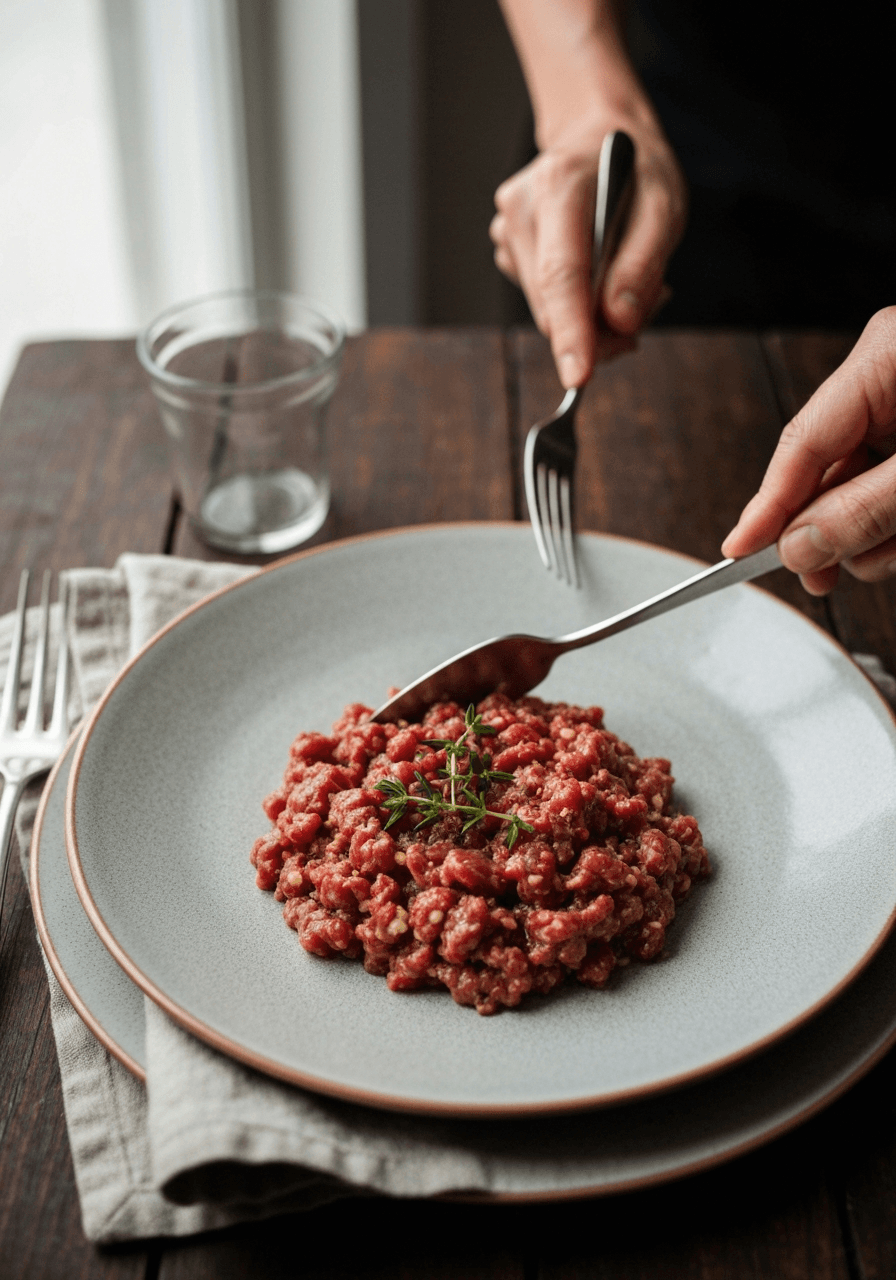
Steak Tartare — Raw Perfection
Indulge in the exquisite simplicity of steak tartare, where hand-cut beef meets vibrant seasonings for a symphony of flavor and texture.
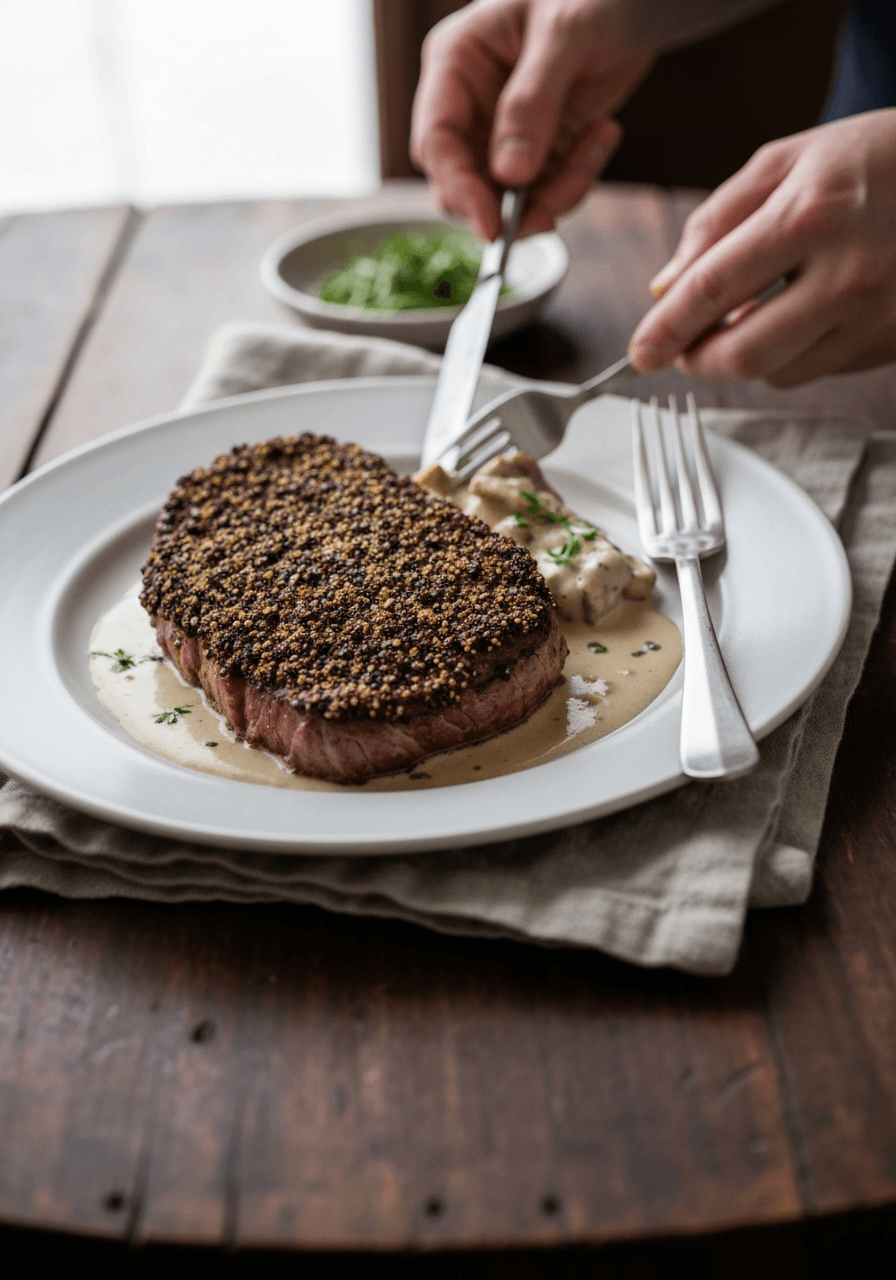
Steak au Poivre — Pepper Crusted
Experience the rich flavors of a French bistro with this classic steak au poivre recipe. Perfectly seared steak, bold pepper crust, and a decadent cream sauce.
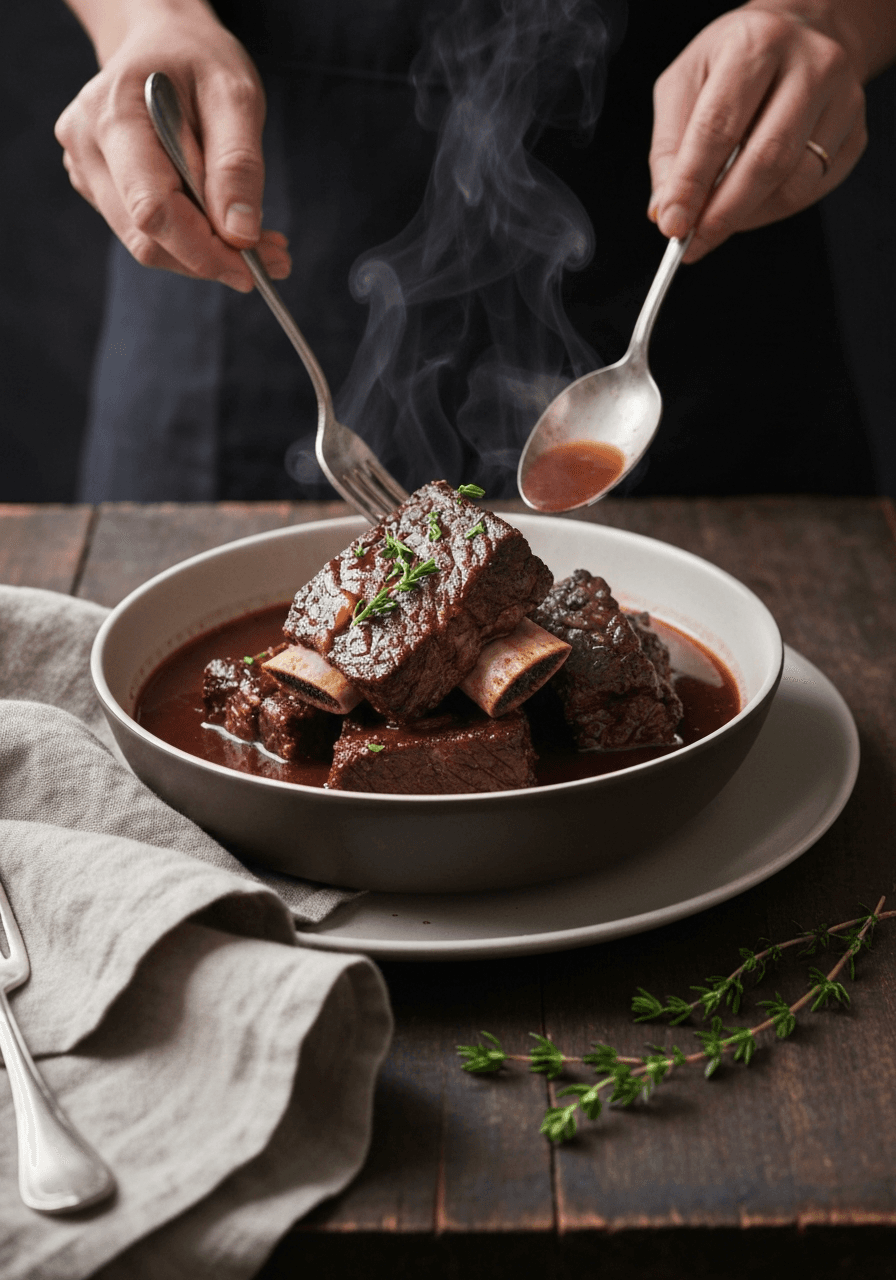
Short Ribs — Wine Braised
Indulge in fall-off-the-bone short ribs, braised in a rich red wine sauce. This easy recipe transforms simple ingredients into a comforting and impressive dish.