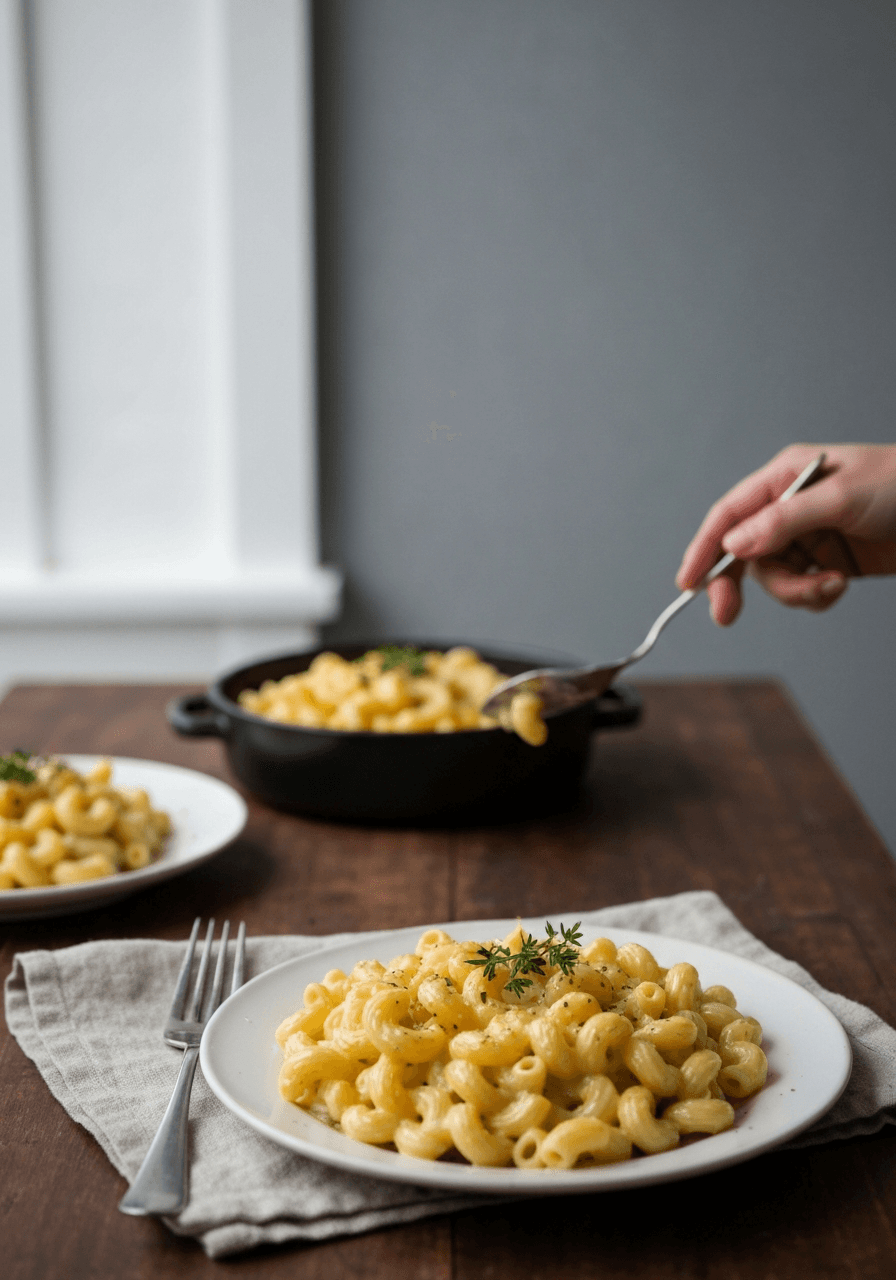
Creamy Mac & Cheese
Béchamel + Cheese = Mornay. No blue boxes allowed.
Master the roux-based mac and cheese. Build a Mornay sauce from scratch with proper emulsion technique. Sharp cheddar suspended in velvety béchamel.
Mac and cheese is about the roux, not the cheese. Build a stable béchamel (butter+flour+milk), then add cheese off-heat to prevent separation. Grainy sauce means you boiled the cheese.
The fit, timing, and key move are all here. If it is a yes, go straight into cook mode.
Béchamel + Cheese = Mornay. No blue boxes allowed.
Timing note: 45 mins
Set your units, then drop the ingredients into grocery if this is happening later.
What matters before the pan gets hot
The shortest path to understanding the dish, the key move, and whether tonight is the right time to cook it.
The Hook
Most people think mac and cheese is about dumping cheese into pasta. It's actually about building a stable emulsion. The roux provides structure, the béchamel provides creaminess, and the cheese provides flavor. Skip any step and you get a broken, greasy mess.
The Technique
A roux works because flour contains starch granules. When heated in fat, these granules swell and burst, releasing amylose chains that tangle together and thicken the liquid. Adding cheese off-heat prevents the proteins from denaturing (curdling) and the fat from separating. The result is a stable emulsion—cheese suspended in a creamy sauce rather than floating as oil on top.
The History
USA. Thomas Jefferson brought the pasta machine to America; the South perfected the casserole. This Southern-style version emphasizes proper sauce technique.
Food Facts
Sourced notes. Tap to verify.
Fermentation uses microorganisms to transform foods, often improving shelf life, flavor, and texture. It is one of the oldest food-processing techniques.
As water evaporates, dissolved flavors become more concentrated. Reducing too far can also over-concentrate salt, so seasoning should be adjusted late.
Master the roux-based mac and cheese. Build a Mornay sauce from scratch with proper emulsion technique. Sharp cheddar suspended in velvety béchamel.
Nutrition per Serving
Estimated valuesSatiety
Data estimatedTechnique, context, and fallback plans
The reason the method works, the prep you can do early, and what to change if the dish starts drifting.
Mac and cheese is not about the cheese—it's about the roux. If you can't make a white sauce (butter + flour + milk), you can't make this. We are building a Mornay sauce, which suspends the cheese fats in a stable emulsion so it doesn't turn into a grease slick.
The roux is your foundation. Equal parts butter and flour, cooked until it smells like toasted biscuits but hasn't browned. This is a white roux, designed to thicken the milk without adding color. When you whisk warm milk into the roux, the starch granules swell and create a smooth, thick base—this is béchamel.
The béchamel becomes Mornay when you add cheese. But here's the critical part: you must add the cheese off the heat. Cheese contains proteins and fats that separate when heated above 180°F. If you add cheese to a simmering pot, those proteins seize up and the fat leaks out, giving you grainy, greasy mac and cheese. Off the heat, the residual warmth of the béchamel is enough to melt the cheese gently, creating a smooth, glossy sauce.
We use mustard powder and cayenne not for spice, but to cut the richness. Without them, it tastes like bland glue—the acidity and heat provide contrast.
Sauce is grainy or gritty?
You boiled the cheese. Cheese proteins separate above 180°F. Next time, remove the pot from heat completely before adding cheese. If it's already grainy, you can't fully fix it, bu…
Greasy pool on top after baking?
Your cheddar was too oily (cheap cheese with high fat content), or your sauce broke.
Set up, cook, and remember what worked
The mise, the method, your notes, and the next recipes to master after this one lands.
The Setup
- Large Pot4-6 qt·For pasta and sauce
- Whisk
- Baking Dish9x13 inch·Buttered
- Box Grater
The Mise en Place
5 of 9Your prep station before cooking begins
Seasoning (0/3)
The Pasta (0/1)
The Roux (0/2)
Chef's Notes
Hand-grate block cheese—pre-shredded cheese has anti-caking agents that prevent smooth melting.
Add cheese off the heat—this is the most critical step for smooth sauce.
Assemble completely, cover, and refrigerate up to 24 hours. Bring to room temp 30 minutes before baking.
COOK
Time-sensitiveCook pasta in heavily salted boiling water until 2 minutes shy of package directions. Drain and set aside.
Undercooking is essential—pasta finishes cooking in the oven • Pasta has slight white center when bitten • Pasta is tender but firm
Pasta is al dente, slightly underdone
HEAT
While pasta cooks, warm milk in microwave or small saucepan until hot but not boiling.
Warm milk prevents lumps when added to roux • Steam rising from milk
Milk is steaming, not boiling
BUILD
Time-sensitiveMelt butter in a large pot over medium heat. Whisk in flour. Cook, whisking constantly, for 2 minutes until mixture smells like biscuits and is foamy.
Do not let it brown—we want a white roux for light-colored sauce • Mixture is smooth, foamy, light golden color • Nutty, toasted flour aroma
Roux is pale blonde, smells nutty
WHISK
Time-sensitiveSlowly pour warm milk into roux, whisking constantly to prevent lumps. Add mustard powder, cayenne, and salt (1 tsp). Simmer, whisking occasionally, until sauce thickens enough to coat the back of a spoon (about 5 minutes).
Add milk gradually—rushing creates lumps • When you drag a finger across the back of a sauce-coated spoon, the line holds • Sauce bubbles gently, smells creamy and nutty
Sauce is smooth, thick, glossy
EMULSIFY
Time-sensitiveRemove pot from heat completely. Whisk in cheese one handful at a time, letting each addition melt before adding more.
Off the heat is critical—cheese separates above 180°F • Sauce is creamy yellow-orange, no visible cheese shreds • Sauce is velvety smooth, no grittiness
Breaking: Add fat slowly while whisking to keep it smooth. Too fast can split the sauce.
Cheese melts into smooth, glossy sauce
COMBINE
Prep aheadFold cooked pasta into the cheese sauce until evenly coated. Pour into a buttered 9x13-inch baking dish.
Fold gently to avoid breaking pasta • Pasta is swimming in creamy sauce
Every piece of pasta is coated
BAKE
Time-sensitiveSprinkle remaining cheese on top. Bake at 375°F (190°C) for 20-25 minutes until bubbly and golden on top.
Let rest 5 minutes after baking—sauce thickens as it cools • Cheese on top is melted and lightly browned, sauce bubbles at edges • Bubbling sounds, cheese aroma
Top is golden brown, edges are bubbling
Service Log
Log your variables. Iterate like a pro.
Clean slate.
Log your variables after the first run.
Master These Next
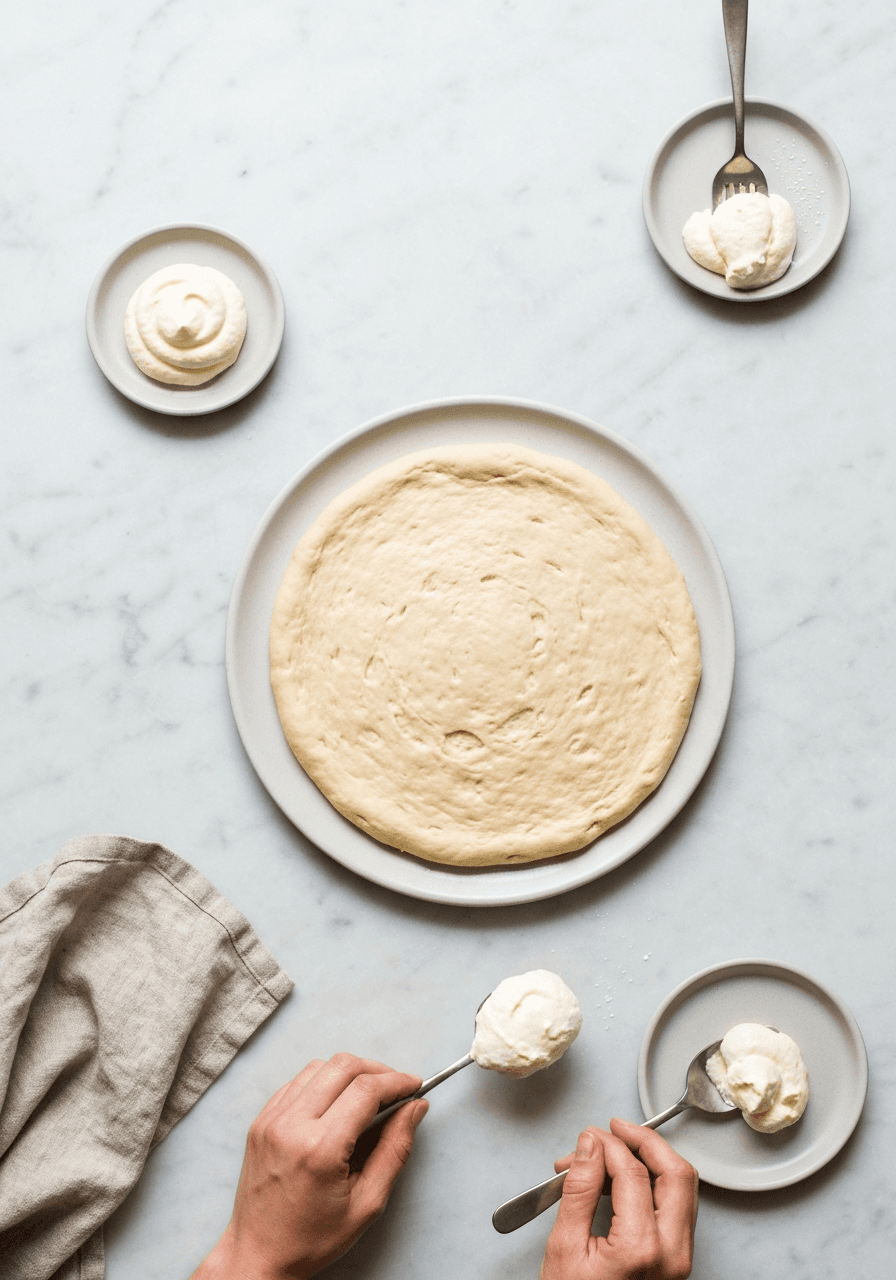
Roberta's Pizza Dough
00 Flour, cold fridge, 3 days waiting. Best crust of your life.
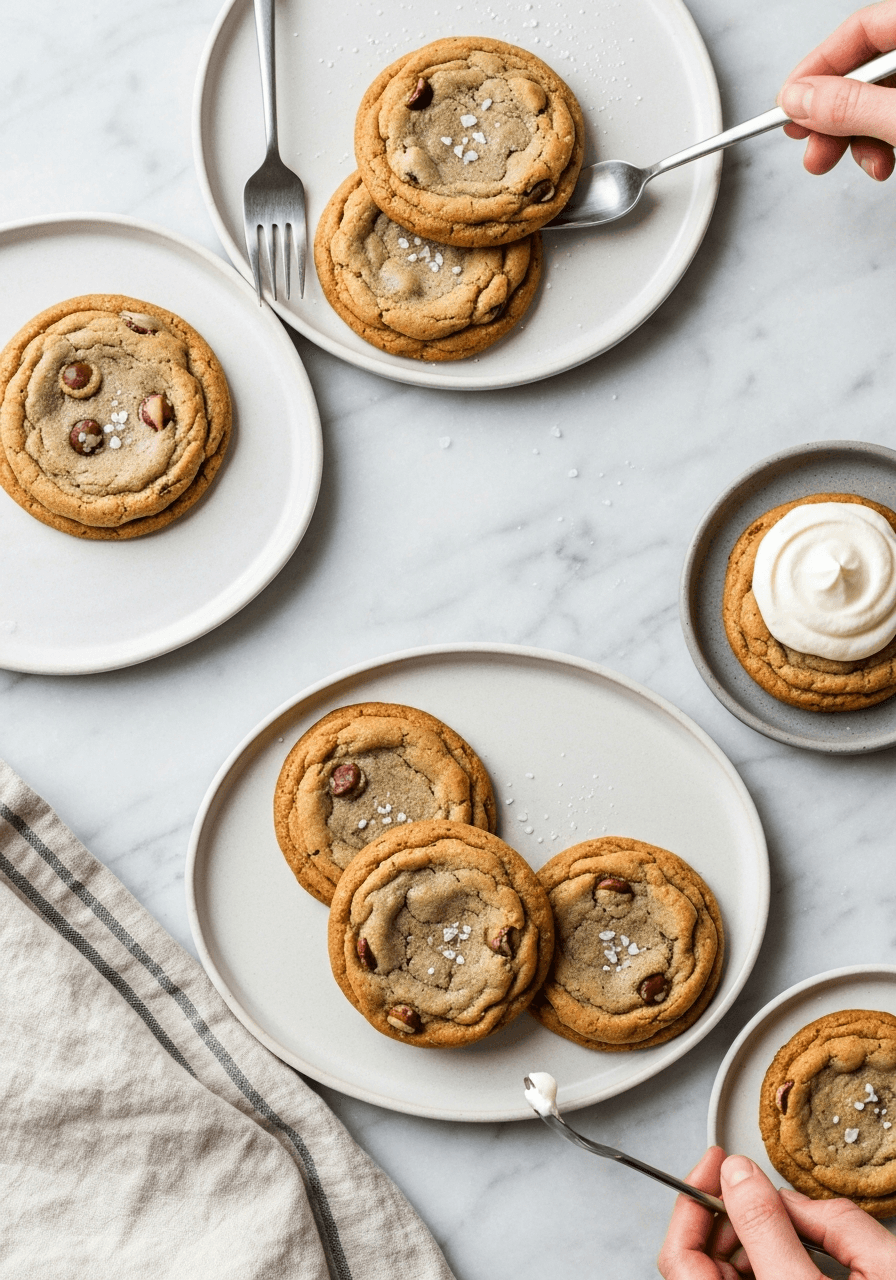
36-Hour Chocolate Chip Cookies
Dough that sleeps for 36 hours. Salt on top. Best in class.
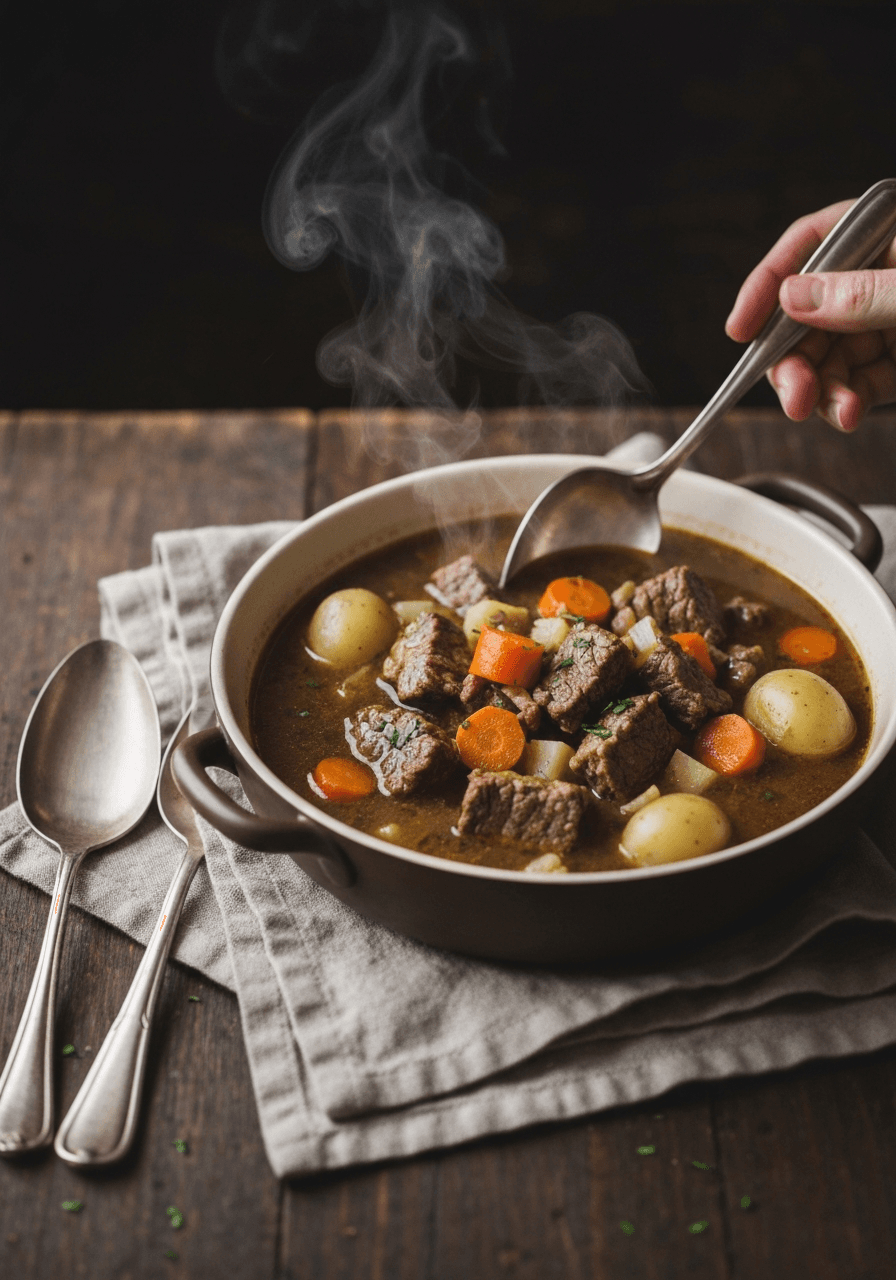
Old-Fashioned Beef Stew
No wine, just beef, carrots, and potatoes. Brown the meat or don't bother.