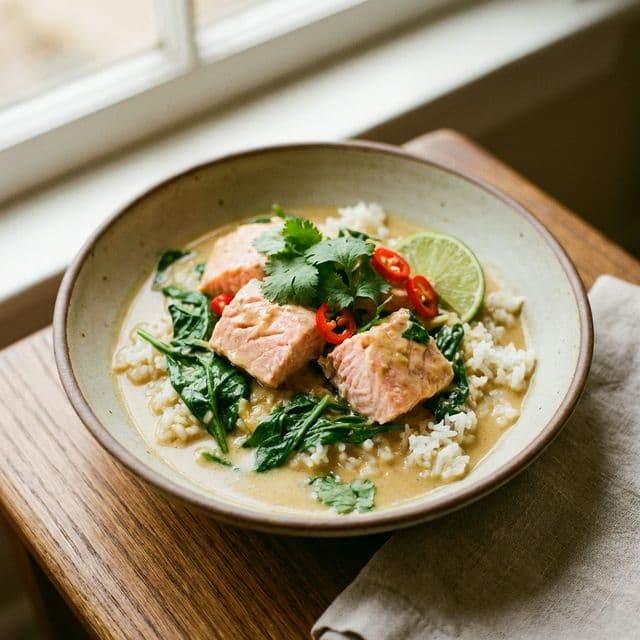
Coconut-Miso Salmon Curry
White miso meets coconut milk. Poached fish perfection.
Master umami layering with coconut-miso salmon. Fermented miso and fish sauce create deep flavor in 20 minutes. Gentle poaching prevents albumin leakage.
Stack glutamates for instant depth: miso (fermented soy), fish sauce (fermented anchovy), salmon (nucleotides). Poach gently—don't boil coconut milk or it splits.
The fit, timing, and key move are all here. If it is a yes, go straight into cook mode.
White miso meets coconut milk. Poached fish perfection.
Timing note: 30 mins
Set your units, then drop the ingredients into grocery if this is happening later.
What matters before the pan gets hot
The shortest path to understanding the dish, the key move, and whether tonight is the right time to cook it.
The Hook
Traditional curries build flavor through layering spices and long cooking. This version uses umami stacking instead—fermented ingredients (miso, fish sauce) provide instant depth that would normally take hours. It's a shortcut that actually works because it leverages modern understanding of flavor chemistry.
The Technique
Umami is caused by free glutamates (glutamic acid) and nucleotides (inosinate, guanylate). Fermented foods like miso and fish sauce are packed with glutamates. Salmon contains inosinate. When combined, these compounds create a synergistic effect—the total umami is greater than the sum of the parts. Gentle poaching keeps the salmon's proteins from denaturing too quickly, which would make it dry and chalky.
The History
Modern fusion cooking, popularized by Kay Chun at NYT Cooking as a weeknight-friendly curry that requires no curry paste or long simmering.
Food Facts
Sourced notes. Tap to verify.
An emulsion is a stable mixture of two liquids that normally do not mix, like oil and water. Many dressings and sauces rely on emulsifiers and whisking to hold that texture.
Searing creates a browned crust and flavor compounds on the exterior. It does not seal in juices, but it does improve texture and taste.
Master umami layering with coconut-miso salmon. Fermented miso and fish sauce create deep flavor in 20 minutes. Gentle poaching prevents albumin leakage.
Nutrition per Serving
Estimated valuesSatiety
Data estimatedTechnique, context, and fallback plans
The reason the method works, the prep you can do early, and what to change if the dish starts drifting.
This recipe works because of glutamates—the compounds that signal 'savory' to your taste buds. Miso is fermented soy (umami). Fish sauce is fermented anchovy (umami). Salmon is rich in nucleotides (umami). When you stack them, you get a flavor depth that usually takes 12 hours of simmering, but this takes 20 minutes.
The technique is simple: bloom the miso paste in oil to intensify its flavor, then add coconut milk to create a rich, creamy base. The key is gentle heat—coconut milk is an emulsion of fat and water, and if you boil it aggressively, those components separate (curdle). Keep it at a bare simmer and it stays smooth and creamy.
Poaching salmon in liquid is gentler than searing and prevents the dreaded 'white albumin goo' from leaking out of the fish. Albumin is a protein that coagulates when heated—when you sear salmon on high heat, it pushes out of the flesh and forms white streaks. Gentle poaching keeps it inside the fish where it belongs.
The spinach is mostly for color and to make you feel virtuous about eating a bowl of coconut cream, but it also adds textural contrast to the silky sauce and tender fish.
Sauce separated or curdled?
You boiled the coconut milk too hard. Coconut milk is an emulsion that breaks under high heat. Next time, keep it at a bare simmer—tiny bubbles only. If already broken, whisk vigor…
Salmon is dry and chalky?
You overcooked it. Salmon needs barely any heat—5 minutes is plenty for gentle poaching. Use a timer and check at 5 minutes. If it flakes easily with a fork, it's done. Turn off he…
Use this in Focus
Turn this nutrition profile into a week you can plan, shop, and actually cook.
Set up, cook, and remember what worked
The mise, the method, your notes, and the next recipes to master after this one lands.
The Setup
- Large Deep Skillet or Pot with Lid12-inch·Must have a lid for poaching
- Small Bowl
The Mise en Place
5 of 10Your prep station before cooking begins
Chef's Notes
Keep coconut milk at a bare simmer—vigorous boiling causes curdling.
Salmon is done when it flakes easily with a fork. Turn off heat immediately.
Serve over jasmine rice or rice noodles. Squeeze lime over everything before eating.
MASH
Prep aheadIn a small bowl, mash together miso paste, ginger, garlic (4 cloves), and 1 tbsp oil into a smooth paste.
Use the back of a spoon to really work it into a paste • No visible chunks of garlic or ginger • Pungent ginger and garlic aroma
Mixture forms a cohesive, aromatic paste
FRY
Time-sensitiveHeat remaining oil in a large, deep skillet or pot over medium heat. Add the miso paste and fry for 1 minute, stirring constantly.
Blooming the miso intensifies umami flavor • Paste sizzles and becomes aromatic • Deep, toasted miso aroma
Paste is fragrant and slightly darkened
SIMMER
Time-sensitiveAdd coconut milk (14 oz) and fish sauce (1 tbsp). Stir to combine and bring to a gentle simmer—not a rolling boil.
Vigorous boiling will curdle coconut milk—keep heat moderate • Surface barely bubbles, sauce is pale yellow-brown • Rich coconut and miso aroma
Scorch risk: Reductions can go from perfect to burnt fast. Keep an eye on the bottom and stir if needed.
Liquid is steaming with tiny bubbles at edges
POACH
Time-sensitiveNestle salmon chunks into the liquid. Cover and cook for 5-6 minutes without stirring.
Turn off heat immediately when done—salmon continues cooking in hot liquid • Salmon changes from translucent red to opaque pink throughout • Salmon smells cooked, not fishy
Salmon is opaque pink and flakes easily
WILT
Remove lid. Tuck spinach around the salmon. Cover again and let sit off heat for 1 minute until spinach wilts.
Residual heat wilts spinach without overcooking • Spinach shrinks and turns deep green
Spinach is wilted and bright green
SERVE
Divide among bowls. Serve over rice with lime (1 whole) wedges and cilantro.
Squeeze lime over top—acid brightens the rich sauce • Creamy yellow sauce, pink salmon, green spinach
Each bowl has salmon, sauce, and wilted greens
Service Log
Log your variables. Iterate like a pro.
Clean slate.
Log your variables after the first run.
Master These Next
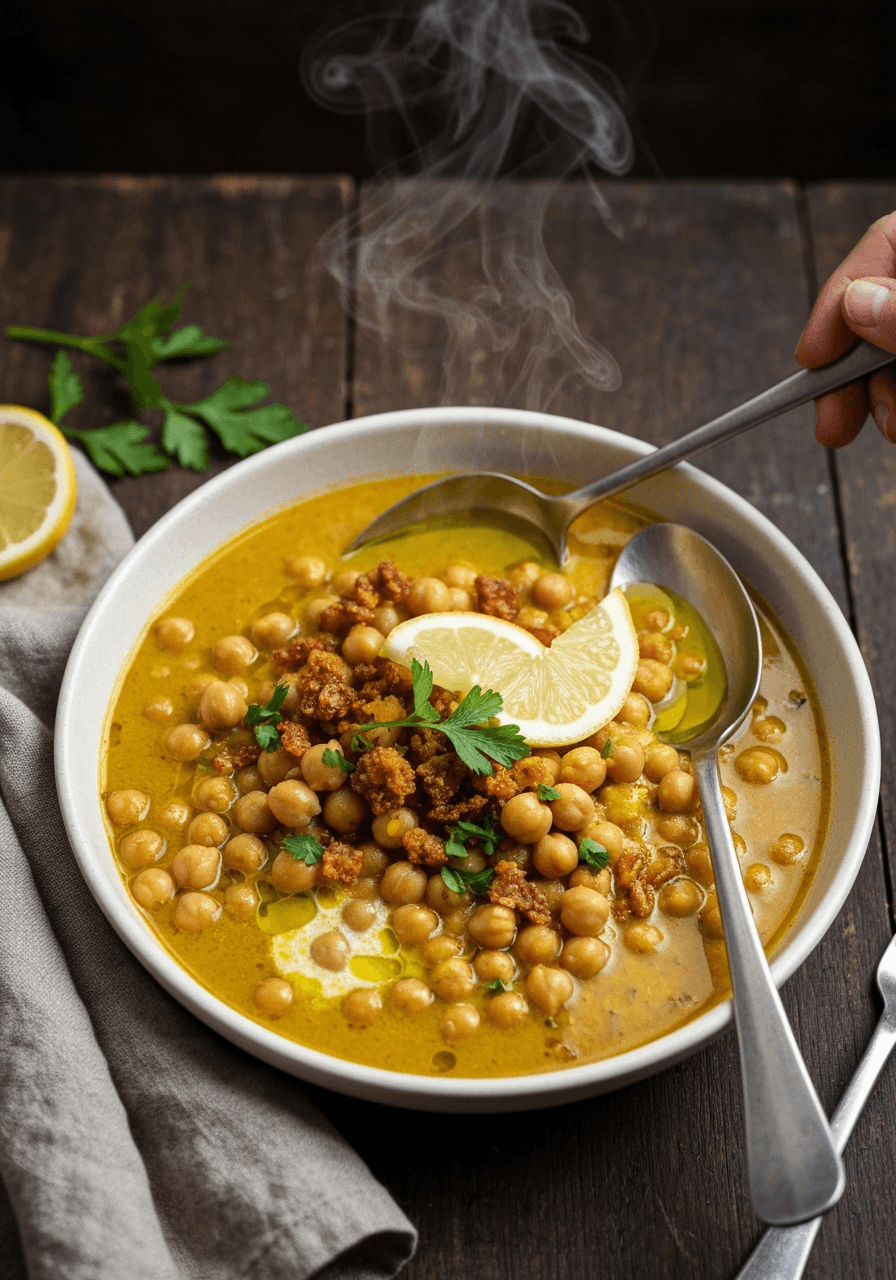
Spiced Chickpeas
Crispy bits, creamy broth, and a turmeric gold rush.
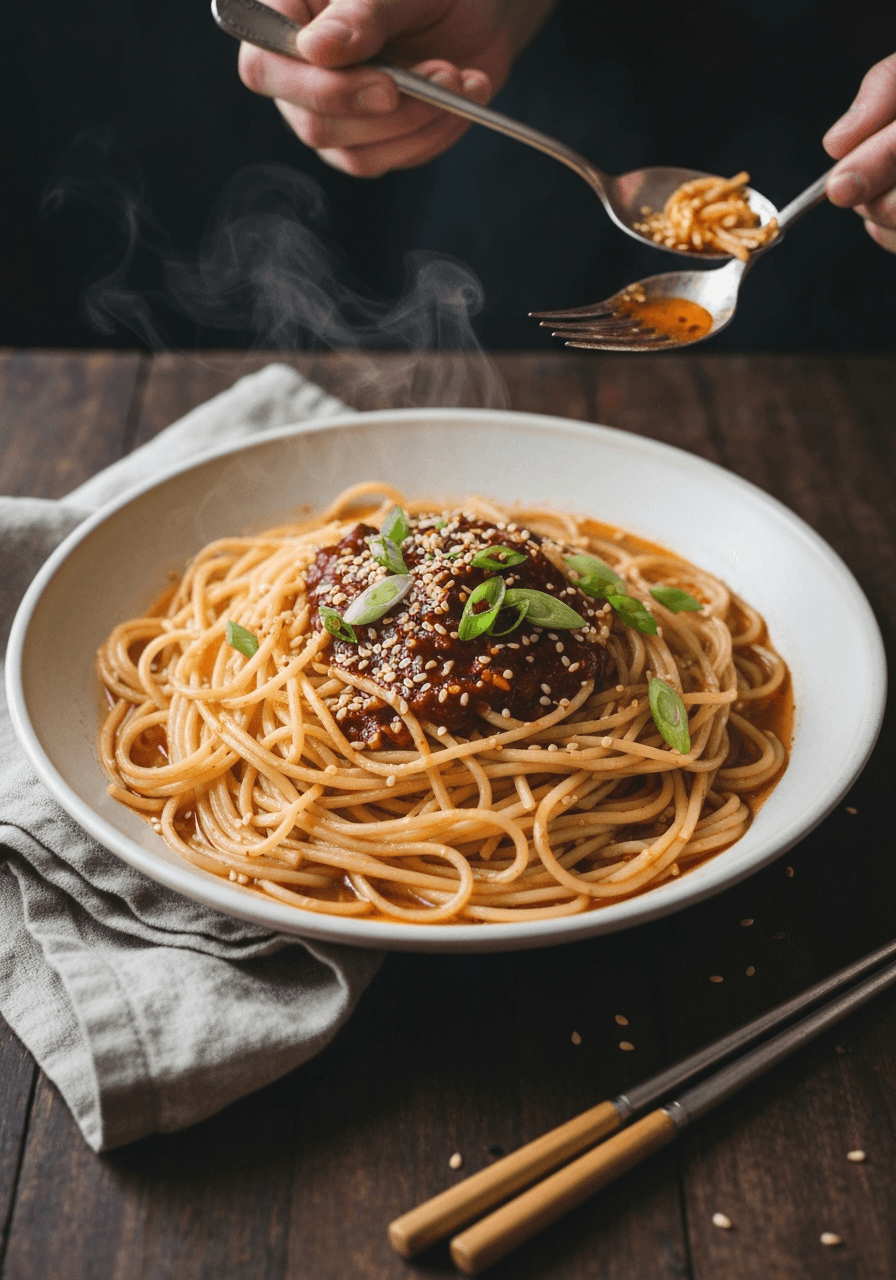
Gochujang Butter Noodles
Spaghetti meets Korean fermentation. 10 minutes to glory.
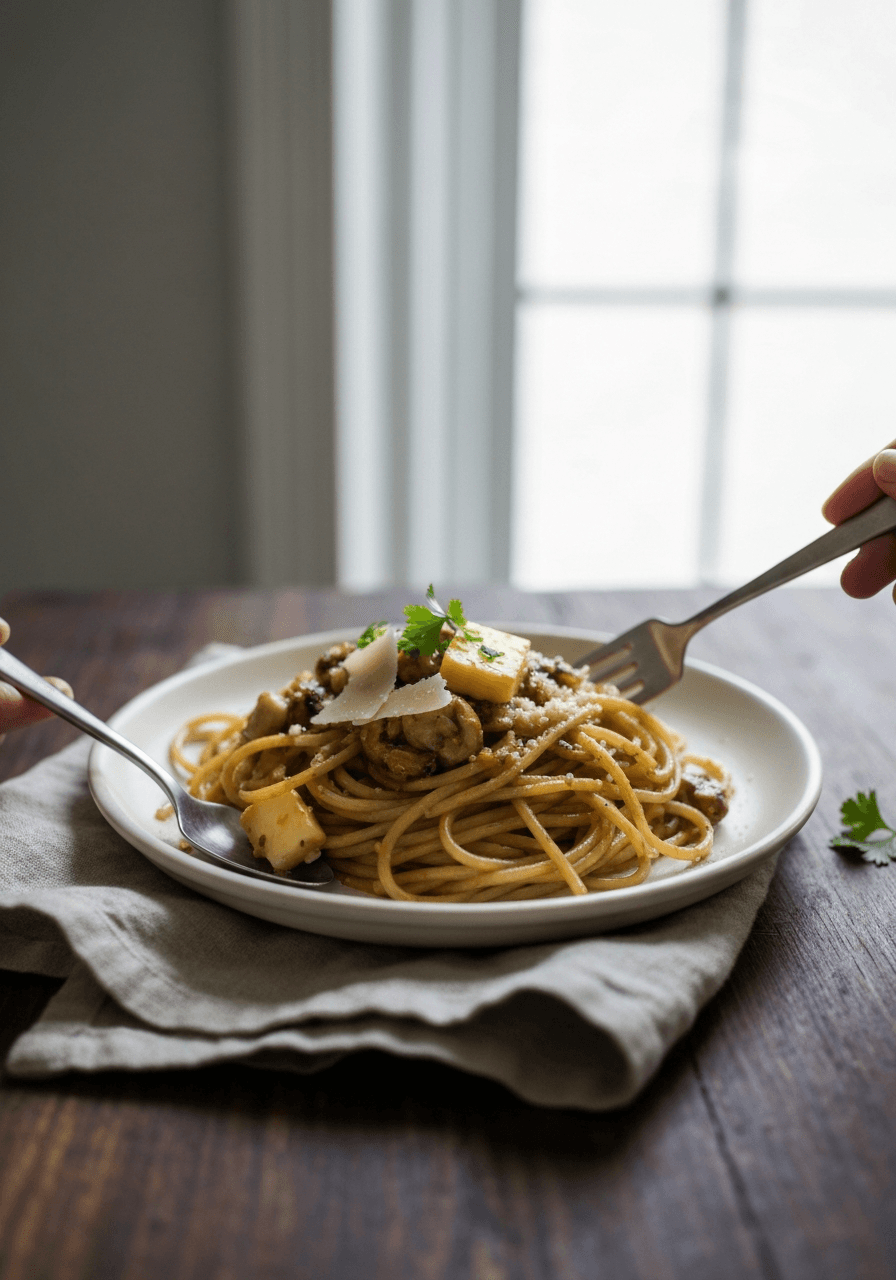
SF-Style Garlic Noodles
Butter, oyster sauce, parmesan. The ultimate fusion dish.