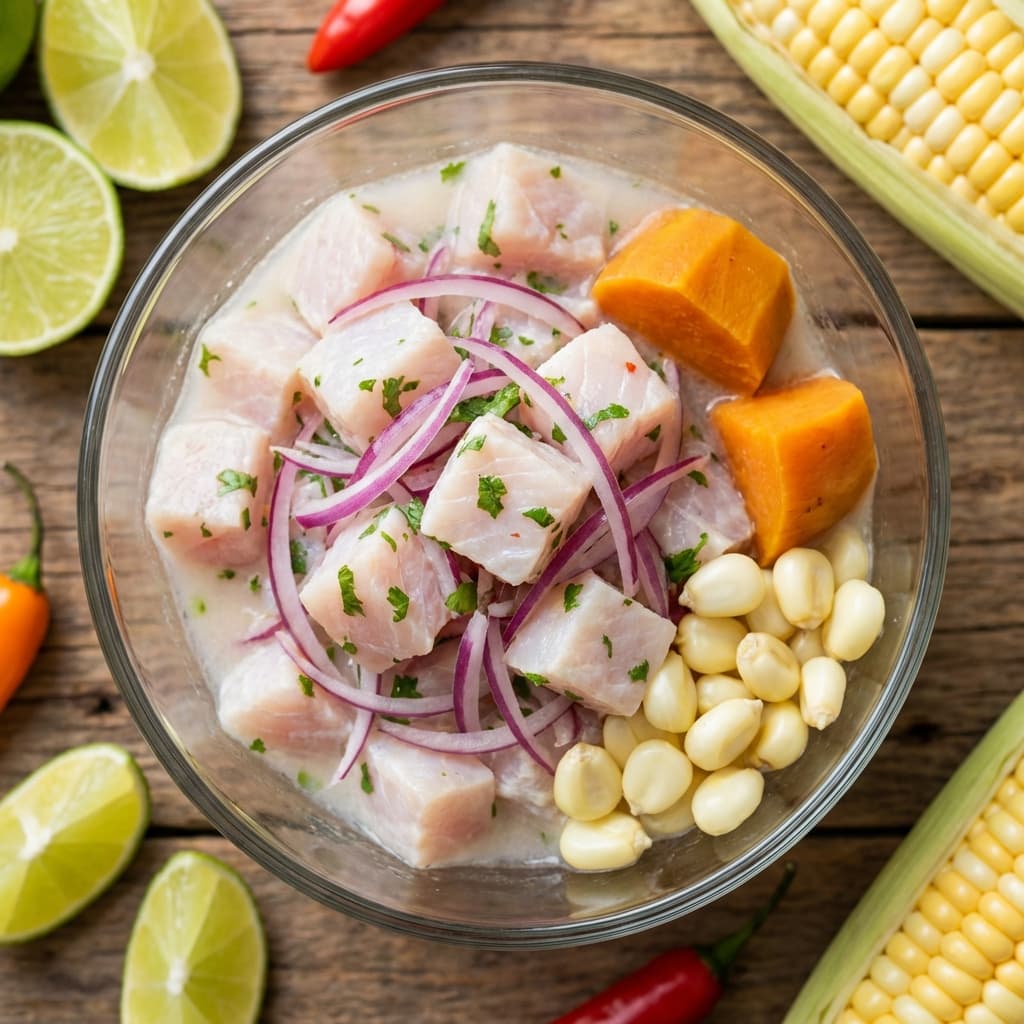
Ceviche (Peruvian Style)
"Cooking" fish in lime juice milk. No heat.
"Cooking" fish in lime juice milk. No heat. This relies on denaturation.
This relies on denaturation
The fit, timing, and key move are all here. If it is a yes, go straight into cook mode.
"Cooking" fish in lime juice milk. No heat.
Timing note: 15 mins
Set your units, then drop the ingredients into grocery if this is happening later.
What matters before the pan gets hot
The shortest path to understanding the dish, the key move, and whether tonight is the right time to cook it.
The Hook
This ain't cooking, it's chemistry. Get it wrong and you've just served expensive, mushy fish. Get it right, and you've got liquid gold.
The Technique
Citric acid from the lime juice denatures the fish proteins, just like heat. The acid unravels them, causing them to firm up and turn opaque. The trick is the timing – too little and it's raw, too much and it's rubber. We add an ice cube to slow it down, giving us control over this delicate chemical reaction.
The History
Forget the Spanish influence. Peruvians were 'cooking' fish with fermented fruit juice long before they showed up. This is ancient alchemy, a primal transformation of raw ingredients that predates empires. It’s about freshness, speed, and making something incredible out of next to nothing.
Food Facts
Sourced notes. Tap to verify.
Fish generally has less connective tissue than land meats, so it firms up and flakes quickly with heat. That is why seafood often goes from underdone to overdone in a small window.
"Cooking" fish in lime juice milk. No heat. This relies on denaturation.
Nutrition per Serving
Estimated valuesSatiety
Data verifiedTechnique, context, and fallback plans
The reason the method works, the prep you can do early, and what to change if the dish starts drifting.
Ceviche is an elemental dish that predates the Incas. Ancient Peruvians "cooked" fish using the juice of fermented banana passionfruit long before the Spanish arrived with limes. It is a dish defined by freshness and speed. Unlike curing, which takes days, ceviche is a transformation that happens in minutes right before your eyes.
The magic lies in denaturation. The citric acid in the lime juice unravels the proteins in the fish, changing its texture from raw and translucent to firm and opaque, mimicking the effect of heat. The byproduct of this reaction is the Leche de Tigre (Tiger's Milk)--a spicy, savory, acidic elixir created by the mingling of fish juices, lime, chili, and aromatics. In Peru, this liquid is prized as a hangover cure and an aphrodisiac, proving that the sauce is just as important as the fish itself.
My ceviche came out chalky and dry.
Ah, that happens when the fish sits in the lime juice a bit too long, past that 15-minute mark.
My ceviche tastes a little bitter.
That bitterness often comes from the pith, the white part of the lime peel.
Use this in Focus
Turn this nutrition profile into a week you can plan, shop, and actually cook.
Set up, cook, and remember what worked
The mise, the method, your notes, and the next recipes to master after this one lands.
The Setup
- Cutting Board
- Chef's Knife
The Mise en Place
4Your prep station before cooking begins
The Protein (0/1)
The Aromatics (0/1)
The Pantry (0/1)
Other (0/1)
Chef's Notes
Use the freshest fish possible. If unsure, ask your fishmonger for sushi-grade.
Don't over-marinate. Fish should be opaque but still tender, not chalky.
Serve immediately after marinating for the best texture and flavor.
Garnish with fresh cilantro, red onion, and a slice of aji amarillo for authentic flavor.
THE CUBE
Cut fish into uniform 1/2 inch cubes. Season with salt first.
Why? Salt opens the pores of the fish to accept the lime juice.
THE MILK
Mix lime juice, Aji Amarillo, ginger, garlic, and cilantro stems.
THE CURE
Time-sensitivePour marinade over fish. Add an ice cube.
Why? The ice keeps it cold and slightly dilutes the harsh acid. • Watch the color. After 5 minutes, the outside should be white, but the center slightly translucent (medium-rare).
Watch the color. After 5 minutes, the outside should be white, but the center slightly translucent (medium-rare).
THE ASSEMBLY
Toss with red onions and cilantro. Serve immediately with sweet potato and corn (to balance the acid).
Service Log
Log your variables. Iterate like a pro.
Clean slate.
Log your variables after the first run.
Related Techniques
Master These Next
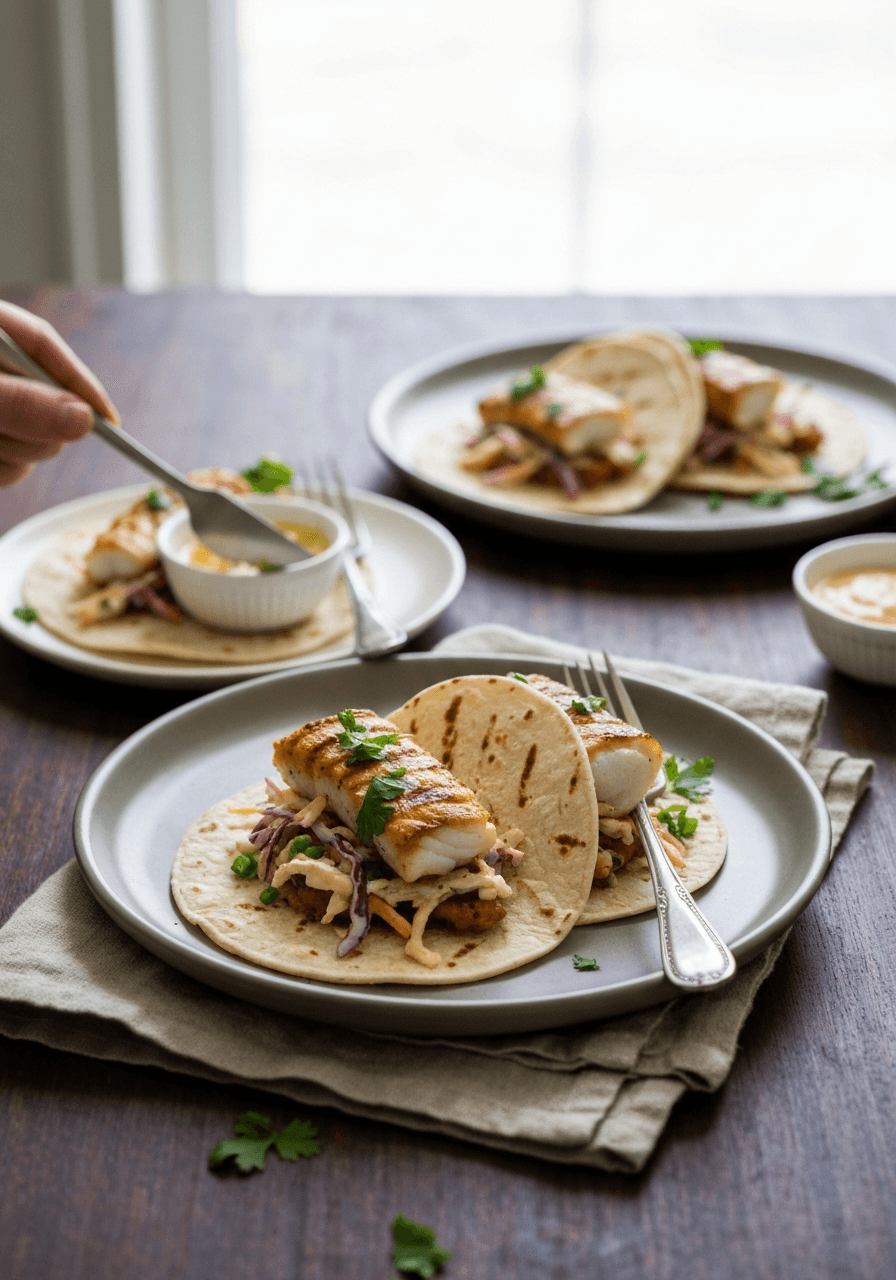
Grilled Fish Tacos — Baja Style
Smoky grilled fish, tangy slaw, and creamy sauce come together in these Baja-style tacos for a taste of California sunshine. The perfect weeknight meal or weekend fiesta.
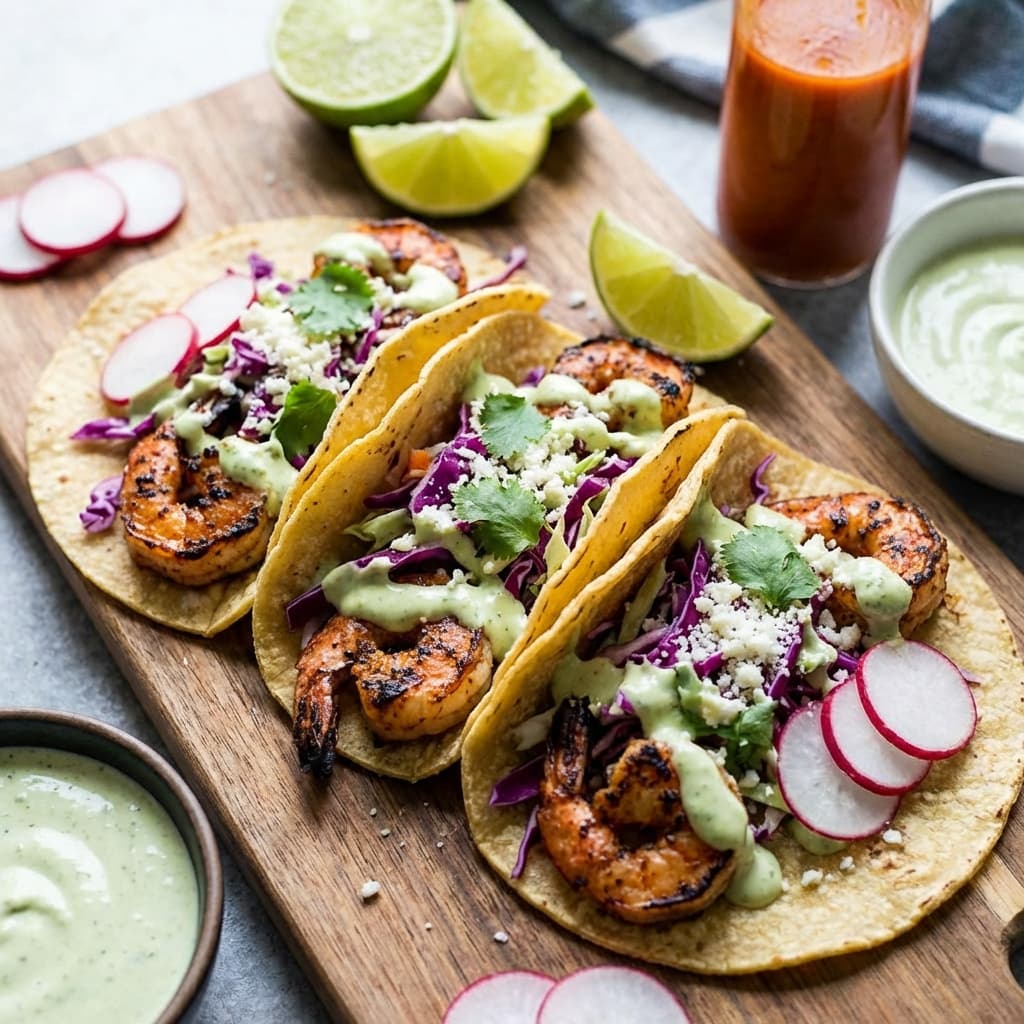
Shrimp Tacos
Tacos in 15 minutes: juicy shrimp, crisp cabbage, bright crema. No rubbery shrimp ever again.
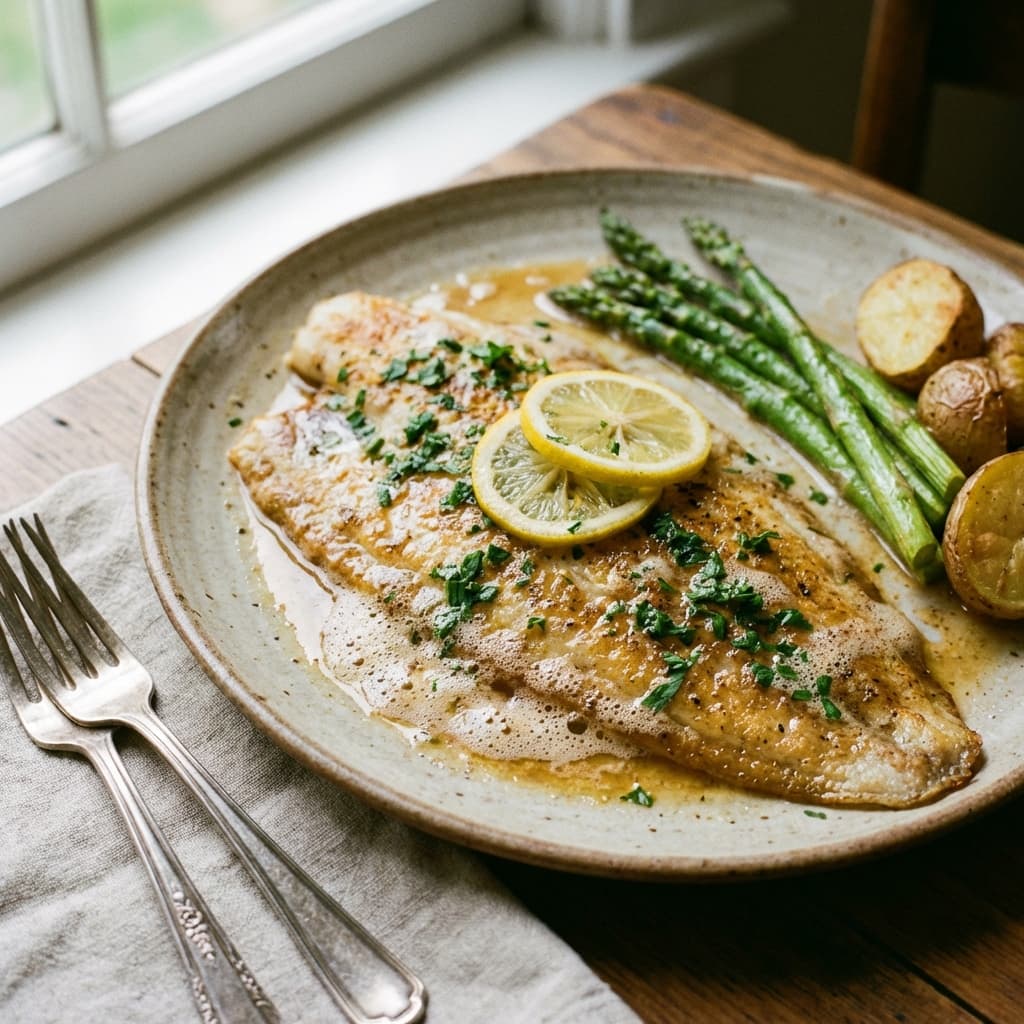
Sole Meunière
Dover Sole, brown butter, lemon, parsley. Do not blink.