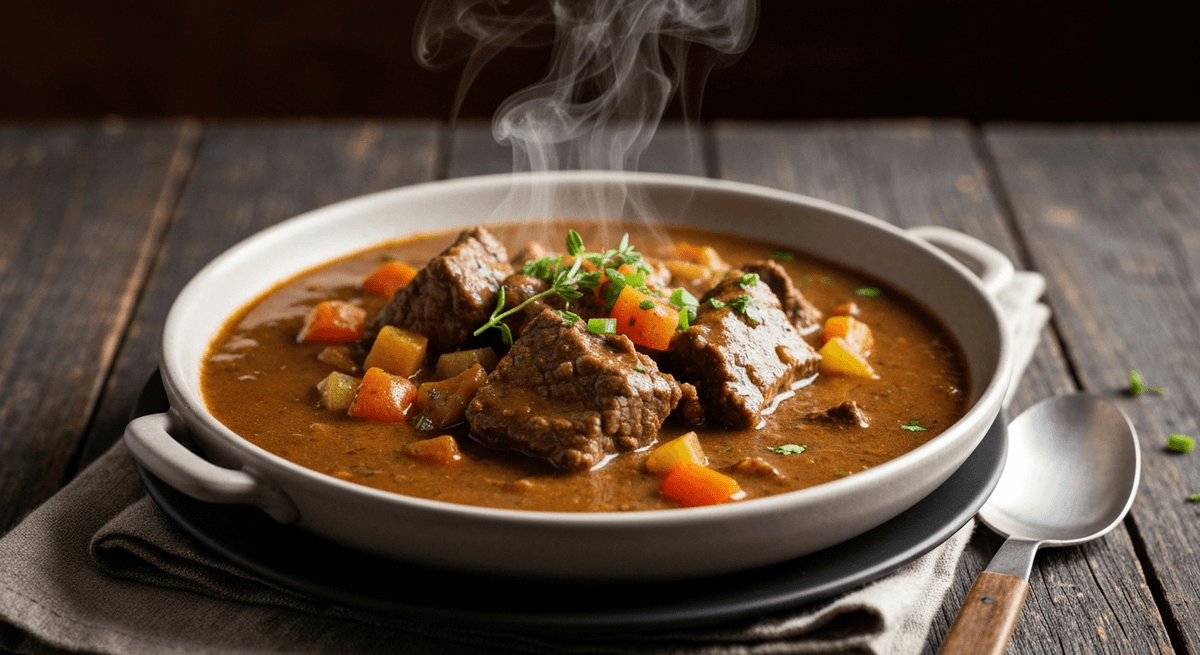
Beef Stew — Hearty Not Watery
Transform your cold weather cooking with this hearty beef stew, loaded with vegetables and a rich, thick gravy that's anything but watery. The secret? Lightly flouring the beef for a stew that's pure comfort in a bowl.
A hearty beef stew, loaded with vegetables and a rich, thick gravy. Perfect for cold weather comfort, this stew is anything but watery.
Lightly flour the beef before searing to create a rich, thick gravy.
The fit, timing, and key move are all here. If it is a yes, go straight into cook mode.
Transform your cold weather cooking with this hearty beef stew, loaded with vegetables and a rich, thick gravy that's anything but watery. The secret? Lightly flouring the beef for a stew that's pure comfort in a bowl.
Set your units, then drop the ingredients into grocery if this is happening later.
What matters before the pan gets hot
The shortest path to understanding the dish, the key move, and whether tonight is the right time to cook it.
The Hook
**Flouring the beef is non-negotiable for a rich, thick gravy.**
The Technique
Flouring the beef before searing creates a Maillard reaction, developing deep, savory flavors. The flour also acts as a thickening agent, creating a luscious gravy as it cooks in the stew.
The History
Beef stew has ancient roots, with variations found in cultures worldwide. The modern version, featuring beef and root vegetables in a thickened broth, likely evolved in Europe as a way to utilize tougher cuts of meat.
Food Facts
Sourced notes. Tap to verify.
Mise en place means setting up your ingredients and tools before you start cooking. It is a professional workflow trick that reduces mistakes, keeps timing tight, and makes cooking feel calmer.
A hearty beef stew, loaded with vegetables and a rich, thick gravy. Perfect for cold weather comfort, this stew is anything but watery.
Nutrition per Serving
Estimated valuesSatiety
Data estimatedTechnique, context, and fallback plans
The reason the method works, the prep you can do early, and what to change if the dish starts drifting.
Beef stew is more than just a meal; it's a warm embrace on a chilly evening. It's the kind of dish that fills your home with an inviting aroma, promising comfort and satisfaction with every spoonful. But not all stews are created equal. Too often, they end up thin and watery, lacking the depth of flavor and satisfying texture that makes a truly great stew.
This recipe is all about achieving that perfect balance: tender chunks of beef, a medley of colorful vegetables, and a gravy so rich and thick it clings to your spoon. The secret? A simple step of lightly flouring the beef before searing, creating a foundation for a luscious gravy that will transform your stew from ordinary to extraordinary. Think of it as a culinary hug, a symphony of flavors and textures that will warm you from the inside out.
It's not just about sustenance; it's about creating a memory, a moment of warmth and connection shared with loved ones around the table. So gather your ingredients, put on some music, and let's create a beef stew that's hearty, not watery, and full of love.
Stew is too watery.
Simmer uncovered for the last 30 minutes to reduce the liquid.
Beef is tough.
Continue simmering until the beef is fork-tender. This may take longer than the recipe indicates, depending on the cut of beef.
Watch the Technique
Video source: YouTube
Use this in Focus
Turn this nutrition profile into a week you can plan, shop, and actually cook.
Set up, cook, and remember what worked
The mise, the method, your notes, and the next recipes to master after this one lands.
The Setup
- Dutch Oven6-quart
- Knife
- Cutting Board
The Mise en Place
5 of 14Your prep station before cooking begins
The Dry Mix (0/13)
DREDGE
Place the flour in a bowl. Dredge the beef cubes in the flour, shaking off any excess.
SEAR
Heat the olive oil (2 tbsp) in a large Dutch oven or pot over medium-high heat. Sear the beef in batches until browned on all sides. Remove the beef and set aside.
Beef is browned, not steamed
Overcrowding: Crowding steams instead of browning. Sear in batches and leave space.
SAUTE
Add the onion (1 medium), carrots (3 medium), and celery (2 stalks) to the pot and sauté until softened, about 5-7 minutes.
Vegetables are fragrant and softened
ADD
Add the garlic (4 cloves) and tomato paste (2 tbsp) and cook for 1 minute more.
Scorch risk: Tomato paste can blacken quickly. Keep it moving; if it burns, it will taste bitter.
POUR
Pour in the beef broth (6 cups), scraping up any browned bits from the bottom of the pot. Return the beef to the pot.
ADD
Add the potatoes (2 medium), bay leaf (1 leaf), thyme (1 tsp), salt (1 tsp), and pepper. Bring to a simmer.
SIMMER
Reduce heat to low, cover, and simmer for 1.5 - 2 hours, or until the beef is very tender.
Beef is fork tender
Scorch risk: Reductions can go from perfect to burnt fast. Keep an eye on the bottom and stir if needed.
REMOVE
Remove the bay leaf (1 leaf) before serving. Taste and adjust seasoning as needed. Serve hot.
Service Log
Log your variables. Iterate like a pro.
Clean slate.
Log your variables after the first run.
Master These Next
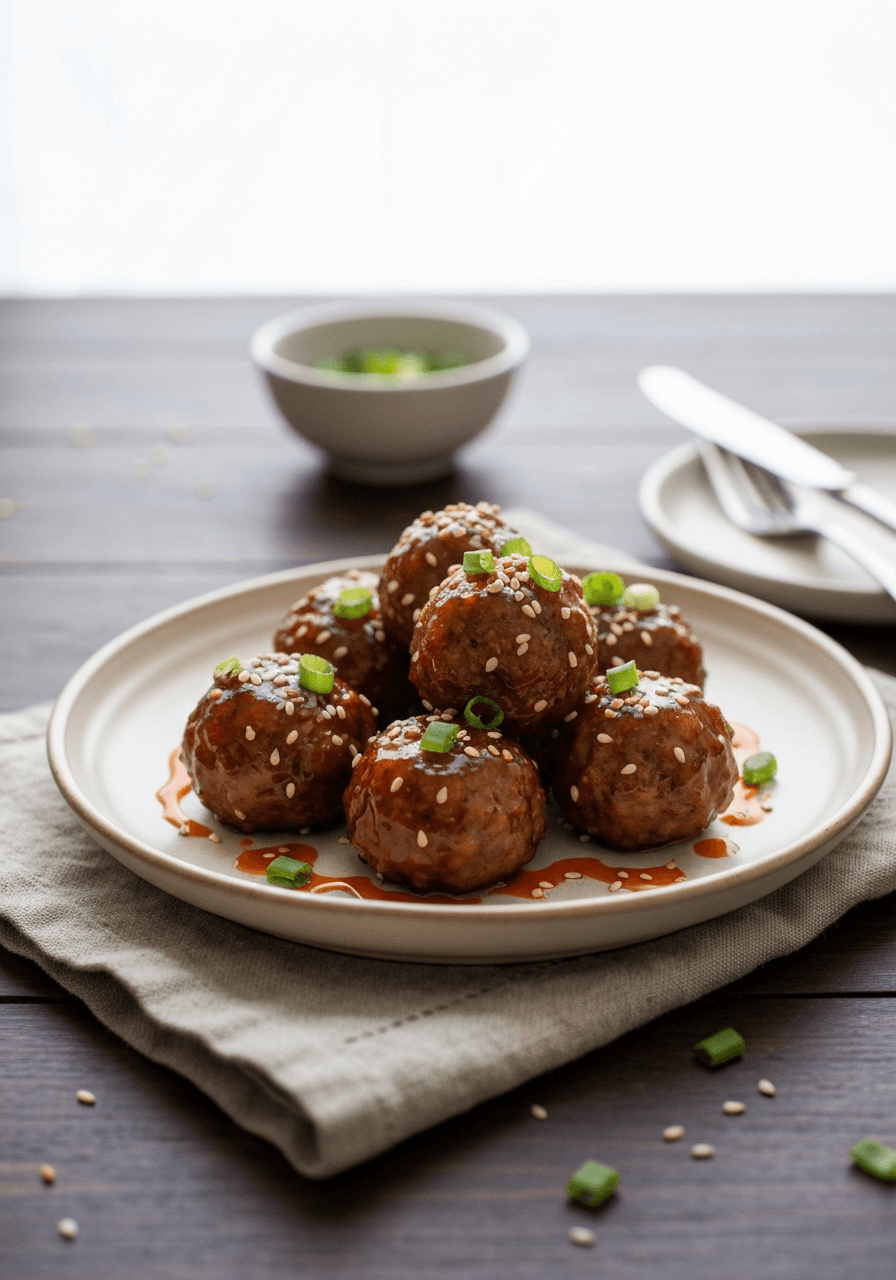
Korean BBQ-Style Meatballs
Ritz crackers in the meat, sugar glaze on top. Sticky perfection.
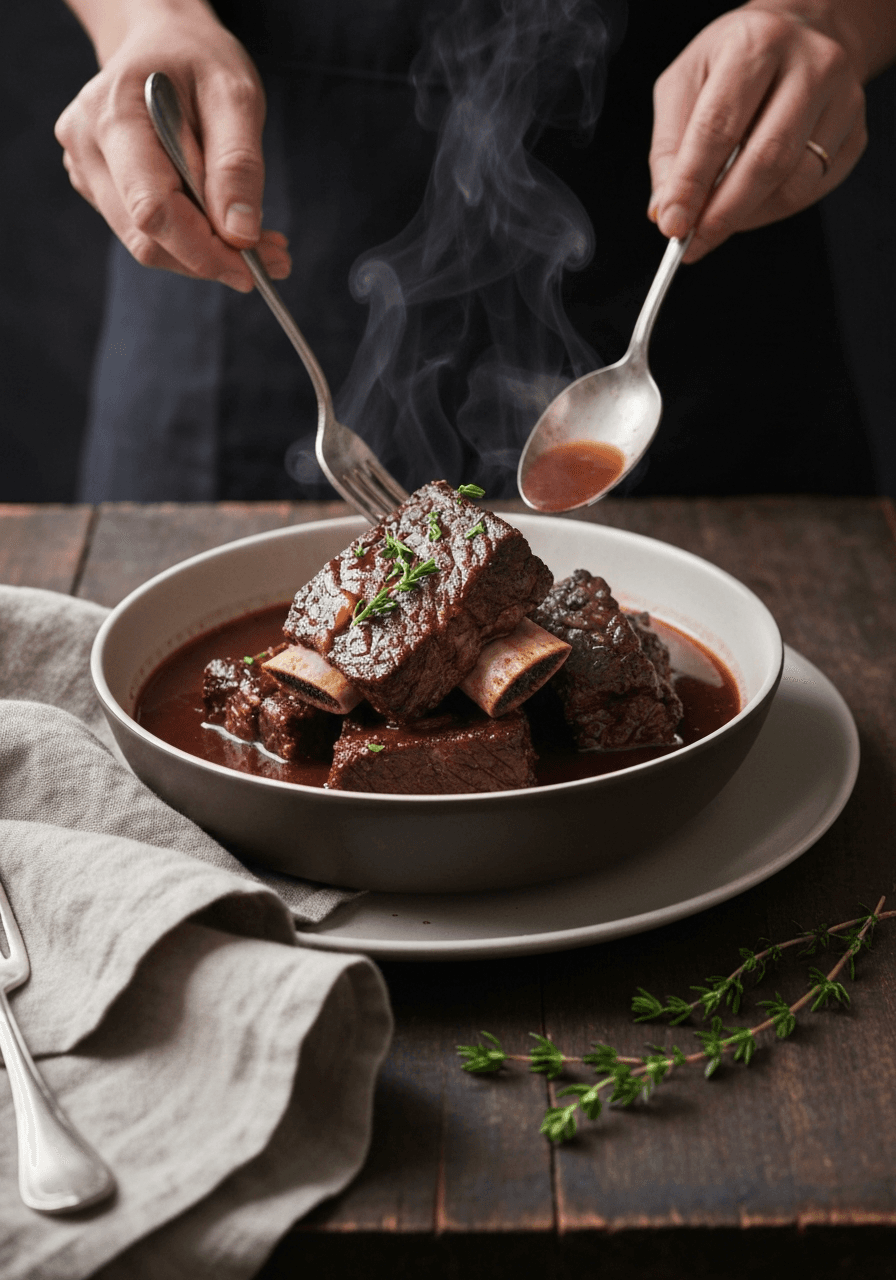
Short Ribs — Wine Braised
Indulge in fall-off-the-bone short ribs, braised in a rich red wine sauce. This easy recipe transforms simple ingredients into a comforting and impressive dish.
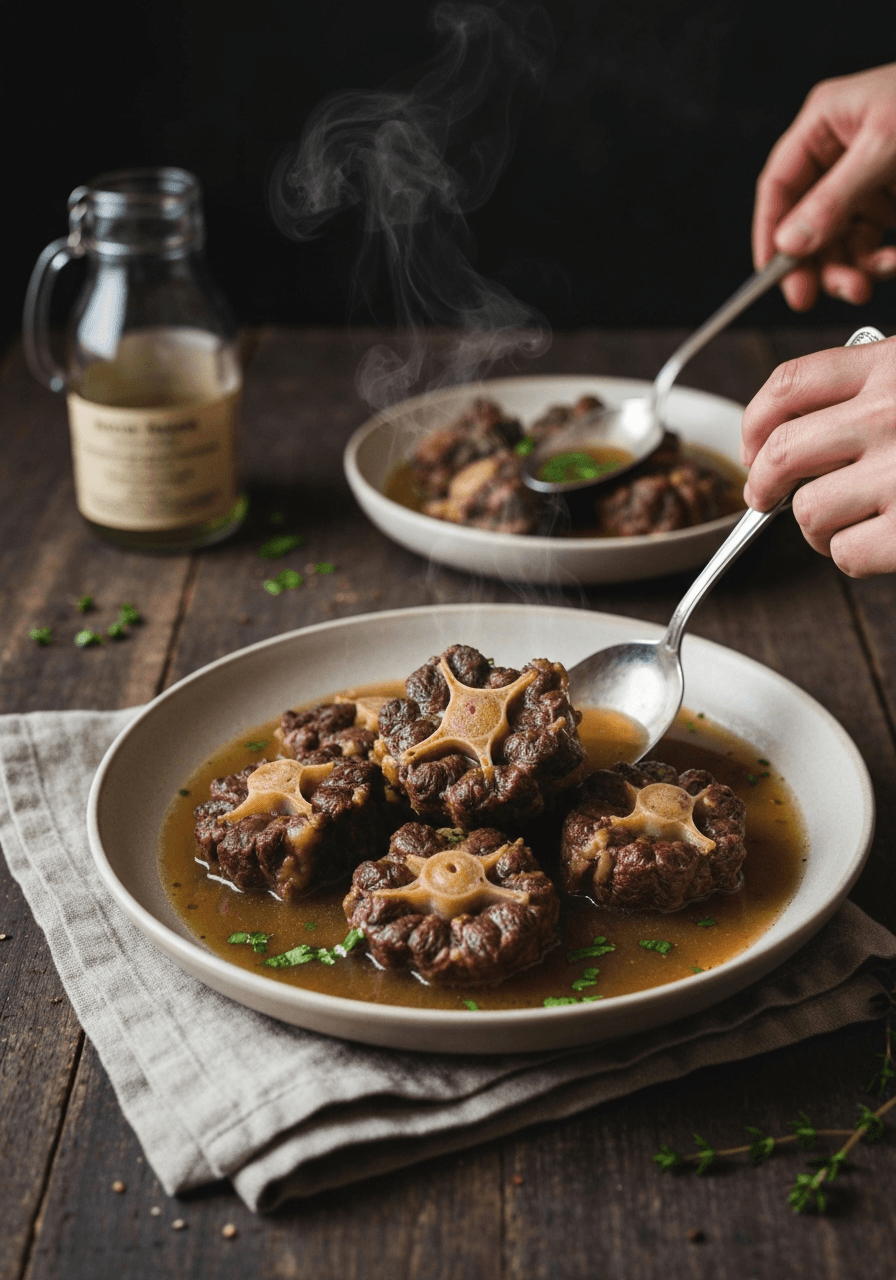
Oxtail Stew - Gelatin Rich
Slow-braised oxtail stew transforms tough cuts into a rich, gelatinous masterpiece. This soul food classic delivers tender meat and a silky sauce, perfect for a comforting and flavorful meal.