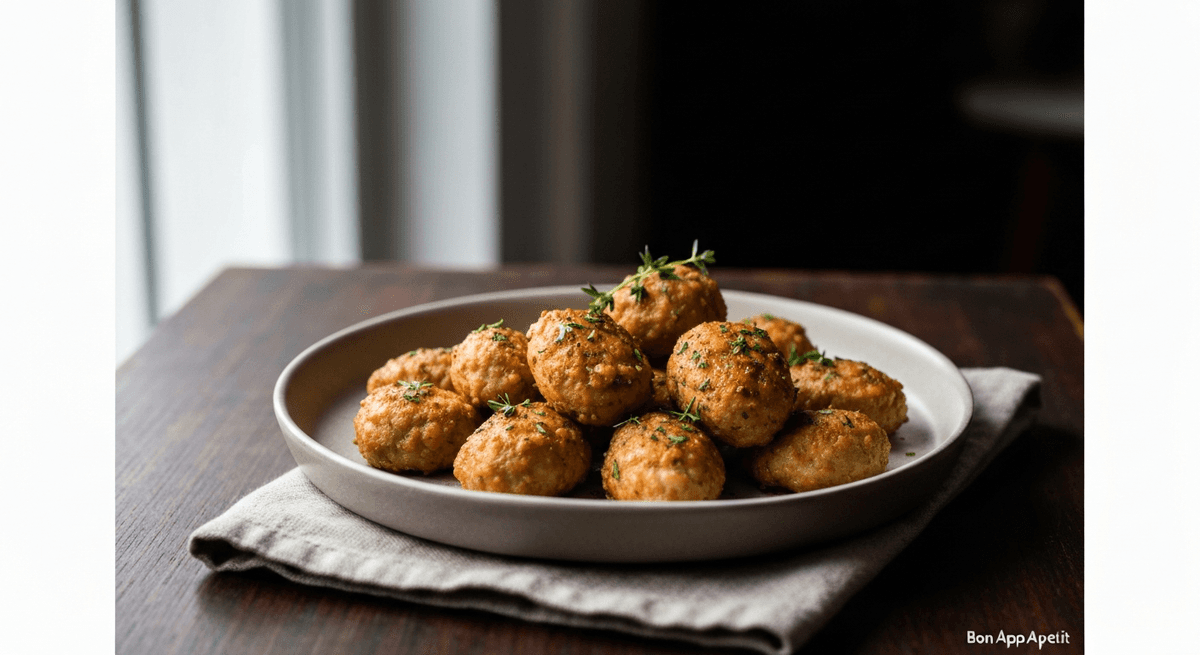
Air Fryer Timing Map (The Shake Rule + Doneness Targets)
A simple system that makes the air fryer predictable: shake timing, spacing rules, and doneness targets you can trust.
A beginner-proof air fryer system: when to preheat, how to avoid steaming, the shake rule, and doneness targets that stop dry food forever.
Crisp food is dry food with space: preheat, pat dry, single layer, then shake on schedule to vent steam and expose new surfaces.
The fit, timing, and key move are all here. If it is a yes, go straight into cook mode.
A simple system that makes the air fryer predictable: shake timing, spacing rules, and doneness targets you can trust.
Timing note: 10 mins
Set your units, then drop the ingredients into grocery if this is happening later.
What matters before the pan gets hot
The shortest path to understanding the dish, the key move, and whether tonight is the right time to cook it.
The Hook
This ain't magic, it's airflow. Dry food, space, and a shake. Anything else is just steamed disappointment.
The Technique
Crispness demands a dry surface for Maillard reactions. This machine blasts hot air, accelerating moisture evaporation. Overcrowding traps steam, raising humidity and preventing browning. Strategic shaking vents that steam and exposes new surfaces to the blast.
The History
Forget 'frying.' This is convection roasting in a box. It's high-heat oven principles crammed into a countertop appliance. Don't be fooled by the name; it's about controlled hot air, not submerged oil.
Food Facts
Sourced notes. Tap to verify.
An air fryer cooks by blasting hot air with a fan, which is the same basic idea as convection. The strong airflow speeds up surface drying and browning, which is why food can turn crisp without deep frying.
A beginner-proof air fryer system: when to preheat, how to avoid steaming, the shake rule, and doneness targets that stop dry food forever.
Nutrition per Serving
Estimated valuesTechnique, context, and fallback plans
The reason the method works, the prep you can do early, and what to change if the dish starts drifting.
The air fryer's name is a delicious deception. It doesn't truly fry; its magic lies in rapid convection roasting, a whirlwind of hot air that transforms food. The common pitfall? Treating it like a deep fryer, leading to soggy disappointment. The real secret is understanding airflow. When surfaces are dry and the basket has room to breathe, that hot air works wonders, browning ingredients with astonishing speed.
This system is a departure from guesswork, offering a reliable map for consistent results. It’s about creating the ideal conditions: a hot start, a dry surface, a whisper of oil, and crucially, space. The 'shake rule' isn't just a suggestion; it's a vital step to release trapped steam and expose new surfaces for that coveted crispness. Whether it's vibrant vegetables, succulent proteins, or revived leftovers, the outcome is a symphony of tender centers and perfectly browned edges, banishing the specter of dry, sad food forever.
My food is soggy or soft, even though it looks browned.
Ah, that usually means we trapped some steam in there. Make sure you're patting your food really dry before it goes in, and don't overcrowd the basket – give everything space. Shak…
Some pieces are burnt while others are still pale.
That's a classic sign that the pieces weren't quite the same size, or the basket was too full.
Set up, cook, and remember what worked
The mise, the method, your notes, and the next recipes to master after this one lands.
The Setup
- Air Fryerbasket style
- Instant-Read Thermometer
- Mixing Bowl
- TongsOptional
The Mise en Place
3Your prep station before cooking begins
Baseline Seasoning (0/2)
Baseline Browning (0/1)
Chef's Notes
Basket size matters. If your basket is under 5 qt, assume you will need batches for real crisping.
Crisp boost for skin-on chicken: add 0.25 tsp baking powder per 1 lb / 450 g chicken with the salt (measured, not vibes).
PREHEAT
Preheat the air fryer 3 minutes at your cook temperature (usually 390-400F / 200-205C).
Starting hot prevents the first minutes from steaming the food while the machine warms up. • A wave of heat when the basket opens • Hot, dry convection heat
DRY
Prep aheadDry the surface aggressively. If you washed produce or thawed frozen food, pat it dry before oiling and seasoning.
Crisp is dehydration. Wet food steams itself before it can brown. • No droplets hiding in crevices
Surface looks matte, not wet or shiny
OIL
Use light oil. Toss with 1 tbsp oil per 1.5 lb / 680 g food as a baseline. Enough to coat, not enough to pool.
Oil helps browning and prevents sticking, but excess oil softens crisping. • Even sheen, not dripping
Food is lightly glossy with no oil puddles in the bowl
SPACE
Cook in a single layer with visible gaps. If pieces touch, you are trapping steam. Batch cook instead.
Airflow is the heat source. If air cannot move, you are steaming. • Gaps between pieces; basket is not piled
Air can circulate around most pieces
SHAKE
Time-sensitiveUse the Shake Rule: shake or flip once at the halfway mark, and once more for small pieces at the last third (e.g., minute 4 and minute 7 of a 10-minute cook).
Shaking vents humidity and prevents the underside from softening. • Pieces redistribute into a single layer again • A quick rush of steam, then roasted aroma
New surfaces are exposed; steam vents when basket opens
TARGET
Time-sensitiveUse doneness targets to stop overcooking: chicken thighs 175-185F (79-85C), chicken breast 155-160F (68-71C) then rest, pork chops 145F (63C) then rest, salmon 120-130F (49-54C), shrimp opaque and firm (no translucent centers).
Timers vary by machine and thickness. Targets make results repeatable. • Food looks browned and set, not pale or wet
Temperature or visual target reached, not a random timer
REST
Rest proteins 3-5 minutes after cooking (shrimp excluded).
Resting redistributes juices and finishes cooking gently. • Surface juices calm down during rest • Texture relaxes from tight to springy
Juices stay in the meat when sliced
ADJUST
If food is browned but not crisp, add 2-4 minutes and increase shaking frequency. If food is drying out, lower temp by 15-25F (10-15C) and shorten total time.
Crisp problems are usually steam problems. Dry problems are usually time problems. • Edges brown; centers stay tender
Crisp edges without dryness
Service Log
Log your variables. Iterate like a pro.
Clean slate.
Log your variables after the first run.
Related Techniques
Master These Next
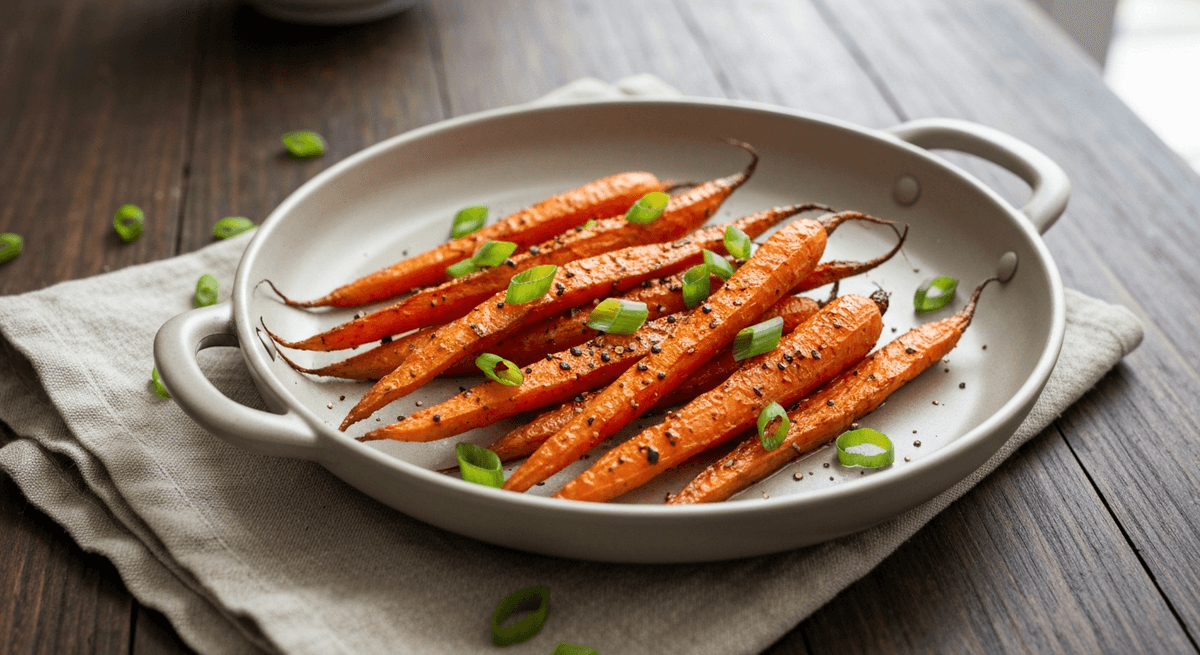
Air Fryer Carrots (Cajun Lacquer, Not Soft)
Bust the myth that air fryer carrots must be soft; these are crisp with tender centers and a vibrant Cajun kick.
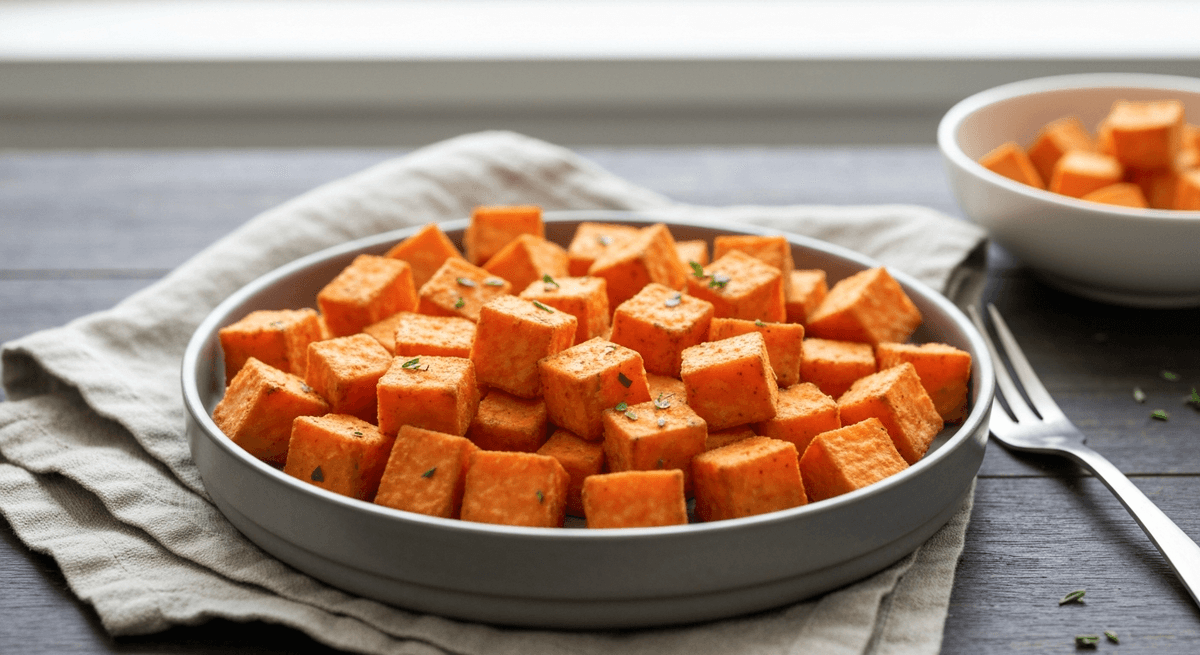
Air Fryer Sweet Potato Cubes
The sweet potato method that finally crisps. Even cubes, dry surface, and a light starch coat for clean texture.
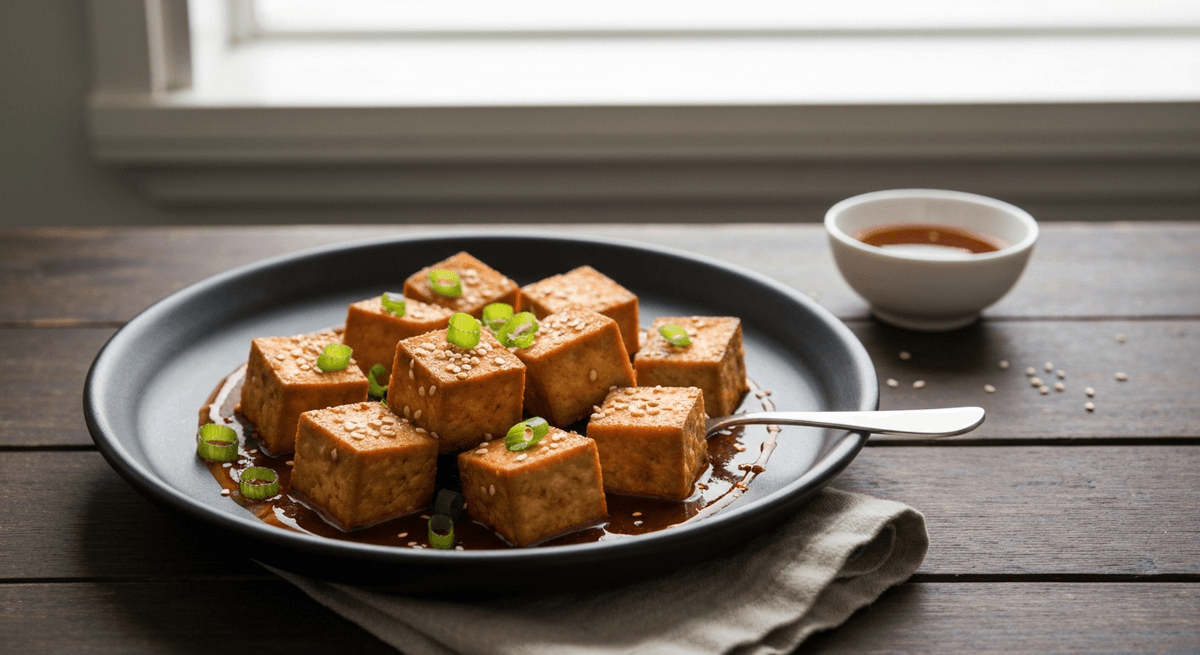
Air Fryer Tofu
Achieve perfectly crispy tofu without cornstarch, using a simple air fryer technique.