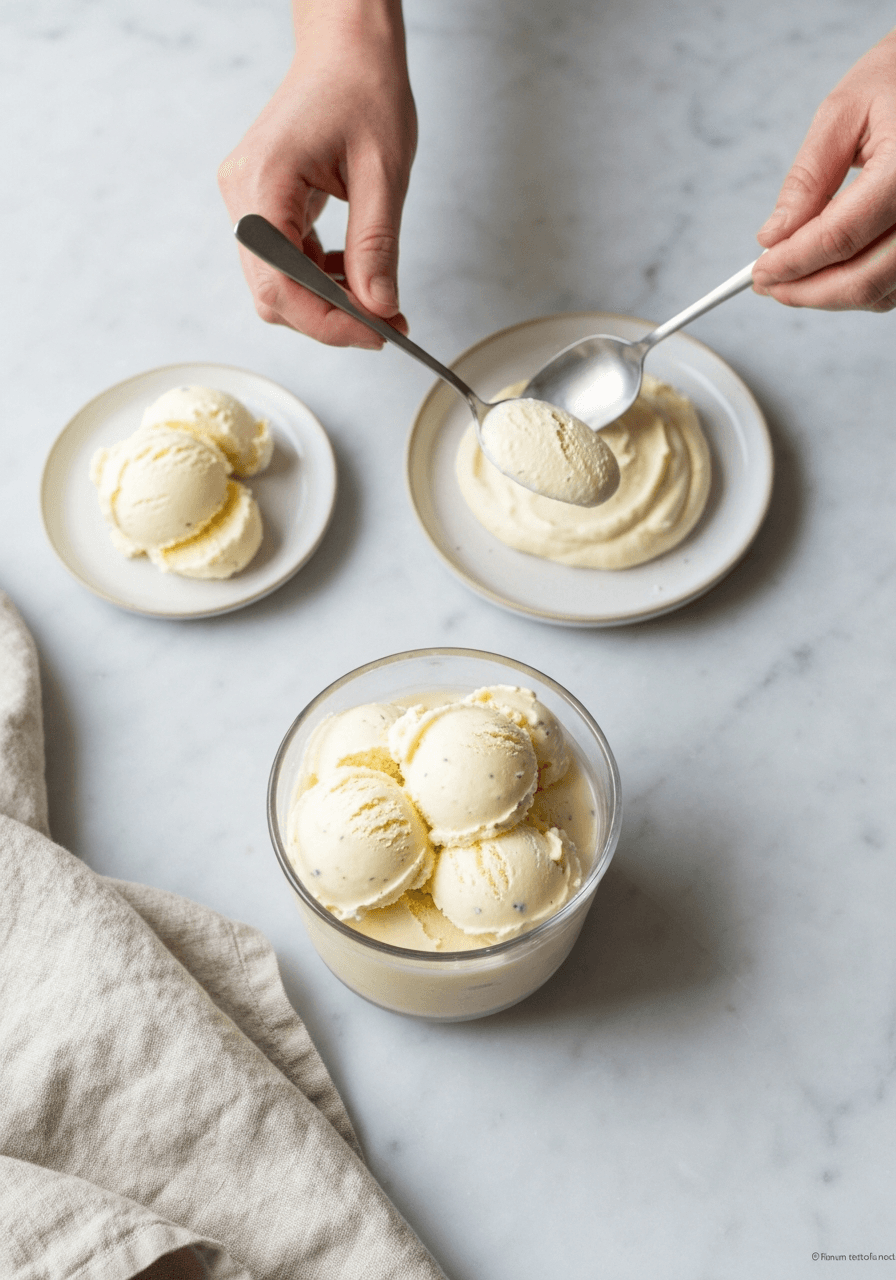
Vanilla Ice Cream Base — Custard Style
Indulge in the pure, velvety texture of homemade vanilla ice cream. This custard-style base is the perfect foundation for your favorite frozen creations.
30 min active, minimal dishes
Vanilla Ice Cream Base — Custard Style
Indulge in the pure, velvety texture of homemade vanilla ice cream. This custard-style base is the perfect foundation for your favorite frozen creations.
30 min active, minimal dishes
Key move
Temper the eggs slowly and carefully to prevent scrambling and achieve a smooth, creamy texture.
Cook mode keeps your place
Larger text, ingredients in reach, and saved step progress while you cook.
The Setup
- SaucepanMedium
- Mixing BowlMedium
- Whisk
- Wooden Spoon
- Fine-Mesh Sieve
- Ice Cream Maker
The Mise en Place
5 of 6Your prep station before cooking begins
The Protein (0/2)
The Spice Blend (0/1)
The Pantry (0/1)
Other (0/2)
Custard is lumpy or curdled.
The eggs were likely cooked too quickly. Strain the custard immediately to remove any lumps. Next time, temper the eggs more slowly and cook over very low heat.
Ice cream is icy or grainy.
This can happen if the custard wasn't chilled properly or if the ice cream wasn't churned long enough.
Chef's Notes
Temper eggs slowly by whisking a small amount of hot milk into them before adding to the pot to prevent scrambling.
Strain the custard through a fine-mesh sieve to catch any cooked egg bits for a silky smooth texture.
Chill the base thoroughly overnight for the best ice cream texture. The colder it is, the faster it freezes.
Serve scoops with fresh berries, a drizzle of chocolate sauce, or a sprinkle of toasted nuts.
The Method
COMBINE
In a medium saucepan, combine the heavy cream (2 cups), whole milk (1 cup), and sugar.
Scorched sugar: High heat can caramelize the sugar prematurely. Use medium-low heat to ensure it dissolves without browning.
Heavy cream, milk, and sugar are combined in the saucepan.
HEAT
Time-sensitiveHeat the mixture over medium heat, stirring occasionally, until it just begins to simmer. Do not boil.
Scorching risk: If the mixture boils, the milk proteins will denature and create an unpleasant texture.
Small bubbles are forming around the edges of the pan, indicating the mixture is simmering.
WHISK
In a separate medium bowl, whisk the egg yolks (6 large) until light and slightly thickened.
Uneven texture: Failing to whisk thoroughly leaves streaks of yolk that may curdle when the hot cream is added.
Egg yolks are pale yellow and slightly increased in volume.
TEMPER
Time-sensitiveSlowly drizzle about 1/2 cup of the hot cream mixture into the egg yolks (6 large), whisking constantly to temper the eggs.
Scrambling risk: Adding the hot liquid too fast will cook the eggs into clumps, ruining the custard base.
The egg yolks have been gradually warmed by the hot cream mixture without scrambling.
POUR
Pour the tempered egg yolk mixture back into the saucepan with the remaining cream mixture.
Scrambled eggs: Adding the hot liquid too quickly will cook the yolks instantly, creating lumps.
The tempered egg yolk mixture is fully incorporated into the cream mixture in the saucepan.
COOK
Time-sensitiveCook over low heat, stirring constantly with a wooden spoon or heat-resistant spatula, until the custard thickens enough to coat the back of the spoon.
Overcooking risk: If the custard gets too hot, it will curdle and lose its smooth, creamy consistency.
The custard coats the back of a spoon and leaves a clear line when swiped with a finger.
STRAIN
Strain the custard through a fine-mesh sieve into a clean bowl to remove any cooked egg particles.
Contamination: If you force cooked bits through the sieve, the gritty texture will ruin the mouthfeel of the final ice cream.
The custard is smooth and free of any cooked egg bits after being strained.
STIR
Stir in the vanilla extract (2 tsp) and salt.
Flavor imbalance: Ensure the salt is fully dissolved; undissolved grains create unpleasant salty bursts in the final frozen product.
Vanilla extract and salt are fully incorporated into the strained custard.
CHILL
Prep aheadCover the bowl with plastic wrap, pressing it directly onto the surface of the custard to prevent a skin from forming. Chill in the refrigerator for at least 4 hours, or preferably overnight.
Skin formation: Exposed custard will form a rubbery film, which creates lumps in the finished ice cream.
Custard is completely chilled and has no skin formed on the surface.
FREEZE
Pour the chilled custard into an ice cream maker and churn according to the manufacturer's instructions.
Over-churning: Churning too long past soft-serve consistency can cause the fat to separate and turn the ice cream grainy or buttery.
The ice cream has reached a soft-serve consistency.
TRANSFER
Prep aheadTransfer the ice cream to an airtight container and freeze for at least 2 hours to harden before serving.
Ice crystal formation: If the container is not airtight, ice crystals will form on the surface, ruining the texture.
The ice cream is firm and has hardened in the freezer.
Appears in collections
Keep browsing by the kind of recipe choice this supports, not just this single dish.
Master These Next
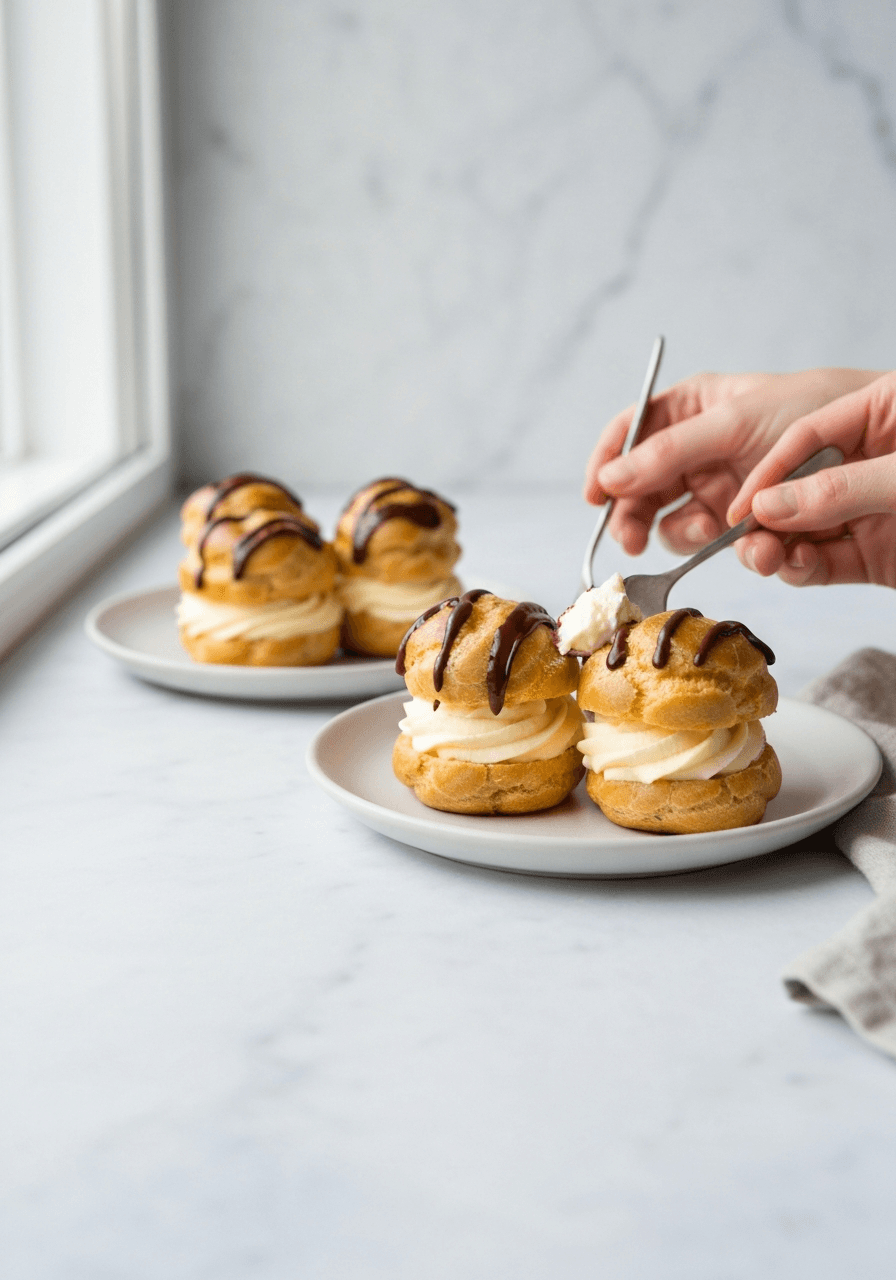
Profiteroles — Cream Puffs
Delicate, airy cream puffs filled with sweet cream and drizzled with dark chocolate. A classic French dessert that's surprisingly easy to make at home.
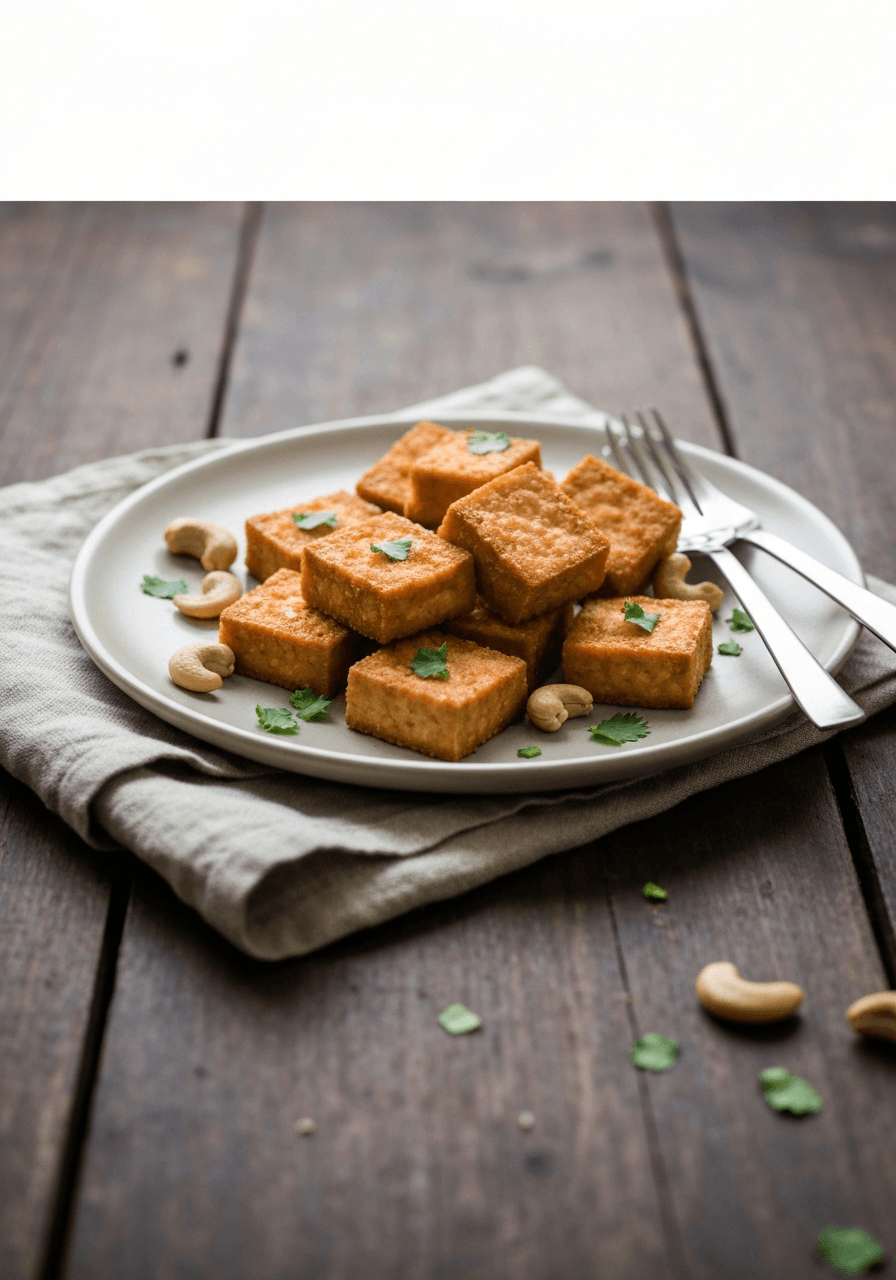
Crispy Tofu with Cashews
Tear, don't cut. Cornstarch crust. The meat-eater's tofu.
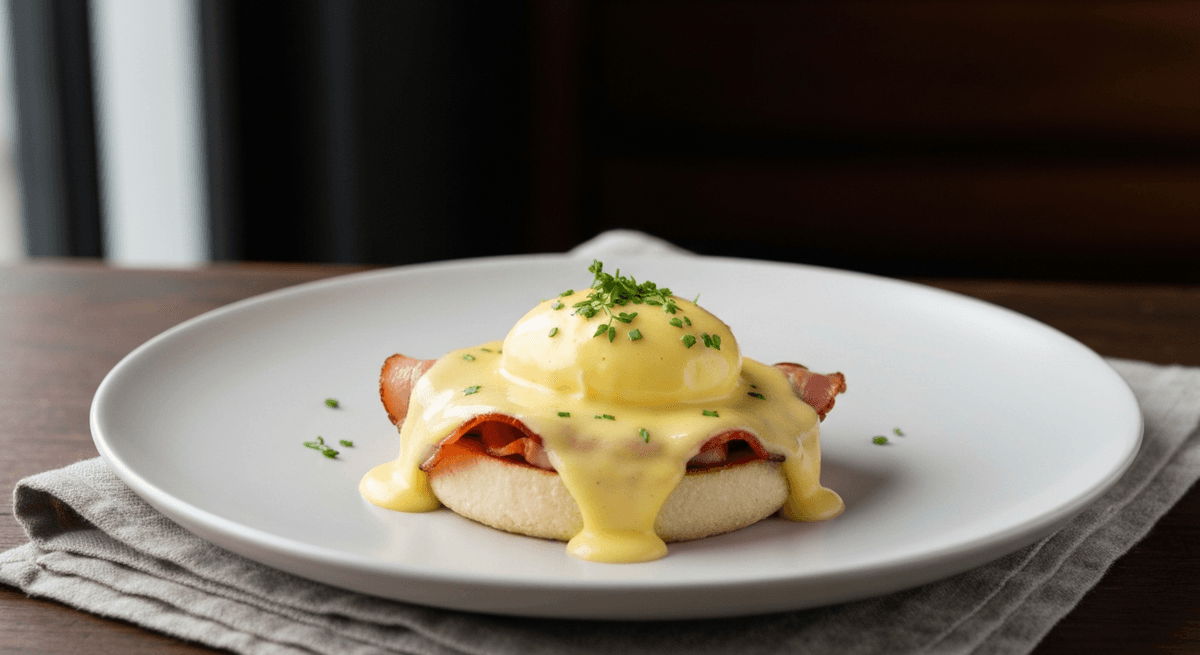
Eggs Benedict — Classic
Indulge in the ultimate brunch classic: Eggs Benedict. Perfectly poached eggs, velvety hollandaise, and savory Canadian bacon create a symphony of flavors.