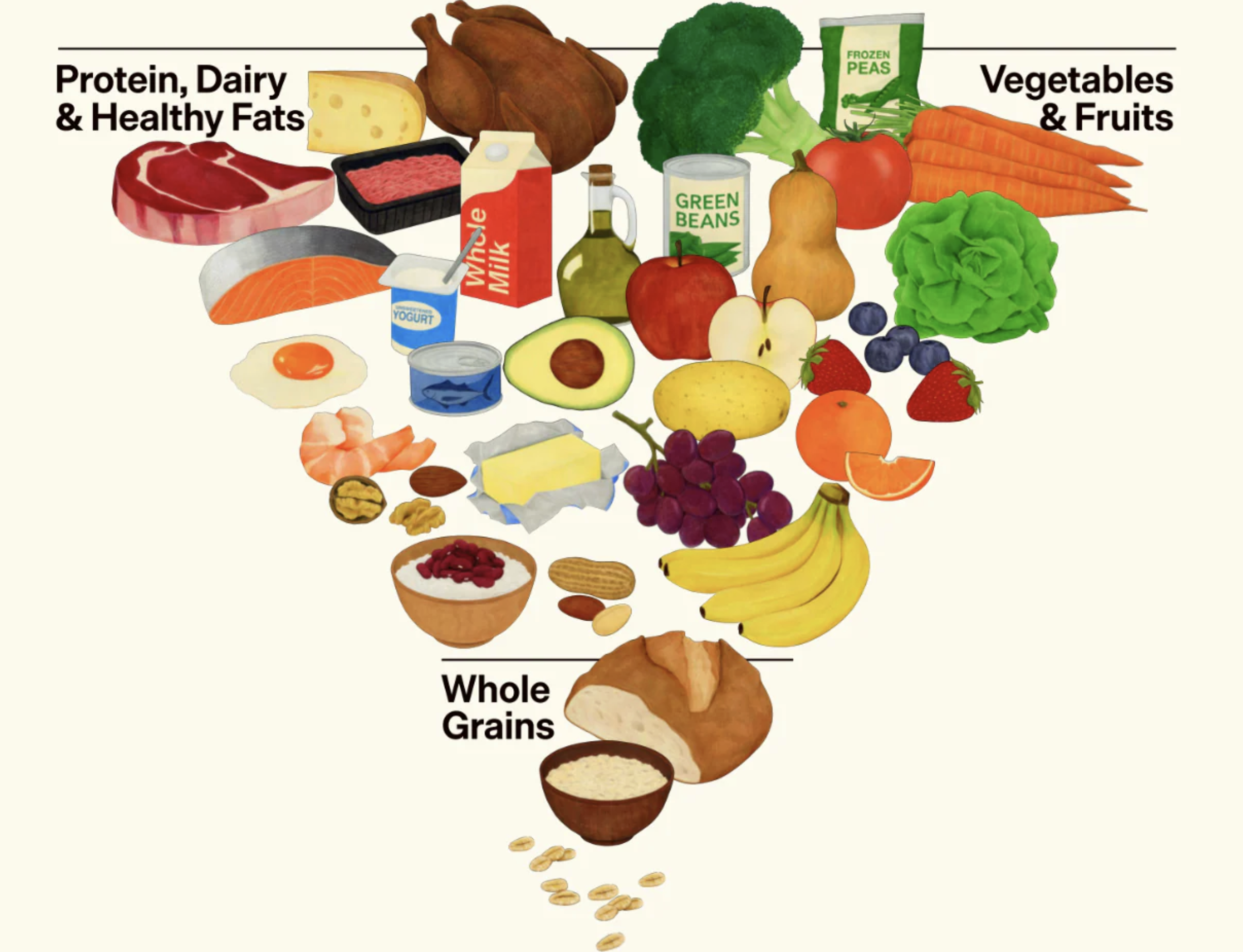
The 2025–2030 Dietary Guidelines for Americans (DGAs) are a shorter, more consumer-facing update. The core message is simple: eat real food. Cut back on highly processed foods, refined carbohydrates, and added sugars. Prioritize protein, vegetables and fruits, healthy fats, and whole grains.
What changed in this edition?
The DGAs are updated every five years by the USDA and HHS. This edition is more consumer-facing, with a prominent "New Pyramid" graphic and companion website. The 2025–2030 update emphasizes:
- Avoiding highly processed foods. Especially salty or sweet packaged snacks and ready-to-eat foods.
- Tighter added-sugar messaging. Includes a practical meal-based limit.
- Higher protein targets. Emphasis on getting protein at each meal.
- A renewed focus on whole foods. Reducing refined carbohydrates.
The guidelines retain the longstanding recommendation that saturated fat should stay under 10% of total daily calories.
Where to read the full DGAs
The DGAs come with materials that define serving sizes, calorie-level patterns, and scientific rationale:
- Dietary Guidelines for Americans, 2025–2030 (main document)
- Daily Servings by Calorie Level (servings by food group at different calorie needs)
- Scientific Foundation + Appendices (background evidence)
Start at the official site: realfood.gov.
Who these guidelines are for
The DGAs are a federal framework used by:
- Schools, childcare, and community feeding programs
- Military and veteran meal programs
- Healthcare and public health nutrition guidance
They're meant to be adapted based on health status, culture, preferences, and budget.
A note on the "New Pyramid" vs. the fine print
Graphics are memorable. They can shape behavior more than the footnotes. If the pyramid makes certain foods look "endorsed," the practical check is still the written guidance:
- Keep saturated fat under 10% of calories
- Avoid highly processed salty/sweet foods and sugar-sweetened beverages
- Choose fiber-rich carbs more often than refined ones
Key recommendations (plain-English version)
At-a-glance targets
Framework numbers. Serving sizes are defined in the companion "Daily Servings by Calorie Level" resource.
- Added sugar: 10g or less per meal
- Protein: 1.2–1.6 g/kg body weight per day
- Saturated fat: Under 10% of daily calories
- Whole grains: 2–4 servings/day
- Dairy: 3 servings/day (at 2,000 cal)
- Vegetables: 3 servings/day (at 2,000 cal)
- Fruit: 2 servings/day (at 2,000 cal)
- Sodium: Under 2,300 mg/day (ages 14+)
1. Eat the right amount for you
- Calorie needs depend on age, sex, height, weight, and activity level.
- Watch portion sizes, especially for calorie-dense foods.
- Hydration matters. Choose water and unsweetened beverages most often.
2. Prioritize protein at every meal
- Aim for high-quality, nutrient-dense proteins.
- Include a variety of protein foods.
- Animal sources: eggs, poultry, seafood, red meat
- Plant sources: beans, peas, lentils, nuts, seeds, soy
- Prefer baked, broiled, roasted, stir-fried, or grilled over deep-frying.
- Avoid proteins with added sugars or chemical additives. Season with salt, spices, and herbs.
- Target: 1.2–1.6 grams per kilogram of body weight daily.
3. Consume dairy
- Prioritize no-added-sugar options.
- Daily goal: 3 servings/day in a 2,000-calorie pattern.
4. Eat vegetables and fruits throughout the day
- Choose a colorful variety.
- Prefer whole fruits and vegetables.
- Frozen, dried, or canned work well if they have no added sugars.
- Keep 100% juice to smaller portions.
- Daily goal (2,000 cal): 3 servings vegetables + 2 servings fruit.
5. Incorporate healthy fats
- Many whole foods naturally contain fat: meats, eggs, seafood, nuts, seeds, dairy, olives, avocados.
- For added fats, prioritize olive oil and other unsaturated options.
- The DGAs also list butter or beef tallow as options.
- Keep saturated fat below 10% of daily calories.
Practical note: Full-fat dairy and higher-fat animal proteins make it easier to exceed the saturated fat cap. Use the written limit as your guide. Favor unsaturated fats most often.
6. Focus on whole grains
- Prioritize fiber-rich whole grains.
- Some people may do better with fewer refined carbs, especially those managing chronic conditions.
- Reduce white bread, packaged breakfast foods, flour tortillas, and crackers.
- Goal: 2–4 servings/day.
7. Limit processed foods, added sugars, and refined carbs
- Avoid salty or sweet processed foods like chips, cookies, and candy.
- The DGAs flag foods with artificial flavors, dyes, preservatives, and non-nutritive sweeteners.
- Avoid sugar-sweetened beverages (soda, fruit drinks, energy drinks).
- Benchmark: No more than 10 grams of added sugar in a single meal.
For kids: Avoid added sugar for children under four. For older kids and teens, work with a pediatric clinician.
Special populations
The DGAs include considerations for infants, children, pregnant people, and older adults. Needs differ by life stage. The official documents include those adjustments.
How to use this in real life
If you don't want to count grams and milligrams, these 5 habits capture most of the DGAs' intent:
- Make water your default drink.
- Build meals around protein + plants. Protein at each meal, vegetables/fruits across the day.
- Choose fiber-rich carbs (whole grains, beans, starchy vegetables) over refined grains.
- Limit ultra-processed snacks to "sometimes," not daily.
- Check labels for added sugar. Especially in beverages, yogurt, cereal, and snacks.
The bottom line
The 2025–2030 Dietary Guidelines emphasize real, whole foods. Minimize ultra-processed products. The "New Pyramid" puts protein and produce front and center. The written guidance on saturated fat and added sugar remains your practical compass.
For personalized advice, especially with health conditions, consult a registered dietitian or healthcare provider.